Some links on this page are affiliate links: if you buy through them we may earn a commission, at no extra cost to you.
Yes: seven major technology companies signed President Donald Trump’s Ratepayer Protection Pledge at the White House on March 4, 2026, after he said in his February 24 State of the Union address that companies would soon commit to providing for their own power needs. The pledge says they will bring new power supplies, pay for required delivery upgrades, negotiate special rates and cover costs for capacity reserved for their data centers even if they do not use it all. But it is a voluntary commitment, not a national electricity-rate law—and it has not established that household bills have fallen.
What Trump announced—and what happened next
During his February 24, 2026 State of the Union address, Trump said major technology companies would sign commitments the following week to provide for their own power needs. On March 4, Amazon, Google, Meta, Microsoft, OpenAI, Oracle and xAI signed the White House’s Ratepayer Protection Pledge.
The phrase “pay for their own power” can sound as if each data center will build a power plant and disconnect from the grid. That is not what the pledge requires. Companies may build or buy power from new or expanded generation, arrange utility service under special rates, and pay for infrastructure needed to deliver electricity. A facility can still rely on the regional grid, or combine grid electricity with on-site generation, batteries or contracted power.
The distinction matters for customers. The pledge is about how costs associated with data-center demand should be allocated; it is not a promise that every company will operate independently or that electricity bills will automatically go down.
#1 Best Overall

- Various Monitoring Parameters: The power meter plug can monitor the power (W), energy (kWh), volts, amps, hertz, power factor, cost, minimum and maximum power (W), cumulative days and time of your appliances. By switching 7 display modes, you can easily know the various parameters while the appliance is working. The home energy monitor can also calculate and display how much power your appliance uses and how much electricity bill it cost in cumulative time
- Upgraded LCD Display: With large screen size 2.36 inch x 1.85 inch, clearer monitor backlit, our electrical usage monitor can display the data clearer and more visible no matter day or night. 180°full wide viewing angles is great for reading and recording the data in any angles. No need to stand on the front of the display and bend over to read the numbers
- Adjustable Backlight Time: Our upgraded watt meter has 5 options of backlight time. The default backlight time duration is 10 minutes(bL-0). If you want to change the backlight time, you can press and hold "UP" and "DOWN" button at the same time to enter backlight time setting, then press "UP" and "DOWN" to select the backlight time (bL-0 =10 minutes, bL-1=1 hour, bL-2=4 hours, bL-3=8 hours, bL-4=always on), finally press the "COST" to save the backlight time settings
- Overload protection: When the power of the appliance exceeds the overload power, the LCD will display “OVERLOAD” to warn the user. All the buttons will quit working and can only be workable when you lower or remove the load power. The default overload power is 3680W and is adjustable from 0 to 3680W. In general, you need to set the overload power to 1800W before using. Just press the "function" button for more than 3 seconds to enter the setting
- Data Memory Function: The wattage meter will record your power consumption data when you remove it from socket, or remove appliances from the electricity monitor. You can directly see the last data when you use it next time. This function can also automatically save the data when there is a sudden power failure
What the pledge asks companies to do
The White House describes five broad commitments. In practice, the details would have to be worked out with utilities, grid operators and state regulators.
- Bring new power to serve new demand. Companies are expected to build, bring or buy electricity from new or expanded power resources for their data centers.
- Pay for required delivery upgrades. They are expected to cover new power-delivery infrastructure needed to connect or serve their facilities, such as network upgrades.
- Pay for reserved capacity even if they use less than expected. Companies are expected to negotiate separate rates and pay for power and related infrastructure brought online to serve their facilities, even when they do not consume all the contracted electricity.
- Invest in local workforce development. The pledge includes hiring and training commitments in communities where data centers are built.
- Support grid resilience where possible. Companies are expected to coordinate with grid operators and, where possible, make backup generation available during emergencies or periods of scarcity.
The White House’s March fact sheet lists the original seven signatories. Signing the pledge is not the same as signing a specific utility contract: project-level agreements and state-approved rate structures are separate steps.
Rank #2

- Multi-function power monitor: Our electric usage monitor can monitor the power (W), electricity(kWh), voltage(V), frequency(Hz), current(A), power factor(PF), unit price($/kWh), total cost($) of your appliances. By switching 8 display modes, you can easily know the various parameters while the appliance is working. The “electricity” mode can calculate and display how much power your appliance uses. And the “total cost” mode will show how much electricity bill it cost in cumulative time
- Overload protection: When the loading power of the appliance is over the default overload threshold 1800W, the whole display with backlight and the word “OVERLOAD” will keep flashing to warn the users. Please turn off the appliance for safety concern
- Premium Material: The whole body of our energy meter is made of high-quality ABS material. It makes our home electricity usage monitor more long lasting, fireproof and anti-drop. The standard US socket and plug is suitable for all US standard appliances
- Backlight Display: With white backlight and black words, the LCD display of our home power monitor can display the data clearer and help you to read the data easier no matter day or night. The backlight will only lights up when the device is connected to AC power. If no button is pressed, the backlight turns off automatically after 10 minutes. You can also press the "UP" button to turn off the backlight manually, and press any button to turn on backlight again
- Easy to reset: No reset tool needed, our appliance power usage meter is easy to reset. You can press the “M” button for 5 seconds directly to reset the device. After reset, all cumulative data (electricity quantity, cost) will be cleared, and all settings will be restored to factory settings
Why ordinary electricity customers are watching
Large data centers use electricity to run computing equipment and keep it cool. As demand grows, utilities may need more generation and upgrades to transmission and local distribution networks. Those investments can be costly, and the way they are assigned matters: if a utility’s costs are recovered through rates paid by a broad group of customers, households and small businesses may help pay for infrastructure prompted by a large new load.
The Tool Desk
Outbyte PC Repair FREEClear out junk files and repair common Windows errorsFree Scan →Outbyte Driver Updater FREEScan for outdated or missing drivers - takes under a minuteDriver Scan →That concern has made data-center development a political issue as well as an energy-planning challenge. Communities also raise questions about water use, land, noise, emissions, tax incentives and local infrastructure. Paying for electricity does not, by itself, settle those disputes.
Rank #3
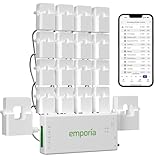
- SAFETY YOU CAN TRUST WITH UL CERTIFICATION: With Emporia Energy, your home energy monitoring is safe, reliable, and certified. The Emporia Vue is UL Listed, meaning it has met rigorous safety standards for electrical products in the U.S. and Canada. This certification ensures that every component has been thoroughly tested to prevent hazards, such as overheating, short-circuiting, or fire, offering you peace of mind as you manage your home’s energy consumption.
- INSTALLS IN CIRCUIT PANEL of most homes with clamp-on sensors. Supports Single phase, Single-split phase, and 2-wire systems. 3-wire systems; 3-phase, 4-wire Wye systems with earthed (TN or TT) neutral (no-Delta) are supported with an additional 200A sensor (sold separately).
- 24/7 ENERGY MANAGEMENT AND MONITORING: Automate, manage and control your home's real power anywhere, anytime to prevent costly repairs, conserve energy, and save costs. Monitor solar / net metering. PROTECTED BY A 1-YEAR WARRANTY.
- LOWER YOUR ELECTRIC BILL: Configure settings in the Emporia Energy App to automate energy management for time of use, peak demand, excess solar, and rewards programs. You can even see live reporting and invaluable savings opportunities instantly. Gauge real-time spending and get actionable notifications and automated energy management to help you reduce costs.
- REAL-TIME ENERGY DATA: REQUIRES 2.4 GHz WIFI WITH AN INTERNET CONNECTION to monitor energy use with iPhone / Android / Web app. Vue sensors collect energy data and are accurate from ±2%. The Vue is UL and CE Listed for your safety. 1 second data is only available in the app (when actively open) and retained 3 hours. Minute and hour data are retained in the cloud. 1 minute data is retained 7 days, 1 hour data is retained indefinitely. Export cloud data whenever you want in the app.
Reuters reported that the pledge was announced amid concern about power bills and grid strain, but also noted that paying for generation does not necessarily make it available quickly. New power plants and grid connections can depend on construction timelines, permitting, equipment, fuel supplies and transmission work. A company’s financial commitment cannot alone remove those bottlenecks.
How the cost question plays out on a project
Consider a hypothetical company proposing a large data center. The sequence might look like this:
Rank #4

- Various Monitoring Parameters: The power meter plug can monitor the power (W), energy (kWh), volts, amps, hertz, power factor, cost, minimum and maximum power (W), cumulative days and time of your appliances. By switching 7 display modes, you can easily know the various parameters while the appliance is working. The home energy monitor can also calculate and display how much power your appliance uses and how much electricity bill it cost in cumulative time
- Upgraded LCD display: With large screen size 2.36 inch x 1.85 inch, clearer monitor backlit, our electrical usage monitor can display the data clearer and more visible no matter day or night. 180°full wide viewing angles is great for reading and recording the data in any angles. No need to stand on the front of the display and bend over to read the numbers
- Adjustable Backlight Time: Our upgraded watt meter has 5 options of backlight time. The default backlight time duration is 10 minutes(bL-0). If you want to change the backlight time, you can press and hold "UP" and "DOWN" button at the same time to enter backlight time setting, then press "UP" and "DOWN" to select the backlight time (bL-0 =10 minutes, bL-1=1 hour, bL-2=4 hours, bL-3=8 hours, bL-4=always on), finally press the "COST" to save the backlight time settings
- Overload protection: When the power of the appliance exceeds the overload power, the LCD will display “OVERLOAD” to warn the user. All the buttons will quit working and can only be workable when you lower or remove the load power. The default overload power is 3680W and is adjustable from 0 to 3680W. In general, you need to set the overload power to 1800W before using. Just press the "function" button for more than 3 seconds to enter the setting
- Data Memory Function: The wattage meter will record your power consumption data when you remove it from socket, or remove appliances from the electricity monitor. You can directly see the last data when you use it next time. This function can also automatically save the data when there is a sudden power failure
- The utility studies the request. It evaluates how much power the facility needs, when it will need it, and what generation or network changes may be required.
- The parties identify supply and delivery costs. The company could contract for power from new or expanded generation, while the utility identifies interconnection, transmission or distribution work. Which costs are considered necessary for the project—and who pays them—are key questions.
- A rate arrangement is proposed. The company and utility may negotiate a special tariff or other contract terms, including minimum payments for capacity reserved to serve the facility.
- Regulators review relevant terms. Depending on the arrangement and jurisdiction, state utility regulators and regional grid processes may affect the rate, cost allocation and approvals.
- The contract determines what happens if plans change. If the data center uses less power, is delayed or is canceled after infrastructure is built, the agreement and applicable regulatory decisions help determine who remains responsible for those costs.
This is why a pledge at the national level cannot answer every household’s question. The crucial details are in project-specific contracts, utility filings and regulatory decisions: what costs are included, when the company pays, how long the obligation lasts, and what happens if forecasts prove wrong.
Do these 3 things before closing this tab:
1Fix the driver behind crashes, sound loss and screen glitches2Clear out junk files and repair common Windows errors3Scan for outdated or missing drivers - takes under a minuteWhat the pledge does not guarantee
- It does not create one enforceable federal rate rule. The White House presents a voluntary pledge. The Associated Press characterized it as nonbinding and reported that it remained unclear whether consumers would see genuine savings. Actual protections depend on contracts, state regulatory proceedings, utility rules and project approvals.
- It does not guarantee lower bills. Preventing a data center from shifting certain costs to other customers is different from reducing rates. Electricity bills also depend on other costs and market conditions. The White House and Trump have promoted the pledge as a way to protect affordability, but that is not proof of a nationwide bill reduction.
- It does not guarantee that new power will arrive on time. Generation, transmission and interconnection projects take time, and paying for them does not eliminate construction or permitting delays.
- It does not mean data centers will leave the grid. A company can procure new power and pay for upgrades while still using utility service and relying on the wider grid.
- It does not settle other local costs. Water, roads, land use, emissions, tax arrangements and other community impacts require separate decisions.
- It does not show that every future project is covered identically. The pledge’s broad language does not replace scrutiny of each company’s contracts and each state’s regulatory process.
There is also an important distinction between preventing an additional cost and producing a saving. A pledge could keep a particular project’s costs off household bills without lowering existing rates. Conversely, if a company’s obligation is incomplete or a utility’s broader costs are allocated across customers, a pledge alone may not shield residents from indirect effects.
Best Value

- ✓ Backlit LCD Display: The watt meter features an upgraded backlit LCD display with a 160° wide viewing angle, providing clear and distinct data readings from any angle, day or night. (Note: To conserve energy, the backlight will automatically turn off after 15 seconds of continuous use.)
- ✓ 9 Types of Data Display: This energy meter plug accurately monitors a wide range of electrical parameters, including power (W), apparent power (VA), energy consumption (kWh), usage time (hours), power frequency (Hz), power factor (PF), voltage (V), current (A), and electricity cost. The user-friendly interface allows you to easily read and navigate through 9 types of data with a single button.
- ✓ Save Money and Energy: By toggling through the 9 display modes, you can gain insights into various operational parameters of your devices. The home energy monitor also calculates and displays the electricity consumption and cost over time, helping you save on your electricity bills by monitoring and managing energy usage.
- ✓ Data Storage: The plug-in electricity meter stores all non-real-time data, ensuring no information is lost in the event of a sudden power outage. If data exceeds the screen’s maximum display range, the screen will flash as a reminder. Pressing and holding the reset button for 3 seconds will reset the cumulative data to zero.
- ✓ Safe to Use: Rated voltage 125VAC, 60Hz, 15A maximum 1875W resistor and tungsten wire, 1/2HP. Clean and tidy interface, very simple to use.
What changed after the March signing
On July 23, 2026, the White House said the initiative had expanded to more than 200 additional utilities, data-center developers, cooperatives and states. It also said the pledge covered 80% of power delivered to U.S. homes and businesses and protected 263 million Americans when a data center is built nearby. Those figures are administration claims, not independently demonstrated measures of lower bills.
The White House cited examples involving Google and Oracle in Michigan; Amazon and Alphabet in Indiana; Southern Company in Georgia; Amazon and Entergy in Mississippi; developers and Alliant Energy in Iowa; Meta and Entergy in Louisiana; and Crusoe’s Texas campus, which it described as using on-site natural-gas generation and battery storage. These examples show the range of arrangements being promoted, not proof that customers have already saved money. The AP’s July report noted continuing doubts about whether the voluntary approach would deliver lower household bills.
How to tell whether customers are actually protected
For a proposed or operating project, look beyond whether its developer signed the pledge. The strongest evidence of protection would be a public, regulator-reviewed arrangement that clearly assigns costs and leaves the company responsible when its demand changes.
- Who pays? Look for how generation, fuel, interconnection, transmission, distribution and capacity costs are divided among the data-center company, utility customers and taxpayers.
- What counts as new power? Check whether the supply is genuinely new or expanded, rather than existing generation relabeled as serving the project.
- Are payments tied to actual use? Minimum-payment or take-or-pay terms can protect other customers if the company reserves power and later uses less than expected.
- Who bears the risk if a project is delayed or canceled? A clear agreement should address stranded infrastructure and reserved capacity, not just the expected operating case.
- Who verifies performance? Look for oversight through state utility commission proceedings, utility filings, grid processes or independent review, rather than relying only on a company’s public pledge.
- Are savings measured or merely projected? A claim that rates are protected is not the same as evidence from actual utility bills or approved cost-allocation data.
State public-utility commission filings, proposed special tariffs, interconnection agreements and state legislation are useful places to check. They can show whether commitments have become project-level obligations and whether the public can see the terms. A signed national pledge is politically significant and may influence negotiations, but those records are what reveal who bears the costs.
Quick Recap
Product prices and availability are accurate as of the date/time indicated and are subject to change. Any price and availability information displayed on Amazon at the time of purchase will apply.



