Some links on this page are affiliate links: if you buy through them we may earn a commission, at no extra cost to you.
Washington leaders warned that President Donald Trump’s One Big Beautiful Bill Act could slow clean-energy development just as data centers increase demand for electricity—and leave households exposed to higher costs. The risk is plausible, but higher bills are not a proven or automatic result: the law targets particular wind and solar incentives, and what customers ultimately pay depends on what power gets built, how quickly the grid expands, and how utilities allocate the costs.
What Washington leaders objected to
At a Seattle roundtable on July 25, 2025, Sen. Patty Murray criticized the newly enacted One Big Beautiful Bill Act, saying its clean-energy provisions could set Washington back, raise utility costs and cost energy-sector jobs. Washington Commerce Director Joe Nguyen argued that limiting power production conflicts with the goal of U.S. leadership in artificial intelligence. Their concern is that the country could make it harder to add electricity supply just as AI-related data centers seek large amounts of power. GeekWire reported on the Seattle roundtable.
The dispute is not simply “clean energy versus AI.” It is about which generation projects remain economical, how quickly alternatives can be built, and whether the companies driving new demand pay the full costs of serving it.
Recommended Free Tools
What the law changed—and what it did not
The law is the One Big Beautiful Bill Act, Public Law 119-21, enacted July 4, 2025. Its energy provisions revise or terminate specified incentives; they do not end every federal clean-energy credit. Among the affected provisions are the technology-neutral clean electricity production credit, Section 45Y, and clean electricity investment credit, Section 48E. The law also changes incentives for clean hydrogen and advanced manufacturing and adds restrictions tied to prohibited foreign entities and foreign-influenced entities. Other support, including credits relevant to nuclear power and carbon capture, remains in the policy mix, though eligibility and deadlines vary. The Congressional summary of H.R. 1 and the Congressional Research Service overview of data-center energy tax benefits describe the broader changes.
#1 Best Overall

- SAFETY YOU CAN TRUST WITH UL CERTIFICATION: With Emporia Energy, your home energy monitoring is safe, reliable, and certified. The Emporia Vue is UL Listed, meaning it has met rigorous safety standards for electrical products in the U.S. and Canada. This certification ensures that every component has been thoroughly tested to prevent hazards, such as overheating, short-circuiting, or fire, offering you peace of mind as you manage your home’s energy consumption.
- INSTALLS IN CIRCUIT PANEL of most homes with clamp-on sensors. Supports Single phase, Single-split phase, and 2-wire systems. 3-wire systems; 3-phase, 4-wire Wye systems with earthed (TN or TT) neutral (no-Delta) are supported with an additional 200A sensor (sold separately).
- 24/7 ENERGY MANAGEMENT AND MONITORING: Automate, manage and control your home's real power anywhere, anytime to prevent costly repairs, conserve energy, and save costs. Monitor solar / net metering. PROTECTED BY A 1-YEAR WARRANTY.
- LOWER YOUR ELECTRIC BILL: Configure settings in the Emporia Energy App to automate energy management for time of use, peak demand, excess solar, and rewards programs. You can even see live reporting and invaluable savings opportunities instantly. Gauge real-time spending and get actionable notifications and automated energy management to help you reduce costs.
- REAL-TIME ENERGY DATA: REQUIRES 2.4 GHz WIFI WITH AN INTERNET CONNECTION to monitor energy use with iPhone / Android / Web app. Vue sensors collect energy data and are accurate from ±2%. The Vue is UL and CE Listed for your safety. 1 second data is only available in the app (when actively open) and retained 3 hours. Minute and hour data are retained in the cloud. 1 minute data is retained 7 days, 1 hour data is retained indefinitely. Export cloud data whenever you want in the app.
Wind and solar deadlines
Under IRS guidance, applicable wind and solar facilities generally lose eligibility for Sections 45Y and 48E if placed in service after December 31, 2027. The law also makes projects that begin construction after July 4, 2026 subject to the new termination provisions. That construction date has passed. Whether a particular project qualifies can depend on statutory beginning-of-construction rules, continuity requirements, supply-chain restrictions and other project-specific details; a developer should not treat a general deadline summary as a determination of its tax eligibility. See the IRS guidance on the credit changes.
Termination is not the same as a universal phaseout
The key distinction is that the law changes eligibility for specified facilities and credits under specified timing rules. It does not mean all existing wind and solar plants lose support, nor does it mean all clean-energy technologies are treated alike. Storage, nuclear, carbon capture, hydroelectric power and other resources may face different rules or remain eligible for particular incentives. Foreign-entity restrictions can also affect a project that otherwise appears to meet technology and timing requirements.
Why electricity incentives matter to AI data centers
Large data centers can draw power continuously, including overnight, and need reliable service, cooling, backup arrangements and robust grid connections. The Congressional Research Service notes that data centers are more likely to contract with natural-gas and nuclear facilities because of their steady demand, while solar paired with storage can also be part of a supply strategy. A data center need not claim a generation tax credit itself to be affected: incentives can reduce the cost of electricity projects that sell power to utilities or through contracts.
What’s actually slowing this PC down?
Pick the symptom - the matching free tool is one click away.
Rank #2

- ⚡ EASY INSTALLATION: Installs in circuit panel of most homes with clamp-on sensors. Supports single-phase up to 240VAC line-neutral; single, split-phase 120/240VAC; and three-phase up to 415Y/240VAC (no Delta). The branch lines can automatically match different phases and have no restrictions in terms of quantity and voltage.Panels with access only to busbars will need flexible sensors available from SEM-Meter.
- ⚡ ENERGY MONITORING ANYTIME, ANYWHERE: Monitor your home's real power anywhere, anytime to prevent costly repairs, conserve energy, and save costs. Monitor solar / net metering. Light commercial 3 phase option available as a separate bundle. Protected by a 1-year warranty.
- ⚡ VARIOUS ELECTRICAL APPLIANCE MONITORING: Comes with 16 50A sensors to accurately monitor your air conditioner, furnace, water heater, washer, dryer, range, etc.
- ⚡ LOWER YOUR ELECTRIC BILL: SEM-Meter measures real-time spending and gets actionable notifications to understand where savings can be made, both to lower your electric bill and to conserve energy and protect the planet’s resources. Be an environmentalist.
- ⚡ REAL-TIME ENERGY DATA: Connect SEM-Meter device via 2.4GHz WiFi to monitor energy usage, with an accuracy range of 1%. View usage in real time through Android/Apple software. Statistics of power usage in now/day/week/month/year format: the validity period of hourly exported data is 90 days, and the exported data of day/month/year data is permanent, available at any time Export from application.
Wind and solar can be built faster than some large generation projects, but variable output is not the same as guaranteed round-the-clock supply. A workable portfolio can combine renewables with storage, firm generation, transmission and contracts. If incentives make fewer eligible projects viable, developers and utilities may turn to other resources or imports. Whether that changes the pace or cost of AI expansion depends on what alternatives are available locally and how quickly they can be connected.
How strong is Washington’s 18-gigawatt warning?
At the Seattle event, Gregg Small, executive director of Climate Solutions, cited an estimate that the law could reduce Washington’s electric capacity by 18 gigawatts over roughly the following decade. GeekWire attributed the projection to Small and an Energy Innovation analysis. It is an advocacy-group projection, not an established state or federal forecast.
A gigawatt measures power capacity, not energy produced over time or electricity available at every hour. The figure concerns potential capacity that might not be built; it does not mean Washington is losing 18 gigawatts of operating plants. The estimate should therefore be read as a warning about a possible development pipeline, not a measurement of a certain shortfall. Actual results depend on which projects proceed, their timing and the mix of replacement resources.
Rank #3

- EM16P MODEL & LOCAL CONTROL & DATA PRIVACY: Access your home energy monitor data locally via Built-in Web UI, Open API, and MQTT without relying on cloud services. Unlike cloud-dependent monitors, Refoss ensures your data stays within your home network. Direct local access protects your privacy while giving you 100% full control of your home energy system.
- NATIVE HOME ASSISTANT & OPENCLAW AI: Experience seamless Native Home Assistant integration right out of the box—no firmware flashing or complex coding required. Featuring ✨NEW✨ OpenClaw Support, it enables AI-driven automation for smarter, real-time energy management and seamless smart home control.
- MAXIMIZE SOLAR & ZERO FEED-IN AUTOMATION: Designed for solar homes, the power monitor works with the Refoss app and Home Assistant to automatically use surplus solar power. Appliances like EV chargers, washing machines, and water heaters are powered during midday peaks, maximizing solar self-consumption and reducing low-value electricity feed-in to the grid. Optimizes usage and reduces bills.
- REAL-TIME MONITORING & ±1% ACCURACY: Monitor voltage, current, active power, and power factor of major appliances. Provides ±1% accuracy (200A: 2–200A; 60A: 1–60A) and ±2% at low current. Daily data stored up to 5 years and exportable. With no subscriptions or hidden fees, you get deep historical insights to help you identify every energy-saving opportunity and save 10–20% on monthly bills.
- SMART ALERTS & CIRCUIT-LEVEL CONTROL: Set usage targets for each individual circuit and receive instant alerts when appliances exceed normal consumption. Refoss app supports automation and peak management to optimize schedules, reduce peaks, and improve efficiency. Real-time electricity usage monitor for circuit-level insights.
How a change in generation incentives could reach a household bill
The bill’s effect on a utility customer is indirect. A tax credit can lower a project’s financing cost; removing or narrowing it can raise the price a developer needs to make a project viable. If lower-cost projects are delayed or canceled, a utility may need to procure other generation, power from elsewhere, storage or grid upgrades. When those costs are approved for recovery through rates, customers can pay some share.
Quick wins for a faster PC:
Fix the driver behind crashes, sound loss and screen glitchesFind Drivers →Clear out junk files and repair common Windows errorsFree Scan →Scan for outdated or missing drivers - takes under a minuteDriver Scan →That chain is not guaranteed. Gas, nuclear, storage, hydropower, efficiency and transmission can replace some lost supply, but each has its own cost, lead time and constraints. Additional electricity sales can also spread fixed grid costs across more customers. The result depends on regional markets, fuel prices, permitting, interconnection queues, utility rate design and regulators’ decisions about which customers should pay for new infrastructure.
It also helps to separate the bill’s effect on the cost of generating electricity from the cost of delivering it. A data center might pay for its direct connection while still using transmission, reserves or other shared system resources. The rate treatment of those shared costs—and whether a utility can recover them from a large customer or from all customers—can matter as much as the source of new power.
Rank #4
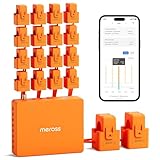
- SAFE & RELIABLE: Meross smart energy consumption monitor is ETL‑certified and compliant with the UL 61010 testing standard, ensuring safe and reliable home energy monitoring. Works with most US homes: single-phase 2-wire systems, single-split phase 3-wire systems, and 3-phase 4-wire Wye systems with earthed (TN or TT) neutral (no Delta). Easy clamp‑on design installs in minutes. Invert CT readings in the app—no physical flipping. PROTECTED BY 2-YEAR WARRANTY for worry-free use.
- TRACK ENERGY & CUT BILLS: Track power, voltage, current, and power factor within ±1% accuracy. Clear power usage and cost charts by minute/hour/day/month/year help you easily understand your energy use. Store up to 5 years of data and export hourly reports for deep analysis. Most users save 10–20% on energy costs by spotting energy hogs and getting accurate insights to cut their bills.
- 24/7 ENERGY MONITORING + SMART ALERTS: Real-time home energy monitoring from anywhere. Set custom alerts for unusual usage spikes and threshold breaches for total peace of mind. Catch issues early with no subscriptions, no cloud lock‑in, and no hidden fees — all built-in. Supports 2 main circuits (200A) + 16 branch circuits (60A), making it perfect for precise, circuit-level energy monitoring.
- MAXIMIZE YOUR SOLAR SAVINGS (HOME ASSISTANT): This solar energy monitor integrates with Home Assistant to detect solar surplus and automatically power EV chargers, water heaters, and other high‑use appliances. Stop wasting solar energy—use it yourself and cut your electricity bill faster. The perfect home energy monitor for solar homes.
- LOCAL DATA, FULL PRIVACY, NO SUBSCRIPTIONS: Connect seamlessly with Home Assistant for advanced energy automation. All energy data stays local—no cloud, no delays, no privacy concerns. Take full control of your home energy, reduce waste, and protect your privacy. Supports Open API and Web Control.
What Washington’s prices and data show
Washington’s average residential electricity price rose from 12.14 cents per kilowatt-hour in May 2024 to 13.67 cents in May 2025, a 12.6% year-over-year increase. The national average reported for May 2025 was 17.47 cents per kilowatt-hour, so Washington remained below it. These figures show that prices rose; they do not establish that data centers caused the increase. Reporting by Axios described several possible pressures, including grid investments, clean-energy spending, severe weather and wholesale power prices.
A state legislative auditor’s review offers a more specific check on the urban data-center claim. In 2024, four eligible urban data centers used about 427,000 megawatt-hours, approximately 1.4% of electricity sales by Puget Sound Energy and Seattle City Light. The Joint Legislative Audit and Review Committee concluded that these facilities’ effect on other customers was likely minimal during the period it studied. That finding is limited to the eligible urban facilities and review period; it does not settle the effect of future projects or all data centers in Washington. The JLARC review also describes rural and urban sales-tax exemptions. The urban program covers King, Pierce and Snohomish counties and can apply to servers and power infrastructure.
Washington’s data-center tax preferences changed in 2026
The 2026 Legislature narrowed both rural and urban data-center tax preferences by removing exemptions for refurbishments and replacement server equipment; the governor signed the change on April 1, 2026, according to JLARC. The review also found that the urban preference had not incentivized new data-center construction during the period examined. Tax breaks, electricity demand and household rates are separate policy questions: a tax preference can affect public revenue without proving that a data center raises other customers’ power bills.
Best Value

- SAFETY YOU CAN TRUST WITH UL CERTIFICATION: With Emporia Energy, your home energy monitoring is safe, reliable, and certified. The Emporia Vue is UL Listed, meaning it has met rigorous safety standards for electrical products in the U.S. and Canada. This certification ensures that every component has been thoroughly tested to prevent hazards, such as overheating, short-circuiting, or fire, offering you peace of mind as you manage your home’s energy consumption.
- INSTALLS IN CIRCUIT PANEL of most homes with clamp-on sensors. Supports Single phase, Single-split phase, and 2-wire systems. 3-wire systems; 3-phase, 4-wire Wye systems with earthed (TN or TT) neutral (no-Delta) are supported with an additional 200A sensor (sold separately).
- 24/7 ENERGY MANAGEMENT AND MONITORING: Automate, manage and control your home's real power anywhere, anytime to prevent costly repairs, conserve energy, and save costs. Monitor solar / net metering. PROTECTED BY A 1-YEAR WARRANTY.
- LOWER YOUR ELECTRIC BILL: Configure settings in the Emporia Energy App to automate energy management for time of use, peak demand, excess solar, and rewards programs. You can even see live reporting and invaluable savings opportunities instantly. Gauge real-time spending and get actionable notifications and automated energy management to help you reduce costs.
- REAL-TIME ENERGY DATA: REQUIRES 2.4 GHz WIFI WITH AN INTERNET CONNECTION to monitor energy use with iPhone / Android / Web app. Vue sensors collect energy data and are accurate from ±2%. The Vue is UL and CE Listed for your safety. 1 second data is only available in the app (when actively open) and retained 3 hours. Minute and hour data are retained in the cloud. 1 minute data is retained 7 days, 1 hour data is retained indefinitely. Export cloud data whenever you want in the app.
Why Washington is not a template for every region
Washington’s substantial hydropower resources and state clean-electricity and carbon-neutrality requirements shape its choices. Data centers are expanding in both rural and urban areas, while utilities plan generation and transmission investments to serve growth. A power system with significant hydro resources and Pacific Northwest market connections is not interchangeable with Texas or the Mid-Atlantic; each region has different supply, transmission constraints, weather exposure and rules for assigning costs.
Projects announced for a region are not the same as operating loads. A data-center plan can be delayed, reduced, moved or canceled. That makes actual consumption and completed grid connections more informative for ratepayers than a headline total of proposed capacity.
The administration’s answer: add supply and make hyperscalers pay
The Trump administration’s approach emphasizes expanding domestic power, streamlining permitting, keeping existing firm generation available and encouraging data-center companies to build, procure or buy power. Its preferred mix can include nuclear, gas, backup generation and renewables. The administration argues that large technology companies should pay for the generation and delivery infrastructure associated with their facilities rather than shifting those costs to households.
Windows Errors? Fix Them Before They Spread
Repair common Windows errors and clear accumulated junk for a smoother, more stable PC - no reinstall needed.Free scan · no reinstallOutdated Drivers Are Slowing You Down
One free scan finds every outdated or missing driver and matches the right update for your exact hardware.Free scan · exact hardware matchIn March 2026, the White House said Amazon, Google, Meta, Microsoft, OpenAI, Oracle and xAI signed its Ratepayer Protection Pledge. The administration says the companies agreed to negotiate separate rate structures, pay for associated power and infrastructure, and make backup generation available to grid operators. Those are important commitments to scrutinize, but a White House fact sheet is not proof that every customer is protected. The White House describes the pledge’s terms.
What ratepayers should look for in the pledge
The pledge is described as voluntary, and the details needed to measure its consumer impact remain consequential. The Associated Press reported that it was unclear whether it would generate genuine consumer savings. A promise to pay “associated” costs is only as protective as the agreements and utility-commission decisions that define those costs. Questions include which facilities and projects are covered, how dedicated and shared infrastructure is priced, what happens if a company cancels a project, and whether the company pays for reserve capacity and systemwide transmission as well as a direct interconnection. See AP’s report on the voluntary pledge.
What the counterevidence does—and does not—say
A 2026 academic working paper found that data-center growth was associated with modestly lower average U.S. retail electricity rates from 2015 through 2024. Its authors argue that economies of scale and use of existing system capacity can offset demand pressure. That is relevant counterevidence to the claim that data-center growth must raise average bills, but it is not a forecast of what will happen under the 2025 law. The study covers a historical period before the current AI buildout and does not establish how future grid costs will be allocated. The working paper is available on arXiv.
Quick Recap
What to watch as the effects emerge
- Project eligibility: whether projects claiming credits satisfy the IRS beginning-of-construction, continuity and other statutory requirements tied to the July 4, 2026 and December 31, 2027 dates.
- Power actually added: completed generation, storage and transmission, rather than announced projects alone, and how much firm capacity is available when data centers need it.
- Utility rate cases: how regulators assign the costs of interconnections, transmission, reserves and generation to large-load customers versus other ratepayers.
- Large-customer agreements: whether hyperscalers’ power and infrastructure commitments become specific, enforceable arrangements approved by relevant regulators.
- Washington demand: actual electricity use by operating facilities, alongside any effects of the state’s narrowed tax preferences on data-center siting and investment.
Product prices and availability are accurate as of the date/time indicated and are subject to change. Any price and availability information displayed on Amazon at the time of purchase will apply.
The Tool Desk
Outbyte PC Repair FREERepair Windows errors before they cause bigger problemsFix Now →Outbyte Driver Updater FREEScan for outdated or missing drivers - takes under a minuteDriver Scan →



