Do these 3 things before closing this tab:
1Fix the driver behind crashes, sound loss and screen glitches2Clear out junk files and repair common Windows errors3Scan for outdated or missing drivers - takes under a minuteSome links on this page are affiliate links: if you buy through them we may earn a commission, at no extra cost to you.
Yes—Trump’s China tariffs can cause damage that is difficult or impossible for some U.S. businesses to undo. A company may lose customers after stockouts or price increases, write off specialized tooling, or find that a product no longer earns enough to justify selling. But “irreversible” is a warning about possible business outcomes, not a proven verdict on most affected firms. The risk varies with each product’s tariff exposure, margins, supplier options, and customer relationships.
Tariffs are intended to protect U.S. industry, strengthen domestic production, and pressure trading partners. Those are policy goals, not guaranteed results. For an importer that depends on Chinese components or finished goods, the transition can bring higher costs well before a domestic or alternative supplier is ready. The danger is not just a larger customs bill: it is that the company may lose the customers, cash, or production capability needed to survive the transition.
This assessment is current to August 18, 2026. China-related duties are not one uniform rate. They can arise under different authorities, apply to different products and dates, and stack with other duties. A company must check the classification, origin, applicable tariff measures, exclusions, and entry date for each product rather than rely on a headline percentage.
Recommended Free Tools
How a tariff bill reaches a U.S. business
The U.S. importer of record generally pays customs duties to U.S. Customs and Border Protection. That does not determine who ultimately bears the economic cost. Depending on bargaining power and alternatives, a business may absorb the duty in lower margins, pass some of it on to customers, negotiate a lower price from its supplier, switch or redesign products, or stop selling them.
#1 Best Overall

- 【US to Australia Plug Adapter】- This Type i plug adapter is compatible in overseas countries such as Australia, New Zealand, China, Fiji, Samoa, Argentina, Cook Islands, Kiribati, Nauru, Papua New Guinea, Saint Vincent and Grenadines, Samoa, Solomon, Tajikistan, Timor Leste, Tonga, Tuvalu, Tokelau, Uzbekistan, Vanuatu etc
- 【5 in 1 Australia Power Plug Adapter】- This Australia Plug Adpater provides 2 standard Amercian outlets, Max Capacity Up to 3250 Watt (max 250 Volt, 13 A); 3 USB Ports(2 USB C+1 USB A Port) can charge up to 3.1A, 2 side design allowing you charge 5 devices simultaneously without blocking, ideal for cell phone, tablet, power bank and other electrical charger etc. Please read the Instructions before using the product.
- 【2 x Travel Adapter USB C】- This type i plug adapter added extra 2 USB C ports for your devices, the USB C port can charge up to 5V/3A. USB-A ports can charge up to 5V/2.4A Max, all USB Ports Output is 5V/3.1A, 15.5W max which is 30% faster than other travel adapter. With smart charging technology, the australia plug adapter can auto-detects your devices and can reach faster charging efficiency, perfectly fit for your iphone, ipad etc
- 【Lightweight & Compact】- This australia travel adapter is mini size: 2.2*1.1*1.5 in, 2.4 oz, it's easy to carry and use. Indicator can let you know the power of this australian power adapter is on/off. No need to carry extra plug adapter and for your traveling, can save your suitcase space. The travel plug with NO surge protection, it's absolutely a must have travel essentials and cruise ship must haves
- 【Note】- This australia plug adapter is not a voltage converter, is only compatible for 110V-250V wide voltage device, If you want to use your hair dryer, straightener, electric toothbrush or razor, they MUST support 110V-250V Dual Voltage, otherwise you may need a power voltage converter. For your safety, ensure that the current power DO NOT exceed the rated power of 1875W/15A, or it may cause short circuit and fire hazards.
For a retailer, the sequence might be: a tariff raises the landed cost of a product; the retailer raises its price or accepts a smaller margin; customers buy less or switch brands; and the retailer reduces orders. A manufacturer importing a low-cost but essential component may face a different choice: pay more, redesign the product, or risk interrupting its U.S. production line. Employees, suppliers, investors, and consumers can all be affected as firms adjust.
Tariffs can also affect prices beyond the directly taxed item. The Federal Reserve estimated that tariff changes through November 2025 raised core-goods prices by a cumulative 3.1% through February 2026 and made overall core personal consumption expenditures prices 0.8% higher. That model-based estimate covers broader tariff changes, not China tariffs alone; it should not be read as a measurement of the effect of China duties in isolation. The analysis also found that the November 2025 reduction in China tariffs offset part of the inflationary effect. Federal Reserve analysis of tariff effects on prices.
When temporary costs can become lasting harm
“Irreversible” is most useful as a description of specific business losses, not as a blanket forecast. A tariff may be reduced later, but that does not automatically restore what a company lost while adjusting.
- Customers and shelf space: Repeated price increases or missed deliveries can lead a retailer or distributor to replace a supplier. A later price cut may not win the account back.
- Tooling and engineering: Molds, dies, fixtures, product designs, and production know-how may be tied to a particular factory. Moving work can require new investment and technical changes.
- Qualification delays: A replacement component may not match the old one. Testing, certification, redesign, or regulatory review can take time, leaving production exposed in the meantime.
- Cash-flow pressure: Importers often pay higher landed costs while goods are in transit and before their own customers pay. A thin-margin company may run short of working capital before it can adjust prices or sourcing.
- Lost scale: If a product line is discontinued or orders fall, the remaining units may become more expensive to make or buy, reinforcing the decision to exit.
- Market access: Retaliation or other barriers can cost exporters customers in China. Competitors may take those relationships, and market share can be difficult to regain.
A Federal Reserve account of earlier trade disruptions illustrates why a substitute is not always a plug-in replacement: U.S. boat manufacturers had difficulty replacing Chinese motors because alternatives had different specifications, requiring changes to production lines. That is a historical example, not evidence that every manufacturer faces the same constraint. Federal Reserve research on trade disruptions.
Rank #2

- US to Australia Plug Adapter: This australia power plug adapter is compatible in overseas countries such as Australia, Argentina, New Zealand, China, Fiji, Cook Islands, Samoa, Kiribati, Nauru, Papua, New Guinea, Saint Vincent and the Grenadines Samoa, Solomon Islands, Tajikistan, Timor-Leste Tonga Tuvalu, Uruguay, Uzbekistan, Vanuatu etc
- 7 in 1 Type I Plug Adapter: This Australia travel adapter could turn 1 EU type I socket into 4 American type B outlets and 3 USB ports(1 USB C); 4-side design can charge 7 devices at a time without blocking, compatible with laptops, camera and more devices
- USB C PD 20W: TESSAN Australian Outlet Adapter is of 20W Max output, charging your phone, earphones and other devices; also has 2 USB A port to meet the charging needs of various devices
- Compact Size for Travel: With only 4.01oz lightweight design, portable size Australia travel adapter can easily fit in luggage, effectively saving your suitcase, backpack or handbag space; No surge protection, no cords, making it suitable for cruise ship use
- Not a Voltage Converter: It is not a voltage converter; Please make sure your devices especially your hair dryer, straightener, hair curler, electric toothbrush support 100V to 250V Dual Voltage; If your device is 110V or 125V only, you will need a voltage converter
Which businesses are most exposed?
Risk depends less on whether a business can say it “uses China” than on how much a particular product depends on Chinese content and how hard it is to replace. The most vulnerable companies tend to combine several of these conditions:
- China accounts for a large share of a product’s cost, with few qualified alternative suppliers.
- Margins are thin, or fixed-price contracts prevent quick price changes.
- Customers can readily switch brands or retailers can replace the product.
- Sales are seasonal, fashion-sensitive, or dependent on timely delivery.
- Production relies on China-based tooling, technical expertise, or tightly matched components.
- Supplier qualification takes a long time, or alternative factories lack capacity.
- The company relies on small parcels, low-value imports, or a concentrated supplier network.
- The business also depends on sales, distributors, or joint ventures in China.
These risks can arise in consumer electronics and accessories, toys, sporting goods, furniture, apparel and footwear, machinery, medical or laboratory equipment, auto parts, marine equipment, and retail and wholesale businesses. Small manufacturers may be especially exposed when a relatively inexpensive imported component is essential to a much larger U.S.-made product.
A July 2025 analysis cited by the Associated Press estimated $82.3 billion in direct tariff costs for U.S. employers under the policy configuration it examined, with retail and wholesale firms particularly exposed. That is a dated estimate for that scenario—not a current cost total or a forecast for every employer. Associated Press coverage of the estimate.
Who might benefit—and why the gains are not automatic
U.S. producers that compete directly with Chinese imports may gain customers or pricing power, particularly if they have unused capacity and can supply buyers quickly. Domestic suppliers, some logistics and customs businesses, and manufacturers that can shift production to another suitable country may also benefit from changes in sourcing.
Rank #3

- International Power Adapter:Equipped with 2 USA outlets, 1x USB-A (3A), 1x USB-C and 1x PD 35W USB-C and USB-C cable-Perfect for travel - use with cell phones, laptops & other devices anywhere in the world - Few Exceptions Listed below.
- Travel Adapter Worldwide: Designed by a Traveler and perfected for a Traveler-Ultra compact 2.7" X 1.4" X 3.7" & weighs less than 5 oz.-Travel Pouch included - Fast Quick Charge compatible devices such as Samsung Galaxy, Tablets and More.
- Built-in surge protection-protect your high electronics from voltage surges and spikes. Voltage indicator (110V or 220V). LED illuminates to indicate 110V in outlets or both LEDs will illuminate to indicate 220V. Note: This is not a voltage converter.
- Ceptics World-Way Includes 6 adapters-Europe (Type C), UK (Type G), US (Type B), Australia/China (Type I), Germany/France (Type E/F), Japan(Type A) compatible outlets in most of Europe, Asia and more. Other SWADAPT attachments sold separately.
- 2-Years Limited Warranty-Note: This Universal travel adapter is compatible with electronics and chargers for worldwide voltage (100-240V AC). It is not compatible with 110V AC only devices such as some hair clippers, hair dryers & curling irons etc.
But a protected producer can still lose if it depends on imported machinery, components, metals, or subassemblies that become more expensive. Building U.S. capacity may require capital, workers, suppliers, and time. A Federal Reserve model of a hypothetical 60-percentage-point increase in tariffs on Chinese imports found declines in U.S., Chinese, and global GDP, including a modelled 0.6% decline in global GDP. This is a scenario analysis, not a forecast of the tariff policy currently in force. Federal Reserve analysis of tariff trade-offs.
Why moving production out of China is not a quick fix
“China plus one” usually means adding a second source, not instantly transferring an entire supply chain. An alternative factory may lack capacity or consistent quality; tooling and engineering may remain in China; and suppliers in a new country may themselves use Chinese components. Changing the final assembly location does not automatically change the product’s legally relevant country of origin. Repacking goods or performing minimal processing in a third country should not be assumed to change origin or avoid duties. Customs classification and origin questions can be fact-specific and warrant qualified customs or legal advice.
Moving production can also involve new capital investment, higher labor or input costs, longer setup periods, and additional compliance work. A route through another country is not inherently a tariff solution: authorities may scrutinize transshipment, and new tariffs can apply to the alternative source. The Washington Post has reported concerns about Chinese goods being routed through Southeast Asia and about trade arrangements intended in part to deter transshipment. Washington Post reporting on supply-chain and transshipment risks.
The risk runs in both directions
China is both a source of inputs and a market for U.S. companies. Retaliatory tariffs, regulatory scrutiny, or shifts in consumer preference can hurt U.S. exporters even if they import little from China. A company may lose sales to domestic Chinese competitors or suppliers in other countries, and a tariff reduction may not reverse that loss.
Rank #4
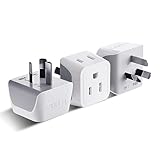
- DESIGNED FOR A TRAVELER: Our Australia power adapter is designed in the USA & includes Limited Lifetime Warranty - Return it for any reason and we will replace it with a new one with Ceptics Advantage!
- 2 in 1 Input Australia Travel Plug Adapter: Accepts the standard N American 2 and/or 3 prong flat pin plug (including polarized) - No Messy Universal Outlet
- ULTRA-COMPACT: Ceptics US to Australia, China plug adapter only measures 1.5 x 1.5 x 1.75" & Max Load Rating: 10A/250V, Fully Grounded also ensures safety!
- International Output Plug Type I Plug Adapter - Compatible in countries such as China, New Zealand, Australia adapter plug
- Note: This Australia plug adapter is compatible with only Dual Voltage Products & Electronics. Our New Zealand adapter is NOT a voltage converter and it will not convert voltage from 220V to 110V or vice versa. It is designed to work with travel electronics such as cell phones, laptops, battery chargers, tablets and other dual voltage electronics such as CPAP machines.
In an Associated Press report, nearly two-thirds of 254 surveyed companies said new tariffs had reduced expected revenue from their China operations in 2025. That finding describes the survey respondents; it is not a representative estimate of all U.S. companies. Associated Press report on the company survey.
Independent reader supportYour contribution helps us test, update, and keep practical guides available for everyone.How a business can measure its actual exposure
A useful assessment starts at the product and component level, not with a company-wide guess. For each import, calculate landed cost: product price plus applicable duties, customs fees, freight, insurance, brokerage, financing, and inventory carrying costs. Confirm product classification, country of origin, applicable authorities, effective dates, and any exclusions with current official information and qualified advisers where needed.
Then test whether the company can absorb or pass through the added cost. Review contracts, competitor prices, customer sensitivity, retailer terms, and the amount of margin available. Map direct suppliers and important lower-tier inputs, identify qualified alternatives and their capacity, and estimate how long a switch would take. Include tooling, testing, certification, redesign, freight, and the working capital needed during the transition.
Windows Errors? Fix Them Before They Spread
Repair common Windows errors and clear accumulated junk for a smoother, more stable PC - no reinstall needed.Free scan · no reinstallCrashes, No Sound, or Screen Glitches?
Random freezes, missing sound and display glitches usually trace back to one bad driver. Find and replace yours safely.Free scan · under a minutePractical steps include qualifying backup suppliers before an emergency, reviewing tariff-adjustment and force-majeure clauses, documenting origin, modelling several price and demand scenarios, and checking inventory needs against cash and warehouse capacity. Carrying extra stock can buy time, but it can also tie up cash, become obsolete, or leave the business holding goods if the policy changes.
Best Value

- Universal Plug Compatibility: Type A (US / Canada / Japan / China), Type C (EU), Type G (UK / Singapore), and Type I (Australia).
- Power 5 Devices at Once: Includes 1 AC outlet, 2 USB-A ports, and 2 USB-C ports. The USB ports support up to 20W total output or 15W max when shared. A single USB-C port delivers up to 20W and charges iPhone 16 to 50% in 28 minutes. The maximum current is 6A.
- Exceptionally Compact: Measuring just 3.39 × 1.97 × 0.98 in (86 × 50 × 25 mm), it has a credit card-sized footprint and is 43% smaller than similar models. See image 4 for the size comparison. Foldable and retractable pins make it even easier to carry.
- 2-Pin to 2-Pin Connection: The safe 2-pin design helps reduce the risk of electric shock for worry-free travel. The AC outlet does not support 3-prong grounded plugs, including EU Schuko, UK 3-pin, or grounded laptop chargers.
- What You Get: 1× Anker Nano Travel Adapter (5-in-1, 20W), welcome guide, 18-month warranty, and our friendly customer service.
Customs brokers and trade-compliance specialists can help with entries, classification, and documentation; software can help track costs and supplier data. Neither a broker nor a platform removes the importer’s duty or guarantees a correct origin determination. Do not treat a third-country routing arrangement as a substitute for a lawful origin analysis.
What would show that harm is truly lasting?
No single price increase or company statement proves that tariffs caused permanent damage. More persuasive evidence would include closures or bankruptcies, permanent product-line exits, sustained employment or capital-spending reductions, lasting export losses in China, or a durable shift to higher-cost suppliers. Researchers and investors should also examine lead times, supplier concentration, business formation and survival, and tariff collections or refund liabilities.
Attribution matters: weak demand, exchange rates, freight costs, or a broader downturn can hurt a firm at the same time as tariffs. The U.S. International Trade Commission is examining possible effects of revoking China’s permanent normal trade relations status, including production, prices, sourcing, and industry impacts. As of August 18, 2026, its stated expected report date of August 21 was still in the future; the investigation concerns a possible policy change, not a settled new tariff regime. USITC investigation details.
The business case for concern is therefore strongest at the firm level: a company with thin margins, no qualified substitute, and customers willing to switch can be pushed into a decision it cannot later reverse. For other businesses, tariffs may be manageable, temporary, or even create an opportunity. The outcome depends on the product, the supply chain, the market, and how much time and cash the company has to adapt.
Quick Recap
Product prices and availability are accurate as of the date/time indicated and are subject to change. Any price and availability information displayed on Amazon at the time of purchase will apply.



