The Tool Desk
Outbyte Driver Updater FREEFix the driver behind crashes, sound loss and screen glitchesFind Drivers →Outbyte PC Repair FREERepair Windows errors before they cause bigger problemsFix Now →Some links on this page are affiliate links: if you buy through them we may earn a commission, at no extra cost to you.
Most people do not replace an iPhone because they suddenly need AI. They replace it because the old phone has become inconvenient: the battery no longer lasts, the screen is damaged, storage is full, performance feels slow, or a trade-in promotion makes a replacement seem affordable.
AI is part of Apple’s sales message, but the stronger purchase case is usually practical. The old phone creates the problem; newer hardware solves it; financing and trade-in programs reduce the apparent cost; and Apple’s ecosystem makes switching brands less appealing.
What “the real reason” actually means
There are several different questions hidden inside the claim that people buy new iPhones:
Recommended Free Tools
- Why does someone replace a working phone?
- Why choose an iPhone instead of Android?
- Why buy this year’s iPhone instead of an older model?
- Why do some people upgrade annually while others keep a phone for four or five years?
- What does Apple advertise, and what do buyers say actually motivated them?
Those questions have different answers. The Apple ecosystem may explain why someone stays with iPhone. A failing battery may explain why they upgrade now. A carrier promotion may explain why they do not wait another year.
#1 Best Overall

- 6.1" Super Retina XDR OLED, HDR10, 800 nits (HBM), 1200 nits (peak), 2532x1170px at 460ppi, 4005mAh Battery
- 8GB RAM, Apple A18 6-core CPU (2 performance + 4 efficiency cores), Apple GPU 4-core, 16‑core Neural Engine
- Rear camera: 48MP, f/1.6, wide, Front Camera: 12MP, f/1.9, wide, iOS 18.3.1, upgradable to iOS 18.5
- Connectivity: Global 4G LTE, Sub-6 GHz 5G, LTE, Wi-Fi 6, Bluetooth 5.3, NFC, USB-C, Wireless Charging (7.5W). (does not have mmWave 5G or MagSafe or physical SIM card) - Dual eSIM Only
- Unlocked for freedom to choose your carrier. Compatible with both GSM & CDMA networks. The phone is unlocked to work with all GSM Carriers & CDMA Carriers Including AT&T, T-Mobile, Verizon, Straight Talk., Etc.
What the available data says
A 2025 report citing CIRP data found that only 13% of U.S. iPhone buyers cited new features—including improved cameras, displays, or performance—as their reason for upgrading. The category was broader than AI, so it would be inaccurate to describe this as “only 13% upgraded for AI.” It indicates that new features as a group were not the dominant reported reason.
That report also described replacements involving phones that still technically worked but had damaged screens, aging batteries, or disappointing performance. 9to5Mac’s coverage of the CIRP findings provides the relevant context.
A separate SellCell survey of U.S. iPhone owners who planned to upgrade to the iPhone 17 found that 53.2% named battery life as a reason, while 7.1% cited AI and software enhancements. This was a pre-launch intention survey, not a record of completed purchases, so it should be treated as directional evidence rather than a universal sales breakdown. SellCell’s survey results show the distinction.
Windows Errors? Fix Them Before They Spread
Repair common Windows errors and clear accumulated junk for a smoother, more stable PC - no reinstall needed.Free scan · no reinstallOutdated Drivers Are Slowing You Down
One free scan finds every outdated or missing driver and matches the right update for your exact hardware.Free scan · exact hardware matchThe broader conclusion is not that hardware does not matter. It is that buyers tend to value improvements they can feel every day more than abstract or future-facing capabilities.
1. Battery degradation makes a phone feel old
Battery decline is one of the clearest upgrade triggers. A phone can remain fast enough for messaging, browsing, and streaming while becoming frustrating because it needs charging several times a day.
That matters especially during travel, commuting, navigation, photography, gaming, or long workdays. Battery anxiety changes how people use the device: they carry a charger, avoid certain apps, or worry about reaching the evening with power remaining.
Before buying a new phone, check Settings → Battery → Battery Health & Charging. The exact wording can vary by iOS version and model. If battery health is the only serious problem, a battery replacement may be more economical than replacing the entire phone. Apple provides repair and service information at Apple’s iPhone repair page.
Quick wins for a faster PC:
Repair Windows errors before they cause bigger problemsFix Now →Scan for outdated or missing drivers - takes under a minuteDriver Scan →Clear out junk files and repair common Windows errorsFree Scan →Rank #2

- This pre-owned product is not Apple certified, but has been professionally inspected, tested and cleaned by Amazon-qualified suppliers.
- There will be no visible cosmetic imperfections when held at an arm’s length. There will be no visible cosmetic imperfections when held at an arm’s length.
- This product will have a battery which exceeds 90% capacity relative to new.
- Accessories will not be original, but will be compatible and fully functional. Product may come in generic Box.
- This product is eligible for a replacement or refund within 365 days of receipt if you are not satisfied.
A replacement becomes easier to justify when the battery is poor and the phone also has a cracked display, limited storage, weak performance, or expensive repair needs. Battery degradation alone is not proof that an upgrade is financially sensible.
2. Damage changes the repair calculation
Many upgrades are responses to accidents rather than excitement about a new product. Common triggers include:
- A cracked display that makes the phone unpleasant or unsafe to use.
- A damaged charging port.
- A broken camera.
- Water damage.
- Face ID or button failures.
- A repair quote that approaches the phone’s resale value.
There is no universal rule that replacement is cheaper than repair. The answer depends on the model, warranty or AppleCare coverage, local labor costs, parts availability, and the number of failing components.
A useful rule of thumb is:
| Situation | Usually worth considering |
|---|---|
| Only the battery is weak | Battery replacement |
| One repair is needed and the phone is otherwise current | Repair |
| Several components are failing | Compare repair cost with replacement |
| An older phone has little resale value | Repair, keep it, or consider refurbished |
| A promotion offers unusually high trade-in credit | Compare the promotion with repair and ownership costs |
3. Performance matters when users feel it
Most people do not upgrade because a benchmark score increased. They upgrade when apps open slowly, the camera takes too long to process a photo, games stutter, multitasking feels constrained, or demanding apps no longer perform well.
Free tools Windows power users keep installed
One-click scans. No signup required.
Performance matters differently to different owners:
- People who need performance: gamers, video editors, photographers, and users of demanding professional apps.
- People who want headroom: buyers trying to keep a phone useful for several more years.
- People unlikely to notice: users whose main activities are messaging, browsing, streaming, and social media.
Counterpoint reported that iPhone Pro users replace their phones faster than base-model users, consistent with a stronger interest in cameras, performance, and premium features. It also reported that 48% of surveyed iPhone owners had previously used Android, showing that the market includes switchers as well as repeat iPhone buyers. These findings describe Counterpoint’s surveyed population, not every iPhone owner. Read Counterpoint’s analysis.
4. Cameras are useful when they solve a real problem
The iPhone is often a family camera, travel camera, video camera, scanner, and social-media tool. Camera improvements can therefore have practical value, especially for people who regularly photograph children, pets, events, or moving subjects.
Rank #3
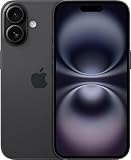
- This pre-owned product is not Apple certified, but has been professionally inspected, tested and cleaned by Amazon-qualified suppliers.
- There will be no visible cosmetic imperfections when held at an arm’s length. There will be no visible cosmetic imperfections when held at an arm’s length.
- This product will have a battery which exceeds 90% capacity relative to new.
- Accessories will not be original, but will be compatible and fully functional. Product may come in generic Box.
- This product is eligible for a replacement or refund within 365 days of receipt if you are not satisfied.
Relevant improvements include:
- Better low-light photography.
- Faster capture of moving subjects.
- Improved stabilization.
- More useful optical zoom.
- Better front-facing video calls.
- Improved microphones and video processing.
- More storage for photos and video.
But a camera specification is not automatically a financial reason to upgrade. Many owners rarely use advanced zoom or professional video features. A photographer or creator may rationally value a Pro model; someone who mainly takes occasional snapshots may not notice enough difference.
For the iPhone 17, Apple lists a 48MP Dual Fusion camera system, an A19 chip, ProMotion display technology, and up to 30 hours of video playback. Those are Apple’s stated specifications and battery claim, not independent test results. See Apple’s iPhone 17 buying page.
5. Storage pressure quietly forces upgrades
Storage becomes a purchase trigger when a phone cannot comfortably record video, download media, install large games, or retain years of photos. Repeatedly deleting content is a form of friction, even if the phone still works.
Before buying more storage, check how much space is actually being used. Cloud storage, transferring old video to a computer, deleting duplicate files, or removing downloaded media may solve the problem.
When comparing a new phone, calculate the cost over the period you expect to own it. Apple’s U.S. listing showed the iPhone 17 at $799 for 256GB and $999 for 512GB before applicable promotions or trade-in credit. The unlocked “connect later” price and carrier-activation price can differ. Prices and offers can change, so confirm them on Apple’s current page.
What’s actually slowing this PC down?
Pick the symptom - the matching free tool is one click away.
6. Trade-ins and carrier credits change the psychology of price
The financial engine behind many upgrades is not simply the phone’s sticker price. It is the way that price is presented:
- A monthly installment instead of a large upfront payment.
- Trade-in credit for the existing phone.
- Carrier bill credits spread over an installment term.
- A promotional “free” or heavily discounted device.
- An upgrade program that turns replacement into a recurring payment.
Apple’s U.S. pages currently list the iPhone 17 from $799 and show trade-in credits of up to $695, depending on the device and condition. The general shopping page also advertises carrier credits of up to $800 to $1,100 in some circumstances. None of these figures is an unconditional discount. Eligibility, model, condition, carrier, plan, and promotional terms matter. Check Apple’s current iPhone offers.
Rank #4
- This pre-owned product is not Apple certified, but has been professionally inspected, tested and cleaned by Amazon-qualified suppliers.
- There will be no visible cosmetic imperfections when held at an arm’s length. There will be no visible cosmetic imperfections when held at an arm’s length.
- This product will have a battery which exceeds 90% capacity relative to new.
- Accessories will not be original, but will be compatible and fully functional. Product may come in generic Box.
- This product is eligible for a replacement or refund within 365 days of receipt if you are not satisfied.
A “free” phone may require a specific unlimited plan, a new line, a qualifying trade-in, and continued service for the full credit period. If you leave early, remaining credits may stop. Compare the total 24- or 36-month cost of the plan and phone with the cost of buying directly.
Monthly pricing can also hide the cost of replacing a phone before it is paid off. Include taxes, AppleCare, financing payments, trade-in value, lost resale value, and any plan requirements in the calculation.
7. Annual upgraders are not typical buyers
People who upgrade every year or nearly every year may be enrolled in Apple’s iPhone Upgrade Program, highly sensitive to camera or performance changes, or willing to pay for the newest model as a hobby or work expense. Some also sell or trade in phones early, while resale value remains relatively strong.
Apple’s iPhone Upgrade Program is a 24-month, 0% APR arrangement that includes AppleCare+ and allows an upgrade after the equivalent of 12 payments, subject to program conditions. Apple’s listed iPhone 17 configuration showed a payment of $42.41 per month for 24 months. That arrangement can suit someone who deliberately wants a predictable upgrade cycle, but it is not automatically the cheapest way to own a phone for four or five years. Review Apple’s program terms.
CIRP reporting in 2025 said the average age of retired iPhones had increased over time, citing durability, higher prices, longer installment terms, and smaller incremental upgrades as factors. That supports a more nuanced picture: some enthusiasts upgrade frequently, while many ordinary owners keep phones longer. See the CIRP discussion.
Independent reader supportYour contribution helps us test, update, and keep practical guides available for everyone.8. The ecosystem explains staying with iPhone
For many owners, the choice is not simply “new iPhone or old iPhone.” It is also whether to leave a network of devices, services, accessories, and habits that already work together.
Switching costs can include:
- iMessage and FaceTime habits.
- AirDrop.
- Apple Watch compatibility.
- AirPods integration.
- iCloud Photos and backups.
- Family Sharing and Find My.
- Existing accessories.
- Stored passwords, purchases, subscriptions, and familiar settings.
This ecosystem may explain why someone chooses an iPhone rather than Android. It does not necessarily explain why they upgrade this year. Battery wear, storage pressure, damage, and promotional timing usually provide the immediate reason.
Best Value

- The large 6.9-inch display combines ProMotion 120Hz technology with advanced color calibration, giving movies, games, and productivity apps a spacious, crisp, and fluid visual experience that’s ideal for multitasking or immersive media consumption.
Apple promotes trade-in, financing, and an easier switching process on its shopping pages, while its upgrade program reduces the friction of remaining an iPhone customer. See Apple’s upgrade process.
9. When AI is a legitimate reason
AI should not be dismissed entirely. A buyer may genuinely value writing tools, image editing, transcription, translation, notification summaries, or other Apple Intelligence features. AI may also be tied to a newer processor, making it part of the reason to choose one model over another.
But AI is a broad label, and the experience is not identical on every device. Availability can vary by model, iOS version, language, and region. Features may also arrive at different times. Confirm the specific feature and device support before treating AI as a purchase reason.
Do these 3 things before closing this tab:
1Fix the driver behind crashes, sound loss and screen glitches2Clear out junk files and repair common Windows errors3Scan for outdated or missing drivers - takes under a minuteApple’s slower AI rollout was previously described as a potential reason the company would need to rely more heavily on hardware improvements such as processors, cameras, displays, and battery life. Axios reported on that upgrade-cycle issue.
The defensible conclusion is not “nobody buys an iPhone for AI.” It is that AI has not emerged as the dominant stated reason in the cited surveys. For many owners, it is a supporting feature or future-proofing argument rather than the problem that forces a purchase.
10. A practical keep-or-upgrade test
Upgrade now if:
- The battery is poor and replacement is uneconomical or inconvenient.
- The display, camera, charging port, or another major component is damaged.
- The phone no longer supports software or features you actually need.
- Storage is repeatedly full.
- You regularly use demanding camera, gaming, video, or productivity features.
- A carrier promotion provides substantial credit without requiring an unattractive plan.
- You can recover meaningful value from the current phone.
Keep the current phone if:
- It remains fast enough for normal use.
- A battery replacement would solve the main complaint.
- You do not need better cameras, storage, display, or connectivity.
- AI is the only meaningful reason you can identify.
- You are reacting mainly to fear of missing out.
- The carrier deal requires a more expensive plan than you want.
- Your current phone still has strong resale value and a later generation may offer a more substantial improvement.
Consider alternatives
- Battery or screen repair.
- A previous-generation iPhone.
- Apple Certified Refurbished.
- A lower-cost current model such as the iPhone 17e, listed by Apple from $599 in the U.S. shopping page.
- Buying unlocked instead of accepting carrier financing.
- Switching to Android if Apple-specific ecosystem features are not important.
Apple’s Certified Refurbished inventory changes frequently, but it can offer a lower-cost route to Apple hardware with Apple’s support framework. Check current refurbished availability.
The bottom line
The real reason people buy new iPhones is usually not one headline feature. It is the combination of an old phone that has become inconvenient, tangible improvements in battery life, cameras, storage or performance, and a trade-in or financing path that makes replacement feel timely.
AI may matter to a smaller group of users, particularly those who know they will use specific features. For everyone else, the rational question is simpler: What problem does the new phone solve, and is replacing the whole phone cheaper than repairing or keeping the one you already own?
Quick Recap
Product prices and availability are accurate as of the date/time indicated and are subject to change. Any price and availability information displayed on Amazon at the time of purchase will apply.



