Some links on this page are affiliate links: if you buy through them we may earn a commission, at no extra cost to you.
The memory shortage is real, but it does not mean every device is about to vanish from store shelves. AI data centers are drawing heavily on high-bandwidth memory, server DRAM and enterprise storage. Because suppliers are steering investment and available capacity toward those higher-value products, ordinary buyers face a more familiar squeeze: higher prices, fewer attractive configurations and less choice about when or whether to upgrade.
That pressure reaches beyond desktop RAM. It can affect laptop and phone memory, graphics cards and SSDs, though not all at once or for the same reasons. For household budgets, the practical risk is paying more for a new device—or discovering that the affordable model has less memory and cannot be upgraded later.
The short version
- AI infrastructure needs large amounts of HBM, server memory and enterprise SSD capacity. Suppliers are giving those products priority.
- That does not make HBM interchangeable with the DDR5 in a home PC. The connection is competition for manufacturing investment, capacity and packaging, alongside stronger demand for other kinds of server memory.
- Contract prices for DRAM and NAND surged in the first half of 2026. Forecast price growth slowed for the third quarter, but that is not proof that supply has recovered.
- Consumers are more likely to see higher prices, lower memory or storage configurations, and fewer good-value choices than universal stockouts.
These price figures describe industry contract markets, not a guaranteed increase at a particular retailer. Retail prices can move later, faster or more slowly depending on inventory, contracts, promotions and local currency.
“RAM” is not one product
Memory shortages are often described as if every chip were interchangeable. They are not. Different memory types serve different devices and have distinct production, packaging and supply constraints.
#1 Best Overall

- [Color] PCB color may vary (black or green) depending on production batch. Quality and performance remain consistent across all Timetec products.
- DDR3L / DDR3 1600MHz PC3L-12800 / PC3-12800 240-Pin Unbuffered Non-ECC 1.35V / 1.5V CL11 Dual Rank 2Rx8 based 512x8
- Module Size: 16GB KIT(2x8GB Modules) Package: 2x8GB ; JEDEC standard 1.35V, this is a dual voltage piece and can operate at 1.35V or 1.5V
- For DDR3 Desktop Compatible with Intel and AMD CPU, Not for Laptop
- Guaranteed Lifetime warranty from Purchase Date and Free technical support based on United States
| Type | Common uses | Why it matters here |
|---|---|---|
| DDR4 and DDR5 DRAM | Desktop PCs, laptops and servers | Directly relevant to PC upgrades and system configurations; older DDR4 can have its own availability dynamics. |
| LPDDR | Phones, tablets and thin laptops | Mobile-device makers can face tighter allocations and higher component costs. |
| HBM | AI accelerators and other high-performance computing systems | It is stacked memory for specialized systems, not a substitute for a PC memory module. Its demand draws suppliers and advanced packaging toward AI products. |
| GDDR | Graphics cards and gaming systems | Graphics memory is a separate product category; supply pressure may affect GPU designs or prices, but does not explain every graphics-card shortage. |
| NAND flash | SSDs, phone storage, USB drives and memory cards | NAND is storage, not RAM. Enterprise SSD demand links it to the data-center buildout, while its supply and pricing remain distinct from DRAM. |
| RDIMM | Servers | Registered server memory is important to data centers and competes for supplier attention and capacity. |
A shortage in one category does not mean another category has run out. The broader concern is that suppliers have economic reasons to prioritize AI and server products while the entire memory market cannot quickly add capacity.
How AI demand reaches consumer electronics
AI data centers use HBM beside accelerators, but they also need substantial amounts of conventional server memory and storage. As AI inference expands—the everyday process of running trained models, not just training them—demand extends beyond HBM into broader server-memory categories. TrendForce says suppliers have been reallocating capacity toward HBM and server applications.
The chain from data centers to a household purchase is indirect but consequential:
PC Slower Than It Used to Be?
A free scan shows the junk files, broken settings and background clutter dragging Windows down - then fixes them in one click.Free scan · Windows 10 & 11Outdated Drivers Are Slowing You Down
One free scan finds every outdated or missing driver and matches the right update for your exact hardware.Free scan · exact hardware match- Cloud companies and other large buyers order AI servers, accelerators, server DRAM and enterprise SSDs.
- These customers can make large commitments, often with longer-term agreements, and the products can command better returns for suppliers.
- Memory makers direct investment, production planning and scarce packaging capacity toward those orders.
- Consumer and device makers may face higher input costs, smaller allocations or less certainty about future supply.
- Brands choose how to respond: raise prices, reduce a configuration, absorb some cost, adjust production or delay a product.
This is not a claim that a wafer of HBM could simply be turned into a consumer DDR5 kit. Product design, manufacturing processes and packaging differ. The pressure comes from competition for resources and supplier priorities, as well as direct demand for conventional server memory and enterprise storage.
The price surge—and what a slowdown does not mean
TrendForce estimated that conventional DRAM contract prices rose about 93–98% quarter over quarter in Q1 2026. In a forecast published on March 31, it projected a further 58–63% increase in Q2. These are estimates of contract pricing between suppliers and buyers, not a promise that retail DIMMs, laptops or phones rose by those percentages. TrendForce’s June update and its March forecast provide the market context.
For NAND, TrendForce forecast contract prices up 70–75% quarter over quarter in Q2. That matters to SSD and phone-storage costs, but NAND is not RAM and the two price series should not be conflated.
Later Q3 reporting put expected DRAM price growth at roughly 13–18% and NAND growth at roughly 10–15% quarter over quarter. The slower pace was linked to affordability limits, weaker consumer demand and inventory effects—not a sudden return to abundant supply. Tom’s Hardware’s summary of the Q3 outlook makes that distinction explicit.
Do these 3 things before closing this tab:
1Repair Windows errors before they cause bigger problems2Fix the driver behind crashes, sound loss and screen glitches3Clear out junk files and repair common Windows errorsRank #2

- ✅【DDR3 8GB Kit 1333MHz UDIMM RAM 】PC3-10600, DDR3 1333MHz, Unbuffered, Dual Rank, Non ECC, 1.5V CL9, apply for AMD, Intel, Mac system
- ✅【Advanced Chips】All DDR3 8GB RAM are high quality ram memory module. Professional company, high-quality materials, upgrade designed for DDR3 UDIMM compatible desktop
- ✅【Stable and Durable】8GB DDR3-1333MHz DIMM RAM, 100% tested for stability, durability and compatibility. All PC3-10600 modules undergo quality assurance testing to ensure dependable and reliable performance
- ✅【Increases System Performance】PC3 8GB ram will speed up loading times, improve system responsiveness, and increase your system's ability to handle greater workloads. Warm tips: Please make sure your desktop model meets 2x4GB 1333 10600 kit, you can also contact us to make sure
- ✅【Lifetime Service】Lifetime warranty, free technical support. You can also contact us to ensure compatibility. Any questions, feel free to contact us, we are always be with you
When buyers stop buying because prices are too high, prices can rise more slowly even while supply remains tight. That is a bad bargain for consumers, not necessarily a healthy market. Watch availability, device specifications and total prices as well as headline price-growth rates.
Where households may notice it first
Desktop PCs: upgrades and prebuilt prices
Desktop builders may see more expensive DDR4 or DDR5 kits, less appealing high-capacity deals and a larger premium for 32 GB or 64 GB configurations. Prebuilt prices can also rise if manufacturers pass component costs through. Budget systems can be especially sensitive because memory makes up a larger share of a low-cost build.
Retail prices will not necessarily track contract prices one for one. A shop may still have older inventory or a promotion; another may face a restocking increase. A steep markup is not automatically evidence that every supplier has run out, and a temporary sale does not show that the broader market has normalized.
Laptops: the cost of choosing the right capacity upfront
Higher memory costs can lead manufacturers to charge more for 32 GB or 64 GB models, ship lower configurations or absorb costs elsewhere. Some laptops solder memory to the motherboard, making a lower-capacity purchase permanent. If you keep a laptop for years, check whether its RAM is upgradeable, the maximum supported capacity and the price difference between configurations before paying.
What’s actually slowing this PC down?
Pick the symptom - the matching free tool is one click away.
TrendForce has warned that memory costs could weigh on notebook pricing and shipments. Its March outlook also describes pressure on device makers as server demand takes priority.
Phones and tablets: less generous upgrades at a given price
Phones use LPDDR, not desktop DIMMs. Mobile makers can respond to rising memory costs with higher prices, fewer memory or storage upgrades for the same money, more cautious production plans, or software changes that use memory more efficiently. Budget models may have less room to absorb higher component costs, though no single response applies to every brand or device.
TrendForce has reported pressure on smartphone makers from higher memory costs, while its April mobile-memory report addresses mobile DRAM and production implications. Check the specific model’s memory and storage configuration rather than assuming a new generation will offer the same capacity at the same price.
Rank #3
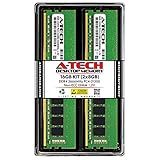
- Compatible with select DDR4 Desktop computers + Easy to install at home, no expertise required
- Maximize your system's performance, boost loading speeds and multitask with ease
- Backed by A-Tech's Lifetime Warranty + Friendly tech support team available to help before and after your purchase
- 16GB RAM Kit ( 2 x 8GB Modules ) | DDR4 DIMM 288-Pin | Speeds up to 2666MHz (2667MHz), PC4-21300 / PC4-2666V
- NON-ECC Unbuffered | 1Rx8 or 2Rx8 - Single or Dual Rank | JEDEC DDR4 standard 1.2V
Gaming PCs and graphics cards: three different memories
A gaming PC can contain DDR4 or DDR5 system RAM, GDDR memory on a graphics card, and—if used to access cloud services—none of the HBM that sits beside a data-center accelerator. Those categories should not be blurred. A tighter memory market could contribute to higher graphics-product costs or more conservative VRAM configurations, but GPU prices also depend on chip supply, packaging, board components, demand and product strategy.
The Tool Desk
Outbyte Driver Updater FREEFix the driver behind crashes, sound loss and screen glitchesFind Drivers →Outbyte PC Repair FREERepair Windows errors before they cause bigger problemsFix Now →Recent reporting described graphics-memory demand and allocation as uneven, rather than showing that every GPU is constrained for the same reason. The Q3 market summary notes that some expected GDDR7 demand had not materialized as anticipated. That is a reason to avoid treating the whole graphics market as a simple extension of HBM demand.
SSDs and removable storage: the NAND side
AI data centers buy enterprise SSDs, which use NAND flash. Strong enterprise demand can tighten the broader NAND market and put pressure on client SSDs, phone-storage tiers, memory cards and USB drives. Yet this remains a separate supply story from DRAM. Some PC makers may also have inventory that temporarily cushions client-SSD prices, even as enterprise demand stays strong. TrendForce’s NAND outlook and the later Q3 report describe those different pressures.
If a computer feels slow, buying a larger SSD will not fix a shortage of system RAM, and more RAM will not expand storage space. Diagnose the problem before spending money.
What about cars, consoles and household devices?
It is plausible that automotive and industrial buyers could feel pressure if legacy or specially qualified memory becomes difficult to source. Vehicle components can have long validation cycles, so a different part may not be an immediate replacement. But the evidence here supports a risk, not a claim that the current shortage has caused a particular carmaker to stop production.
The same caution applies to consoles, TVs and appliances. They contain memory, but exposure depends on each product’s components, supplier contracts, inventory and release schedule. For now, the clearest direct exposure is in PCs, laptops, smartphones, server memory and enterprise SSDs. Graphics products and consumer storage have meaningful but more product-specific exposure; broad claims that every appliance or car is next go beyond the evidence.
Independent reader supportYour contribution helps us test, update, and keep practical guides available for everyone.Why manufacturers cannot fix it overnight
Memory supply does not respond like a factory adding another shift on an ordinary assembly line. New cleanrooms and fabs take years to build and equip. Output also depends on specialized tools, trained staff, water, electricity, packaging, testing and customer qualification. HBM adds advanced stacking and packaging constraints; more wafer capacity alone will not instantly turn into finished HBM.
Rank #4

- 【DDR3 2x 4GB 1600MHz 12800 Udimm Desktop RAM Card】DDR3-1600, PC3-12800, Unbuffered, Dual Rank, Non ECC, 2Rx8, 240-Pin, 1.5V, CL11 memoria ram
- 【Advanced Chips】All DDR3 4GB 12800 ram card are high quality ram memory module, apply for desktop computer AMD, Intel, Mac system
- 【Stable and Durable】8GB DDR3-1600MHz Udimm, 100% tested for stability, durability and compatibility. We test all rams before shipment to ensure all PC3-12800U ram card works stably and normally
- 【Increases System Performance】PC3 8GB ram will empower your computer to achieve faster loading times, system responsiveness, increase your system's ability to handle greater workloads. Note: Please make sure your desktop computer meets PC3 12800 1600 kit
- 【Lifetime Service】Compatible with Macbook, iMac, HP, Dell, Lenovo, ASUS, Acer, etc. Lifetime warranty, free technical support. Any questions, feel free to contact us, we will reply within 24hrs
Process improvements can raise the number of bits made from existing capacity, but they are incremental and may not help every product at the same time. Suppliers also remember the 2022–2023 downturn, when excess supply hurt prices; they have less reason to flood a lower-margin market without durable demand. TrendForce said manufacturers were relying mainly on process migration and optimization in 2026, and projected that meaningful new capacity would be unlikely until late 2027 or 2028. Those dates are forecasts, not guaranteed milestones. See TrendForce’s capacity outlook.
SK hynix CEO Kwak Noh-jung told Reuters in July that 2027 could be the industry’s worst shortage year and that demand could exceed the company’s supply capacity beyond 2030. That is a warning from one major supplier’s chief executive, not a settled forecast for the entire industry. It should be taken seriously, but not as certainty. The report and attribution are here.
What could ease the squeeze—and what could prolong it
The shortage could ease if cloud companies slow capital spending, customers delay server purchases, AI workloads become more memory-efficient, or new manufacturing and packaging capacity comes online sooner than expected. Weaker consumer demand can also reduce pressure, though consumers may experience that relief as fewer purchases or poorer value rather than a healthy supply rebound.
It could persist if AI inference expands, server deployments continue, long-term agreements reserve capacity, and suppliers keep favoring higher-return products. Demand can also shift between memory types: less need for one accelerator product does not automatically erase demand for conventional server DRAM or enterprise SSDs. The balance depends on actual orders, output and inventories—not just AI headlines.
Should you buy RAM or a device now?
There is no universal “buy now” answer. Base the decision on an actual need, the device’s upgrade path and the total price—not fear of a headline.
- Consider buying an upgrade sooner if your current machine is genuinely memory-constrained, you have confirmed the required part, and a reputable seller has a reasonable offer. High-capacity or hard-to-find legacy memory may be more exposed to future price changes, but that is not a reason to buy capacity you will not use.
- Consider waiting if your current system works, the purchase is speculative, or the target product has a large configuration premium. Weak consumer demand can bring promotions, though no one can promise when or how much.
- For a laptop, decide capacity before purchase if memory is soldered. A cheap base configuration may cost more in the long run if it cannot handle your workload and cannot be upgraded.
- Compare the whole device, including warranty, processor, storage and upgradeability. A separately priced RAM kit is only one part of the cost of a functioning system.
Do not panic-buy. Rushed purchases can mean the wrong generation, incompatible modules, mismatched kits, an unnecessary capacity premium, or a questionable marketplace listing. Retail conditions vary, and the shortage does not make every listing fair or authentic.
RAM upgrade checklist
- Confirm the required memory type, such as DDR4 or DDR5; do not assume generations fit the same slot.
- Check the computer’s maximum supported capacity and the number of available slots.
- Find out whether memory is soldered or replaceable; laptop form factors such as SO-DIMM differ from desktop DIMMs.
- Match supported speed and voltage, and prefer a matched kit for multi-channel operation.
- Check whether the system requires ECC, registered RDIMM or unbuffered memory. Server modules are not interchangeable with ordinary desktop RAM.
- Consult the device or motherboard maker’s compatibility information. Update firmware only when the manufacturer recommends it for compatibility.
- After installation, confirm the system recognizes the full capacity and run its diagnostic tools or a reputable memory test.
There is no universal installation menu or firmware path: steps differ by model. A storage upgrade is not a substitute for insufficient RAM, and neither upgrade is useful if the device imposes a capacity limit.
How to read the next shortage headline
Ask what kind of memory it refers to, which quarter and geography the claim covers, and whether the number is a contract forecast, a wholesale quote or a retail price. Then distinguish price increases from allocation, lead times, inventory and actual production. A slower rate of price growth can coexist with tight supply; an empty shelf at one retailer does not prove a global shortage of every memory type.
The best-supported conclusion is narrower than the headline: AI infrastructure is competing for memory resources and is reshaping supplier priorities. That can make ordinary technology more expensive and less generously configured, but effects differ by product and buyer. Consumers should plan around their real upgrade needs—not assume every device is about to disappear.
Quick Recap
Product prices and availability are accurate as of the date/time indicated and are subject to change. Any price and availability information displayed on Amazon at the time of purchase will apply.
Recommended Free Tools



