Some links on this page are affiliate links: if you buy through them we may earn a commission, at no extra cost to you.
AI-powered automation is changing jobs mainly by redistributing tasks—not by eliminating entire occupations overnight. Software increasingly handles drafting, searching, classification, summarization, scheduling, monitoring, routine analysis and parts of coding. People still provide judgment, accountability, relationship management, exception handling, creativity and goal-setting.
That distinction matters for your income and career. An occupation can have high technical exposure to AI without disappearing, while a worker can face real risk if the specific tasks they perform are routine, digital and easy to evaluate. The practical question is not simply whether AI will “take jobs,” but which tasks machines will perform, which responsibilities humans will retain, and who will receive the resulting productivity gains.
AI exposure is not the same as job replacement
AI-powered automation means using software or machines to perform tasks that previously required human labor. It can involve prediction, classification, generation, routing, monitoring, decision support or physical action.
Do these 3 things before closing this tab:
1Repair Windows errors before they cause bigger problems2Scan for outdated or missing drivers - takes under a minute3Clear out junk files and repair common Windows errorsGenerative AI is the subset that produces text, code, images, audio, video or structured outputs. Robotic and physical automation uses machines in environments such as factories, warehouses, hospitals, farms and transportation. These technologies overlap, but they affect work differently.
#1 Best Overall
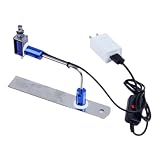
- ✅ True Random Click System: The auto keyboard clicker with no fixed frequency, automatic random click between 1-30 seconds, effectively bypass anti-AFK detection, no false advertising.
- ✅ Sufficient Stable Pressing Force: Upgraded pressing structure, can fully trigger the keyboard key every time, will not appear the problem of insufficient strength.
- ✅ Universal Fit for All Keyboards: Freely movable click head + stepless height adjustment, compatible with keyboards of any thickness and any brand.
- ✅ 100% Silent Click: Soft rubber click head, no noise during use, will not scratch the keyboard keycap.
- ✅ Stable & Firm Installation: Screw fixed design, will not shift or shake during long-term use, easy to install without tools.
- Automation: AI substitutes for a human task.
- Augmentation: AI helps a worker complete a task faster, more accurately or at greater scale.
- Job transformation: The occupation remains, but its workflow, responsibilities and skills change.
- Job displacement: Labor demand falls enough that workers lose employment.
- Exposure: The technical potential for AI to affect an occupation; it is not a forecast of layoffs.
- Adoption: Actual use by a worker, team or employer.
- Productivity: Output per worker, hour or unit of input—not merely time saved on one task.
The International Labour Organization’s 2025 analysis estimated that roughly one in four workers globally is in an occupation with some degree of generative-AI exposure. Its conclusion was that transformation is generally more likely than outright redundancy because most occupations still contain tasks requiring human input. The ILO’s methodology and findings measure occupational exposure, not guaranteed unemployment.
A useful rule for workers, investors and business owners is: analyze tasks, not job titles.
Why task analysis gives a better answer
Most jobs combine routine information processing with judgment, communication, physical activity, compliance, coordination and responsibility for consequences. AI can automate one component while increasing the value of another.
Quick wins for a faster PC:
Fix the driver behind crashes, sound loss and screen glitchesFind Drivers →Repair Windows errors before they cause bigger problemsFix Now →| Task category | Likely AI effect | Human work that remains |
|---|---|---|
| Repetitive text processing | High automation potential | Quality control and exception handling |
| Information retrieval | Strong augmentation | Question formulation and source judgment |
| Standardized analysis | Partial automation | Interpretation and accountability |
| Content drafting | Augmentation or substitution | Strategy, originality, editing and approval |
| Physical manipulation in changing environments | More limited or uneven | Presence, dexterity and adaptation |
| Relationship-intensive work | Usually augmentation | Trust, empathy, negotiation and persuasion |
| High-stakes decisions | Decision support | Responsibility, ethics and contextual judgment |
These are analytical categories, not universal predictions. Reliability, data quality, workflow integration, regulation and the cost of errors determine what actually changes.
Which roles and tasks are most exposed?
Higher exposure to generative AI
Generative AI is most immediately relevant to work that is digital, language-based, standardized and relatively easy to review. Examples include:
- Administrative and clerical support
- Data entry and document processing
- Basic customer support and sales assistance
- Translation and transcription
- Routine copywriting and content production
- Basic research and reporting
- Bookkeeping and invoice processing
- Legal and compliance document review
- Entry-level coding and software maintenance
- Scheduling and coordination
- Some finance, insurance and analytical tasks
The ILO found that clerical occupations are particularly exposed. In its high-income-country analysis, occupations in the highest modeled automation-risk category represented 9.6% of female employment compared with 3.5% of male employment. That difference reflects the concentration of women in certain administrative and clerical roles; it does not mean every woman worker faces the same risk.
Lower or differently exposed roles
Full automation is generally harder where work depends on unpredictable physical environments, face-to-face trust, empathy, negotiation, leadership, complex coordination, poorly digitized information or responsibility for safety and legal outcomes.
The Tool Desk
Outbyte PC Repair FREERepair Windows errors before they cause bigger problemsFix Now →Outbyte Driver Updater FREEFix the driver behind crashes, sound loss and screen glitchesFind Drivers →“Lower exposure” does not mean “unchanged.” AI can still alter scheduling, documentation, procurement, training, hiring, performance measurement and administrative workloads in healthcare, education, construction, hospitality and skilled trades.
Rank #2

- Hands Free Operation: This device meets your computer clicking requirements. Simply place the clicking arm on the keyboard or mouse, and it will click automatically, allowing you to free your hands.
- Programmable: This auto clicker offers a high degree of customization. You can define the loop time, set the click interval, specify the random time range, determine the random click count, adjust the click press duration, and enable rapid consecutive clicks. It also supports timed operation and rest periods, and you can customize the number of timed repetitions to precisely meet your diverse clicking needs.
- Adjustable Clicking Speed: Each of the three ports can have its clicking speed adjusted independently. Different click speeds can fulfill various needs you may have.
- Clicking Arm Usage: The clicking arm is equipped with 3 adjustable parts, making it easier to click on the keyboard. However, do not exceed 5 clicks per second to avoid heat - related damage.
- Wide Application: This auto clicker device is compatible with both keyboards and mice. It is suitable for a wide range of clicking applications, saving you a significant amount of time.
Roles likely to grow or change
As organizations adopt AI, demand may increase for:
- AI implementation and integration specialists
- Data governance and privacy professionals
- Model-risk and AI-assurance personnel
- Cybersecurity and identity specialists
- Workflow designers and automation analysts
- AI product managers
- Human-in-the-loop reviewers
- Technical trainers and change-management staff
- Domain experts who supervise AI systems
- Workers combining technical fluency with sector expertise
The IMF reported in January 2026 that one in ten online job postings in advanced economies and one in twenty in emerging-market economies required at least one newly demanded skill in its analysis. Some postings requiring new skills also carried wage premiums, but this evidence concerns online vacancies and the IMF’s definition of “new skills,” not a guarantee of higher pay for every worker who learns AI tools. See the IMF’s labor-market analysis.
How AI is redesigning familiar jobs
Customer service
- Automated: Frequently asked questions, ticket classification, basic account lookups and response drafts.
- Augmented: Live agents receive suggested answers, customer history and next-best actions.
- Human responsibility: Escalations, empathy, negotiation, refunds, exceptions and accountability.
- New risk: Agents may handle more emotionally difficult cases while being measured against faster AI-assisted averages.
Software development
- Automated or accelerated: Boilerplate code, documentation, test generation and routine debugging.
- Augmented: Developers explore designs and translate requirements into prototypes more quickly.
- Human responsibility: Architecture, security, testing, integration, requirements and production accountability.
- New risk: Fewer entry-level coding tasks may weaken the traditional path through which junior developers build experience.
Administrative work
- Automated: Data entry, invoice extraction, meeting summaries, scheduling and document routing.
- Augmented: Staff find information and prepare reports faster.
- Human responsibility: Resolving incomplete records, coordinating stakeholders and approving consequential actions.
- New risk: More invisible checking and correction work can offset headline time savings.
Marketing and content
- Automated or accelerated: First drafts, variations, tagging, research summaries and campaign reporting.
- Human responsibility: Positioning, originality, brand judgment, legal review, audience insight and performance decisions.
- New risk: Greater content volume can reduce prices for routine work while increasing the premium on differentiation.
Legal and finance
- Automated: Document review, invoice processing, reconciliation, classification and standardized reporting.
- Human responsibility: Advice, interpretation, client relationships, risk acceptance and regulatory accountability.
- New risk: A plausible but incorrect output can create legal, financial or reputational losses if review is treated as optional.
Healthcare administration
- Automated or accelerated: Scheduling, transcription, coding support, records organization and routine communications.
- Human responsibility: Patient interaction, clinical judgment, consent, privacy and care coordination.
- New risk: Administrative efficiency can coexist with more monitoring and less discretion for staff.
Manufacturing and logistics
- Automated: Inventory routing, visual inspection, warehouse movement and parts of scheduling.
- Human responsibility: Maintenance, safety, exception handling, physical work in variable conditions and operational judgment.
- New risk: Workers may become responsible for supervising more complex systems without receiving sufficient technical training.
Short-term versus long-term effects
What is likely in the near term
Near-term changes include faster drafting and research, more AI-assisted customer service, less routine administrative work, new verification duties, slower hiring in some exposed functions and higher expectations that employees produce more.
Free tools Windows power users keep installed
One-click scans. No signup required.
Some employers will experiment extensively without achieving measurable organization-wide gains. The ILO’s 2026 review of empirical evidence found that large-scale displacement remained limited in the evidence available at the time. It also found that worker-reported time savings of a few percentage points of working hours had not consistently translated into higher measured output, earnings or employment. The review discusses productivity, displacement and work organization.
What may happen over a longer period
Long-term effects depend on whether lower costs increase demand, firms reinvest gains, new tasks emerge, workers can move into complementary roles and AI adoption spreads beyond large, digitally advanced companies.
Education and training systems, regulation, market concentration and worker bargaining power will also shape the result. The World Economic Forum’s 2025 job figures are employer expectations and modeled projections through 2030, not observed future outcomes. Treat them as scenarios rather than promises. Read the WEF report.
Productivity: why time saved is not money earned
AI can make an individual task faster without making the organization more productive. A complete productivity assessment asks:
- Does the system save time?
- Does the saved time produce more useful output?
- Does quality meet the required standard?
- Do gains appear at team or firm level?
- Who captures the gain through pay, hours, staffing, prices or profits?
- Are benefits sustained after training, integration, review and error-correction costs?
The ILO’s 2026 “aggregation paradox” brief reports task-level productivity gains commonly in the 10%–70% range for well-defined, text-intensive tasks. However, firm-level results are mixed, with benefits concentrated among larger, digitally advanced enterprises. Many firms report little measurable impact beyond pilots. Read the ILO’s task-to-firm productivity analysis.
Rank #3

- ADJUSTABLE HEIGHT: Computer keyboard clicker can be adjusted to fit different heights of keyboards and in the market.
- WIDE RANGE TIME: Mouse auto clicking tool has a wide range of random click time, from 0.1 seconds to .9 seconds can be set.
- SET TIME: Auto random click with setting, host directly set the time, no programming, easier to use.
- SIMULATE MANUAL CLICKING: Mouse auto clicking tool real simulation of manual clicking, fixed drop, random time, irregular clicking, real effect.
- RUBBERIZED COVER: Physical mouse clicker with rubberized defend cover, clicking without damaging the keyboard, less sound.
Do not confuse faster completion with better work, more output with more value, AI use with successful adoption, or employee enthusiasm with return on investment. A company may use AI and still see no improvement after accounting for rework, security controls, training and workflow disruption.
Workforce dynamics: hiring, promotion and bargaining power
Work allocation and team structure
Managers are increasingly dividing work into AI-executable tasks, human-judgment tasks, review and approval, escalation, data-cleaning and exception-handling work. Smaller teams may produce more, but organizations may also create larger managerial spans, fewer junior roles and new specialists responsible for governance and quality.
Hiring and promotion
Employers may hire fewer people for routine entry-level work while placing more weight on portfolios, practical demonstrations and the ability to supervise systems. Promotion may partly reflect AI-enabled output. These are plausible mechanisms, not proof that AI caused a particular hiring decline. A reduction in hiring can also result from weak demand, restructuring or ordinary cost-cutting.
The entry-level issue is especially important. Routine tasks have traditionally allowed new workers to learn an industry’s vocabulary, systems and standards. If those tasks disappear, organizations may save money today but make it harder to develop experienced workers later.
Control and bargaining power
AI can give employers more power to monitor, schedule, evaluate and standardize work. It can also give workers leverage by reducing drudgery, widening access to expertise and allowing small teams or independent professionals to deliver more.
The distribution depends on who owns the systems and data, whether workers participate in implementation, whether performance metrics are transparent, whether employees can challenge automated decisions and whether gains are shared through wages, shorter hours, staffing or benefits.
Job quality matters as much as job quantity
Workers may keep their jobs while experiencing a major change in job quality.
What’s actually slowing this PC down?
Pick the symptom - the matching free tool is one click away.
Possible improvements
- Less repetitive work
- Faster access to information
- Assistive tools for workers with disabilities
- Reduced administrative burden
- Personalized training
- Greater capacity for small teams
- Support for less experienced workers
- More consistent routine processes
Possible deterioration
- Work intensification and “always-on” productivity expectations
- Continuous surveillance and algorithmic scheduling
- Reduced autonomy and professional discretion
- Deskilling and loss of judgment
- More invisible review work
- Unclear responsibility when AI makes mistakes
- Bias in hiring, evaluation or promotion
- Replacement anxiety and emotional strain
The central job-quality question is: What kind of work remains, who controls it, how much discretion workers retain and whether the remaining roles are better or worse?
Rank #4

- [Super safe use]----The product machine is powered by 5V.Wide range of applications; you can use a mobile phone charger; or a power bank; or a computer USB interface; pure peripherals are connected to the computer USB just to get power.Applicable to all kinds of physical keyboards, laptop or PC keyboards, mice (need to fix mouse).
- [Product Features]----The clicker has press and release modes, It has its own digital display function, and the click speed is clearly displayed in numbers. You can set the number of clicks and control them by maintaining the pressing time.It can be set to 0 and the click action for each group can be disabled,so the order of "timing and executing clicks" can be arranged.
- [Product Functions]----ABC configurable content:(1).click head travel distance.(2).press the start key to click the head's click direction.(3).Delay stop running.(4).The number of clicks performed by the end of the timer.(5).click head running speed.It can Continuous click up to 6 times in 1 second.It has two time dimensions waiting for clicks and keep pressing,It enables arbitrary combination of Fixed time and Random time for 0.1-999S.
- [Product ABC commit logic]----ABC groups are executed sequentially.Among them,group B and group C can be closed or opened arbitrarily.You can choose to close the execution click in the settings of group A,group B,and group C.For example,if the execution click option in group B is turned off,only the time in group B is valid.Combined to achieve latency from 0.1 second to 80 hours.You can choose to execute it once and stop.
- [Product Details]----The biggest feature of this machine,Any single-use combination with fixed random time supports any single-use combination with fixed pressing time. The keyboard clicker adopts a button design, and the host directly sets the time without programming, making it easier to use.
Why the effects will be unequal
AI’s effects vary by country income level, gender, age, education, occupation, industry, firm size, language, disability status, employment arrangement and digital infrastructure.
An ILO–World Bank analysis covering 135 countries and roughly two-thirds of global employment found that workers in potentially automatable jobs are often already online, while workers whose jobs could benefit from augmentation may lack reliable internet access in lower-income settings. This raises the risk that some countries experience competitive pressure or displacement before capturing the productivity benefits. See the ILO–World Bank findings.
There is also a potential career-ladder problem: if routine junior work is automated, fewer workers may receive the practical experience needed to become senior specialists. Benefits may flow disproportionately to workers with strong digital access, bargaining power and domain expertise, while others face intensified monitoring or reduced opportunities.
Recommended Free Tools
How workers can protect and improve their earning power
“Learn AI” is too vague to be useful. Start with the actual workflow.
- Map recurring tasks. List weekly activities and estimate time spent on drafting, searching, classification, coordination, analysis, physical work and relationship management.
- Identify exposure. Mark tasks that are routine, digital, predictable, document-heavy and easy to check.
- Learn the tools used in your industry. Familiarity with a general chatbot is less valuable than competence with the systems your employer or customers actually use.
- Build verification skills. Learn to check sources, calculations, omissions, security issues, bias and compliance requirements.
- Deepen domain expertise. Trusted outputs require context, standards and judgment that a general-purpose model may not possess.
- Develop workflow and data literacy. Understand structured data, permissions, automation logic, metrics and failure modes.
- Document measurable improvements. Track cycle time, quality, rework, customer outcomes or revenue—not just the number of prompts used.
- Protect confidential information. Do not place customer, employer or regulated data into an unapproved tool.
- Ask how AI affects evaluation. Understand whether management measures tool usage, speed, output, quality or some combination.
- Seek training before experimenting. Use approved systems and clarify who is accountable for errors.
Durable capabilities include problem framing, communication, critical evaluation, domain knowledge, negotiation, relationship management, systems thinking, data interpretation, ethical reasoning and adaptability. Prompting is one component of broader workflow and evaluation competence—not, by itself, a dependable career strategy.
Independent reader supportYour contribution helps us test, update, and keep practical guides available for everyone.How employers should deploy AI responsibly
- Inventory processes and tasks. Start with work problems, not a fashionable tool.
- Select low-risk, high-frequency use cases. Drafting, internal search and classification are often easier starting points than high-stakes decisions.
- Set data and privacy rules. Define what information may be entered, retained, shared or used for training.
- Run controlled pilots. Establish a baseline and compare performance with a suitable control or prior period.
- Measure the whole workflow. Track quality, cycle time, rework, customer outcomes, incidents, worker experience and total cost.
- Include frontline workers. They often know where exceptions, hidden labor and customer risks are located.
- Define approval and escalation. Specify when a person must review, reject or override an output.
- Train affected employees. New review, monitoring and exception duties require time and compensation decisions.
- Audit bias and security. Test outcomes across relevant groups and preserve an audit trail.
- Scale only after benefits survive real conditions. A successful demonstration is not proof of firm-wide return on investment.
AI adoption is an organizational redesign project. Processes, job descriptions, approval rights, training, data access, security, performance metrics and accountability all need to change together.
Governance, worker protections and public policy
Responsible deployment requires transparency about where AI is used, what data it relies on, how decisions are reviewed and how workers can contest an outcome. High-stakes hiring, lending, medical, legal, safety and benefits decisions require stricter controls than low-risk drafting.
Outdated Drivers Are Slowing You Down
One free scan finds every outdated or missing driver and matches the right update for your exact hardware.Free scan · exact hardware matchWindows Errors? Fix Them Before They Spread
Repair common Windows errors and clear accumulated junk for a smoother, more stable PC - no reinstall needed.Free scan · no reinstallImportant safeguards include human review, audit trails, data protection, bias testing, clear accountability, worker consultation and limits on intrusive algorithmic management. The ILO highlights social dialogue, training rights, transparency and data protection as central issues in the future of work. Review the ILO’s discussion of AI adoption and job quality.
Best Value

- Easy to Use - Our USB wired numpad does not require any driver or battery; easy to install, plug and play, gives you a stable connection.
- Quiet & Soft Touch - Integrated ergonomic tilt provides comfortable typing, helps reduce the wrist strain. Low noise of the 19-key USB numeric keypad gives you a quiet and soft touch.
- USB Wired Number Pad - Full-size 19mm keys improve speed and accuracy by making it easier to locate and press the numbers you are looking for. Numeric keypad supports NumLock.
- Lightweight & Portable - The black numeric keypads are perfect for working on spreadsheet, you can works household, school, business trips, or daily use, very convenient number use.
- Wide Compatibility - Compatible for Windows 2000, XP, Vista, or Windows 7/8/10, Android operating systems. Works with PC, desktop, notebook and other devices with USB ports.
Policymakers and educators can support workers through portable training assistance, employer training incentives, broadband and device access, consultation and collective bargaining rights, transparency requirements for automated management, protection against discriminatory decisions, better labor-market data and targeted support for displaced workers.
Choosing workplace AI tools without confusing novelty with value
For employers and small-business owners, the right tool depends on the existing workflow, not on a universal ranking.
| Tool or platform | Best fit | Important limitation |
|---|---|---|
| ChatGPT Business | Cross-platform knowledge work, drafting, analysis, coding and company-context assistance | Less native than Microsoft or Google tools for organizations deeply tied to those suites |
| Microsoft 365 Copilot Business | Organizations using Word, Excel, PowerPoint, Outlook, Teams, Microsoft Graph and Azure | Requires a qualifying Microsoft 365 license; agents and some capabilities may add metered costs |
| Google Workspace with Gemini | Organizations centered on Gmail, Drive, Docs, Sheets and Meet | Less suitable when core work depends on Microsoft applications or specialized automation |
| Claude | Long-form analysis, coding, document work, APIs and custom agentic workflows | May be less suitable than office-suite-native tools for turnkey workplace deployment |
| Zapier AI | Connecting AI steps across business applications without building every integration | High-volume, regulated or transaction-critical workflows may need deeper controls |
Official-page pricing signals observed on August 18, 2026 included ChatGPT Business at $20 per user per month annually or $25 monthly, with a two-user minimum; Microsoft 365 Copilot Business at a displayed promotional $18 annually, $21 regular annual pricing or $25.20 monthly, plus a qualifying Microsoft 365 license; and Google Workspace Business Standard at $14 annually or $16.80 monthly. Anthropic’s API page displayed introductory Sonnet pricing of $2 per million input tokens and $10 per million output tokens through August 31, 2026, with standard pricing shown afterward as $3 and $15. Zapier AI used Standard, Advanced and Premium model tiers with 1x, 3x and 5x task multipliers.
These are volatile official-page signals, not complete ownership costs. Confirm regional pricing, taxes, contracts, minimums, usage charges, data-retention terms, administrator settings and licensing before buying. Microsoft’s Copilot Chat may be included for eligible customers, while agents and some capabilities can involve metered Azure or Copilot Studio charges. A subscription can be inexpensive compared with implementation, integration, training, security and review costs.
Evaluate any platform against:
- Your existing productivity ecosystem
- Number and type of users
- Need for custom agents or workflows
- Data sensitivity and retention requirements
- Identity, administration and audit controls
- Per-seat versus metered pricing
- Integration depth
- Quality-assurance requirements
- Ability to measure return on investment
- Exit and data-portability options
Common mistakes in judging AI’s labor-market impact
- Turning exposure into layoffs: Technical susceptibility does not establish employment loss.
- Treating occupations as indivisible: The same title can contain very different tasks.
- Counting jobs but ignoring quality: Autonomy, discretion, training and bargaining power can change without a layoff.
- Generalizing a productivity demonstration: Task-level improvement may disappear at team or firm level.
- Ignoring implementation labor: Data cleaning, integration, permissions, testing and incident response are real costs.
- Assuming entry-level work is disposable: Removing junior tasks can weaken the future talent pipeline.
- Ignoring distribution: Gains can flow to workers, consumers, employers, investors, vendors or the public.
- Relying on vendor narratives: Product surveys reveal perceptions and adoption, not neutral economic proof.
- Offering vague soft-skill advice: Human capabilities matter when tied to real tasks, authority and market demand.
- Ignoring worker agency: Employees adapt, negotiate, resist unsafe systems and often discover useful applications themselves.
What this means for personal finances
AI-related career risk is usually gradual rather than a single cliff. The most useful financial response is to increase flexibility while improving the value of your work.
- Maintain an emergency fund appropriate to the volatility of your industry.
- Track which parts of your income depend on routine, easily standardized tasks.
- Build a portfolio of work showing judgment, measurable outcomes and domain expertise.
- Invest selectively in training that maps to actual vacancies and workflows.
- Do not take on expensive education or software subscriptions solely because an AI trend is popular.
- Ask employers whether productivity gains will affect pay, hours, staffing or performance targets.
- Keep confidential work data out of unapproved consumer tools.
For investors, the same caution applies. AI exposure may create demand for software, data infrastructure, integration and cybersecurity, but adoption costs, regulation, concentration and uncertain firm-level productivity can determine whether that demand produces durable profits.
Conclusion
AI-powered automation is best understood as an organizational and distributional process, not a single technological event. It will automate some tasks, augment others and create new work around supervision, integration, governance and accountability.
The evidence available in 2026 supports a measured conclusion: large-scale displacement has so far been limited, task-level productivity gains can be significant, and economy-wide benefits remain uneven and uncertain. Workers who combine AI fluency with domain knowledge, verification, judgment and relationship skills are better positioned than those who merely learn a tool. Employers that redesign workflows with clear measurement, worker participation and human accountability are more likely to create lasting value than those that simply add a chatbot to a broken process.
Quick Recap
Product prices and availability are accurate as of the date/time indicated and are subject to change. Any price and availability information displayed on Amazon at the time of purchase will apply.



