What’s actually slowing this PC down?
Pick the symptom - the matching free tool is one click away.
Some links on this page are affiliate links: if you buy through them we may earn a commission, at no extra cost to you.
Short answer: The FCC proposed requiring wireless providers to unlock phones 60 days after activation, but the proposal was not automatically effective and is not established as a nationwide rule. The agency acted after citing Metro by T-Mobile’s increase of its prepaid-device lock from 180 days to 365 days. Official FCC material available through August 18, 2026, still described an industry-wide unlocking approach as unresolved.
What happened with T-Mobile’s 365-day lock?
On July 18, 2024, the FCC voted 5–0 to begin a rulemaking proceeding on phone unlocking. The agency’s notice specifically cited T-Mobile’s change to Metro by T-Mobile’s prepaid-device locking period, which increased from 180 days to 365 days.
That does not mean every T-Mobile phone was subject to a 365-day lock. The cited policy concerned Metro prepaid devices. T-Mobile postpaid phones, financed devices, Mint Mobile and Ultra Mobile phones, and phones purchased directly from manufacturers can be governed by different policies and commitments.
The FCC released its proposed rule on July 19, 2024, and it appeared in the Federal Register on August 8, 2024.
#1 Best Overall

- Professionally inspected and fully functional renewed unit — each phone has been thoroughly tested, cleaned, and certified to ensure full network compatibility, display clarity, and battery performance like new.
- Brilliant 6.5” Super AMOLED Display: Enjoy vibrant colors and smooth visuals with a 90Hz refresh rate for seamless scrolling and viewing.
- Powerful 5G performance: Stay connected with fast data speeds and reliable coverage on T-Mobile’s 5G network (carrier-locked; not compatible with other carriers).
- 64GB internal storage + expandable memory: Easily store photos, videos, and apps with microSD support up to 1TB (card sold separately).
- Triple rear camera system: 50MP main camera, 5MP ultra-wide, and 2MP depth sensor for capturing sharp photos and HD videos in any light.
What did the FCC propose?
The FCC’s proposed rule would require all mobile wireless providers to unlock a handset 60 days after activation. The proposal included an exception when the provider determined during that 60-day period that the device had been obtained through fraud.
The FCC also asked whether:
- Prepaid and postpaid phones should receive identical treatment;
- Unlocking should happen automatically;
- An unpaid device balance should prevent unlocking;
- Customers should have to make a payment first; and
- A shorter lock would affect discounts, financing, fraud prevention, and phone availability.
The proposal began a notice-and-comment process. Comments were due September 9, 2024, and reply comments September 23, 2024, according to FCC procedural notices. It was not a final rule.
Is the 60-day rule in effect now?
Do not assume that it is. The 2024 FCC document was a Notice of Proposed Rulemaking, not an immediately enforceable nationwide requirement.
The latest official material identified for this article does not establish that the FCC adopted the proposed rule. In a June 5, 2026 waiver order, the FCC referred to the period before it decides an “appropriate industry-wide approach” to unlocking. That order, DA 26-554, is a key reason consumers should not be told that every carrier must currently unlock phones after 60 days.
Rank #2

- 6.82Inches HD+ Display | 1640 x 720 pixels
- Storage Capacity -64GB | Ram -4GB | Maximum Expandable Memory -2 TB (NOT INCLUDED)
- Connectivity -Wi-Fi 802.11a, b, g, n, ac, Bluetooth 5.1, NFC, VoLTE,5G, USB
- Processor -MediaTek Dimensity 700 Processor | Operating System -Android
Existing obligations may still apply to particular carriers, brands, devices, or transactions. Those obligations should not be confused with a general federal unlocking rule.
Why did the FCC support a shorter lock?
The FCC described handset locking as a switching cost. A customer who cannot use an existing phone on another network may be less able to compare prices, change providers, use a local SIM while traveling, or take advantage of a competing service plan.
The agency’s theory was that a uniform 60-day standard could make carrier policies more transparent, improve consumer choice, and encourage competition based on price, coverage, and service rather than restrictions on the device.
The Tool Desk
Outbyte PC Repair FREEClear out junk files and repair common Windows errorsFree Scan →Outbyte Driver Updater FREEFix the driver behind crashes, sound loss and screen glitchesFind Drivers →Those are policy rationales, not measured results proving that a 60-day rule would produce a particular savings or competition outcome.
Rank #3
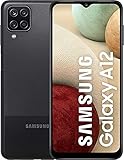
- Solid everyday performance with the MediaTek Helio P35 octa-core processor, enabling efficient multitasking and smooth operation on common apps like messaging, social media, and navigation — all while keeping power consumption modest.
- PLS IPS 6.5″ screen designed for readability and clarity, with a 20:9 aspect ratio that makes scrolling through long web pages or documents comfortable, and a resolution that balances sharpness with battery efficiency.
- Versatile quad-camera setup, featuring a 48 MP main sensor for crisp daytime shots, a 5 MP ultra-wide lens to expand your field of view, a 2 MP macro for detail shots, and a 2 MP depth sensor for portrait effects.
- Connectivity and legacy support options, including Bluetooth 5.0 for stable pairing, a 3.5mm headphone jack so you don’t have to ditch your wired headphones, and a side-mounted fingerprint sensor for secure, intuitive unlocking.
- Built for reliability in business or daily use, with a 5,000 mAh battery, microSD expansion up to 1 TB, and built-in Knox security to safeguard your data and give you peace of mind for mobile work or media storage.
Why did carriers oppose the proposal?
T-Mobile, AT&T, and industry trade groups argued that carriers often subsidize or heavily discount phones to attract customers. A customer could receive a discounted phone, have it unlocked after 60 days, and move to another provider while the original carrier still faced unpaid financing or subsidy risk.
Carrier filings and industry arguments predicted that a mandatory short lock could lead to higher upfront prices, fewer promotional phones, stricter fraud screening, or less generous device offers. These are carrier forecasts, not established consequences.
T-Mobile also questioned whether the FCC had sufficient legal authority to impose an industry-wide unlocking mandate. That is a central legal objection, not a settled conclusion in the material available for this article.
Unlocking is not the same as paying off a phone
Unlocking removes a carrier’s software or network restriction so the device can potentially be used with another provider’s SIM or eSIM. It does not erase the customer’s financial obligations.
Rank #4

- Blazing-fast Qualcomm performance. Get the speed you need for great entertainment with a Snapdragon 680 processor and 4GB**** of RAM.
- Fluid display + immersive stereo sound. Bring your entertainment to life with an ultrawide 6.5" 90Hz* HD+ display plus stereo speakers, Dolby Atmos, and Hi-Res Audio**.
- 50MP*** Quad Pixel camera. Capture sharper, more vibrant photos day or night with 4x the light sensitivity.
- 64GB**** built-in storage. Get plenty of room for photos, movies, songs, and apps—and add up to 1TB more with a microSD card*****.
- Unbelievable battery life. Work and play nonstop with a long-lasting 5000mAh battery.*****
| Unlocking may do | Unlocking does not do |
|---|---|
| Remove the carrier restriction | Pay off an installment balance |
| Make switching networks possible | Cancel a service contract or financing agreement |
| Permit use of another provider’s SIM or eSIM | Guarantee compatibility with every network |
| Improve resale or travel flexibility | Preserve promotional bill credits after cancellation |
Consumer advocates argued that a phone should be unlocked after 60 days even if the customer still owed money, while the customer’s financing obligation would remain. Carrier groups argued that this could undermine device subsidies and increase fraud. The dispute over financing is one of the most important parts of the proposal.
T-Mobile’s existing obligations are not one universal policy
The FCC’s 2024 notice described several separate sources of obligations:
- Certain T-Mobile prepaid devices were subject to a one-year unlocking requirement under the amended Sprint/T-Mobile merger judgment, subject to reasonable conditions.
- Postpaid unlocking was generally connected to completing a service contract or device financing plan, or paying applicable early-termination amounts.
- As part of the T-Mobile acquisition of Mint Mobile and Ultra Mobile, T-Mobile committed to a 60-day unlocking policy for applicable Mint and Ultra devices activated on its network, with limitations including device financing.
These merger commitments and transaction-specific promises are different from a nationwide FCC regulation. Check the exact brand, device, activation date, account status, and financing terms.
What an unlocked phone still may not do
An unlocked phone is not automatically compatible with another provider. Before switching, verify the device’s IMEI with the destination carrier and check:
Best Value

- Camera Description: Rear
- LTE and 5G band support;
- VoLTE compatibility;
- Physical SIM and eSIM support;
- Compatibility with the carrier’s U.S. model requirements;
- Support for features such as Wi-Fi calling and visual voicemail; and
- Whether the phone is blacklisted or reported lost or stolen.
The FCC’s consumer guidance also warns that unlocking does not guarantee technological compatibility.
What to check before switching carriers
- Identify the seller and brand. A Metro phone, T-Mobile postpaid phone, Mint phone, manufacturer-bought phone, and financed device may have different rules.
- Find the activation date. The FCC proposal used activation, not purchase, as the starting point.
- Review financing. Confirm the remaining balance, whether paying it off ends promotional credits, and whether closing the account accelerates payment.
- Check eligibility. The account may need to be current, and the phone cannot generally be reported lost, stolen, or fraudulently obtained.
- Confirm compatibility. Use the destination carrier’s IMEI checker rather than relying only on the word “unlocked.”
- Request the unlock through the carrier. Avoid unverified third-party unlock-code services, which may be scams or unable to authorize a modern server-based unlock.
What if the carrier refuses?
First, review the carrier’s written unlocking policy and ask support for the exact unmet condition. Record the interaction and request a case number. If ordinary support cannot resolve the issue, escalate through the carrier’s executive customer-relations channel.
If you believe the provider is violating a binding commitment or misrepresenting its policy, you can file a complaint through the FCC complaint portal. The FCC says complaints help inform enforcement and policy work, but a complaint does not guarantee that the agency will find a violation or order a particular remedy.
Do these 3 things before closing this tab:
1Clear out junk files and repair common Windows errors2Fix the driver behind crashes, sound loss and screen glitches3Repair Windows errors before they cause bigger problemsWhat this means for phone buyers
A factory-unlocked phone bought directly from Apple, Samsung, or Google generally offers the greatest portability, but usually requires more money upfront. A discounted carrier or prepaid phone can reduce the initial cost, but the buyer should treat the lock period, financing balance, required plan, trade-in, and promotional credits as part of the phone’s real cost.
The most important distinction is simple: a phone may be eligible to move networks without being paid off, and a phone may be paid off without being universally compatible. Until the FCC adopts a final industry-wide standard, consumers must rely on the applicable carrier policy, merger commitment, transaction condition, or voluntary industry commitment for their specific device.
Quick Recap
Product prices and availability are accurate as of the date/time indicated and are subject to change. Any price and availability information displayed on Amazon at the time of purchase will apply.



