Some links on this page are affiliate links: if you buy through them we may earn a commission, at no extra cost to you.
Tariffs could encourage some production in the United States, but they will not automatically create a manufacturing revival. Their immediate effects are usually higher costs for imported materials and components, disrupted supply chains, retaliation risk, and uncertainty that can delay investment. AI may help factories become more productive, but it cannot replace reliable suppliers, skilled workers, affordable energy, efficient logistics, or predictable trade policy.
This article explains the tariff and AI-architecture debates associated with coverage published on April 30, 2025. It does not treat that publication date as a forecast of tariff policy in September 2026; tariff rates, exemptions, effective dates, and litigation can change. For current measures, check official notices from the White House, U.S. Trade Representative, U.S. International Trade Commission, and U.S. Customs and Border Protection.
What the two stories have in common
The tariff debate and the AI-architecture debate can look like unrelated headlines. One concerns physical goods and international trade; the other concerns software, chips, and data centers. Their common question is broader: what does it take to build productive capacity at home?
Tariffs change the price and availability of imported goods. AI architecture changes the cost, speed, and location of computation. Both can influence business investment, consumer prices, wages, and the competitiveness of American companies—but neither produces results automatically.
#1 Best Overall

- 【Leading AI Mini Workstation】MINISFORUM AI MS-S1 Max Workstation comes with AMD Ryzen AI Max+ 395 processor, which uses AMD's latest generation Zen 5 architecture. It has 16 Cores and 32 Threads, the boost clock is up to 5.1GHz. The overall processor performance is up to 126 TOPS, and the NPU performance reaches up to 50 TOPS. AMD Ryzen AI enables improved productivity, advanced collaboration, and improved efficiency.
- 【AMD Radeon 8060S Graphics 】The MS-S1 Max Mini PC equipped with AMD Radeon 8060S Graphics which built on the new generation of RDNA 3.5 architecture AMD graphics, it brings ultra-high frame rate experiences and advanced content creation features anywhere and delivers staggering performance. It can handle all your computing and multimedia tasks efficiently.
- 【Five 8K Video Output】This MS-S1 Max Workstation comes with five video outputs, 1x HDMI (8K@60Hz), 2x USB4(40Gbps,Alt DP2.0,PD out 15W) and 2x USB4 V2(80Gbps,Alt DP2.0,PD out 15W) Outputs, which support multiple monitors display at the same time and provide a larger and wider filed of view and improve your work efficiency. It is used in fields that require high-performance computing and graphics processing, including digital signage and securities trading, as well as work that uses CAD, such as engineering design, scientific calculations, animation production, and post-production for movies and television.
- 【 Fast and Stable Wire & Wireless Speed】It comes with Two 10G Lan Ports for wired connection and and Wi-Fi 7 / BT5.4 for wireless connection, which increased the network speed greatly and expand its functions and improved performance of computer to a large extent and allows you to use more networks such as software routers (OpenWRT / DD-WRT / Tomato etc.), firewalls, NAT, network isolation etc.
- 【Large Storage & Flexible Expandability】This Workstation equipped with 128GB LPDDR5-8000MHz + 2TB M.2 2280 PCIe4.0 SSD. There is another PCIe4.0 SSD slot available for up to 8TB, these SSD slots are compatible with RAID0 and RAID1, you can store movies, videos, photos, important files easily. What’s more, it also comes with 1x standard PCIex16 slot(PCIe4.0x4) inside.
The available copy associated with the headline is a third-party rewritten version, so its exact original argument and technical details cannot be confirmed. The defensible takeaway is narrower: tariffs may threaten or complicate a hoped-for U.S. manufacturing rebound, while new AI architectures are changing the economics of deploying advanced software.
What a tariff actually does
A tariff is a tax collected when an imported product enters the country. The legal payer is generally the U.S. importer—not the foreign government. That importer may be a manufacturer buying components, a wholesaler, or a retailer bringing in finished products.
The economic burden can then spread across the supply chain. Depending on competition and demand, companies may:
The Tool Desk
Outbyte Driver Updater FREEFix the driver behind crashes, sound loss and screen glitchesFind Drivers →Outbyte PC Repair FREEClear out junk files and repair common Windows errorsFree Scan →- absorb some of the cost through lower profit margins;
- ask foreign suppliers to reduce their prices;
- switch to another supplier or country;
- pass the cost to manufacturers, retailers, or consumers;
- delay investment or reduce hiring.
The result depends on exchange rates, supplier margins, available substitutes, and how sensitive buyers are to price changes. Saying that “foreign countries pay the tariffs” is therefore too simple. The border payment and the ultimate economic burden are different questions.
Tariff analysis also requires precision. A measure can be proposed, announced, implemented, suspended, modified, exempted, or challenged in court. Its rate may vary by country and by product classification. A tariff on imported steel, for example, has different effects from one on finished vehicles, machinery, electronics, or semiconductors.
For data on trade flows, prices, and industrial activity, readers can consult the Census Bureau, Bureau of Labor Statistics producer-price data, Bureau of Economic Analysis, and the Federal Reserve’s industrial-production data.
Can tariffs rebuild U.S. manufacturing?
Only under specific conditions, and rarely by themselves. A tariff can make imported products more expensive, giving an existing domestic producer temporary pricing room. It may also encourage a company to build a plant in the United States if the tariff is durable enough and domestic production is technically feasible.
Recommended Free Tools
But “manufacturing revival” can mean several different things:
Rank #2
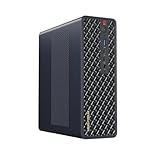
- 【Leading AI Mini Workstation】MINISFORUM AI MS-S1 Max Workstation comes with AMD Ryzen AI Max+ 395 processor, which uses AMD's latest generation Zen 5 architecture. It has 16 Cores and 32 Threads, the boost clock is up to 5.1GHz. The overall processor performance is up to 126 TOPS, and the NPU performance reaches up to 50 TOPS. AMD Ryzen AI enables improved productivity, advanced collaboration, and improved efficiency.
- 【AMD Radeon 8060S Graphics 】The MS-S1 Max Mini PC equipped with AMD Radeon 8060S Graphics which built on the new generation of RDNA 3.5 architecture AMD graphics, it brings ultra-high frame rate experiences and advanced content creation features anywhere and delivers staggering performance. It can handle all your computing and multimedia tasks efficiently.
- 【Five 8K Video Output】This MS-S1 Max Workstation comes with five video outputs, 1x HDMI (8K@60Hz), 2x USB4(40Gbps,Alt DP2.0,PD out 15W) and 2x USB4 V2(80Gbps,Alt DP2.0,PD out 15W) Outputs, which support multiple monitors display at the same time and provide a larger and wider filed of view and improve your work efficiency. It is used in fields that require high-performance computing and graphics processing, including digital signage and securities trading, as well as work that uses CAD, such as engineering design, scientific calculations, animation production, and post-production for movies and television
- 【 Fast and Stable Wire & Wireless Speed】It comes with Two 10G Lan Ports for wired connection and and Wi-Fi 7 / BT5.4 for wireless connection, which increased the network speed greatly and expand its functions and improved performance of computer to a large extent and allows you to use more networks such as software routers (OpenWRT / DD-WRT / Tomato etc.), firewalls, NAT, network isolation etc.
- 【Large Storage & Flexible Expandability】This Workstation equipped with 64GB LPDDR5-8000MHz + 2TB M.2 2280 PCIe4.0 SSD. There is another PCIe4.0 SSD slot available for up to 8TB, these SSD slots are compatible with RAID0 and RAID1, you can store movies, videos, photos, important files easily. What’s more, it also comes with 1x standard PCIex16 slot(PCIe4.0x4) inside.
- more factories;
- more domestic value added;
- more well-paid jobs;
- higher productivity;
- less dependence on vulnerable suppliers;
- more production returning from overseas.
These outcomes are not interchangeable. A new plant may create capacity without creating large numbers of jobs if it is highly automated. A factory may operate in the United States while importing most of its components, machinery, minerals, or intellectual property. Production may move from one foreign country to another rather than return to America.
The downstream-manufacturer problem
Tariffs can help a protected input producer while hurting companies that use that input. A domestic steel mill may benefit from higher steel prices, while an American appliance maker, construction-equipment company, or automobile producer pays more for its materials.
The same problem applies beyond steel and aluminum. U.S. manufacturers may rely on imported:
Outdated Drivers Are Slowing You Down
One free scan finds every outdated or missing driver and matches the right update for your exact hardware.Free scan · exact hardware matchPC Slower Than It Used to Be?
A free scan shows the junk files, broken settings and background clutter dragging Windows down - then fixes them in one click.Free scan · Windows 10 & 11- electronic components and sensors;
- industrial machinery and machine tools;
- batteries and chemicals;
- semiconductors and networking equipment;
- motors, packaging, and specialized parts.
If downstream industries are much larger than the protected industry, the overall effect can be negative even when a narrow group of producers gains.
Previous tariff analysis cited by The Economist argued that protection benefited some steel and aluminum producers while imposing costs on downstream businesses. It also warned that uncertainty can cause companies to delay plant-location and capital-spending decisions. See the publication’s analysis.
Major ways tariff policy can fail
- Input-cost shock: Factories pay more for materials and components, weakening their ability to compete.
- Retaliation: Other countries impose their own tariffs, reducing sales for U.S. exporters.
- Supply-chain rerouting: Companies shift production to a different foreign country without creating U.S. capacity.
- Investment paralysis: Businesses postpone major projects until they know which rules will apply.
- Exemption lobbying: Complex exceptions favor companies with the resources to pursue legal and political relief.
- Automation without broad job growth: New facilities may be productive but employ relatively few people.
- Lower productivity pressure: Long-term protection can reduce the incentive to innovate.
- Consumer pass-through: Higher import costs can raise prices for finished goods.
- Hidden dependency: A protected U.S. industry may still depend on foreign machinery, chips, or raw materials.
A tariff can create a one-time increase in the price level without necessarily producing permanently accelerating inflation. However, retaliation, labor-market effects, supply shortages, and expectations can make the broader economic outcome more complicated.
What would make reshoring more likely to work?
Domestic production is more likely to be durable when tariffs, if used, are part of a predictable industrial strategy. Important supporting conditions include:
- multi-year policy clarity;
- workforce training and apprenticeships;
- faster permitting and construction;
- reliable, affordable electricity;
- modern ports, roads, rail, and broadband;
- development of domestic supplier networks;
- research and development support;
- access to long-term capital;
- public procurement or demand guarantees;
- automation and process innovation.
The right policy also depends on the industry. Semiconductor fabrication, pharmaceuticals, automobiles, aerospace, steel, textiles, food processing, batteries, and industrial machinery have different capital requirements, supplier networks, labor needs, and national-security considerations. A single universal tariff is unlikely to fit all of them.
Rank #3

- Built for Local AI and Advanced Workflows – The BOSGAME M5 AI Mini PC is powered by AMD Ryzen AI Max+ 395 with 16 cores, 32 threads, up to 5.1GHz, 50 TOPS NPU performance and up to 126 TOPS total AI performance. It is designed for local AI inference, private AI assistants, coding, data analysis, virtualization, content creation and demanding multitasking while keeping sensitive data on the device.
- 128GB Unified Memory for Large Models and Creative Projects – M5 includes 128GB LPDDR5X-8000 unified memory, giving the CPU and Radeon 8060S graphics access to a large shared memory pool. This helps support memory-intensive AI workloads, large project files, multiple virtual machines, 3D work, video editing and complex professional applications without the capacity limits of typical 32GB or 64GB mini computers.
- Radeon 8060S Graphics for Creation, Rendering and Gaming – Integrated Radeon 8060S graphics with 40 RDNA 3.5 compute units delivers high-end visual performance without a separate graphics card. Use the M5 creator workstation for 4K video editing, 3D rendering, CAD, AI image workflows, high-resolution media and modern gaming, while maintaining a compact desktop footprint.
- 2TB PCIe 4.0 SSD and Flexible Expansion – A pre-installed 2TB NVMe PCIe 4.0 SSD provides fast access to models, datasets, media libraries and project files. A second M.2 2280 PCIe 4.0 slot allows additional storage expansion, while the SD 4.0 card reader supports efficient photo and video workflows for creators and production teams.
- Professional Connectivity and Four-Display Support – Dual USB4 ports, HDMI 2.1 and DisplayPort 1.4 support up to four displays and resolutions up to 8K@60Hz. WiFi 7, Bluetooth 5.4 and 2.5GbE deliver fast networking for cloud collaboration, NAS access and business deployment. Windows 11 Pro, performance-mode switching, Wake-on-LAN and auto power-on support flexible workstation use.
What does “AI architecture” mean?
The phrase is broad. It can describe at least three layers of a modern AI system.
Model architecture
This is the design of the model itself. Examples include transformer-based language models, mixture-of-experts systems, multimodal models, retrieval-augmented systems, reasoning models, smaller domain-specific models, and open-weight models. A general-purpose model is not automatically the best choice for every task.
Computing architecture
This concerns how the model runs: training versus inference, GPUs and other accelerators, memory bandwidth, networking, distributed computing, quantization, batching, and the choice between cloud, on-premises, and edge deployment.
Quick wins for a faster PC:
Repair Windows errors before they cause bigger problemsFix Now →Scan for outdated or missing drivers - takes under a minuteDriver Scan →Product and factory-system architecture
This is the wider operating system around the model. It may include data pipelines, model routers, enterprise databases, retrieval tools, agents, human approval, audit logs, and connections to manufacturing software such as ERP, MES, SCADA, PLM, and quality systems.
Confusing these layers leads to bad purchasing and policy decisions. A better model does not help if the factory cannot supply clean data or integrate the system safely with existing equipment.
Independent reader supportYour contribution helps us test, update, and keep practical guides available for everyone.Why reasoning models change the economics of AI
Earlier discussions of AI scaling focused heavily on using more computing power during training. Reasoning-oriented systems can also spend additional computation while answering an individual request. That may improve performance on difficult tasks, but it can increase:
- cost per query;
- response time;
- energy consumption;
- dependence on accelerators and data centers.
That creates two types of AI expense. Fixed costs include model training and infrastructure. Variable costs include the compute needed to serve each request. A model that performs better but requires much more inference may be economical for high-value engineering work and uneconomical for millions of low-value interactions.
Do these 3 things before closing this tab:
1Fix the driver behind crashes, sound loss and screen glitches2Repair Windows errors before they cause bigger problems3Scan for outdated or missing drivers - takes under a minuteCoverage from The Economist connected this shift toward inference-heavy systems with continuing demand for chips, cloud services, and data-center capacity. Its analysis is available at How will AI change the economics of software?. Exact cost or performance claims should be evaluated using a defined task, latency target, model, hardware configuration, and benchmark rather than a single leaderboard.
Rank #4

- Speed up your tasks with AI: Unlock new levels of productivity and creativity by upgrading to Intel Core Ultra processors with built-in AI.
- Supports multiple monitors: Connect up to four FHD monitors using DisplayPort and Daisy Chaining*. Or connect two 4K displays using HDMI 2.1 port and DisplayPort.
- Effortless upgrades: The tool-less entry and removable side panel let you quickly access the internal components, making upgrades convenient and stress-free.
- Ready for business: Keep your data secure with a hardware TPM security chip. And when you need to step away from your desk, simply secure your desktop using the built-in lock slot or padlock loop.
- Style meets sustainability: Dell Tower Desktop seamlessly combines elegance with sustainability. Its sleek, modern design, crafted from recycled materials and featuring refined corners, makes it a stylish addition to any home or office.
Where AI can help a factory
Manufacturers can apply AI to practical problems such as:
- visual inspection and defect detection;
- predictive maintenance;
- process monitoring;
- production scheduling;
- demand forecasting and inventory management;
- engineering design and documentation;
- digital twins and simulation;
- worker assistance and compliance documentation;
- energy optimization;
- supplier-risk analysis;
- robotics and machine-control support.
The safest early projects are usually decision-support applications where a human can review the result. A model that flags a possible defect is materially different from a system that directly changes a machine’s operating parameters. Physical control requires validation, fail-safes, cybersecurity, monitoring, and a clear recovery procedure.
Factories also face practical obstacles. Data may be fragmented, poorly labeled, or trapped in proprietary systems. Legacy equipment may use difficult-to-integrate protocols. Sensor failures, model drift, cyberattacks, distribution shifts, and incorrect outputs can create safety or quality risks. The cheapest model may not be the cheapest system once integration, testing, monitoring, retraining, and downtime are included.
Can AI offset tariff damage?
AI could lower certain labor, inspection, planning, and engineering costs. It may help U.S. plants operate with smaller workforces, address skilled-labor shortages, and make high-wage production more viable.
It cannot eliminate higher prices for imported materials, retaliation against exporters, expensive energy, land and permitting costs, or missing supplier networks. AI deployment can also create new import dependencies because factories may need chips, servers, networking equipment, and cloud capacity.
The interaction therefore runs in both directions: tariffs may raise the cost of the hardware used to deploy AI, while AI may partly offset the cost of operating a domestic plant. Whether the combination works depends on the full system cost—not on the tariff rate or AI capability considered in isolation.
A practical framework for evaluating tariff policy
Policymakers and investors should ask:
- Is the tariff aimed at a genuine strategic bottleneck?
- Can domestic producers realistically replace the imports?
- How much imported content does the protected sector itself require?
- Are downstream industries larger than the firms receiving protection?
- Are exemptions transparent, limited, and predictable?
- Is there a workforce, energy, infrastructure, and supplier plan?
- Could trade partners retaliate?
- Does the policy create resilience or merely change the foreign source?
- What is the cost per unit of new capacity or domestic job?
A practical framework for evaluating factory AI
Before approving an AI project, a manufacturer should determine:
Free tools Windows power users keep installed
One-click scans. No signup required.
- What decision will the system improve, and how will success be measured?
- Does the task require local, low-latency processing?
- Can confidential or regulated data leave the facility?
- What happens when the model is wrong?
- Is human approval required?
- Can the system connect to existing MES, ERP, SCADA, PLC, PLM, and quality systems?
- What are the total inference, hardware, integration, and maintenance costs?
- How will performance, drift, security, and uptime be monitored?
- Would a smaller specialized model, traditional machine learning, or rules-based automation work better?
- Does the project create unacceptable dependence on one cloud, chip supplier, or software vendor?
What this means for households and investors
Tariff effects can reach personal finances through prices for vehicles, appliances, electronics, building materials, and other imported or import-dependent goods. The effect on any individual depends on the product, its supply chain, retailer margins, and whether exemptions apply. Businesses may also respond through hiring, wages, prices, or investment.
AI’s effects are similarly uneven. More efficient systems could reduce costs and improve productivity, but large inference workloads may increase demand for electricity, chips, servers, and data centers. Investors should distinguish between a company selling AI infrastructure, a manufacturer using AI successfully, and a business merely adding AI language to its strategy.
For both stories, the useful questions are concrete: which inputs are affected, who has pricing power, how quickly can alternatives be built, and what measurable productivity or capacity improvement follows?
Quick Recap
Product prices and availability are accurate as of the date/time indicated and are subject to change. Any price and availability information displayed on Amazon at the time of purchase will apply.
What’s actually slowing this PC down?
Pick the symptom - the matching free tool is one click away.



