Some links on this page are affiliate links: if you buy through them we may earn a commission, at no extra cost to you.
The chiplet market is already real—but there is no single agreed figure for its size, because estimates count different things. One forecast puts the narrow chiplet-interconnect and UCIe ecosystem at $3.28 billion in 2026; Deloitte estimates the much broader category of chiplet-based solutions at $100 billion–$110 billion in 2026. Those figures describe different markets, not competing estimates of the same pool of sales.
The distinction matters: chiplet-based products and the engineering behind them are established in high-performance computing, while a broad marketplace where buyers can routinely mix and match dies from unrelated suppliers is still emerging. For investors and business readers, the near-term opportunity is better understood as an ecosystem of processors, packaging, design tools, IP, manufacturing and testing—not simply a catalog of chiplets.
What counts as the chiplet market?
A chiplet is a separately designed and manufactured semiconductor die that is integrated with other dies in a package to create a larger system. The term describes an architectural approach, not one uniform product category. That is why a market-size estimate is meaningful only after its boundaries are clear.
| Market layer | What it includes | What it does not prove |
|---|---|---|
| Chiplet-based products | Finished processors, accelerators, networking devices and other products built from multiple dies. | That the dies are reusable or available from independent suppliers. |
| Enabling infrastructure | Advanced packaging, foundry work, EDA tools, IP, design services, substrates, assembly and test. | That a customer can buy a complete, interoperable system from a standard catalog. |
| Reusable or merchant chiplets | Dies designed for integration into products by other companies, potentially across vendor boundaries. | That arbitrary chiplets can be combined without system-specific engineering or qualification. |
A monolithic system-on-chip (SoC) places its main functions on one die. A multi-chip module combines multiple dies in a package, but that alone does not make it part of an open chiplet economy. In a chiplet-based system, the dies are deliberately partitioned and designed to communicate as parts of a coordinated package-level architecture. A 3D integrated circuit stacks dies vertically; it can be a chiplet design, but the labels are not interchangeable in every context.
#1 Best Overall

- 【Multifunctional Repair Kit】This computer tool kit comes with 120 precision bits and 22 practical tools, such as extension rod, magnetizer, ESD tweezers, spudgers, flexible shaft... Whether you're a professional or a amateur, this toolkit has what you need to repair all cell phone, computer, laptops, SSD, iPad, game consoles, tablets, glasses, HVAC, sewing machine, etc.
- 【Premium Quality】The precision bits are made of 60HRC Chromium-vanadium steel which is resist abrasion, oxidation and corrosion, sturdy and durable, ensure long time use.Each screwdriver bit (Torx, Flat, Phillips, Star, Hex, Triwing...) fits neatly into a marked slot for easy to find and storage. Flat and Phillips can use on computer, laptop, desk and other device. P2 can use to open the iPhone case. Triwing is a good helper to repair game controller.
- 【Effective& Portable】All screwdriver bits are stored in rubber bit holder which marked with type and size for fast recognizing. And the repair tools are held in a tear-resistant and shock-proof oxford bag, offering a whole protection and organized storage, no more worry about losing anything. The tool bag with nylon strap is light and handy, easy to carry out, or placed in the home, office, car, drawer and other places.
- 【Humanized Design】This precision screwdriver set features a particle grip and rubberized, ergonomic handle with swivel top, provides a comfort grip and smoothly spinning. With one hand. 5.11-inch flexible shaft consists of double-layer CRV springs, which can bend 180° and rotate 360°, helping you to easily remove screws with complex angles.
- 【Efficient Service】Every electronic screwdriver set has been delicately produced and strictly inspected before shipment. We treat every customer seriously and provide good after-sales service, the computer tool kit enjoys unconditional return and refund within 30 days. If you have any issues with the quality or usage, please don't hesitate to contact us, we will offer you a best solution in 24 hours.
Why market estimates differ
Fortune Business Insights estimates the market for chiplet interconnect and the UCIe ecosystem at about $2.60 billion in 2025, $3.28 billion in 2026 and $23.47 billion by 2034, projecting a 27.9% compound annual growth rate. This is a relatively narrow category, not the value of every processor, package, tool or service that uses chiplets. Fortune Business Insights’ forecast is a commercial market-research estimate.
Deloitte estimates chiplet-based solutions could generate approximately $100 billion–$110 billion in annual revenue in 2026. That broader definition includes a much wider range of chiplet-derived products and systems. It is not directly comparable with the narrower interconnect forecast. Deloitte’s estimate also highlights how chiplet supply chains rely on back-end processes, including advanced packaging.
Why semiconductor companies use chiplets
As computing demands grow, a single very large die can become difficult or costly to design and manufacture. Chiplet architectures let designers partition a system and integrate dies that may use different manufacturing processes. The approach can help address reticle-size limits, use advanced manufacturing only for performance-critical functions, and keep less demanding functions—such as some I/O or analog circuitry—on mature processes.
Do these 3 things before closing this tab:
1Scan for outdated or missing drivers - takes under a minute2Clear out junk files and repair common Windows errors3Fix the driver behind crashes, sound loss and screen glitches- Yield and die economics: Smaller dies can have better manufacturing yield in some designs, but the finished package must also account for the yield of each die, assembly and interconnect.
- Heterogeneous integration: Compute, I/O, memory-related functions and other blocks can be built using processes suited to each function.
- Reuse and product variants: A validated die may be reused across product families, reducing duplicated design work and potentially speeding variants.
- Scaling system performance: AI and high-performance computing demand more compute, memory bandwidth and I/O than a single monolithic design may efficiently deliver.
These are potential benefits, not automatic savings. A chiplet design adds package, interconnect, testing and system-validation costs. The relevant comparison is the cost and performance of the complete product, not the wafer cost of one large die against several smaller ones.
Where adoption is strongest
Adoption is uneven. Chiplets are most commercially relevant where system scale, bandwidth and integration justify the cost and complexity of advanced packaging. The evidence also varies in maturity: a shipping product is not the same as a demonstration, reference design or standards activity.
Rank #2
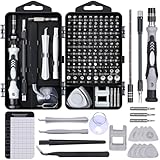
- 122 in 1 Precision Screwdriver Set: This precision screwdriver set contains 101 precision bits and 21 auxiliary tools—screwdriver handle, flexible shaft, extension rod, magnetizer, magnetic mat, spudgers, and more. It handles PC maintenance—RAM upgrades, SSD swaps, PC assembly—while also tackling teardowns and repairs of PS4, Xbox, other game consoles, drones, smartphones, tablets (battery and screen replacements), and other electronics. Rare and specialty bits are included for servicing specialized devices.
- Maximize Repair Efficiency: Engineered for efficient repairs, the handle is ergonomically designed and non-slip, fitting comfortably in your hand and spinning smoothly. A 4.56-inch alloy-steel extension shaft offers high hardness and resists bending, while the spring-constructed flexible shaft flexes up to 180° to reach and turn tiny screws deep inside a chassis with ease.
- Dual-Magnet Design: The kit includes two magnetic tools. A magnetizer boosts bit magnetism to pick up screws, and a magnetic mat holds and organizes every tiny screw you remove. Used together, they slash the risk of loss or mix-ups, keeping every teardown and reassembly neat and orderly.
- Quality First: The bits are forged from Cr-V steel and heat-treated to 60 HRC for exceptional hardness, strength, and deformation resistance—ideal for long-term electronic repairs. Spare bits in the most common sizes are also included, so a lost tip never leaves you short, keeping the kit fully functional and extending its service life.
- Compact Storage: Every component is neatly labeled and organized in the case—ready for home, office, or on-the-go use. This all-in-one kit saves money and eliminates service appointments. It’s the perfect household essential and an ideal gift for husbands, dads, sons, or friends who love electronics repair and DIY projects.
- AI and data-center compute: Accelerators and high-end compute systems are strong drivers because they need dense compute, high memory bandwidth and substantial I/O.
- HPC and networking: High-performance processors, switches and other networking silicon benefit from modular integration and demanding package-level bandwidth.
- Custom cloud silicon: Large system companies may use multi-die designs to tailor compute and I/O to workloads, especially when they can coordinate the full platform.
- High-end processors: Chiplet designs can support product families and combine functions built on different process nodes.
- Automotive and ADAS: Centralized vehicle compute and advanced driver-assistance systems offer a potential next wave, but safety, reliability and long product lifecycles make qualification more demanding.
- Consumer, communications, industrial and embedded systems: These are possible applications, but the commercial case depends on whether modularity and integration benefits outweigh package and validation costs.
Consortium demonstrations are useful evidence that technical interoperability work is progressing; they do not establish a broad merchant market or high-volume deployment. The UCIe Consortium’s account of its 2026 Chiplet Summit describes cross-vendor demonstrations and participation by companies including Arm, Marvell, Cadence, Synopsys, Siemens, Alphawave Semi, Keysight and Tenstorrent. Those are consortium-reported ecosystem signals, not independent proof of routine production use. The UCIe Summit report also discusses UCIe 3.0 data rates of 48 GT/s and 64 GT/s. GT/s measures transfers per second, not application payload bandwidth; usable throughput depends on factors including encoding, lane count, package and protocol overhead.
The businesses behind a chiplet product
A finished chiplet product depends on more than the dies themselves. Value—and commercial opportunity—can accrue across a chain of suppliers and services.
Outdated Drivers Are Slowing You Down
One free scan finds every outdated or missing driver and matches the right update for your exact hardware.Free scan · exact hardware matchPC Slower Than It Used to Be?
A free scan shows the junk files, broken settings and background clutter dragging Windows down - then fixes them in one click.Free scan · Windows 10 & 11Advanced packaging and manufacturing
Packaging connects the dies and has to meet requirements for bandwidth, latency, power, thermal performance, mechanical reliability, yield and test. Approaches include 2D multi-die packages, 2.5D interposers, 3D stacking, silicon bridges, fan-out packages and different substrate technologies. Intel promotes EMIB and Foveros for multi-die integration; TSMC’s 3DFabric Alliance coordinates companies across EDA, IP, memory, design services, OSAT, substrates and testing.
Alliance membership signals ecosystem coordination, not guaranteed availability for every customer or design. TSMC lists partners across categories that include Cadence, Keysight, Siemens EDA, Synopsys, Arm, Alphawave, Micron, Samsung, SK hynix, Amkor, ASE, Advantest and Teradyne. Intel’s chiplet and packaging overview and TSMC’s 3DFabric Alliance describe their respective ecosystems.
EDA, IP and design services
Multi-die engineering extends beyond conventional SoC design. Teams must co-optimize die partitioning, package topology, bump maps, interposer routing, power delivery, thermal behavior, signal integrity, mechanical stress, test and verification. Cadence describes an integrated multi-die and 3D-IC flow spanning design, packaging and system analysis. Synopsys offers UCIe controller, PHY and verification IP; its advertised capabilities and support depend on the specific implementation and engagement. Cadence’s 3D-IC design solutions and Synopsys’ UCIe IP overview describe those offerings.
Rank #3

- [Professional Configuration] This set includes a precision screwdriver handle, 56 bits, 7 spudgers, opening picks, magnetizer, tweezers, brush, and Anti-static wrist strap and metal scraper. Designed for electronic equipment repair, it makes computer assembly, motherboard repair, hard disk replacement, memory upgrades, and cleaning and maintenance easy and efficien.
- [Wide Application] PH000 for Switch, PH00 for PS4/PS5/Xbox One X, T8H for PS5/Xbox 360, T9H for Xbox One/PS4 Slim, T10H for Xbox, Y2.5 for Wii/DS/GBA, Y00 for Switch Joycon, Gamebit 3.8 for 64/Virtual Boy, Gamebit 4.5 for Sega Master System/Game Cube
- [Sturdy and Durable] CRV steel bits with a hardness of 60HRC can withstand 851° quenching, are wear‑resistant, and resist deformation and breakage. The bits can handle any task, whether tightening screws or disassembling a computer case, with ease. The tear‑resistant Oxford cloth case ensures tools stay organized and secure.
- [Humanized Design] Textured handle for secure grip, 360° rotating top with a built-in bearing makes it easy to handle tasks such as removing a motherboard or installing a power supply. Magnetizer adjusts magnetism as needed for maintenance tasks
- [Gift For Gamers] Compact and versatile, perfect for electronics enthusiasts and gamers. A thoughtful gift for any occasion. Experience the UnaMela Upgraded Precision Screwdriver Set now
These tools and services can be significant parts of the economics even where no standalone chiplet is sold. Foundries, OSATs, substrate makers, test-equipment firms and design-service companies also have roles in bringing a multi-die product to market.
Recommended Free Tools
Reusable dies and the still-forming marketplace
The most ambitious version of the market is a buyer assembling a product from dies supplied by multiple vendors. That model needs more than compatible electrical interfaces: it requires known-good-die specifications, package compatibility, power and thermal models, software and firmware support, security information, reliability data, testing, licensing and clear responsibility when a product fails.
AMD describes interim third-party integration approaches, including intermediate third-party dies and third-party adapted dies. These models point to controlled partnerships as a bridge toward broader reuse; they are not evidence that unrelated vendors’ dies are already interchangeable by default. AMD’s chiplet architecture white paper sets out those approaches.
UCIe: an important interface, not a complete marketplace
Universal Chiplet Interconnect Express (UCIe) is an open specification for die-to-die connectivity. It addresses a major part of interoperability by defining physical and protocol elements. The UCIe Consortium lists resources and specifications through UCIe 3.0. The consortium presents the latest version as an evolution intended to improve data rates, bandwidth density, power behavior and manageability. The UCIe Consortium and its specification resources are the primary references for the standard.
Implementing the same UCIe revision does not make two dies plug-and-play. Compatibility still depends on package type, physical-layer implementation, lane configuration, protocol, voltage, bump layout, thermal limits, firmware, memory or coherency assumptions, security requirements and validation. Buyers should also confirm compliance and interoperability evidence rather than relying only on a supplier’s “UCIe-compatible” description.
Rank #4

- 【Wide Application】STREBITO precision screwdriver set has 120 bits, complete with every driver bit you'll need to tackle any fix or DIY project. In addition, this PC tool kit comes with 22 accessories, such as magnetizer, magnetic mat, suction cup, spudger, cleaning brush, tweezers, etc. Whether you're a professional technician or a amateur, this essential electronics toolkit has what you need to repair all PC, iphone, laptop, PS5, switch, game controller, tablets, glasses, watch, etc
- 【Humanized Design】Our iphone repair tool kit has been designed with the professional in mind to maximize your repair capabilities. The screwdriver features a rubberized, ergonomic handle with swivel top, provides a comfort grip and smoothly spinning. Magnetic bit holder transmits magnetism through the bit, helping you handle small screws and parts. The blade can be extended for working in hard-to-reach areas. And flexible extension shaft is useful for removing screw in tight spots
- 【Magnetic Design】We put 2 magnetic tools in this computer repair tool kit that save your energy and time, make your fixing job easier. The 5.7 x 3.3" magnetic project mat can keep all tiny screws and parts organized, prevent from losing and messing up, make your repair work more efficient. Magnetizer demagnetizer tool helps strengthen the magnetism of the screw driver tips to grab screws, or weaken it to avoid damage to your sensitive electronics
- 【Organize & Portable】All screwdriver bits are stored in rubber bit holder which marked with type and size for fast recognizing. And the repair tools are held in a tear-resistant and shock-proof oxford bag, offering a whole protection and organized storage, no more worry about losing anything. The tool bag with nylon strap is light and handy, suit for your tool case, easy to carry out, or placed in the home, office, car, drawer and other places
- 【Lifetime Warranty】The precision bits are made of 60HRC Chromium-vanadium steel which is resist abrasion, oxidation and corrosion, sturdy and durable, ensure long time use. This computer screwdriver kit is covered by STREBITO lifetime warranty and 30 days money-back. If you have any issues with your phone repair tool kit, simply contact customer service for troubleshooting help, parts, replacement or refund. Buy the STREBITO electronic screwdriver set with confidence
UCIe is not the only approach. Intel’s AIB, OCP-related BoW work, proprietary vendor links and application-specific interfaces remain relevant. Open standards may broaden choice, while a vertically integrated company may prefer a proprietary link that it can optimize for power, latency, package and software across its own system. The OCP Open Chiplet Economy includes work on EDA flows, collateral, economics and interfaces; it is a collaborative industry effort, not itself a commercial chiplet exchange. OCP’s Open Chiplet Economy outlines its workstreams, while its 2024 ODSA business analysis discusses chiplet-system economics and technology.
Independent reader supportYour contribution helps us test, update, and keep practical guides available for everyone.Why chiplets are not yet Lego blocks
A reusable die has to fit into a particular electrical, physical and commercial system. Several barriers make open, multi-vendor integration slower than the growth of chiplet-based products.
- Package-specific engineering: Interposers, bridges, substrates, bump maps, power delivery and thermal design are not universal.
- System compatibility: Dies must agree on protocols, memory semantics, firmware, security and error handling—not just a signaling standard.
- Manufacturing and test: Known-good-die screening, die matching, package assembly, repair and final test add complexity. A multi-die package can have more failure points than a single die.
- Reliability and responsibility: Cross-vendor products need agreed quality data, warranty terms, failure analysis and liability arrangements.
- Commercial scale: A merchant chiplet supplier must justify qualification, inventory and support across multiple processes and customer designs. Demand may be too uncertain if every integration requires customization.
- Security and provenance: Integrators need ways to authenticate dies, verify origin and address vulnerabilities or malicious behavior across suppliers.
The OCP has highlighted market sizing, adoption potential, price sensitivity and vendor profitability as questions that must be answered before supply-side investment in an open chiplet economy can scale. OCP’s discussion of chiplet ecosystem development frames these as commercial as well as technical challenges.
When a chiplet architecture makes economic sense
The business case is strongest when the design can reuse dies at meaningful volume, reserve leading-edge manufacturing for functions that need it, or deliver system performance that a monolithic alternative cannot achieve efficiently. It is weaker when packaging and qualification costs outweigh those benefits or when the product lacks enough volume to amortize system development.
Free tools Windows power users keep installed
One-click scans. No signup required.
| Potential economic advantage | Cost or risk to include |
|---|---|
| Smaller dies may improve yield in some designs. | Yield must be calculated across each die, assembly, interconnect and final package. |
| Reuse may reduce duplicated IP and design effort across product variants. | Each package, process and customer combination may still require engineering and validation. |
| Functions may use different process nodes, including mature nodes for non-critical blocks. | More complex integration can increase packaging, substrate, assembly and test expense. |
| Modular development may speed a program where validated dies and flows already exist. | A first-of-its-kind package or multi-vendor design can lengthen development and verification. |
A complete cost model should include wafer cost and expected yield for every die; package and substrate; assembly and test; EDA and IP licensing; masks and tape-out; qualification; inventory and logistics; software and system validation; and expected reuse across products. It should also compare performance, latency, bandwidth, power delivery, supply resilience and time to market with the monolithic alternative.
Best Value
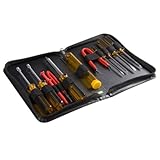
- ALL-IN-ONE SOLUTION: This 11-piece computer tool kit provides you with everything you’ll need to repair and maintain today’s computers.
- SECURE DESIGN: Designed to be used in offices or by computer services people, the computer tool set features a high quality vinyl case and is zippered to keep everything in one place.
- VERSATILE FUNCTIONALITY: This PC repair tool kit is perfect for computer technicians, off-site technicians and hobbyists looking for a basic tool kit to perform PC repairs and maintenance from home.
- MAXIMUM PORTABILITY: This PC tool kit is perfect for technicians who need a kit of common repair tools in a small, portable package.
Packaging capacity and supply-chain exposure
Advanced packaging is not a back-end detail. AI accelerators and systems built around high-bandwidth memory (HBM) rely on packaging, substrates, assembly and test as well as wafer fabrication. A product can face a constraint in those steps even if wafer capacity is available. Materials, supplier coordination and geographic concentration can also affect delivery and resilience.
Deloitte characterizes advanced packaging as a potential geopolitical chokepoint in chiplet-based supply chains. The practical exposure depends on the design and its suppliers: teams should examine reliance on a single foundry or packaging provider, HBM and substrate availability, export controls, geographic concentration and whether a credible second source exists. Deloitte’s 2026 supply-chain analysis discusses the growing importance of back-end processes.
Automotive and other potential next markets
Automotive chiplets could support scalable compute, reuse across vehicle platforms and integration of functions built on different processes. But cars require long availability periods, functional-safety evidence, security, thermal and vibration reliability, and detailed failure analysis. Multiple dies and interfaces add qualification and service complexity. UCIe’s automotive working group has framed interoperability, reliability, functional safety and long lifecycles as relevant requirements; that standards activity indicates a use case under development, not mass adoption. UCIe’s webinar materials address automotive requirements.
What’s actually slowing this PC down?
Pick the symptom - the matching free tool is one click away.
Industrial, aerospace, communications and edge-computing systems may also benefit from modular designs. Their adoption will depend on application-specific reliability, power, cost and lifecycle requirements, rather than on chiplets being inherently superior to a single die.
Where the market is headed
The likely progression is from proprietary multi-die products toward more qualified partnerships and, later, selective third-party chiplet catalogs. Vertically integrated platforms and coordinated foundry, EDA and packaging ecosystems are likely to remain central in the near term. UCIe can help standardize a key interface, but it cannot by itself settle package design, software, qualification, supply or liability.
Reusable chiplets may emerge first in functions with clearer boundaries—such as I/O, connectivity, memory-related functions, security or domain-specific acceleration—where interfaces and validation can be defined for a particular class of system. The pace will depend on available packaging and test capacity as much as on interface data rates. Broad plug-and-play commerce remains a longer-term possibility, not an established near-term outcome.
Checklist for evaluating a chiplet strategy
For an architecture team, investor or buyer assessing a program, the critical questions are specific to the proposed package and workload:
The Tool Desk
Outbyte PC Repair FREEClear out junk files and repair common Windows errorsFree Scan →Outbyte Driver Updater FREEScan for outdated or missing drivers - takes under a minuteDriver Scan →- Performance: Is die-to-die latency acceptable? Is usable bandwidth adequate after protocol overhead? Can the package provide the required power and memory behavior?
- Interoperability: Which UCIe revision, PHY, package type, protocols, lane width and rate are supported? Is there compliance or cross-vendor interoperability evidence? Are firmware, error handling, manageability, test and repair included?
- Cost and schedule: Does the whole-product model include dies, yield, package, substrate, assembly, test, IP, EDA, qualification, inventory and system software? Are reusable components already validated?
- Supply resilience: How dependent is the design on a specific foundry, advanced-packaging provider, substrate or HBM source? Is a second source technically and commercially feasible?
- Reliability and lifecycle: Are package reliability, thermal cycling, mechanical stress, electromigration, field-failure isolation and end-of-life arrangements covered? Automotive and infrastructure products may demand especially long support periods.
- Commercial responsibility: Who owns integration, warranty, security updates, die provenance and failure analysis when multiple suppliers contribute?
For financial analysis, distinguish revenue from chiplet-based end products from revenue earned by the enabling ecosystem and from sales of reusable third-party dies. Those layers have different business models, suppliers and adoption risks; combining them into one headline market figure can obscure where value actually accrues.
Quick Recap
Product prices and availability are accurate as of the date/time indicated and are subject to change. Any price and availability information displayed on Amazon at the time of purchase will apply.



