Quick wins for a faster PC:
Clear out junk files and repair common Windows errorsFree Scan →Fix the driver behind crashes, sound loss and screen glitchesFind Drivers →Some links on this page are affiliate links: if you buy through them we may earn a commission, at no extra cost to you.
Texas Instruments has agreed to acquire Silicon Labs for $231 per share in cash, in a transaction valued at approximately $7.5 billion on an enterprise-value basis. The deal was announced on February 4, 2026, but it is not yet the same as a completed acquisition. Silicon Labs said the U.S. Hart-Scott-Rodino waiting period expired on May 22, 2026; the companies expected closing in the first half of 2027, subject to shareholder approval and other conditions.
The deal in brief
| Item | Details |
|---|---|
| Announcement | February 4, 2026 |
| Offer | $231 in cash for each Silicon Labs share |
| Estimated transaction value | Approximately $7.5 billion in enterprise value |
| Buyer | Texas Instruments, through wholly owned Caldwell Merger Corp. |
| Status | Pending; not reported as completed in the transaction-status source available for this article |
| Expected closing | First half of 2027, subject to remaining conditions |
Under the proposed structure, Caldwell Merger Corp. will merge with Silicon Labs, with Silicon Labs surviving as a wholly owned subsidiary of Texas Instruments. Silicon Labs shareholders would receive cash rather than shares in TI, subject to the terms of the merger agreement.

The $7.5 billion figure is an estimated enterprise value, not simply the amount of equity value paid directly to shareholders. TI has been reported as planning to fund the cash consideration with a combination of cash on hand and new debt. The definitive agreement establishes what shareholders are to receive; it does not mean the entire purchase is necessarily financed solely from existing cash.
The offer represented approximately a 69% premium to Silicon Labs’ unaffected closing price before takeover speculation became public, according to Reuters-syndicated reporting. That premium gives Silicon Labs investors a substantial cash-exit opportunity, while also raising the standard TI must meet through growth and integration.
#1 Best Overall

- The C2000TM DelfinoTM MCU LaunchPadTM Development Kit is an affordable evaluation platform that provides designers with a low-cost development kit for high-performance digital control applications. This tool provides an excellent starting point for the development of many high-end digital control applications such as industrial drives
- Containing project the USB Cable
- TMS320F28379D Microcontroller Development Board 200MHz CPU 1MB Flash Win
- Supported Device Technology Microcontroller
Why Texas Instruments wants Silicon Labs
The strategic logic is less about adding another generic “IoT” business and more about extending TI’s embedded-electronics portfolio into secure wireless connectivity.
Texas Instruments is widely associated with analog semiconductors and embedded processing. Those components help electronic systems sense conditions, manage power, process information, and control equipment. Silicon Labs adds wireless system-on-chip products, connectivity technologies, mixed-signal expertise, embedded software, and security capabilities that allow devices to communicate with one another and with networks.
That combination could give TI a broader offering for customers developing industrial equipment, smart-home products, connected lighting, smart meters, energy infrastructure, and other connected devices. A customer that already buys TI analog, power-management, or embedded-processing components could potentially source wireless connectivity products from the same supplier.
TI’s stated rationale also includes its global sales organization, customer relationships, manufacturing network, and assembly-and-test capabilities. These are company-stated benefits, not guaranteed results. The acquisition will create value only if the combined company can preserve Silicon Labs’ technology and customer relationships while executing the manufacturing and distribution opportunities it has identified.
What Silicon Labs brings
Silicon Labs describes its business as secure, intelligent wireless technology. Its products sit at the embedded-device layer rather than the AI-accelerator layer. They help equipment detect information, connect over wireless protocols, exchange data, and operate securely with low power consumption.
Its portfolio is associated with:
- Wireless system-on-chip devices;
- Smart-home and building-automation equipment;
- Industrial monitoring and automation;
- Connected lighting;
- Smart meters and energy infrastructure;
- Consumer and other Internet-connected devices; and
- Development software, security features, reference designs, and tools that support those products.
Silicon Labs reported $785 million in full-year 2025 revenue, up 34% from the prior year. That growth is an important part of the valuation discussion, but one strong year does not by itself establish how durable demand will be through the transaction’s expected closing and integration period.
The manufacturing opportunity—and its risks
Manufacturing is central to TI’s case for the deal. Silicon Labs has historically relied more heavily on external manufacturing partners, while TI operates substantial internally owned semiconductor capacity. TI has pointed to its 300-millimeter wafer infrastructure and assembly-and-test capabilities as potential advantages for Silicon Labs products. Reporting has also identified 28-nanometer process technology as relevant to parts of Silicon Labs’ wireless portfolio.
In theory, bringing more production into TI’s manufacturing network could improve supply control, cost performance, and resilience. It could also support the companies’ forecast of approximately $450 million in annual manufacturing and operational synergies within three years after closing.
That forecast is a management estimate—not a guaranteed reduction in costs or an immediate increase in profit. Moving a wireless chip between manufacturing environments can involve more than changing a production line. The companies may need to address process compatibility, packaging, testing, certification, software behavior, supply qualification, and customer requalification. Customers may also have to approve changes before they use a revised component in a production system.
For that reason, “Silicon Labs products could benefit from TI manufacturing” is more accurate than saying that all Silicon Labs products will quickly move into TI fabs. Some products may transfer, some may remain with external partners, and some may be redesigned or rationalized over time.
Rank #3
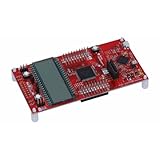
- MSP-EXP430FR6989 TI MCU LaunchPad
What the $450 million synergy target means
The companies forecast approximately $450 million of annual manufacturing and operational synergies within three years after closing. Investors should separate that statement into several questions:
The Tool Desk
Outbyte PC Repair FREERepair Windows errors before they cause bigger problemsFix Now →Outbyte Driver Updater FREEScan for outdated or missing drivers - takes under a minuteDriver Scan →- Manufacturing savings: How much depends on using TI-owned wafer capacity, assembly, and testing?
- Timing: How quickly can products move without disrupting supply or customer qualification?
- Integration costs: What engineering, equipment, retention, restructuring, and transition expenses must be incurred first?
- Revenue benefits: Will cross-selling create additional sales, or is most of the forecast limited to cost savings?
- Portfolio choices: Could overlapping products be discontinued, reducing choice for some customers?
Annual savings are not the same as annual net earnings. The eventual financial benefit will depend on the cost of achieving those savings, Silicon Labs’ underlying growth, market conditions, and TI’s financing costs.
What customers and employees should watch
In the near term, the most important distinction is between the period before closing and the integration period after closing. Silicon Labs told employees that it expected “business as usual” until the transaction was finalized, according to company materials. That does not determine what happens after closing, but it signals that customers should not assume immediate product or support changes while the deal remains pending.
Customers will likely focus on:
- Whether existing product road maps remain intact;
- Continued access to software development kits, drivers, tools, and reference designs;
- Security patches and long-term support commitments;
- Any manufacturing or packaging changes;
- Product availability during qualification and production transfers;
- Distribution and technical-support arrangements; and
- Whether overlapping products are consolidated.
The potential upside is a broader supplier relationship that combines wireless connectivity with analog, power, and embedded-processing components. The potential downside is reduced independence, changes to road maps, or longer qualification cycles. Wireless products are supported by software and developer ecosystems as well as silicon, so integration quality will matter beyond factory capacity alone.
Regulatory and shareholder approval
The transaction still depends on customary closing conditions, including approval by Silicon Labs shareholders, applicable governmental or regulatory approvals, and satisfaction of the conditions set out in the merger agreement.
Do these 3 things before closing this tab:
1Repair Windows errors before they cause bigger problems2Fix the driver behind crashes, sound loss and screen glitches3Clear out junk files and repair common Windows errorsRank #4
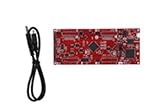
- DEVELOPMENT PLATFORM: Texas Instruments C2000 MCU F280025C LaunchPad development kit for rapid prototyping and evaluation
- CONNECTIVITY: Features USB connection cable for programming, debugging, and power supply
- PROCESSOR: Built around the F280025C microcontroller, ideal for real-time control applications and digital signal processing
- DESIGN FEATURES: Red PCB board with comprehensive development capabilities and expansion headers for additional functionality
- COMPATIBILITY: Supports TI's development ecosystem with Code Composer Studio and other programming tools
Silicon Labs disclosed on May 26, 2026, that the U.S. Hart-Scott-Rodino antitrust waiting period expired at 11:59 p.m. Eastern Time on May 22. That satisfies one U.S. antitrust waiting-period condition, but it does not establish that every regulatory approval or other closing condition has been completed. The relevant transaction-status filing should be read as an update to the deal process, not as a closing announcement.
The merger agreement provides termination rights if the transaction has not closed by February 4, 2027, with possible extensions under specified regulatory circumstances to August 4, 2027, and February 4, 2028. These dates are contractual mechanisms and should not be confused with a guaranteed closing schedule. The exact rights and extensions depend on the agreement’s conditions, as described in the merger materials.
What happens if the deal fails?
The merger agreement includes termination-fee provisions, but they are conditional rather than automatic cancellation charges. Silicon Labs may owe approximately $259 million in specified circumstances. TI may owe approximately $499 million in specified circumstances. The applicable fee depends on why and how the agreement is terminated.
Potential failure points include a rejected shareholder vote, delayed or unsuccessful regulatory review, a competing bidder, a breach of the agreement, or failure to satisfy another closing condition. If the transaction fails, Silicon Labs’ share price could fall substantially from the takeover price, although the size of any decline cannot be predicted. The possibility of a failed deal is therefore part of the risk borne by shareholders who continue holding the stock while waiting for completion.
Free tools Windows power users keep installed
One-click scans. No signup required.
What it means for investors
Silicon Labs shareholders
The $231 cash offer provides a fixed proposed exit price, subject to closing. The trade-off is certainty of consideration versus waiting risk. Shareholders must weigh the value of the offer against the possibility of delay, deal failure, changing market conditions, and the opportunity cost of holding the shares until the transaction is completed.
Best Value

- 1 Pcs MSP-EXP430FR5994 MSP430 MSP430FR5994 LaunchPad Dev Kit
The cash structure also means Silicon Labs investors would not directly participate in TI’s future share-price performance through merger consideration. Their economic outcome is primarily tied to whether the deal closes on the agreed terms, rather than to receiving TI stock.
Texas Instruments shareholders
TI shareholders face a different set of questions. The acquisition could broaden TI’s product portfolio and create manufacturing and cross-selling opportunities, but TI is committing to a large transaction and may use new debt alongside cash on hand.
Investors should examine future filings for the final financing mix, changes in leverage, purchase-accounting effects, integration costs, employee-retention expenses, manufacturing-transfer progress, and evidence that the acquired business is maintaining customer and software support. The $450 million synergy forecast should be evaluated against the price paid and the time required to achieve the savings. Neither the initial market reaction nor management’s projections alone proves that the acquisition is attractive or unattractive.
Crashes, No Sound, or Screen Glitches?
Random freezes, missing sound and display glitches usually trace back to one bad driver. Find and replace yours safely.Free scan · under a minuteWindows Errors? Fix Them Before They Spread
Repair common Windows errors and clear accumulated junk for a smoother, more stable PC - no reinstall needed.Free scan · no reinstallWhat the deal could mean for semiconductor competition
The proposed acquisition would move TI further beyond a narrow analog identity by adding a significant secure-wireless and embedded-connectivity portfolio. It could make TI a more complete supplier for companies building connected industrial and consumer systems.
That may increase competitive pressure on independent connectivity suppliers and encourage customers to consider more integrated sourcing relationships. It may also create a stronger alternative for customers that prefer to purchase multiple embedded components from one large semiconductor company.
However, the deal’s eventual effect on market competition cannot be measured from the announcement alone. It will depend on how TI manages product overlap, pricing, software support, manufacturing access, and the retention of Silicon Labs’ engineering and customer-facing teams.
What happens next
- Shareholder process: Silicon Labs shareholders must vote on the transaction under the terms of the merger agreement.
- Regulatory process: The HSR waiting period has expired, but other applicable approvals and closing conditions must still be tracked.
- Integration planning: The companies must prepare for manufacturing, sales, software, support, and employee integration without treating proposed synergies as completed savings.
- Closing: The companies expected the transaction to close in the first half of 2027, subject to the required conditions.
- Post-closing execution: Customers and investors will need to monitor product continuity, qualification schedules, manufacturing transfers, retention, and the pace of synergy realization.
Bottom line
Texas Instruments’ proposed purchase of Silicon Labs is a real and strategically significant pending acquisition, not a completed takeover. TI is paying $231 per Silicon Labs share in cash for an estimated $7.5 billion enterprise value to add secure wireless connectivity to its analog and embedded-processing portfolio. The strongest rationale is the combination of complementary technology, TI’s manufacturing network, and possible cross-selling.
What’s actually slowing this PC down?
Pick the symptom - the matching free tool is one click away.
The main uncertainties are execution-related: whether products can move into TI’s manufacturing system without disruption, whether software and customer support remain strong, whether the forecast $450 million in annual synergies materializes, and whether the transaction closes on schedule. The HSR waiting period’s expiration is meaningful progress, but it does not eliminate the remaining shareholder, regulatory, financing, and integration risks.
Quick Recap
Product prices and availability are accurate as of the date/time indicated and are subject to change. Any price and availability information displayed on Amazon at the time of purchase will apply.



