Some links on this page are affiliate links: if you buy through them we may earn a commission, at no extra cost to you.
Tariffs do not directly tax the digital delivery of a Netflix, Disney+ or Max stream. But they can raise costs across the physical and commercial systems that make streaming possible: televisions, streaming devices, production equipment, cloud hardware, advertising and corporate operations.
That means the first effect may be a more expensive TV or streaming stick—not a tariff line on your monthly bill. Subscription prices could rise later if services pass along higher costs, reduce promotions, add advertising or cut back on content.
The short answer: streaming is digital, but its economy is not
A tariff is generally collected from the importer of a covered physical good. The importer may be a manufacturer, distributor or retailer. That company can absorb the cost, accept a lower margin, change suppliers, reduce discounts or pass some of the expense to customers.
Quick wins for a faster PC:
Clear out junk files and repair common Windows errorsFree Scan →Fix the driver behind crashes, sound loss and screen glitchesFind Drivers →Repair Windows errors before they cause bigger problemsFix Now →Your streaming subscription is sold digitally, so the act of transmitting a show is not automatically tariffed. The more accurate description is tariffs on goods and inputs used by the streaming economy.
#1 Best Overall

- HD streaming made simple: With America’s number 1 TV streaming platform,* exploring popular apps—plus tons of free movies, shows, and live TV—is as easy as it is fun. *Based on hours streamed—Hypothesis Group
- Compact without compromises: The sleek design of Roku Streaming Stick won’t block neighboring HDMI ports, and it even powers from your TV alone, plugging into the back and staying out of sight. No wall outlet, no extra cords, no clutter.
- No more juggling remotes: Power up your TV, adjust the volume, and control your Roku device with one remote. Use your voice to quickly search, play entertainment, and more.
- Shows on the go: Take your TV to-go when traveling—without needing to log into someone else’s device.
- TV, simplified: With setup that only takes minutes, a simple-to-navigate Home Screen, and an uncluttered remote control that does all you need—Roku makes it easier to watch the TV you love.
The potential chain looks like this:
Tariffed input → higher company or advertiser costs → business response → consumer-visible effect.
For example, an imported TV component could increase the retail price of a television. A higher production-equipment cost could affect a studio’s future budgets. A tariff-hit advertiser could reduce its marketing spending, weakening the economics of an ad-supported tier.
None of those paths guarantees a specific subscription-price increase. They show why the claim is plausible without proving that tariffs will add a particular dollar amount to your bill.
What’s actually slowing this PC down?
Pick the symptom - the matching free tool is one click away.
What is actually exposed to tariffs?
| Streaming-related item | Possible consumer effect | Important qualification |
|---|---|---|
| Smart TVs and TV panels | Higher retail prices, fewer discounts or fewer available models | Exposure depends on origin, classification, inventory and sourcing |
| Streaming players and set-top boxes | Higher device prices or reduced promotions | Not every device or component is covered by every tariff |
| Routers and networking equipment | More expensive home-network upgrades | The effect on a streaming bill would be indirect |
| Cameras, lighting and production equipment | Higher budgets for new films and series | Existing contracts can delay the impact |
| Semiconductors and data-center hardware | Higher infrastructure or equipment costs | Specific exemptions and classifications matter |
| Steel, aluminum, copper and derivatives | Higher equipment, facility or logistics costs | Coverage depends on the product and its tariff treatment |
A February 2026 White House proclamation imposed a temporary 10% import surcharge that included certain electronics, but it did not create a flat 10% charge on every television or streaming device. The scope and exceptions depend on the product’s classification. Read the proclamation.
A separate January 2026 semiconductor action specified a 25% duty for covered semiconductor products, while excluding several uses, including non-data-center consumer applications. It would therefore be inaccurate to assume that every chip inside a Roku, Fire TV device or television automatically receives that 25% duty. See the semiconductor proclamation.
Metal tariff regimes also cover aluminum, steel, copper and certain derivative products. Again, the exact classification matters. Review the metals proclamation.
Rank #2

- Ultra-speedy streaming: Roku Ultra is 30% faster than any other Roku player, delivering a lightning-fast interface and apps that launch in a snap.
- Cinematic streaming: This TV streaming device brings the movie theater to your living room with spectacular 4K, HDR10+, and Dolby Vision picture alongside immersive Dolby Atmos audio.
- The ultimate Roku remote: The rechargeable Roku Voice Remote Pro offers backlit buttons, hands-free voice controls, and a lost remote finder.
- No more fumbling in the dark: See what you’re pressing with backlit buttons.
- Say goodbye to batteries: Keep your remote powered for months on a single charge.
The first hit may be your screen, not your subscription
Hardware prices can respond faster than streaming economics because retailers and manufacturers regularly reprice inventory, promotions and new product shipments.
Do these 3 things before closing this tab:
1Scan for outdated or missing drivers - takes under a minute2Clear out junk files and repair common Windows errors3Fix the driver behind crashes, sound loss and screen glitchesExisting stock may temporarily cushion shoppers from a tariff. A retailer with months of inventory may keep the advertised price unchanged while selling older units. But it may reduce the size of future discounts, raise prices on replacement shipments or stop carrying some models.
For someone planning to replace a television or streaming player, the sensible response is not panic-buying. Compare the current discount with the product’s expected support life, warranty, performance and compatibility. Also consider whether your existing smart TV already has the services you use. Buying another device may not save money if it duplicates functionality you already have.
Tariff exposure is not enough to justify buying a particular product. Country of origin, assembly location, component sourcing, retailer inventory and the applicable tariff classification all matter—and policies can change.
Why studios could pass higher costs to viewers
Streaming companies spend far more than the cost of delivering a video file. Their content operations can involve sets, costumes, props, cameras, lighting, editing systems, visual effects, transportation and other imported goods or materials.
Warner Bros. Discovery’s 2025 Form 10-K explicitly identifies U.S. or retaliatory tariffs as a risk that could increase production costs or reduce advertiser spending. That is direct evidence that a major streaming and entertainment company considers tariffs a potential operating threat. It is not proof that a particular price increase has already been caused by tariffs. Read Warner Bros. Discovery’s filing.
Rank #3

- 4K streaming made simple:With America’s number 1 TV streaming platform,* exploring popular apps—plus tons of free movies, shows, and live TV—is as easy as it is fun. *Based on hours streamed—Hypothesis Group
- 4K picture quality: With Roku Streaming Stick Plus, watch your favorites with brilliant 4K picture and vivid HDR color.
- Compact without compromises: Our sleek design won’t block neighboring HDMI ports, and it even powers from your TV alone, plugging into the back and staying out of sight. No wall outlet, no extra cords, no clutter.
- No more juggling remotes: Power up your TV, adjust the volume, and control your Roku device with one remote. Use your voice to quickly search, play entertainment, and more.
- Shows on the go: Take your TV to-go when traveling—without needing to log into someone else’s device.
The impact can take time to appear:
- A tariff takes effect.
- Existing productions continue under contracts and budgets already approved.
- New projects are bid with higher equipment, materials or logistics costs.
- Studios adjust budgets, production locations, marketing or greenlight decisions.
- The resulting changes reach the catalog months or years later.
A studio might respond by accepting lower margins, cutting marketing, shifting production, delaying a project, reducing the number of expensive originals or raising prices. Higher production costs do not automatically mean fewer shows, and they do not automatically mean a higher subscription bill.
Subscription prices could rise—but tariffs would be only one factor
Streaming companies have several ways to respond to higher costs:
- Raise the price of one or more plans.
- Reduce introductory discounts.
- Move 4K, downloads or additional simultaneous streams to a more expensive tier.
- Add or expand advertising.
- Push customers toward bundles.
- Reduce content spending or consolidate operations.
- Accept lower margins temporarily.
The industry was already increasing prices and pursuing profitability before the tariff question arose. S&P Global reported that the average entry-level U.S. subscription-video-on-demand price reached $10.77 in the first quarter of 2026. That is an industry average, not a prediction of your bill or the current price of any individual service. Read the S&P Global analysis.
A December 2025 Senate Commerce Committee report cited Netflix’s Standard plan at $17.99 and Premium plan at $24.99 at the time. Those figures are historical reference points, not guaranteed current U.S. prices. Streaming prices, features and promotions change frequently by plan and location. Read the Senate report.
The strongest conclusion is this: tariffs may not be the original reason for the next streaming price increase, but they can make an increase easier to justify and harder to absorb.
Ad-supported plans face a different kind of pressure
Tariffs can affect both sides of an ad-supported streaming service.
Rank #4
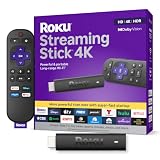
- Stunning 4K and Dolby Vision streaming made simple: With America’s number 1 TV streaming platform,* exploring popular apps—plus tons of free movies, shows, and live TV—is as easy as it is fun. *Based on hours streamed—Hypothesis Group
- Breathtaking picture quality: Stunningly sharp 4K picture brings out rich detail in your entertainment with four times the resolution of HD. Watch as colors pop off your screen and enjoy lifelike clarity with Dolby Vision and HDR10+.
- Seamless streaming for any room: With Roku Streaming Stick 4K, watch your favorite entertainment on any TV in the house, even in rooms farther from your router thanks to the long-range Wi-Fi receiver.
- Shows on the go: Take your TV to-go when traveling—without needing to log into someone else’s device.
- Compact without compromises: Our sleek design won’t block neighboring HDMI ports, so you can switch from streaming to gaming with ease. Plus, it’s designed to stay hidden behind your TV, keeping wires neatly out of sight
On the cost side, tariffs may reduce an advertiser’s margins or sales. Businesses facing higher costs may cut advertising budgets, shift spending to cheaper channels, demand stronger performance or concentrate campaigns in fewer markets. Warner Bros. Discovery identifies reduced advertiser spending as one possible tariff-related risk.
If ad revenue weakens, a service could increase ad loads, raise the price of its ad-supported tier, restrict features or make its ad-free plan more attractive by moving benefits behind it.
There is also an opposing possibility: if households become more budget-conscious, cheaper ad-supported plans may become more popular. Services could preserve low-cost tiers while charging more for ad-free viewing.
So tariffs do not point to one inevitable outcome. The effect could appear as a higher monthly price, more commercials, weaker promotions or fewer features rather than as a simple surcharge.
Independent reader supportYour contribution helps us test, update, and keep practical guides available for everyone.Data centers and bandwidth are a weaker, more speculative link
Streaming depends on cloud computing, storage, content-delivery networks, telecommunications equipment and data centers. Tariffs could affect some physical infrastructure, networking hardware or construction inputs.
Crashes, No Sound, or Screen Glitches?
Random freezes, missing sound and display glitches usually trace back to one bad driver. Find and replace yours safely.Free scan · under a minutePC Slower Than It Used to Be?
A free scan shows the junk files, broken settings and background clutter dragging Windows down - then fixes them in one click.Free scan · Windows 10 & 11But there is no reviewed evidence showing that tariffs alone will produce a predictable streaming-bandwidth surcharge. The chain from an infrastructure tariff to a specific Netflix or Disney+ price is indirect and depends on contracts, competition, energy costs and each company’s pricing decisions.
Best Value
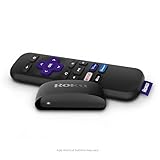
- Streaming made easy: Roku Express lets you stream free, live and premium TV over the Internet—right to your TV. It’s perfect for new users, secondary TVs and easy gifting—but powerful enough for seasoned pros
- Quick and easy setup: Just plug it into your TV with the included High Speed HDMI Cable and connect to the internet to get started
- Tons of power, tons of fun: Compact and power-packed, you’ll stream your favorites with ease; from movies and series on Apple TV, Prime Video, Netflix, The Roku Channel, HBO, Showtime and Google Play to cable alternatives like Hulu with Live TV and PlayStation Vue, enjoy the most talked about TV across free and paid channels
- Low cost, no extra fees: For under $30, Roku Express streaming device includes a High Speed HDMI Cable—and there’s no monthly equipment fee; with access to free TV on hundreds of channels, there’s plenty to stream without spending extra
- Simple remote: Incredibly easy to use, this remote features shortcut buttons to popular streaming channels
The January 2026 semiconductor action includes exemptions for several categories, including non-data-center consumer applications. Separately, the White House’s March 2026 Ratepayer Protection Pledge says participating hyperscalers and artificial-intelligence companies agreed to cover specified energy and infrastructure costs associated with their data centers rather than pass those costs to households. That pledge concerns energy and infrastructure obligations; it is not a guarantee that streaming prices will remain unchanged. Read the pledge.
When could consumers notice?
Days to weeks
- Retail prices or promotions for imported TVs and devices change.
- Existing inventory temporarily limits price increases.
- Some models become harder to find.
One to several quarters
- New device generations launch at different prices.
- Manufacturers revise sourcing and product specifications.
- Advertisers reduce or redirect spending.
- Streaming services change promotions, plans, bundles or ad loads.
One to several years
- Manufacturing and suppliers shift to other regions.
- Studios alter production locations and content budgets.
- More services consolidate or sell bundles.
- Price increases or reductions in content value become more visible.
There is no universal timetable. The outcome depends on inventory, country of origin, tariff classification, supplier contracts, hedging, production schedules and how much cost each company is willing to absorb.
How to protect your entertainment budget
Audit subscriptions before buying anything
List every service, renewal date and monthly or annual cost. Cancel services you are not actively watching, then rotate subscriptions around the shows you want. Check renewal notices rather than relying on old price lists.
Free tools Windows power users keep installed
One-click scans. No signup required.
Compare ad-supported and ad-free value
An ad-supported tier may reduce the monthly charge, but the trade-off can include commercial interruptions, lower video quality, restricted downloads or other limitations. The cheapest plan is not necessarily the best value if it makes you watch less comfortably.
Use annual plans carefully
An annual plan can protect you from a price change during its term only if the provider’s terms actually lock in that price. It is useful for a service you expect to use consistently, but wasteful if you watch only one or two shows before canceling.
Consider free ad-supported services
Tubi, Pluto TV and the Roku Channel can reduce recurring spending for viewers willing to accept more advertising, rotating catalogs and fewer new releases. Check availability and privacy terms before signing up.
Be cautious with bundles
A bundle can lower the effective cost per service, especially for households that use every included product. But bundles may include unwanted services, have separate content rights, make cancellation less convenient or become more expensive after an introductory period.
Do not panic-buy hardware
If your TV or streaming device works, waiting may be reasonable. If you need a replacement soon, compare today’s price with the model’s software support, warranty and likely useful life. Tariffs may raise prices, but retailers can still discount older inventory and policy can change.
What the headline should—and should not—mean
“Tariffs will make streaming more expensive” should be read as a forecast about pressure across the ecosystem, not as a guaranteed 10% increase in every subscription.
Quick Recap
- Correct: tariffs can raise the cost of covered imported goods used by streaming companies, studios, advertisers and households.
- Correct: companies may pass along some costs through prices, advertising, reduced promotions or lower content investment.
- Incorrect: every streaming subscription is directly tariffed.
- Incorrect: a 10% import surcharge means a 10% increase in a monthly streaming plan.
- Unsupported: every semiconductor tariff applies to every Roku, Fire TV device or smart TV.
- Speculative: data-center tariffs will automatically appear on a particular streaming bill.
Product prices and availability are accurate as of the date/time indicated and are subject to change. Any price and availability information displayed on Amazon at the time of purchase will apply.



