Some links on this page are affiliate links: if you buy through them we may earn a commission, at no extra cost to you.
Super Micro Computer reported record fiscal second-quarter revenue of about $12.7 billion for the quarter ended December 31, 2025, up 123% year over year and 153% from the prior quarter. The February 3, 2026 result topped the company’s $10 billion–$11 billion forecast, but roughly $1.5 billion of delayed shipments shifted from Q1, gross margin fell to 6.3%, and one customer accounted for about 63% of sales. For investors, the quarter showed the scale of AI-server demand—and why revenue growth alone is not enough to judge its quality.
What Supermicro reported for fiscal Q2 2026
Supermicro’s fiscal second quarter ended December 31, 2025; it was not calendar Q2 2026. The company announced results on February 3, 2026. Revenue was approximately $12.7 billion, compared with about $5.7 billion in the year-earlier quarter and $5.0 billion in fiscal Q1 2026. That was 123% year-over-year growth and 153% sequential growth. Revenue exceeded the company’s prior Q2 guidance of $10 billion to $11 billion. Supermicro described it as record Q2 revenue, not a record that should be generalized to every later quarter. Supermicro’s earnings release and its SEC-filed results provide the reported figures.
What drove the surge—and what was timing
Rack-scale AI systems and GPU platforms
Management said GPU-based AI platforms generated more than 90% of Q2 revenue. The growth reflected rapid deployments of rack-scale systems for large data-center customers, alongside Supermicro’s broader Data Center Building Block Solutions (DCBBS) approach. DCBBS combines servers with components such as storage, networking, power and cooling, rather than treating a server as an isolated purchase. The company also described manufacturing expansion intended to support AI and sovereign-AI deployments. These are management’s explanations of its results, not an independent measure of the overall AI market.
Do these 3 things before closing this tab:
1Repair Windows errors before they cause bigger problems2Scan for outdated or missing drivers - takes under a minute3Clear out junk files and repair common Windows errorsEnterprise and channel activity
Supermicro also cited expansion in enterprise and channel activity, although the quarter’s revenue mix was heavily weighted toward OEM, appliance and large-data-center business. The broader customer base matters to the durability of growth, but Q2’s reported mix does not show that this smaller part of the business offset the concentration in major deployments.
#1 Best Overall

- Key Features Intel Xeon Processor D-1718T, CPU TDP 46W Up to 256GB Registered ECC RDIMM, DDR4-2933MT/s, in 4 DIMM slots 4 GbE and Dual 25G SFP28 1 Internal 3.5" or 4 Internal 2.5" drive bays 3x 40x28mm 4-PIN PWM fans 200W Low-noise AC-DC power supply 1x VGA, 2 USB 3.0
About $1.5 billion of shipments moved from Q1
Management said customer-readiness issues delayed approximately $1.5 billion of shipments from Q1 into Q2. Recognizing those shipments in Q2 helped lift sequential revenue. It does not negate customer demand, but it means the 153% quarter-over-quarter increase should not be read as a pure measure of newly accelerated orders. The timing and platform-mix details come from management’s prepared remarks.
AI exposure brought concentration risk
The same mix that powered sales left the quarter unusually dependent on large deployments. Management said OEM/appliance and large-data-center revenue was about $10.7 billion, or 84% of total revenue. One large data-center customer represented approximately 63% of revenue, and the United States accounted for 86%. The company did not identify that customer in the cited remarks, so the figure should not be used to infer an identity.
Supermicro builds and sells systems and infrastructure; processors and accelerators are supplied by companies including NVIDIA, AMD and Intel, while hyperscalers, enterprises, governments and sovereign-AI programs buy or deploy the systems. The figures show exposure to AI infrastructure spending, but also make results sensitive to the buying decisions and readiness of a small number of large customers, platform availability and geographic conditions.
Crashes, No Sound, or Screen Glitches?
Random freezes, missing sound and display glitches usually trace back to one bad driver. Find and replace yours safely.Free scan · under a minutePC Slower Than It Used to Be?
A free scan shows the junk files, broken settings and background clutter dragging Windows down - then fixes them in one click.Free scan · Windows 10 & 11Rank #2

- Intel Xeon D-2123IT Quad-Core Processor; 2.2 - 3.0 GHz
- Supports up to 512GB ECC LRDIMM Memory
- 2x 10G SFP+, 2x 10GBase-T RJ45 Ports, 4x GbE RJ45 Ports, and 1x Dedicated IPMI
- Supports 4x 2.5" Drives or 2x 3.5" Drives
- Short Depth 9.8", Front I/O 1U Rackmount Form Factor: 17.2" x 9.8" x 1.7" (in inches)
Revenue rose much faster than profit
Q2 GAAP net income was about $401 million, up from $321 million a year earlier, and diluted GAAP earnings per share were $0.60, versus $0.51. Those increases were far smaller than the increase in revenue because gross margin contracted sharply.
| Measure | Q2 FY2025 | Q1 FY2026 | Q2 FY2026 |
|---|---|---|---|
| Revenue | About $5.7 billion | $5.0 billion | About $12.7 billion |
| GAAP gross margin | 11.8% | 9.3% | 6.3% |
| Non-GAAP gross margin | 11.9% | not stated in cited Q2 results | 6.4% |
| GAAP net income | $321 million | not stated here | About $401 million |
| Diluted GAAP EPS | $0.51 | not stated here | $0.60 |
Figures are from Supermicro’s Q2 FY2026 results filing; margin comparisons are also discussed in the company’s prepared remarks. Management attributed pressure to customer and product mix, freight, production and expedite costs, new-platform ramp costs, component constraints including memory and storage, tariffs and costs associated with international-facility expansion. A 6.3% gross margin leaves less room to absorb execution problems than the revenue headline might suggest.
Scaling sales required more working capital
The balance sheet shows why fast growth in hardware can demand substantial cash before it produces a return. Inventory was approximately $10.6 billion on December 31, 2025, compared with about $4.7 billion on June 30, 2025. A growing server business may need to hold components and finished systems ahead of customer deployments; the increase is not proof by itself of excess inventory. It does, however, raise the stakes around delivery schedules, component availability, obsolescence and liquidity.
Rank #3
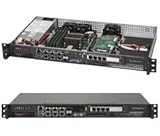
- Intel Xeon D-1518 2.2 GHz Quad Core Processor; Aspeed AST2400 BMC
- 32GB DDR4 ECC Memory Installed; 128GB Maximum
- 512GB M.2 Solid State Drive Installed; Supports 4x SATA3 6Gb/s drives,
- 2x 10Gb SFP+ Ports (Intel D-1500 SoC), 4x 1GbE RJ45 (Intel i350-AM2), 2x 1GbE RJ45 (Intel I210), 1x IPMI RJ45 (Realtek RTL8211F PHY)
- Case Dimensions: 437mm x 249mm x 43mm, 17.2" x 9.8" x 1.7" (in inches)
For the first six months of FY2026, service and software revenue was about $228 million, up from about $173 million in the comparable period. The company also disclosed approximately $223 million in scheduled principal payments on lines of credit and term loans as of December 31, 2025. These balance-sheet and revenue details are in the Q2 FY2026 Form 10-Q. Together, they put the top-line expansion in context: the company had to finance a larger operating footprint and inventory base while margins were under pressure.
Later results tested the Q2 outlook
When it released Q2 results on February 3, Supermicro forecast Q3 revenue of at least $12.3 billion and FY2026 revenue of at least $40 billion. It also forecast Q3 GAAP diluted EPS of at least $0.52 and non-GAAP diluted EPS of at least $0.60. Those were the company’s estimates at that date, not its latest outlook.
Subsequent disclosures changed the picture. Q3 FY2026 revenue was approximately $10.2 billion—lower than Q2 but 122% higher year over year—and gross margin recovered to 9.9%, according to the Q3 results filing. In a July 21 update, Supermicro said preliminary Q4 revenue was near the low end of its $11 billion–$12.5 billion range and estimated gross margin at 15%–17%. It also reported more than $60 billion in new Q4 orders. That order figure is not revenue or guaranteed sales: the company said orders were expected to be delivered over future quarters and warned that some might not be firm commitments or could be delayed or canceled. The update’s Q4 figures were explicitly preliminary and subject to revision. Supermicro’s preliminary Q4 update also disclosed that its board was conducting an independent review related to alleged export-control issues; it said the outcome could affect forecasts and prior-period results. This was a disclosed review, not a final finding of wrongdoing.
Rank #4

- MODEL P74439-005: Compact and affordable HPE ProLiant MicroServer Gen11 powered by Intel Pentium Gold G7400 3.7GHz processor, ideal for file sharing, NAS, and basic business workloads
- READY OUT OF THE BOX: Includes 16GB DDR5 UDIMM memory (expandable to 128GB), one 1TB SATA 6G Business Critical HDD, embedded Intel VROC SATA, dedicated iLO-M.2 port kit, 180w external power adapter and 1/1/1 warranty for dependable plug-and-play server operation
- WHISPER-QUIET & SPACE-SAVING: Ultra-compact mini tower design fits easily in small office spaces; supports wall, flat, or vertical placement for deployment flexibility
- INTEGRATED REMOTE MANAGEMENT: Comes with HPE iLO 6 and embedded TPM 2.0 for secure, license-free remote server administration through shared port access
- EXPANDABLE DESIGN: Two PCIe slots (including PCIe 5.0) and four LFF-NHP drive bays provide robust options for storage and component scalability. Features new MR408i-p controller support for enhanced storage performance
How to assess the growth’s durability
For an investor weighing the business, the central question is not whether Q2 demand was large—it plainly was—but whether sales can convert into diversified, profitable and deliverable business. The subsequent Q3 margin recovery and preliminary Q4 margin estimate are encouraging signs, while Q3 revenue’s sequential decline and the explicitly preliminary status of Q4 information argue against treating Q2’s pace as a straight-line run rate.
- Order conversion: Track how much reported demand becomes shipped systems and recognized revenue, and over what period. Large order totals are not equivalent to firm backlog.
- Margin quality: Watch whether improved margins persist as platform mix, freight, component supply, tariffs and ramp costs change.
- Customer and geographic mix: A broader base would reduce dependence on a single buyer and the U.S.-heavy revenue pattern recorded in Q2.
- Working capital: Inventory needs to support delivery without building faster than customer deployments or tying up too much financing.
- Execution and compliance: Capacity expansion, customer readiness, export-control developments and supply availability can all affect when orders ship and what they earn.
Q2 demonstrated the scale of AI infrastructure demand that Supermicro could serve, but the quarter’s timing shift, concentrated customer mix, compressed margin and rising inventory make earnings quality and execution as important as the next revenue headline.
Quick Recap
Product prices and availability are accurate as of the date/time indicated and are subject to change. Any price and availability information displayed on Amazon at the time of purchase will apply.



