Do these 3 things before closing this tab:
1Repair Windows errors before they cause bigger problems2Scan for outdated or missing drivers - takes under a minute3Clear out junk files and repair common Windows errorsSome links on this page are affiliate links: if you buy through them we may earn a commission, at no extra cost to you.
Starfish Space announced on April 7, 2026, that it had raised more than $100 million in Series B financing to build and operate its Otter satellite-servicing spacecraft. The round was led by Point72 Ventures, with Activate Capital and Shield Capital as co-leads.
The money is intended to fund contracted government and commercial missions, expand Otter production, and grow the company’s team. It marks a shift from technology demonstrations toward manufacturing and mission delivery—but Starfish has not yet completed routine, full-size Otter servicing operations.
How much did Starfish Space raise?
Starfish’s company-backed figure is more than $100 million. GeekWire and other coverage have described the round as approximately $110 million, but Starfish’s announcement does not disclose an exact total. The most precise wording is therefore “more than $100 million.”
What’s actually slowing this PC down?
Pick the symptom - the matching free tool is one click away.
Point72 Ventures led the Series B. Activate Capital and Shield Capital co-led it. Other major participants named by Starfish include Industrious Ventures and NightDragon.
#1 Best Overall

- HOBBY MODEL KIT – Unassembled model packed in an envelope with easy to follow instructions. Ideal for ages 14 and up.
- NO GLUE OR SOLDER NEEDED – Parts can be easily clipped from the metal sheets. Tweezers are the recommended tool for bending and twisting the connection tabs.
- VOYAGER – 1.5 Sheet Model with a moderate difficulty level. Assembled Size: 1.38 x 1.77 x 6.70 inches.
- FROM STEEL SHEETS TO 3D – Pop out the pieces and connect using tabs and holes. Includes illustrated instructions.
- HIGHLY DETAILED ETCHED MODEL – Display your 3D model once completed - collect and build them all.
Existing investors named in the announcement include NFX, Munich Re Ventures, Toyota Ventures, and PSL Ventures. New investors include Nomi Capital, Gaingels, and Overlap Holdings.
Starfish says it has raised more than $150 million in venture capital overall. That figure should not be treated as a simple total of every publicly announced round unless the company provides a complete round-by-round reconciliation.
Starfish’s Series B announcement says the new capital will support contracted Otter missions, production expansion, and hiring.
Why the funding matters now
Earlier financing helped Starfish develop its spacecraft and conduct orbital demonstrations. The Series B is being raised as the company prepares to build and operate multiple customer vehicles.
That distinction matters. A prototype demonstration tests whether key technologies work in space. A production business must also manufacture repeatable hardware, integrate it with launch providers, coordinate with customers, operate missions safely, and deliver contracted results on schedule.
Rank #2

- Model Kit
- May Require Paints and Glues to Assemble
- Accurate Scale Model
- Detailed Instructions Provided
- Decals/Transfers Included
Starfish says it is targeting its first full-size Otter missions in 2026. Those missions remain future milestones, not completed operational services.
What is the Otter spacecraft?
Otter is Starfish Space’s autonomous satellite-servicing vehicle. Depending on the mission, an Otter spacecraft can rendezvous with another satellite, conduct proximity operations, attach to it, and help maneuver or inspect it.
Recommended Free Tools
Potential applications include:
- Life extension: helping an expensive geostationary satellite remain useful for longer.
- Maneuver augmentation: providing additional mobility to a national-security spacecraft.
- Inspection: examining disabled or defunct satellites in low Earth orbit.
- End-of-life disposal: helping deorbit spacecraft from low Earth orbit constellations.
“Servicing” does not automatically mean repairing or refueling a satellite. A mission may involve observation without physical attachment, or maneuvering a spacecraft without restoring its onboard systems. The exact work depends on the target satellite and contract.
Starfish says Otter is designed to perform autonomous rendezvous, proximity operations, docking, and spacecraft maneuvering, including with satellites that were not originally designed for servicing.
Starfish’s contracted mission pipeline
| Customer | Mission | Value or timing | Status |
|---|---|---|---|
| U.S. Space Force | Geostationary-orbit docking and maneuvering mission | $37.5 million STRATFI contract awarded in May 2024 | Contracted; launch timing should not be treated as confirmed without a newer official schedule |
| U.S. Space Force | Dedicated Otter vehicle for dynamic operations in geosynchronous orbit | $54.5 million APFIT contract announced February 7, 2026; delivery scheduled for 2028 | In development |
| Space Development Agency | End-of-life disposal for a low Earth orbit constellation | $52.5 million contract announced January 21, 2026 | Contracted; future mission |
| NASA | Inspection of multiple U.S.-owned defunct satellites in low Earth orbit | $15 million mission; described in earlier coverage as beginning in 2027 | Planned |
| Intelsat | Geostationary satellite life extension | Service was expected to begin in 2026 according to 2024 reporting | Commercial mission announced; completion has not been established here |
| SES | Commercial satellite-servicing work | Customer named in Starfish’s 2026 announcement | Customer traction reported; mission-specific details are limited |
The contract values are award amounts, not proof of revenue, profit, or cash received at closing. Government contracts can also be modified, delayed, or affected by appropriations and mission changes.
Rank #3

- HOBBY MODEL KIT – Unassembled model packed in an envelope with easy to follow instructions. Ideal for ages 14 and up
- NO GLUE OR SOLDER NEEDED – Parts can be easily clipped from the metal sheets. Tweezers are the recommended tool for bending and twisting the connection tabs
- APOLLO CSM – 3.5 Sheet Model with a challenging difficulty level. Assembled Size: 5.07 L x 2.28 W x 3.45 H inches.
- FROM STEEL SHEETS TO 3D – Pop out the pieces and connect using tabs and holes. Includes illustrated instructions
- HIGHLY DETAILED ETCHED MODEL – Display your 3D model once completed - collect and build them all
What has Starfish actually demonstrated?
Starfish says it has launched and operated three demonstration missions in orbit, including the Remora mission in 2025 and the ongoing Otter Pup 2 mission.
In May 2024, the company reported an autonomous rendezvous between Otter Pup and D-Orbit’s ION spacecraft. Starfish and Impulse Space later completed the Remora autonomous rendezvous and proximity-operations mission in low Earth orbit.
Those achievements are important evidence that Starfish has made progress in autonomous navigation and close-proximity operations. They are not the same as completing every type of customer service, such as docking with and maneuvering a high-value commercial geostationary satellite.
The record also includes an important setback. Otter Pup 1 launched in 2023, but the mission later experienced an anomaly and was not successfully completed, according to SpaceNews. The balanced conclusion is that Starfish has achieved meaningful orbital demonstrations while still facing the technical risks typical of difficult servicing missions.
Why customers might pay for satellite servicing
Satellite servicing can create value in several ways:
Rank #4

- HOBBY MODEL KIT – Unassembled model packed in an envelope with easy to follow instructions. Ideal for ages 14 and up.
- NO GLUE OR SOLDER NEEDED – Parts can be easily clipped from the metal sheets. Tweezers are the recommended tool for bending and twisting the connection tabs.
- JAMES WEBB SPACE TELESCOPE - 2.75 Sheet Model with a moderate difficulty level. Assembled Size: 4.13 L x 2.75 W x 2.75 H inches. 1:221 Scale. 62 Pieces
- FROM STEEL SHEETS TO 3D – Pop out the pieces and connect using tabs and holes. Includes illustrated instructions.
- HIGHLY DETAILED ETCHED MODEL – Display your 3D model once completed - collect and build them all.
- Extending asset life: Keeping a costly geostationary satellite operational may delay replacement and launch expenses.
- Increasing mission flexibility: An external vehicle can provide maneuvering capability that a satellite lacks or has partly exhausted.
- Reducing debris: Removing spacecraft at the end of their useful lives can reduce collision risk in increasingly crowded orbits.
- Obtaining information: Inspection missions can provide data about the condition, configuration, or cause of failure of an object in orbit.
The economics depend on the price of the servicing mission, launch availability, spacecraft compatibility, reliability, and the value of the satellite being protected. These benefits explain customer interest, but they do not demonstrate that Starfish has already reached profitable recurring operations.
Independent reader supportYour contribution helps us test, update, and keep practical guides available for everyone.The risks investors and industry customers will watch
Technical execution
Autonomous rendezvous and docking require precise relative navigation, sensing, communications, propulsion, fault management, and collision avoidance. The earlier Otter Pup anomaly shows why a successful demonstration record must be judged alongside failures and incomplete missions.
Production scale-up
Starfish is moving from a small number of demonstration spacecraft toward multiple customer vehicles. That creates manufacturing, supply-chain, testing, launch-integration, and mission-operations risks. The Series B’s focus on production capacity is evidence of that transition—not proof that the transition is complete.
Schedule uncertainty
Statements that a mission is targeted for 2026 or a vehicle is scheduled for delivery in 2028 are forward-looking commitments. They should not be reported as launches or completed services.
Free tools Windows power users keep installed
One-click scans. No signup required.
Operational and regulatory complexity
Approaching and attaching to another operator’s spacecraft requires coordination among spacecraft owners, launch providers, regulators, spectrum authorities, and national-security organizations. It is more complex than launching and operating a standalone satellite.
Best Value
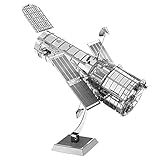
- HOBBY MODEL KIT – Unassembled model packed in an envelope with easy to follow instructions. Ideal for ages 14 and up.
- NO GLUE OR SOLDER NEEDED – Parts can be easily clipped from the metal sheets. Tweezers are the recommended tool for bending and twisting the connection tabs.
- HUBBLE TELESCOPE – 1 Sheet Model with a moderate difficulty level. Assembled Size: 3.00 x 2.00 x 2.50 inches.
- FROM STEEL SHEETS TO 3D – Pop out the pieces and connect using tabs and holes. Includes illustrated instructions.
- HIGHLY DETAILED ETCHED MODEL – Display your 3D model once completed - collect and build them all.
Market competition
Starfish is competing in a field that includes established life-extension providers and newer orbital-logistics companies. Its autonomous servicing architecture is a stated differentiator, but the available evidence does not establish market leadership.
What happens next?
The most important milestones are whether Starfish can launch and complete its first full-size Otter missions, deliver the second Space Force vehicle on its stated 2028 schedule, and advance the NASA inspection and SDA disposal programs.
The company’s progress should be judged on completed orbital services rather than funding alone. The Series B gives Starfish substantial capital to move from demonstrations into production, but the commercial case will depend on reliable mission execution and repeatable customer service.
For now, Starfish is best understood as an orbital-servicing company with meaningful demonstrations and a growing contracted pipeline—not as a company already operating a routine, mature satellite-repair network.
Quick Recap
Key timeline
- 2019: Starfish Space founded by former Blue Origin and NASA engineers.
- September 2021: Announced a $7 million funding round.
- March 2023: Announced a $14 million funding round.
- 2023: Otter Pup launched; the mission later experienced an anomaly.
- May 2024: Reported an orbital rendezvous with D-Orbit’s ION spacecraft and received a $37.5 million Space Force STRATFI award.
- June–September 2024: Announced the Intelsat life-extension mission and NASA debris-inspection funding.
- November 2024: Announced a $29 million round led by Shield Capital.
- 2025: Completed the Remora autonomous rendezvous and proximity mission with Impulse Space.
- January–February 2026: Announced the $52.5 million SDA disposal contract and $54.5 million Space Force APFIT contract.
- April 7, 2026: Announced more than $100 million in Series B financing.
Product prices and availability are accurate as of the date/time indicated and are subject to change. Any price and availability information displayed on Amazon at the time of purchase will apply.



