What’s actually slowing this PC down?
Pick the symptom - the matching free tool is one click away.
Some links on this page are affiliate links: if you buy through them we may earn a commission, at no extra cost to you.
South Korea’s latest semiconductor plan is not a single $450-billion government investment. The major announcement on June 29, 2026, described roughly 800 trillion won—about $518 billion at the exchange rate used in contemporaneous reports—in combined Samsung Electronics and SK Group investment for four new southwestern chip-fabrication sites.
The figure also needs context: it represents a long-term, largely corporate capacity strategy whose timing, scale and product mix will depend on demand, infrastructure and further approvals. Other frequently cited figures, including Samsung’s separate 450 trillion-won pledge and earlier semiconductor-cluster projections through 2047, refer to different plans.
What South Korea announced
On June 29, 2026, South Korea unveiled a semiconductor and artificial-intelligence industrial strategy built around Samsung Electronics and SK Group. The plan links chip manufacturing with AI data-center infrastructure and regional economic development.
Windows Errors? Fix Them Before They Spread
Repair common Windows errors and clear accumulated junk for a smoother, more stable PC - no reinstall needed.Free scan · no reinstallCrashes, No Sound, or Screen Glitches?
Random freezes, missing sound and display glitches usually trace back to one bad driver. Find and replace yours safely.Free scan · under a minuteContemporary reports said Samsung and SK planned approximately 800 trillion won in combined investment for a new southwestern semiconductor base. The announced concept includes two new fabs associated with Samsung and two associated with SK-related investment. Reuters coverage reported the total at approximately $518 billion, although any dollar conversion changes with exchange rates.
#1 Best Overall

- Samsung DDR5 Memory RAM | Part Number: M425R2GA3BB0-CWM
- Single 16 GB RAM Module; DDR5 SO-DIMM 262-Pin; Speeds up to 5600 MHz, PC5-44800 (PC5-5600B)
- NON-ECC Unbuffered; 1Rx8 (Single Rank x8); JEDEC DDR5 standard 1.1V
- Compatible for select Laptop, Notebook Computers
- Expands your system's available memory resource improving performance, reducing bottlenecks, and increasing workload capacity
The plan is intended to expand domestic manufacturing capacity while positioning South Korea for rising demand from AI servers and data centers. It is also part of an effort under President Lee Jae Myung to distribute high-value industrial activity beyond the Seoul metropolitan area.
SK hynix separately described a 400 trillion-won southwestern semiconductor-cluster investment. The company said the project would be phased and that its eventual timing and scale would depend on market demand and board approval.
Why the $450-billion figure is confusing
Several large numbers are being discussed, but they should not be combined without checking their date, currency and scope.
Do these 3 things before closing this tab:
1Scan for outdated or missing drivers - takes under a minute2Repair Windows errors before they cause bigger problems3Fix the driver behind crashes, sound loss and screen glitches| Figure | What it refers to |
|---|---|
| About $518 billion | Reported conversion of the 800 trillion-won Samsung-SK southwestern investment plan announced in June 2026. |
| 400 trillion won | SK hynix’s announced southwestern cluster investment, to be implemented in phases. |
| 1,100 trillion won | SK hynix’s broader mid- to long-term strategy covering the southwest, Yongin and Cheongju—not just the new southwestern fabs. |
| 450 trillion won | Samsung’s separate five-year domestic investment pledge announced in November 2025, reported by the Associated Press as approximately $310 billion. |
| About $450 billion | Earlier or broader estimates associated with South Korea’s semiconductor mega-cluster through 2047. These should not automatically be treated as the 2026 southwestern commitment. |
Before accepting any headline total, check seven things: the currency, the companies included, the geography, the investment period, whether the amount is approved, what costs are included, and whether spending appears in more than one aggregate.
Where will the fabs be built?
The new project is associated with South Korea’s southwestern region, including Gwangju and the broader Honam area. It is separate from the country’s established and previously announced semiconductor centers.
- Yongin: A major semiconductor cluster south of Seoul involving Samsung and SK hynix.
- Pyeongtaek: A significant Samsung manufacturing base.
- Cheongju: An SK hynix site focused on NAND and advanced packaging expansion.
- Southwestern region: A proposed additional production base designed to provide land and infrastructure while spreading industrial growth geographically.
The location offers an opportunity to develop new industrial capacity outside the congested Seoul-area corridor. But available land alone does not make a region ready for advanced semiconductor manufacturing. Fabs require stable high-voltage electricity, large quantities of highly purified water, wastewater treatment, chemical and gas systems, transport links, housing and a dense network of suppliers.
Reuters reporting has highlighted concerns that the southwestern region may take time to develop the power, water, logistics, supplier base and skilled workforce required by leading-edge facilities. The project therefore depends on infrastructure delivery as much as on corporate construction plans.
The Tool Desk
Outbyte PC Repair FREEClear out junk files and repair common Windows errorsFree Scan →Outbyte Driver Updater FREEFix the driver behind crashes, sound loss and screen glitchesFind Drivers →Which chips are involved?
This is primarily a bet on memory and AI-related semiconductor capacity, rather than a generic promise to manufacture every type of chip.
DRAM and HBM
DRAM is the main working memory used in computers and servers. High-bandwidth memory, or HBM, is a specialized form of memory used alongside AI accelerators. Its high data-transfer capability helps AI systems move large volumes of information between processors and memory.
Rank #2
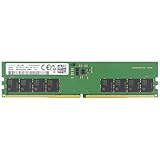
- Samsung DDR5 Memory RAM | Part Number: M323R2GA3DB0-CWM
- Single 16 GB RAM Module; DDR5 DIMM 288-Pin; Speeds up to 5600 MHz, PC5-44800 (PC5-5600B)
- NON-ECC Unbuffered (UDIMM); 1Rx8 (Single Rank x8); JEDEC DDR5 standard 1.1V
- Compatible for select Desktop Computers/PCs
- Expands your system's available memory resource improving performance, reducing bottlenecks, and increasing workload capacity
AI data centers have made HBM strategically important. Training and running large AI models requires powerful accelerators, and those accelerators need fast memory. Samsung Electronics and SK hynix are among the world’s most important memory suppliers, giving South Korea an established base from which to expand.
NAND flash
NAND is nonvolatile memory used for data storage, including solid-state drives. SK hynix’s Cheongju plan includes 100 trillion won: 80 trillion won for the M17 NAND fab and 20 trillion won for the P&T7 advanced-packaging facility.
Advanced packaging
Packaging connects chips to the systems in which they operate. Advanced packaging is increasingly important for AI hardware because it can combine processors and high-bandwidth memory in ways that improve performance and energy efficiency.
The precise process technologies and product mix for every southwestern facility have not been finalized in the supplied announcement. Some capacity may support future AI-memory products whose commercial requirements will become clearer as the projects progress.
How the new plan fits SK hynix’s wider strategy
SK hynix says its overall mid- to long-term investment strategy totals 1,100 trillion won. That number covers multiple locations and should not be mistaken for the southwest project alone.
The company expects total investment in the Yongin cluster to reach about 600 trillion won. It has also said the target for its fourth Yongin fab was accelerated from 2045 to 2033, reflecting expectations for continuing AI-memory demand.
SK hynix’s separate Cheongju program adds another 100 trillion won for NAND production and advanced packaging. Together, these figures show the scale of the company’s broader capacity planning, but they also demonstrate why aggregate semiconductor numbers can be misleading: different sites, products and time horizons may be counted together.
Why South Korea is making the push now
Several forces are driving the expansion.
- AI infrastructure demand: Hyperscalers and other customers are building data centers that require processors, HBM, conventional DRAM, storage and networking equipment.
- HBM’s strategic value: HBM has become a crucial component of advanced AI systems, making production capacity and packaging expertise important competitive assets.
- Global competition: South Korea is competing with semiconductor programs in the United States, Taiwan, Japan and China for capital, talent, customers and supply-chain influence.
- Domestic manufacturing: Expanding at home helps Samsung and SK retain engineering knowledge, production scale and supplier relationships in South Korea.
- Seoul-area constraints: Land, power, water, transport and housing pressures around existing clusters make further concentration increasingly difficult.
- Regional development: A southwestern cluster could create construction, engineering, manufacturing and supplier jobs outside the Seoul metropolitan area.
South Korea’s established memory expertise gives the plan a foundation that a completely new entrant would not have. However, the southwestern region still needs the supporting ecosystem that has developed over decades around existing clusters.
How much is government money?
The headline amount should not be described as a $450-billion or $518-billion government spending package. The largest portion is corporate investment associated with Samsung and SK Group.
Rank #3

- Samsung DDR5 Memory RAM | Part Number: M425R4GA3BB0-CWM
- Single 32 GB RAM Module; DDR5 SO-DIMM 262-Pin; Speeds up to 5600 MHz, PC5-44800 (PC5-5600B)
- NON-ECC Unbuffered; 2Rx8 (Dual Rank x8); JEDEC DDR5 standard 1.1V
- Compatible for select Laptop, Notebook Computers
- Expands your system's available memory resource improving performance, reducing bottlenecks, and increasing workload capacity
The government’s role is more likely to include:
- Power-transmission and other public infrastructure.
- Land, permitting and planning support.
- Low-cost financing and policy loans.
- Tax credits and investment incentives.
- Research and development support.
- Training and workforce programs.
- Support for semiconductor materials, parts, equipment companies and fabless designers.
South Korea’s Ministry of Trade, Industry and Energy has previously described government support for semiconductor clusters, including infrastructure assistance and ecosystem financing. It has also said the government would take significant responsibility for underground power-transmission infrastructure for the Yongin and Pyeongtaek clusters. The relevant ministry releases provide policy context, but they do not turn the entire corporate total into public spending.
Recommended Free Tools
Is the money already committed?
Not in the same sense as an appropriated government budget or a fully funded construction program.
SK hynix says its southwestern investment will be made in phases and can change with market demand, memory prices, technology transitions, capital-allocation decisions and board approvals. “Investment plan” therefore describes a strategic commitment and intended capacity path, not necessarily cash already spent or facilities already under construction.
Advanced fabs take years to design, permit, build, equip and ramp. The announced total should be read as a long-range industrial strategy. Investors and policymakers will need to watch for subsequent land approvals, utility contracts, fab construction, equipment orders, board decisions and production-ramp announcements.
The potential benefits
If executed as planned, the expansion could provide:
Free tools Windows power users keep installed
One-click scans. No signup required.
- More domestic DRAM, NAND and HBM capacity.
- Greater supply for AI accelerators and data centers.
- More resilience in global semiconductor supply chains.
- Stronger negotiating leverage with large international AI customers.
- Construction and engineering activity.
- Regional jobs and supplier development.
- More demand for semiconductor equipment, chemicals, utilities and advanced packaging.
- Less pressure on the Seoul-area industrial corridor.
These are intended or potential outcomes, not guaranteed results. A new cluster only becomes economically durable if it attracts suppliers, skilled workers, customers and reliable infrastructure alongside the fabs.
Independent reader supportYour contribution helps us test, update, and keep practical guides available for everyone.The risks behind the giant number
AI-demand risk
The plan assumes that AI infrastructure spending and demand for AI memory will remain strong. If data-center investment slows, memory prices and manufacturers’ incentives to build could weaken.
Memory-cycle risk
Memory manufacturing has historically experienced sharp cycles in inventories, prices and capital spending. A shortage during the planning phase can become oversupply by the time new fabs reach meaningful production.
Execution and infrastructure risk
Power, water, wastewater treatment, roads, logistics and chemical systems must arrive on schedule. Delays in any one of these can postpone production even if the cleanroom itself is complete.
Rank #4

- Samsung DDR5 Memory RAM | Part Number: M425R4GA3BB0-CQK
- Single 32 GB RAM Module; DDR5 SO-DIMM 262-Pin; Speeds up to 4800 MHz, PC5-38400 (PC5-4800B)
- NON-ECC Unbuffered; 2Rx8 (Dual Rank x8); JEDEC DDR5 standard 1.1V
- Compatible for select Laptop, Notebook Computers
- Expands your system's available memory resource improving performance, reducing bottlenecks, and increasing workload capacity
Workforce and supplier risk
Regional expansion requires engineers, technicians, construction workers and specialized suppliers. A new location may initially lack the dense labor and vendor network available around Yongin, Pyeongtaek or other established hubs.
Technology risk
Memory products and packaging requirements can change during a multiyear construction program. Facilities designed for one generation may need expensive reconfiguration before they reach full utilization.
Capital-allocation risk
Long-term corporate pledges can be delayed, resized or redirected if returns deteriorate. That is why board approvals, phased spending and actual equipment orders matter more than the headline alone.
Environmental and permitting risk
Large fabs consume substantial electricity and water and require extensive land, transmission and wastewater infrastructure. Environmental reviews, local opposition or permitting delays can affect both cost and schedule.
What it means for the global chip industry
For the global market, the most direct consequence would be additional South Korean memory and advanced-packaging capacity. That could help AI-chip customers secure HBM and related components, but it could also intensify competition among memory suppliers if capacity grows faster than demand.
Micron and other memory competitors will be watching the expansion closely. Taiwan remains central to advanced semiconductor manufacturing, while the United States and Japan are using incentives to attract or rebuild strategic capacity. South Korea’s response is to reinforce its strongest existing position—memory—while adding infrastructure and geographic depth.
The plan may improve supply-chain resilience by creating more capacity in another region, but resilience is not the same as self-sufficiency. Semiconductor production still depends on international equipment, materials, software, customers and logistics.
How to read future headlines
When a new report cites a multi-hundred-billion-dollar figure, ask:
Quick wins for a faster PC:
Repair Windows errors before they cause bigger problemsFix Now →Fix the driver behind crashes, sound loss and screen glitchesFind Drivers →- Is the amount in won or dollars, and what exchange rate was used?
- Does it cover Samsung, SK hynix, the government or the entire ecosystem?
- Is it limited to the southwest or spread across Yongin, Cheongju and other sites?
- What is the time horizon?
- Has a company board approved the spending?
- Does the total include utilities, land, equipment, research and supplier investment?
- Could the figure overlap with an earlier announced commitment?
That checklist prevents the 2026 southwest plan from being confused with Samsung’s 450 trillion-won 2025 pledge or earlier cluster projections through 2047. South Korea’s earlier official material described a roughly 2,102-hectare mega-cluster and 16 planned semiconductor manufacturing plants by 2047; that is a broader, longer-term framework rather than a direct description of the latest southwestern announcement. See the Peterson Institute analysis and South Korea’s industry-ministry materials for that earlier context.
The Bottom Line
South Korea is making one of the world’s largest semiconductor-capacity bets, but the accurate description is a long-term, conditional Samsung-and-SK corporate investment strategy supported by government infrastructure and policy measures—not a single $450-billion government check. The latest major figure is approximately 800 trillion won, or about $518 billion, focused heavily on memory, HBM and AI-related capacity in the southwestern region.
Quick Recap
Product prices and availability are accurate as of the date/time indicated and are subject to change. Any price and availability information displayed on Amazon at the time of purchase will apply.



