What’s actually slowing this PC down?
Pick the symptom - the matching free tool is one click away.
Some links on this page are affiliate links: if you buy through them we may earn a commission, at no extra cost to you.
Software projects usually struggle for reasons that have little to do with the task board. The deeper causes are hidden uncertainty, unclear ownership, conflicting priorities, misunderstood requirements, late technical discoveries, delayed decisions, and commitments to fixed scope, cost, and deadlines all at once.
Effective software project management is therefore less about choosing the “right” methodology and more about making value, risk, trade-offs, quality, and progress visible. Agile practices can help when requirements are evolving, but they do not replace budgeting, architecture, governance, documentation, testing, or financial discipline.
A simple diagnostic model
When a software project begins to drift, ask four questions:
Free tools Windows power users keep installed
One-click scans. No signup required.
- Is the outcome clear? Does everyone agree on the problem, users, business value, and definition of success?
- Is the work understood? Are requirements, acceptance criteria, dependencies, and technical assumptions sufficiently clear?
- Can the team deliver it? Is there enough realistic capacity, funding, expertise, and time?
- Are decisions happening quickly enough? Can the people with authority resolve scope, risk, budget, and priority questions?
These questions help distinguish symptoms from root causes. A growing backlog may reflect weak prioritization. Missed deadlines may reflect untested architecture. A “low-productivity” team may actually be waiting for decisions or working around unstable requirements.
#1 Best Overall
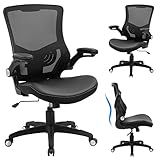
- 【Super Comfortable Office Chair】The thickened sponge seat cushion is quite soft and highly resilient, making it suitable for sedentary lifestyle. The cushion surface of PU leather is more skin-friendly and easy to clean. Breathable mesh backrest can effectively prevent sweat and keep your back cool
- 【Ergonomic Design】The S-shaped curve of the chair fits the spine of the human waist and back well, improving the sitting posture and protecting the health of the spine. Its wider seat provides a larger load-bearing area and relieves pressure on your buttocks
- 【Adjustable Comfort】Equipped with a lumbar support that can be adjusted up and down, adding support can help you focus on your work. Adjustable seat height meets the needs of various heights. Seat height range (cushion to floor) is 17.72''-22.44''. The tilt rocking function allows you to switch between work and rest at will (Please loosen the tension knob first)
- 【Sturdy and Space-saving】This chair passed SGS certification and BIFMA test, maximum capacity is up to 300 lbs. The 3-stage cylinder ensures the safety and stability of the chair. With 90°flip-up armrests, you can easily push the chair under the table to save more space. Quiet casters and 360°swivel help move smoothly in the office, study or conference room
- 【Easy to Assemble】All the parts, screws and wrench needed to install the chair are in the box. Following the detailed installation manual, you can install the chair in about 15-20 minutes. Installation video can also help you with installation
PMI research identifies communication, culture, management support, customer involvement, estimation, requirements, integration, testing, architecture, budgeting, scaling, and organizational change as recurring Agile-project problem areas. See PMI’s review of Agile problems and failure modes.
1. Unclear goals and weak business alignment
A project can be on schedule and still be failing if it is building the wrong product. Delivering every listed feature does not prove that customers will adopt the software, that costs will fall, or that a regulatory obligation will be met.
Warning signs
- Stakeholders describe the project in terms of features rather than an outcome.
- Different departments have different definitions of success.
- No one has final authority when priorities conflict.
- The business case depends on assumptions that have not been tested.
- The team cannot explain what should be removed if time or budget is reduced.
How to handle it
Create a short project charter covering:
- The problem being solved.
- Target users and affected stakeholders.
- The desired business or operational outcome.
- In-scope and out-of-scope work.
- Success measures.
- Budget, target date, and major constraints.
- Key assumptions and known risks.
- The person authorized to make final decisions.
Use outcome measures such as adoption, conversion, task-completion rate, processing time, defect rate, revenue, cost reduction, or compliance. Treat feature count as an activity measure, not proof of value.
The Tool Desk
Outbyte PC Repair FREEClear out junk files and repair common Windows errorsFree Scan →Outbyte Driver Updater FREEScan for outdated or missing drivers - takes under a minuteDriver Scan →2. Scope creep and changing requirements
Scope creep occurs when additional work enters the project without a corresponding change to time, staffing, budget, quality, or previously promised scope. It is not simply the existence of change. A regulatory requirement, security vulnerability, or serious production incident may legitimately replace planned work. The problem is invisible change without an explicit trade-off.
Working software often reveals new needs, and Agile delivery is designed to accommodate evolving requirements through prioritization and incremental delivery. It does not make uncontrolled additions harmless. PMI’s discussion of scope creep and Agile planning describes the central trade-off: keep time and team capacity relatively stable while varying the amount of work delivered.
Use a visible change process
- Record the proposed change.
- State its user or business value.
- Estimate its effect on effort, risk, dependencies, budget, and release date.
- Identify what will be delayed, removed, or funded differently.
- Obtain a decision from the authorized product or project owner.
- Update the backlog, roadmap, forecast, and stakeholder communication.
When the date is fixed, reduce scope rather than quietly removing testing or operational readiness. When scope is fixed, negotiate the date, budget, staffing, or acceptable risk.
3. Poor requirements and ambiguous acceptance criteria
Requirements fail when developers, testers, users, and stakeholders form different interpretations of the same request. The result is rework, rejected features, long-lived “almost complete” work, and disputes that appear late in the delivery cycle.
For each significant item, define
- The user or business goal.
- Expected behavior and explicit exclusions.
- Acceptance criteria and examples.
- Data and integration assumptions.
- Error and boundary cases.
- Security, performance, accessibility, and compliance requirements.
- The test approach.
- The relevant Definition of Done.
Review important items with the product owner, designer, developer, tester, and operational stakeholders before implementation. Documentation should be sufficient to make, test, operate, and maintain the feature—not so extensive that it creates an illusion of certainty without user validation.
A systematic review of Agile requirements research identifies changing estimates, weak historical data, inadequate expert input, distributed teams, insufficient customer involvement, unclear authority, and limited stakeholder availability as recurring challenges.
4. Unrealistic estimates, deadlines, and budgets
Estimates become unreliable when poorly understood work is treated as a precise commitment. Teams may omit integration, discovery, migration, testing, security, deployment, documentation, support, interruptions, or dependency delays.
Rank #2

- Fully Adjustable Office Chair: Customized chairs, featuring with an adjustable 2D headrest, backrest with 90° to 120° recline, and 3D adjustable armrests for multiple work postures at will and discover unparalleled comfort throughout the workday.
- Adaptable Lumbar Support: Our computer chair lumbar support system adjusts 1.18" forward & backward and 2.16" up & down to precisely match your height and body shape, providing tailored comfort and promoting optimal sitting posture.
- Supportive Mesh: The minimalist mesh backrest molds to your back with responsive support while promoting maximum airflow to keep you cool. Every component is designed with your safety and well-being in mind.
- Comfy Desk Chair Seat: Adapting 3.14" thick high-density foam to desk chair seat,double your comfort in daily work moreover high weight capacity 330 lbs for long-term durability. Wider seat provides a larger load-bearing area, enhancing overall support and sitting ease.
- Flexible Armrests: Move smoothly rounded PU-padded armrests forward or back and swivel them left or right to find the optimal arm position. Flip the armrests up when you want more freedom or to easily slide the ergonomic chair under the desk.
Use evidence instead of false precision
- Estimate ranges rather than single-point dates.
- Separate effort from calendar duration and actual availability.
- Decompose large items before estimating.
- Record assumptions and confidence levels.
- Use historical throughput or cycle-time data when available.
- Reforecast after meaningful delivery evidence.
- Present scenarios rather than one supposedly certain date.
If the deadline is fixed, define the minimum viable release, sequence high-risk work early, and remove low-confidence features. If the budget is fixed, fund a smaller outcome or use staged discovery and delivery. Reauthorize or stop the project when evidence shows that the expected value is unlikely.
Adding people to a late project is not a universal solution. New staff require onboarding and increase communication paths. Additional capacity helps mainly when remaining work can be partitioned and the existing team can absorb the onboarding cost.
5. Communication gaps and delayed decisions
Communication is not measured by meeting volume. It is whether the right people receive useful information early enough to make decisions. A project can lose weeks while work waits for clarification, approval, access, procurement, security review, or a product trade-off.
Useful controls
- One authoritative location for requirements and decisions.
- A decision log showing the owner, date, options, decision, and rationale.
- A visible risk and issue register.
- Escalation rules for blocked work.
- Written summaries after consequential meetings.
- A distinction between information, consultation, and approval.
A practical rhythm may include frequent team coordination for blockers, a weekly delivery review for forecasts and decisions, regular product reviews using working software, periodic steering reviews for budget and risk, and retrospectives with named improvement owners.
More meetings can make the problem worse if they do not produce decisions. Use short, purpose-specific sessions and written asynchronous updates for stable information. PMI’s research on communication complexity and ambiguity highlights alignment and decision clarity as key concerns.
6. Stakeholder conflict and unclear decision rights
Product may want more features while engineering needs risk-reduction work. Sales may promise a date that delivery never estimated. Security, compliance, or legal teams may enter after the plan is already committed. A project manager may be accountable without having authority.
Define who recommends, who must be consulted, who approves, who is informed, and when an issue must be escalated. A single empowered product or business decision-maker is generally more effective than a committee that can request work but cannot resolve trade-offs.
Unclear or inexperienced product ownership, weak management support, fragmented departments, and customers who cannot commit are among the recurring risks identified in PMI’s Agile-project review.
7. Technical complexity, architecture, and technical debt
Technical risk becomes a project risk when it affects cost, schedule, reliability, security, operability, or the ability to change the product later.
PC Slower Than It Used to Be?
A free scan shows the junk files, broken settings and background clutter dragging Windows down - then fixes them in one click.Free scan · Windows 10 & 11Outdated Drivers Are Slowing You Down
One free scan finds every outdated or missing driver and matches the right update for your exact hardware.Free scan · exact hardware matchCommon sources of risk
- Unproven technology or unclear architecture boundaries.
- Legacy-system integration.
- Data migration and data-quality problems.
- Performance at expected scale.
- Security and privacy requirements.
- Incompatible third-party services.
- Deployment, environment, or rollback constraints.
- Invisible technical debt.
Practical responses
- Identify architectural assumptions during discovery.
- Run spikes or prototypes for high-uncertainty areas.
- Build a thin end-to-end path early.
- Record consequential choices in architecture decision records.
- Track technical debt as visible work.
- Reserve capacity for maintenance and remediation.
- Include nonfunctional requirements in the backlog.
- Use staged rollout, monitoring, feature flags, and rollback plans where appropriate.
Technical debt is not automatically irrational. A documented shortcut may be sensible when it accelerates learning or validates demand. It becomes dangerous when it is invisible, unmanaged, or repeatedly used to meet short-term targets. The Software Engineering Institute’s architecture-risk guidance recommends integrating continuous risk management into Agile development.
Rank #3

- 【Installation/Other Issues】Our office chair package includes an installation guide, and detailed setup steps are available on our product page. For any questions regarding assembly or office chair usage, pls let us know. we guarantee a response within 24 hours.
- 【Adjustable Air Lumbar Support: Precision Fit for Spinal Curves】Our desk chair features an innovative inflatable lumbar system adjusts ±5cm via air pump for custom fit. High-resilience material provides dynamic support, reducing lumbar pressure by 25% + to ease stiffness.
- 【Space Maximization: 90° Flip-Up Armrest Design】Flexible storage, zero space waste. The computer chair armrests flip up vertically 90°, reducing chair width from 15.74’’ to 3.54’’ for easy storage under desks or in corners. Paired with 360° silent casters, clear your aisle instantly – the ultimate space-saver for compact offices!
- 【Reclining Backrest with Rocking: 90°-115° Tilt】Cradle-style relief. Ergonomic office chair’s dual-axis mechanism supports reclining and rocking from 90° to 115°. Freely adjust rocking amplitude via the bottom knob for personalized comfort.
- 【Targeted Breathability: Reinforced Mesh Layout】The office desk chair has an optimized perforation design with 20%+ denser lumbar zones enhances airflow 50%+. High-elastic fabric & airflow channels reduce sitting temperature 3-5°C. Anti-mold treatment maintains long-term dryness.
8. Quality, testing, and an overly narrow definition of “done”
A project may report high completion while code is not integrated, testing is back-loaded, critical defects remain open, security review is incomplete, deployment is manual, or users cannot perform the intended task.
Depending on the product, a Definition of Done should include code review, automated tests, integration testing, security checks, accessibility checks, performance validation, documentation, deployment readiness, monitoring, product acceptance, support procedures, and rollback readiness.
Track system-level measures such as escaped defects, rework, test stability, deployment frequency, change-failure rate, and time to restore service where they fit the organization. Do not use quality metrics to rank individual developers by ticket count, lines of code, or hours logged.
Do these 3 things before closing this tab:
1Repair Windows errors before they cause bigger problems2Scan for outdated or missing drivers - takes under a minute3Clear out junk files and repair common Windows errorsPMI’s review of Agile failure modes lists back-loaded documentation, testing and regression difficulties, insufficient automation, integration problems, and inadequate time to fix failed tests among recurring issues.
9. Dependencies and cross-team integration
A team can appear to be moving quickly while its critical path depends on another team’s API, a security approval, procurement, infrastructure, vendor behavior, or unavailable data.
Maintain a dependency map showing the owner, required-by date, readiness condition, status, contingency, and escalation route. Test contract boundaries early using test environments, mocks, interface agreements, or staged integration. Treat a merely likely dependency as an assumption or risk—not as a confirmed plan item.
10. Distributed, hybrid, and cross-cultural teams
Distance intensifies requirements, estimation, customer-access, and coordination problems. Decisions made in hallway conversations are unavailable to colleagues in another location or time zone.
- Make requirements and decisions searchable and written.
- Define overlap hours for urgent collaboration.
- Set explicit handoff expectations.
- Rotate meeting times fairly.
- Record demonstrations and consequential decisions.
- Clarify ownership across time zones.
- Account for holidays, leave, hiring, and local employment constraints.
- Measure outcomes rather than online presence.
More synchronous meetings are not always the answer. Better documentation and clearer interfaces often scale better than increasing meeting volume. The distributed-team challenges documented in requirements-engineering research support this approach.
11. Capacity constraints and interruptions
Plans commonly assume that named employees are 100% available. In reality, they handle production support, other projects, leave, onboarding, administrative work, and urgent requests.
Plan against actual availability. Make operational work visible, limit work in progress, identify scarce skills and single points of failure, and create knowledge-sharing plans. If every project is a top priority, the portfolio—not individual teams—must be reprioritized.
Rank #4

- BREATHABLE MESH BACK: 100% ventilated mesh back promotes airflow to keep you cool and comfortable during long hours of sitting, ideal for home offices and workspaces, and daily use.
- ERGONOMIC COMFORT & SUPPORT: Curved mid-back design with lumbar support and ergonomic armrests reduces fatigue, while a high-density cushion offers breathable, all-day seating comfort
- CUSTOMIZABLE HEIGHT & ARMRESTS: This ergonomic computer chair and desk chair fits any office or home setup, with adjustable seat height (17.1"–20.3") and smooth swivel for daily comfort.
- STURDY & CERTIFIED MATERIALS: Built with durable components that meet strict BIFMA standards. The strong mesh frame supports up to 250 lbs, ensuring long-lasting, reliable performance.
- EFFORTLESS ASSEMBLY: Comes with all hardware and clear instructions for a quick setup. Assemble your new office chair in just 10–15 minutes with minimal effort, no extra tools needed.
12. Cargo-cult Agile
Agile can fail when organizations adopt ceremonies without adopting the decision-making behavior behind them. Typical symptoms include fixed mini-deadlines for uncertain work, velocity comparisons between teams, stand-ups used as management status reports, stale backlogs, powerless product owners, retrospectives with no follow-through, and increments that are not releasable.
Quick wins for a faster PC:
Scan for outdated or missing drivers - takes under a minuteDriver Scan →Repair Windows errors before they cause bigger problemsFix Now →Fix the driver behind crashes, sound loss and screen glitchesFind Drivers →Start with the problem a practice is meant to solve. Keep ceremonies that produce useful information or decisions. Train managers and stakeholders as well as delivery teams, and tailor the approach to uncertainty, regulation, dependencies, product maturity, and team structure.
Agile helps make change visible and supports feedback; it does not guarantee faster or cheaper outcomes. Nor does it eliminate architecture, budgeting, compliance, procurement, release management, or governance.
13. Risk and uncertainty management
Maintain risks across product-market, requirements, technical, integration, security, privacy, vendor, staffing, schedule, budget, compliance, operations, and organizational categories.
For each material risk, record its cause, event, consequence, probability, impact, proximity, owner, mitigation, contingency, trigger, and review date. Numeric scoring can help prioritize, but complex projects involve feedback loops and emergent behavior that cannot always be reduced to a reliable probability score. PMI distinguishes predictable environments from complex and chaotic work that requires iterative learning and robust decisions; see its complexity-management guidance.
Recommended Free Tools
14. Reporting that measures activity instead of progress
Percentage complete, tickets closed, story points, utilization, hours logged, and lines of code can all look positive while value, quality, or delivery confidence deteriorates.
Use a balanced view containing outcome progress, working-slice completion, forecast range, cycle time, throughput, blocked-time trends, defects and rework, technical-risk reduction, dependency readiness, budget consumed versus value delivered, customer feedback, and release readiness. Every metric should state its definition, time period, data source, limitations, and intended use.
A practical operating model
A lightweight control system can combine the following:
- Charter: outcome, users, success measures, constraints, scope boundaries, and decision owner.
- Prioritized backlog: the highest-value and highest-risk work first, with stale items removed.
- Definition of Ready: enough context, acceptance criteria, dependencies, and ownership to begin responsibly.
- Definition of Done: quality, security, documentation, deployment, acceptance, and operational requirements.
- Forecasting: ranges, assumptions, capacity, historical evidence, and regular reforecasting.
- Risk and dependency registers: owners, triggers, mitigations, contingencies, and escalation dates.
- Decision log: a durable record of trade-offs and rationale.
- Working-software reviews: demonstrations that lead to acceptance, reprioritization, or correction.
- Retrospectives: a small number of improvement actions with named owners and follow-up.
Choosing a delivery approach
Predictive or plan-driven delivery
This can fit work with stable requirements, formal stage gates, known interfaces, contractual commitments, or significant regulatory documentation. It becomes risky when the plan treats unresolved assumptions as facts.
Scrum-style iterative delivery
Short cycles, backlog refinement, reviews, and retrospectives can work when a product owner is empowered and the team can produce usable increments. They fail when sprints become arbitrary deadlines or the backlog is not genuinely prioritized.
Best Value

- 【ERGONOMIC OFFICE CHAIR】- The ergonomic chair provides 4 supporting points(head/ back/ hips/ hands) and a proper lumbar support. Suitable for people of about 5'2" to 6'1"(Please refer to the height of the user). It's easy to adjust seat height, headrest, backrest and flip-up arms to meet different needs, good for sitting long hours.
- 【COMFORTABLE MESH SEAT】- The office chair is larger than other chairs, and it could accommodate different body build. The whole Chair Dimensions(including the arms): 24.5"W x 27.5"D x 46"-56.4"H, the Seat Dimensions: 20.5"W x 20"D x 18.9"-23.6"H. Loading Capacity: 300 lbs. The recline function makes you tilt the backrest back (90~120°) or sit straight freely.
- 【ADJUSTABLE FLIP-UP ARMREST】- Folding the armrests up 45°, you can push the executive office chairs directly under the desk to save valuable space. It's easy to raise or lower the folding armrest by pressing the black buttons on the armrest.
- 【BREATHABLE MESH CHAIR】- The mesh back and mesh seat keep air circulation for extra comfy. High quality mesh resists abrasion and transformation, it makes the high back computer desk chairs good for sitting for 4 ~ 8 hours, perfect for a long day sitting.
- 【3 YEARS WARRANTY & EASY INSTALLATION】- All ergonomic office chairs come with 3 years warranty, so please email us directly, we will offer you effective solutions ASAP. With clear instruction and tools, the office computer chair is easy to assemble (about 15~20 minutes). PU mute wheels roll smoothly, no harm on wooden floor; the sturdy five-pointed base and chair frame add durability and stylish appearances.
Kanban or flow-based delivery
Flow-based approaches suit teams with changing priorities, service work, maintenance, or uneven arrival of requests. Work-in-progress limits and cycle-time analysis are more useful than forcing every item into a time-box.
Hybrid or discovery-first delivery
A hybrid approach may combine upfront architecture, compliance, procurement, or migration planning with iterative product delivery. Discovery-first or dual-track approaches separate learning about the problem from building the solution, reducing the risk of spending heavily on an untested assumption.
Choose based on uncertainty, regulatory burden, dependency structure, product maturity, cost of change, and team capability—not fashion. PMI’s research does not establish Agile as universally superior in return on investment.
Recovering a software project already in trouble
- Establish the facts. Identify what is actually delivered, what remains, which assumptions failed, what is blocked, what technical risks remain, and what budget, capacity, and date are genuinely available.
- Stop invisible work. Freeze unapproved additions and route every request through prioritization and trade-off review.
- Define a thin valuable release. Remove speculative enhancements and low-value work that does not support the immediate outcome.
- Present explicit scenarios. Compare reduced scope, an extended date, specialized capacity, a changed technical approach, a split release, a discovery or architecture pause, and stopping.
- Restore feedback. Demonstrate working software frequently to people who can accept, reject, or reprioritize it.
- Stabilize quality. Do not recover by eliminating essential testing, security, deployment readiness, or documentation.
- Set a checkpoint. Define the evidence that will justify continuing, changing direction, or stopping.
Stopping is not necessarily failure. Continuing a project only because money has already been spent is a sunk-cost decision, not a recovery strategy.
Choosing project-management software
A tool should support the operating model rather than substitute for it. Look for backlog and issue tracking, dependencies, roadmaps, reporting, automation, permissions, integrations with code and CI/CD, documentation and incident systems, exportability, and appropriate security controls.
Jira
Jira is generally suited to engineering-led organizations that need detailed workflows, issue traceability, dependencies, integrations, and Scrum or Kanban support. It can be a poor fit for very small teams seeking immediate simplicity or organizations without anyone willing to administer workflows. Atlassian’s pricing page currently lists Free at $0 for up to 10 users, Standard at $7.91 per user per month, and Premium at $14.54 per user per month, while noting that pricing varies by billing cycle and team size. The page also lists storage and automation limits by plan. Confirm current pricing, taxes, terms, and features before purchase.
Organizations requiring self-managed deployment should also review Atlassian’s stated Data Center timeline: new-license sales end March 30, 2026, and end of life is scheduled for March 28, 2029.
Linear
Linear fits product and engineering teams that want a focused developer-oriented issue tracker with relatively low administrative overhead. Its pricing page currently lists Free at $0, Basic at $10 per user per month when billed yearly, Business at $16 per user per month when billed yearly, and Enterprise at custom annual pricing. Confirm limits, included features, AI entitlements, and annual versus monthly terms at checkout.
Asana
Asana is often a better fit when software delivery must coordinate with marketing, operations, design, finance, or other business functions. Teams needing deeply developer-centric workflows, granular engineering traceability, or extensive release management may need integrations or another system. Check the official page for current plan names and prices because packaging and regional pricing can change.
Evaluate behavior, not just features
- What is the primary work type: discovery, engineering, cross-functional delivery, portfolio governance, or service operations?
- How complex must workflows, approvals, dependencies, and hierarchies be?
- Does the tool integrate with repositories, pull requests, CI/CD, releases, and incidents?
- Can nontechnical stakeholders understand and use it?
- Do reports reveal risk and confidence, or merely activity?
- What are the administration, training, automation, and permissions costs?
- Are SSO, SCIM, audit logs, data residency, retention, export, and self-managed deployment required?
- What are the guest rules, minimum seats, storage limits, automation limits, annual commitments, and enterprise add-ons?
- Can the organization migrate its data if the tool no longer fits?
- Does the system encourage transparency and prioritization, or ticket-volume surveillance?
Engineering-heavy teams may prefer Jira, focused product and engineering teams may prefer Linear, and broad business–engineering coordination may favor Asana. A team with no system should start with a deliberately small source of truth and establish decision, scope, risk, and quality practices before adding complex dashboards or automations.
Bottom line
Successful software project management is the disciplined management of value, uncertainty, trade-offs, decisions, technical risk, feedback, and quality. The best response to a struggling project is rarely another ceremony or a more elaborate dashboard. Make the outcome explicit, expose assumptions, give someone authority to decide, trade scope against time and money openly, deliver usable increments, protect quality, and be willing to replan, pause, redirect, or stop when the evidence demands it.
What’s actually slowing this PC down?
Pick the symptom - the matching free tool is one click away.
Quick Recap
Product prices and availability are accurate as of the date/time indicated and are subject to change. Any price and availability information displayed on Amazon at the time of purchase will apply.



