The Tool Desk
Outbyte PC Repair FREEClear out junk files and repair common Windows errorsFree Scan →Outbyte Driver Updater FREEScan for outdated or missing drivers - takes under a minuteDriver Scan →Some links on this page are affiliate links: if you buy through them we may earn a commission, at no extra cost to you.
Siemens completed its acquisition of Altair Engineering on March 26, 2025. The deal expanded Siemens’ industrial-software portfolio into Altair’s engineering simulation, high-performance computing (HPC), data science and AI capabilities. By July 2026, Siemens was describing combined Siemens–Altair simulation technologies in Simcenter, evidence of integration underway—not proof that every product has been unified or that promised financial synergies have been achieved.
What Siemens paid and when the deal closed
Siemens and Altair announced their agreement on October 30, 2024. Siemens offered $113 in cash per Altair share, a 19% premium to Altair’s unaffected closing share price on October 21, 2024. Siemens described the transaction’s enterprise value as approximately $10 billion; Altair described the deal as worth approximately $10.6 billion. Those are the companies’ respective transaction-value descriptions, and should not be treated as directly interchangeable calculations. Siemens’ announcement and Altair’s transaction announcement provide the original terms.
At announcement, Siemens expected the deal to close in the second half of calendar 2025. It closed earlier, on March 26, 2025, and Altair became part of Siemens’ industrial-software portfolio. Siemens said the acquisition was financed entirely in cash from existing resources. Siemens’ closing announcement confirms completion and identifies the principal capabilities acquired.
What Altair added to Siemens
Altair’s contribution is broader than AI alone. Siemens identified mechanical and electromagnetic simulation, HPC, data science and AI as key additions. In practice, these capabilities address different parts of engineering work: modeling how products behave, allocating compute resources to demanding workloads, and using engineering data for analysis and optimization.
#1 Best Overall

- Heavy-Duty Magnetic Portable Workstation for Field Technicians: Designed for engineers, electricians, and maintenance workers. Easily attaches to metal walls, cabinets, or trucks, creating a stable hands-free workspace in seconds—no drilling or tools required
- Up to 60 lbs Rock-Solid Stability (Requires ≥ 1mm Steel): Equipped with 18 upgraded powerful magnets, this desk provides exceptional holding strength for your high-value gear. Crucial Technical Note: To ensure maximum safety and avoid slipping, it must be attached to a steel surface at least 1.0mm thick. The load capacity scales strictly with the steel thickness of your workspace: *1mm Steel Panel: Safely supports up to 12 lbs (Ideal for standard tablets, paperwork, and light tools). *2mm Steel Panel: Safely supports up to 30 lbs (Perfect for heavy-duty laptops and standard diagnostic instruments).*5mm+ Thick Steel: Unleashes the maximum peak capacity of 60 lbs (27 kg) without a single slip.
- Premium Oxford Fabric – Durable, Lightweight, and Easy to Carry: Made of industrial-grade Oxford cloth that resists wear, dust, and moisture. Works as both a foldable workstation and a laptop bag, providing reliable portability for technicians on the move
- Foldable Design for Quick Setup and Space Saving: Folds flat for storage and opens instantly into a sturdy desk. Perfect for garages, workshops, control panels, and service trucks where a compact, hands-free workstation saves time and space
- Multi-Purpose Magnetic Laptop and Tool Desk: Ideal for industrial, maintenance, and outdoor use. Functions as a magnetic laptop shelf, writing desk, or tool platform—boosting efficiency and comfort wherever a steel surface is available
Simulation and engineering analysis
Altair brought simulation and analysis capabilities spanning structural, electromagnetic and multiphysics problems, along with design exploration and product-development tools. Combined with Siemens’ existing Simcenter portfolio, this broadens the set of engineering workflows Siemens can offer. It does not mean that every solver or product has been merged into one application.
High-performance computing
HPC software helps organizations schedule and manage demanding computing workloads across clusters and cloud or hybrid environments. This matters for simulation and AI because access to suitable CPUs, GPUs, software licenses and data can constrain how much work engineering teams can run. Siemens now presents HPCWorks as an offering for HPC workload and infrastructure management.
Data science and AI
Altair’s data-science assets include RapidMiner-related analytics, machine-learning and model-development capabilities. Their industrial relevance is that teams can work with engineering and operational data alongside simulation results; AI in this setting can mean analytics, prediction, optimization or AI-assisted simulation, not necessarily a general-purpose chatbot or generative AI.
Recommended Free Tools
Engineering workflows and digital twins
The strategic opportunity is to connect design, simulation, compute, data and analytics across product development and operation. That connection could support more continuous digital-twin workflows, but the term “digital twin” can describe very different things—from a simulation model to a connected representation of an operating asset. Buying a broader software portfolio does not by itself create connected lifecycle data or a useful operational twin.
Rank #2
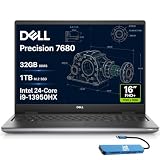
- POWERFUL FOR CREATIVITY - The Dell Precision 7000 series stand at the top of the Precision lineup, delivering higher performance and expandability than the 3000 and 5000 series for demanding workloads. As a flagship model, the Precision 7680 showcases Dell’s high-end workstation design with powerful, scalable capabilities, aligned with the evolution of the Dell Pro Max series. Built for design, architecture, photography, and other intensive workflows, it provides the power and versatility needed for complex projects.
- HIGH PERFORMANCE - Powered by Intel Core i9-13950HX vPro Processor (up to 5.5GHz) with integrated Intel UHD Graphics for superior efficiency and speed. 32GB DDR5 CAMM RAM and 1TB PCIe NVMe M.2 SSD for seamless multitasking and fast storage. CAMM was designed specifically to overcome the performance limits of SODIMM while reducing both Z height and routing traces on the PCB to ultimately allow for laptops with both faster RAM and thinner profiles.
- CRISP DISPLAY - The 16″ FHD+ (1920 x 1200) anti‑glare display delivers sharp, vivid visuals for professional work. Support for up to three external monitors via HDMI, USB‑C, and Thunderbolt ports at 4K@60Hz (without docking station), enables flexible multi‑screen setups. A built‑in 1080p FHD webcam with privacy shutter ensures clear, reliable video calls.
- VERSATILE CONNECTIVITY - Equipped with two Thunderbolt 4, USB-C, two USB-A, HDMI, Ethernet, and an Audio combo jack for flexible connections. With Wi-Fi 6E and Bluetooth, ensuring fast wireless connectivity and compatibility with a wide range of peripherals. Features a backlit keyboard with a numeric keypad for comfortable typing and convenient number entry, even in low-light environments.
- OPERATING SYSTEM - Windows 11 Pro 64‑bit, with AI‑powered Copilot, offers intelligent assistance to streamline complex professional workflows, enhance productivity, and support advanced multitasking across demanding applications. Built for workstation‑class computing, it delivers enterprise‑grade security and IT manageability.
Why Siemens wanted Altair
Siemens said the acquisition would expand its industrial-software portfolio, strengthen its position in simulation and industrial AI, enhance its digital-twin offering and bring Altair technology into Siemens Xcelerator. It also linked the deal to its ONE Tech Company program and forecast cost and revenue synergies. These are Siemens’ stated objectives, not independent measures of market leadership or customer outcomes. Siemens’ Xcelerator ecosystem is positioned as a digital-business platform, not a single software product.
Strategically, the combination gives Siemens a way to connect product engineering with simulation, compute resources, analytics and AI-assisted optimization. That is a plausible industrial-software strategy because industrial AI often depends on physics models, simulation outputs and specialized engineering data as well as algorithms. This is an interpretation of the companies’ portfolio and integration statements, not evidence that every customer workflow already operates as one connected system.
How Altair fits into Siemens Xcelerator and licensing
Siemens’ current pages place Altair capabilities within its wider software and Simcenter ecosystem. Altair One is presented as an access layer for simulation, analytics, HPC and cloud resources, including cloud, on-premises and hybrid use. The integration therefore has a commercial dimension as well as a technical one: customers must assess how software access, licenses and compute resources fit their purchasing and operating models.
Siemens says the Altair Units model provides a shared pool of units usable across more than 180 Altair and partner products. A shared pool may suit teams whose users move between applications, but it does not guarantee that licenses will be available at peak demand. Concurrent use, product-specific license rules and workload patterns determine whether the model works economically. Altair’s licensing documentation says Altair License Manager 2026 is required for Altair 2026 products and that one Altair Unit corresponds to 1,000 license features; it also distinguishes unit-based, named-user and feature-based licensing. Buyers should not assume every product follows one licensing arrangement.
Rank #3

- 【Friendly Remind】This Veken standing desk is built with joined pieces (not one whole)
- Massive Workspace: With a generous 63"x28" desktop, this electric standing desk offers plenty of room for multiple monitors, office essentials, and more—giving you the space you need to stay organized and productive
- Easy Assembly: Pre-installed threaded metal inserts and metal connectors make assembly straightforward and hassle-free. This thoughtful design not only simplifies setup but also enhances the desk's long-term durability
- Dual-Beam Construction: The robust dual-beam frame ensures exceptional stability, minimizing wobble during both use and height adjustments. The strong legs provide reliable weight capacity and lasting durability for daily work routines
- Electric Height Adjustment: A quiet motor (under 52 decibels) smoothly adjusts the desk height from 28.3" to 46.5" to support both sitting and standing positions. Save your preferred heights with the memory preset feature and easily reduce sedentary time throughout the day
What has changed since closing
A concrete integration milestone arrived on July 28, 2026, when Siemens announced a Simcenter release describing a portfolio that combines Siemens and Altair simulation technologies. Siemens highlighted expanded AI-driven simulation, GPU acceleration and multiphysics workflows, as well as PhysicsAI technology within Simcenter HyperMesh and integration of Simcenter SimSolid with Siemens Designcenter. See the July 2026 Simcenter announcement for Siemens’ description.
This shows that integration has moved beyond the acquisition’s legal close and branding. It does not establish that all products have been technically unified, that customers have received quantified productivity gains, or that the promised financial synergies have been realized.
What the announced financial targets do—and do not—show
When it announced the deal, Siemens forecast more than $150 million in annual EBITDA impact from cost synergies by the second year after closing. Siemens also expected the acquisition to be EPS-accretive, before purchase-price allocation, by the second year after closing, and said it intended to maintain its exceptional credit rating. These were forward-looking company projections at announcement, not reported outcomes. They should not be presented as achieved results without subsequent financial reporting that confirms them.
Do these 3 things before closing this tab:
1Clear out junk files and repair common Windows errors2Fix the driver behind crashes, sound loss and screen glitches3Repair Windows errors before they cause bigger problemsWhat the acquisition could mean for customers
Engineering teams and existing Siemens customers
A wider simulation and optimization portfolio, more compute-management options and closer connections between physical models and data could help teams assemble workflows across product development. The practical value depends on interoperability in each organization’s actual tools and data environment. Before adopting a combined workflow, verify version compatibility, APIs, support terms and any migration requirements for the specific products in use.
Rank #4

- More Storage Space: This OffiGo standing desk comes with 4 fabric drawers, providing more storage space for office and study accessories and keeping your desktop more tidy and clean
- L-Shaped Workspace: The standing desk L shape fits in the corner of a room, effectively saving space for rooms with limited space. There's a tray behind the sit stand desk to help you keep your cables tidy, maintaining an aesthetically desktop
- Electric Height Adjustment: The height adjustable standing desk allows you to customize the usage height from 29.9" to 46.1" by using the 3 preset electric buttons for optimal comfort. It equipped with 3 Outlets & 1 USB & 1 Type-C ports, providing convenient charging options for devices at work or play
- Reversible Design: You can customize your standing desk by installing the sub-table plate on your left or right side based on your preference. The 15" extra board can enlarge your workspace. The frame of the table is made of industrial-grade steel that is more robust and stable for a long-lasting performance
- Easy to Assemble & Great After-sale Service: Our computer desk comes with detailed instruction, all parts are clearly labeled, and you only need to follow instruction step-by-step.
Altair customers and new buyers
Ownership by Siemens may offer access to a broader industrial-software ecosystem, but customers should check product roadmaps, continuity and support arrangements rather than infer them from the acquisition alone. Siemens has said the combined offering can make advanced simulation more accessible to companies of different sizes; without customer pricing or adoption evidence, that remains an objective, not a guarantee of affordability.
HPC administrators, IT and procurement
Centralized HPC and licensing tools may be useful where teams manage clusters, GPUs, cloud capacity and software entitlements across many users. Buyers should model peak concurrent use rather than only total license counts: a large shared pool can still become a bottleneck when many users need the same resources at once. They should also confirm cloud support, data-residency and security controls, data-export options, and how proprietary engineering data is stored and accessed.
Cloud bursting and GPU acceleration are not automatic cost or speed wins. Results depend on workload characteristics, queueing, license availability, data movement, infrastructure configuration and cloud governance. Likewise, AI-assisted simulation can change how teams explore designs, but engineers still need to validate results against physical principles, test data and the requirements of the application.
Risks and trade-offs buyers should assess
- Product overlap: A broader portfolio can also make selection harder if tools overlap or roadmaps converge.
- Continuity and migration: Confirm whether a particular product or feature remains supported, and what migration is required before relying on it in a production workflow.
- Licensing complexity: Shared-unit access may be flexible for alternating workloads but less predictable for teams with heavy simultaneous use. Ask for a workload-specific model, including peak demand and product-specific terms.
- Vendor concentration: Buying more engineering capabilities from one supplier may reduce integration work while increasing switching costs and dependence on that vendor.
- Data governance: Establish where engineering data and workloads reside, who can access them, whether they are used for model development, and how they can be exported.
- Digital-twin readiness: Connected, governed lifecycle data and a clear use case are prerequisites; software breadth alone is not enough.
- Synergy proof: The acquisition’s financial forecasts need to be distinguished from realized results in Siemens’ reporting.
How Siemens–Altair compares with alternatives
The acquisition does not make Siemens the automatic choice for every engineering organization. The relevant comparison is how each approach fits existing systems, required physics, compute needs and tolerance for platform consolidation.
| Option | Where it may fit | Buyer question |
|---|---|---|
| Siemens–Altair | Organizations seeking a broad industrial-software environment spanning lifecycle workflows, simulation, HPC and data/AI capabilities. | Will the specific Siemens and Altair products interoperate with current systems, and does the licensing and platform breadth justify consolidation? |
| Ansys | Organizations prioritizing multiphysics simulation, engineering analysis and established solver workflows. | Is a simulation-centered stack a better fit than a broader lifecycle and manufacturing ecosystem? |
| Dassault Systèmes | Organizations centered on 3DEXPERIENCE, product lifecycle management, design, simulation and virtual-twin workflows. | How well does that platform align with the organization’s existing systems and lifecycle strategy? |
| PTC | Organizations focused on PLM, connected products, industrial IoT and augmented-reality workflows. | Are product-lifecycle and connected-product capabilities the primary requirement? |
| Mixed-vendor or open stack | Organizations seeking specialist solvers, cloud HPC, open-source AI frameworks and independent data platforms. | Can internal teams support the added integration, procurement and governance work in exchange for flexibility? |
There is no universal winner. A sound evaluation starts with current CAD and PLM systems, physics domains, HPC usage, cloud strategy, engineering-data architecture, licensing needs, migration tolerance and the value of having one accountable vendor.
What investors and manufacturers should watch
The deal’s strategic logic is clear: Siemens acquired more than a simulation vendor, adding a broad computational-engineering and data/AI portfolio that can reinforce its industrial-software ambitions. For manufacturers, the important test is whether the combined products improve specific workflows—such as simulation access, time to insight, engineering productivity or compute utilization—without introducing unacceptable licensing, migration or governance costs. For investors, the distinction between strategic positioning, announced synergy targets and subsequently reported financial performance is essential; the acquisition’s scale alone does not establish that the expected returns have materialized.
Quick Recap
Product prices and availability are accurate as of the date/time indicated and are subject to change. Any price and availability information displayed on Amazon at the time of purchase will apply.
Free tools Windows power users keep installed
One-click scans. No signup required.



