Do these 3 things before closing this tab:
1Repair Windows errors before they cause bigger problems2Fix the driver behind crashes, sound loss and screen glitches3Clear out junk files and repair common Windows errorsSome links on this page are affiliate links: if you buy through them we may earn a commission, at no extra cost to you.
Redwood Materials is worth watching not because it has built an “AI microgrid,” but because it is trying to connect battery recycling, second-life storage and the growing need to power AI data centers. Its Nevada project with Crusoe combines solar generation and repurposed electric-vehicle batteries in a 12 MW / 63 MWh system. Redwood reported 99.2% microgrid uptime in March 2026 and said the partners were expanding compute capacity to seven times the original scale. Those are meaningful signs of progress—but company-reported performance and expansion plans are not proof that the model is profitable, financeable or repeatable across the industry.
For personal-finance readers, the useful question is not whether Redwood is a guaranteed winner. It is what the project reveals about a private climate-tech company’s opportunity, execution risks and funding needs as energy infrastructure becomes more important to AI.
What Redwood built in Nevada
Redwood Materials launched its energy-storage business, Redwood Energy, in 2025. Its flagship project with AI-computing infrastructure company Crusoe is at Redwood’s Nevada campus near Sparks and Reno. The system brings together solar generation, second-life EV batteries, power electronics and software controls to serve modular data centers designed for AI workloads. The initial deployment used four Crusoe Spark data centers, according to Redwood’s March 2026 update.
Redwood describes the system as 12 megawatts (MW) and 63 megawatt-hours (MWh), deployed in under four months. MW measures the rate at which a system can deliver power; MWh measures the quantity of energy it can store. Dividing 63 MWh by 12 MW gives about 5.25 hours at full rated output as a simple arithmetic illustration—not a guaranteed runtime. Actual delivery depends on operating reserves, battery state of charge, solar production, conversion losses and the data centers’ load.
#1 Best Overall

- Ultra-Lightweight: At only 7.5 lbs, the Explorer 300 delivers a robust 292Wh capacity while remaining 17% lighter than the industry average. The sleek, integrated handle makes it effortless to carry on long hikes or pack with your camping gear, providing reliable off-grid power without adding bulk to your load.
- Versatile Power for 6 Devices: Equipped with 2 AC outlets, a 100W USB-C PD port, 2 USB-A ports, and a 120W car port. With a 300W rated output (600W peak surge), it easily handles laptops, drones, and cameras, while also serving as a dependable cpap battery for camping or a robust solar powered generator when paired with panels.
- Built to Last: Upgraded with premium LiFePO4 chemistry, this portable generator delivers over 4,000 charge cycles before reaching 70% capacity. This ensures more than 11 years of reliable service life, making it a sustainable and durable energy partner for a decade of exploration.
- Fast Solar Charging: Perfect for off-grid use, this solar powered generator pairs seamlessly with Jackery panels. Reach 80% capacity in approximately 2.8 hours with a 100W solar panel, or maintain your gear with a portable 40W panel (80% in 7.5 hours), making it an essential part of your hunting essentials.
- WHAT YOU GET: 1* Jackery Explorer 300 Portable Power Station, 1*AC adapter, 1* car charger cable, 1* user guide (𝐒𝐨𝐥𝐚𝐫 𝐏𝐚𝐧𝐞𝐥 𝐍𝐨𝐭 𝐈𝐧𝐜𝐥𝐮𝐝𝐞𝐝.)
Redwood and Crusoe have called the project the largest microgrid in North America. Treat that as the companies’ description: the published material does not make every possible meaning of “largest” interchangeable, such as largest by power, stored energy or second-life battery capacity. Nor does the available project material establish that the site is permanently disconnected from the utility grid. “Microgrid serving AI data centers” is more precise than calling it fully off-grid.
The project’s notable operational update is Redwood’s reported 99.2% microgrid uptime. That is a useful milestone beyond an announcement of planned construction, but the cited update does not fully define the measurement period, what equipment was included, how maintenance was counted or whether the figure reflects a contractual service-level measure. It should not be equated with a data-center availability certification or a utility reliability standard.
Redwood Energy’s project description and the Crusoe announcement provide the companies’ account of the original deployment.
Quick wins for a faster PC:
Repair Windows errors before they cause bigger problemsFix Now →Fix the driver behind crashes, sound loss and screen glitchesFind Drivers →Clear out junk files and repair common Windows errorsFree Scan →Why pair storage with AI computing?
The business problem is often described as speed to power. A data-center operator may be able to install computing equipment faster than a utility can complete the generation, transmission, substation or interconnection work needed to supply it. Redwood argues that on-site generation and storage can help bridge that gap, allowing computing capacity to come online before all conventional grid upgrades are ready. That is the company’s positioning, not proof that every project can bypass grid constraints or permitting.
Rank #2

- 【SLIM & POCKETABLE】This portable power bank is about the size of a smartphone (6.5×3.3×4 inches) and weighs only 2.54 pounds. It features an ergonomic soft handle for easy portability. It easily fits into a backpack for convenient portability. Pro Tip: Fully charge and discharge the battery twice initially for the best experience.(Solar panel and cable not included)
- 【DUAL INPUT/OUTPUT (AC + DC)】The portable power station comes with a 89.6Wh capacity LiFePO4 battery pack(not NCM) and 100W, features 7 output ports, including 2 AC sockets (100W),2 USB-C port (45W/15W), 2 USB-A port (18W/15W), and DC5521 ports (60W). The LED display can clearly show the working status and remaining power.(Please peel off the protective film on the screen after unboxing)
- 【Ultra Fast Charging】With unique fast charging technology,the portable generator can be charged from 0-80% just in 1.5hrs. The solar power bank power station has Four methods to charging: AC wall socket fast charging, USB-C DC two-way PD fast charging(AC and DC can be charged at the same time) ,car charging and solar panel charging.Fast charging solar power bank portable charger suitable for for emergency home backyard outdoor power outages off-grid camping essentials
- 【ULTRA-QUIET & EMERGENCY-READY POWER STATION】Experience silent, fanless operation perfect for sleeping, working, or camping, while the built-in 4-level LED flashlight (with steady/SOS modes) ensures emergency readiness. Its accidental-touch-proof design requires a long-press to activate, ideal for charging devices during outages or outdoor adventures without noise disruption.(Only suitable for powering devices within 100W).
- 【Long-Lasting & Safe LiFePO4 Battery】: 3500+ life cycles (far exceeding standard batteries). Durable LiFePO4 batteries last 3x longer than standard lithium batteries! Advanced BMS provides 12 safety protections, monitoring voltage, current & temperature. Powers your smartphone, laptop, mini-fridge, camera, and drone simultaneously.
Storage can help balance intermittent solar output, manage peaks and provide power during interruptions or periods when other supply is constrained. Modular data centers can also be deployed in stages. But the energy system and the compute load must be designed together: a 12 MW rating cannot be translated directly into a fixed number of GPUs or training hours, since demand varies with hardware, utilization, cooling, networking and workload.
Most importantly, the phrase “AI microgrid” can blur two different things. AI computing is the customer load Redwood’s system is intended to support. Redwood also describes software that coordinates thousands of varied battery packs as a single energy asset. The reviewed company material supports describing the system as software-managed or intelligently controlled; it does not establish that the controller is a generative-AI system or that machine learning is necessary to operate the microgrid.
Why retired EV batteries may still be useful
An EV battery can become unsuitable for a vehicle without being completely depleted. In stationary storage, weight and energy density are generally less important than they are in a car, so some packs may have a useful second life. Redwood says it screens incoming batteries: packs that meet reuse requirements can be routed into stationary storage, while others can proceed to recycling and materials recovery. See its explanations of repurposed storage systems and Redwood Energy.
The intended lifecycle is straightforward:
- EV battery reaches the end of automotive use.
- Diagnostic screening assesses its condition. A suitable pack may be refurbished or configured for stationary storage.
- Storage extends its service life. The system must monitor performance and account for degradation and replacement.
- At the end of its useful life, the battery can enter recycling and material recovery.
Reuse may create value before a battery’s materials are recovered and may reduce the need to manufacture a new battery for a particular storage job. It could also give Redwood another use for batteries it can access. But reuse is not automatically cheaper or greener. Testing, refurbishment, transport, integration, monitoring and safety measures all cost money and consume resources. The result depends on battery chemistry and condition, the alternative being displaced, electricity sources and the eventual recycling pathway. Independent research discusses these trade-offs and the challenges of second-life batteries, including reuse-versus-recycling pathway analysis and a review of second-life battery uncertainties.
Rank #3
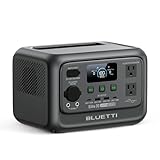
- [288Wh On-the-Go Power] - Only 9.4 lbs lightweight, carry it anywhere during storms! 288Wh capacity meets daily & outdoor needs—camping, road trips, beach visits, or home emergencies. Extend your smart green energy life to every corner of your ideal lifestyle with this compact entry-level power station.
- [600W Continuous & 1500W Surge Power] - Get a full 600W output—twice as much as others. When you need serious power, activate Power Lifting Mode for 1500W power (vs. the typical 600W). It runs everything from essential camping lights, speakers, and car fridges to critical devices like laptops and CPAP machines and even a small kettle or toaster—ideal for stormy days at home or outdoor trips.
- [50% Lower Power Consumption] - Upgraded UltraCell tech & smart cooling system cut power consumption by 50%. Enhances overall energy efficiency, extends device runtime. Excellent durability & environmental adaptability for extreme outdoor climates and long-term operation.(Standby power only 4.5W, DC 5W, AC 8W)
- [8 Charging Modes & 380W Fast Wall Charge] - Supports AC wall charge (380W/200W adjustable), solar, car charging, etc. 0-80% in 45 mins, 0-100% in 70 mins (battery-safe). Match PV60L solar panel for on-the-go recharging. Flexible charging solutions for city, wilderness, daily or emergency scenarios.
- [Reliable UPS] - Never lose data or stop your devices during winter storms/blackouts! 10ms ultra-fast UPS switch protects CPAP, laptops, routers—critical for home emergencies when power cuts suddenly.
A 2025 Nature Communications lifecycle study compares industrial recycling and mining-related pathways that include Redwood’s refining routes. Its findings should not be treated as a lifecycle assessment of the Nevada microgrid itself. That project’s full environmental performance would also depend on refurbishment, power electronics, installation, operating conditions, solar generation, battery replacements and end-of-life treatment.
Redwood’s business is broader than recycling
Redwood’s earlier public identity centered on collecting and processing batteries to recover materials such as lithium, nickel, cobalt and copper, and producing battery materials and components. Redwood Energy extends that strategy into storage deployments. The company now describes itself as working across critical minerals, battery-component manufacturing and energy-storage systems; its company overview sets out that broader scope.
The potential commercial logic is vertical integration: Redwood may be able to assess batteries, route appropriate ones to reuse, recover materials from others, make or source battery components, and integrate storage projects with controls and power electronics. That could create value at more than one point in a battery’s life. It could also make the business operationally complex: recycling, materials processing and project development each have different customers, capital requirements and risks.
Recommended Free Tools
Redwood has said it plans to deploy 20 GWh of grid-scale storage by 2028. That is a company target, not an achieved deployment or independently verified forecast. The company also says its DC/DC converters are designed for more than 15 years and that battery units can be swapped. Those are first-party product claims; their practical importance depends on field performance, maintenance requirements and warranty terms.
Rank #4

- Powerful yet Compact: Boasting a 1,500W AC output and a 3,000W surge peak, the Solar Generator 1000 V2 can power multiple appliances, including AC units, fridges, and electric pots. With a 1,070Wh capacity and a lightweight build of only 23.8 lbs, along with a foldable handle, it makes an excellent companion for outdoor camping, road trips, or emergencies.
- One Hour Fast Charging: Charge your Explorer 1000 v2 Portable Power Station from 0% to 100% battery level in just one hour with emergency charging activated via the Jackery App. It defaults to 1.7 hours for a full charge to optimize battery health. Engineered with advanced ChargeShield 2.0 technology, this power station charges safer, faster, and smarter.
- 10 Year Lifespan: The Explorer 1000 v2 portable power station is equipped with a durable LFP battery, maintaining over 70% of its original capacity even after 4,000 charge cycles, offering longevity exceeding 10 years.
- Tailored for Versatility: Featuring two USB-C ports, one USB-A port, one DC car port, and three pure sine wave AC ports, along with LED lights, the Solar Generator 1000 V2 is capable of charging multiple devices simultaneously, meeting power needs in various scenarios. PD 100W fast USB-C charging ensures a rapid charging speed, even without power adapters.
- Smart App Control: Effortlessly switch between different charging modes with Jackery’s App—including one hour emergency charging from 0 to 100%, 30 dB quiet overnight charging mode, and energy efficiency mode. Maximize the freedom to adjust the power station to meet your needs.
Financing and partnerships: signals, not guarantees
In October 2025, Redwood announced a $350 million Series E financing; in January 2026 it announced a final close of $425 million, with Google joining the investor group. NVIDIA’s venture arm participated in the earlier financing, according to the company’s announcements. Redwood said the funding would support its energy-storage platform as well as its recycling and critical-materials businesses. The raises indicate investor interest in the connection between domestic battery supply and AI infrastructure. They do not demonstrate profitability, prove that the storage business has attractive unit economics or guarantee future funding. See the company’s October financing announcement and January final-close announcement.
In July 2025, General Motors and Redwood announced a partnership to pursue U.S.-built batteries for energy storage, building on an existing relationship around recycling and end-of-life materials. The strategic possibility is that automakers could provide a route to both used batteries and new battery supply for stationary applications. The public announcement did not specify a complete deployment schedule, pricing structure or committed volume, so the partnership should not be read as a quantified supply guarantee. Axios reported on the GM relationship.
Independent reader supportYour contribution helps us test, update, and keep practical guides available for everyone.The risks that could limit the opportunity
Battery condition is not uniform
Used EV packs differ in chemistry, age, design, history and remaining capacity. Screening must estimate both state of health and power capability accurately. If the assessment is wrong, usable capacity, safety, system performance and project economics can suffer. A fleet of varied packs also requires controls and power electronics capable of monitoring, isolating and managing differences.
Storage assets continue to degrade
Second-life batteries keep aging. Operators must plan for declining usable capacity, reserve margins, replacement schedules and eventual recycling. A system that meets its initial rating is not necessarily able to deliver the same service over its full project life.
Best Value
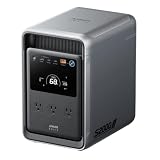
- 𝐔𝐩 𝐭𝐨 𝟑𝟓-𝐇𝐨𝐮𝐫 𝐅𝐫𝐢𝐝𝐠𝐞 𝐁𝐚𝐜𝐤𝐮𝐩: With 6W idle power draw and 10% higher efficiency, this power station runs 20% longer than other 2kWh systems, keeping your fridge powered for 35 hours.
- 𝟏𝟎,𝟎𝟎𝟎-𝐂𝐲𝐜𝐥𝐞 𝐋𝐅𝐏 𝐁𝐚𝐭𝐭𝐞𝐫𝐲: Powered by 314Ah LFP cells, S2000 has a 15-year lifespan, equivalent to 10,000 charge cycles.
- 𝐒𝐦𝐚𝐥𝐥𝐞𝐬𝐭 𝐚𝐧𝐝 𝐋𝐢𝐠𝐡𝐭𝐞𝐬𝐭 𝟐𝐤𝐖𝐡 𝐏𝐨𝐰𝐞𝐫 𝐒𝐭𝐚𝐭𝐢𝐨𝐧: 30% smaller and 25% lighter than the industry average, this power station measures just 8.2 × 11.1 × 12.7 in and weighs only 35.7 lbs.
- 𝐏𝐨𝐰𝐞𝐫𝐬 𝟗𝟗% 𝐨𝐟 𝐇𝐨𝐦𝐞 𝐄𝐬𝐬𝐞𝐧𝐭𝐢𝐚𝐥𝐬: 1,500W continuous output and 3,000W peak output keep nearly every essential appliance running. Actual runtime will vary depending on your refrigerator model, usage habits, and ambient temperature.
- 𝟔 𝐖𝐚𝐲𝐬 𝐭𝐨 𝐑𝐞𝐜𝐡𝐚𝐫𝐠𝐞: Supports up to 400W solar input. Power up via AC + solar, a wall outlet, a generator, solar panels, an alternator charger, or a car outlet—anytime, anywhere.
Safety and bankability matter
Lithium-ion batteries require fire-risk management, monitoring, fault isolation, appropriate design and permitting. A demonstration project is not by itself evidence that a product has every certification, insurance arrangement, performance guarantee or warranty a large customer or lender will require. The relevant questions include who bears replacement and performance risk, what service terms apply, and whether insurers and financiers will support a repeatable project structure.
Grid independence is not a shortcut around infrastructure rules
A microgrid may reduce dependence on a particular grid upgrade or provide flexibility while an interconnection is pending. It does not automatically remove electrical, fire-code, land-use, environmental or utility requirements. Deployment time at one site cannot be assumed for projects with different locations, loads, permits or grid arrangements.
Economics depend on the alternative
Second-life batteries do not compete only with new batteries. A customer may compare them with new-build lithium-ion storage, utility interconnection and transmission upgrades, gas or diesel generation, fuel cells, long-duration storage, demand response or delaying compute deployment. The relevant economics include full installed cost, local electricity prices, demand charges, capacity or ancillary-service revenues, tax treatment, backup needs and the value of bringing computing capacity online sooner. Redwood has not published enough project-level financial detail in the cited materials to establish a general cost advantage.
Free tools Windows power users keep installed
One-click scans. No signup required.
Supply and market concentration are real constraints
The model needs enough batteries in suitable condition, chemistry and location. EV adoption, vehicle lifetimes, battery designs and competing uses all affect feedstock availability. Meanwhile, data-center demand can shift with AI economics, permitting, community response and the capital budgets of compute customers. If a large portion of storage growth depends on AI facilities, a slowdown or change in their geography could matter.
How to judge Redwood as a company to watch
Redwood is a private company, and the cited announcements do not provide public-market investors with the disclosure typical of a listed company. A funding headline or partnership alone is not a basis for estimating an individual investment’s value. For readers following the sector, the more informative evidence will be whether Redwood converts its Nevada installation into repeatable, financeable projects.
- Repeat deployments: Look for operating systems with multiple customers and locations, not only announced plans or a single flagship site.
- Transparent reliability: Watch for uptime methodology, outage reporting, degradation data, maintenance rates, battery replacement rates and safety performance. The 99.2% figure is a useful reported milestone, but more context is needed to compare it fairly.
- Customer economics: Seek disclosed evidence on delivered cost and value compared with new batteries, grid upgrades, backup generation and the cost of delayed compute.
- Feedstock access: Track the scale and terms of automaker and battery-supply relationships, the chemistry mix, logistics costs and the share of incoming packs that qualify for reuse.
- Bankability: Look for warranties, performance guarantees, service arrangements, safety certifications, insurance and financing structures acceptable to large customers and lenders.
- Lifecycle evidence: Project-level information on battery origin, screening, efficiency, replacement and end-of-life recycling would clarify both environmental impact and economics.
- Target progress: Compare actual deployments with Redwood’s 20 GWh-by-2028 ambition, keeping the target distinct from achieved capacity.
- Integration benefits: Assess whether combining materials, screening, storage hardware, software and recycling actually cuts deployment time or delivered cost enough to justify the added complexity.
What the Nevada project proves—and what it does not
The project shows that Redwood and Crusoe have deployed a system combining solar, second-life batteries and modular AI data centers, and Redwood has since reported operating uptime and a major expansion in compute capacity. That makes Redwood Energy more than a purely conceptual extension of the recycling business.
It does not, on the information disclosed, prove that second-life storage will beat new batteries in every market, that the system is fully off-grid, that the controls are AI-powered, or that Redwood has established a profitable, bankable model at broad scale. For now, Redwood merits attention as a company testing an important infrastructure thesis: battery-lifecycle capabilities might help deliver power sooner where grid capacity is constrained. Whether that becomes a durable business depends on repeat deployments, reliable performance, adequate battery supply and transparent project economics.
Quick Recap
Product prices and availability are accurate as of the date/time indicated and are subject to change. Any price and availability information displayed on Amazon at the time of purchase will apply.



