Some links on this page are affiliate links: if you buy through them we may earn a commission, at no extra cost to you.
Yes, the so-called “RAMmageddon” is a real supply-chain risk—but it does not mean every new PC or phone will suddenly ship with less RAM. The more likely outcome is a mix of higher prices, smaller memory or storage configurations, fewer discounts, delayed launches, and weaker overall value, especially in budget phones, low-cost laptops, soldered-memory ultrabooks, and DIY PC upgrades.
The nickname is informal. The underlying issue is that memory manufacturers are prioritizing high-bandwidth memory (HBM) and server DRAM for AI data centers, leaving tighter supply for conventional PC memory, mobile memory, and some storage products.
What “RAMmageddon” actually means
“RAMmageddon” is a media label, not an official industry designation. It describes a broader memory-supply squeeze affecting several different products:
The Tool Desk
Outbyte PC Repair FREERepair Windows errors before they cause bigger problemsFix Now →Outbyte Driver Updater FREEScan for outdated or missing drivers - takes under a minuteDriver Scan →- DRAM: Volatile working memory used by desktops, laptops, and servers.
- DDR4 and DDR5: Common desktop, laptop, and server DRAM standards.
- LPDDR4X and LPDDR5X: Low-power memory used heavily in smartphones and thin laptops.
- HBM: High-bandwidth memory stacked near AI accelerators and data-center GPUs.
- GDDR: Graphics memory used by discrete graphics cards.
- NAND flash: Nonvolatile storage used in SSDs, phones, memory cards, and USB drives.
These markets overlap at the manufacturing level, but they are not interchangeable. HBM cannot simply be installed in a desktop as ordinary RAM, and a NAND shortage affects storage rather than system memory.
#1 Best Overall

- [Color] PCB color may vary (black or green) depending on production batch. Quality and performance remain consistent across all Timetec products.
- DDR3L / DDR3 1600MHz PC3L-12800 / PC3-12800 240-Pin Unbuffered Non-ECC 1.35V / 1.5V CL11 Dual Rank 2Rx8 based 512x8
- Module Size: 16GB KIT(2x8GB Modules) Package: 2x8GB ; JEDEC standard 1.35V, this is a dual voltage piece and can operate at 1.35V or 1.5V
- For DDR3 Desktop Compatible with Intel and AMD CPU, Not for Laptop
- Guaranteed Lifetime warranty from Purchase Date and Free technical support based on United States
TrendForce reported that major DRAM suppliers were prioritizing server DRAM and HBM, putting pressure on PC, mobile, and consumer memory.
Why AI data centers are affecting ordinary electronics
AI companies are not literally taking the RAM out of consumer devices. The more accurate explanation is a shift in manufacturing priorities and supply commitments:
- AI accelerators require large quantities of HBM.
- HBM depends on advanced DRAM production, packaging, and testing capacity.
- Data centers also require substantial volumes of conventional server DDR5.
- Those products can offer memory manufacturers stronger demand and margins than some consumer segments.
- Less capacity and fewer supply commitments remain for PC DRAM, mobile DRAM, and certain storage products.
- Device makers then face higher component costs and tighter allocations.
Reuters, citing TrendForce data, reported that DRAM supplier inventory had fallen to roughly two to four weeks in October 2025, compared with substantially higher levels in late 2024.
Quick wins for a faster PC:
Repair Windows errors before they cause bigger problemsFix Now →Scan for outdated or missing drivers - takes under a minuteDriver Scan →This is different from the pandemic-era chip shortage. That crisis was strongly associated with factory shutdowns, logistics problems, and sudden demand changes. The current pressure is more closely connected to AI infrastructure demand, deliberate capacity allocation, memory-generation transitions, and low inventories.
What the industry forecasts—and what it does not prove
In a December 11, 2025 forecast, TrendForce expected another sharp memory-price increase in the first quarter of 2026. It said smartphone and notebook manufacturers were considering price increases and specification reductions, and forecast greater PC-market price volatility by the second quarter.
That is an industry forecast, not proof that every manufacturer will cut RAM or that every retail market will experience the same increase. The eventual effect depends on memory type, region, inventory, contracts, product margins, and how much cost each manufacturer is willing to absorb.
A manufacturer does not need to announce a “RAM surcharge.” It can pass the cost through in several less obvious ways:
Recommended Free Tools
- Raise the retail price while keeping specifications unchanged.
- Offer less RAM or storage at the same price.
- Reduce discounts on current or previous-generation models.
- Use a weaker display, SSD, battery, camera, or processor to protect the target price.
- Remove the cheapest configuration from the product range.
- Delay a launch or slow the pace of upgrades.
- Accept lower margins instead of changing the advertised specification.
How PCs could be affected
Desktop PCs and DIY upgrades
Desktop buyers may see higher and more volatile prices for standalone DDR4 and DDR5 kits. Prebuilt systems may become more expensive even when the memory line item is not separately visible.
DIY users have one advantage: desktop memory is often replaceable. If your motherboard has open slots and supports the required capacity, you may be able to postpone an upgrade. But that flexibility also exposes you directly to retail pricing.
Rank #2

- ✅【DDR3 8GB Kit 1333MHz UDIMM RAM 】PC3-10600, DDR3 1333MHz, Unbuffered, Dual Rank, Non ECC, 1.5V CL9, apply for AMD, Intel, Mac system
- ✅【Advanced Chips】All DDR3 8GB RAM are high quality ram memory module. Professional company, high-quality materials, upgrade designed for DDR3 UDIMM compatible desktop
- ✅【Stable and Durable】8GB DDR3-1333MHz DIMM RAM, 100% tested for stability, durability and compatibility. All PC3-10600 modules undergo quality assurance testing to ensure dependable and reliable performance
- ✅【Increases System Performance】PC3 8GB ram will speed up loading times, improve system responsiveness, and increase your system's ability to handle greater workloads. Warm tips: Please make sure your desktop model meets 2x4GB 1333 10600 kit, you can also contact us to make sure
- ✅【Lifetime Service】Lifetime warranty, free technical support. You can also contact us to ensure compatibility. Any questions, feel free to contact us, we are always be with you
Before buying an upgrade, check:
- Whether the system uses DDR4 or DDR5. They are not interchangeable.
- The motherboard’s maximum supported capacity and speed.
- Whether modules must be installed in matched pairs.
- How many slots are already occupied.
- Whether the proposed kit is compatible with the processor and motherboard.
A system with two free slots may be more valuable than one with a higher initial capacity but no room to expand. Conversely, buying an unnecessarily large kit solely because of shortage headlines can waste money. Compare the upgrade price with the cost of a future motherboard and CPU platform change.
Gaming PCs and graphics cards
Gaming PCs can be affected through both system memory and graphics memory. Higher DRAM costs may lift the price of a complete system, while GDDR supply and GPU pricing are separate issues. Do not assume that a shortage in HBM automatically explains every graphics-card price movement.
What’s actually slowing this PC down?
Pick the symptom - the matching free tool is one click away.
For a new general-purpose or gaming desktop, 32GB can be a sensible target when the price premium is reasonable. That is not a universal requirement: workload, games, applications, and the rest of the platform matter. More RAM cannot fix a CPU, GPU, storage, or software bottleneck.
Laptops face a bigger expandability problem
Laptops are more exposed than desktops because many use soldered memory. Thin systems commonly use LPDDR memory attached directly to the motherboard, while other designs use replaceable SO-DIMMs or a combination of soldered memory and one expansion slot.
TrendForce specifically highlighted high-end ultrathin notebooks with soldered memory. These systems cannot easily reduce costs late in production by swapping to a different module configuration. Manufacturers may therefore raise prices or alter the design in a future generation.
When comparing laptops, identify which of these designs you are buying:
Free tools Windows power users keep installed
One-click scans. No signup required.
- Fully soldered: The installed capacity is generally a permanent choice.
- SO-DIMM based: Memory may be replaceable, subject to manufacturer limits.
- Hybrid: Some memory is soldered and one slot may remain available.
- Unified memory: Memory is integrated with the processor package and is not user-upgradeable.
An inexpensive 8GB laptop with no expansion can be a false economy if you expect to keep it for many years. Paying for 16GB or 32GB at purchase may be cheaper than replacing the machine later, even if the current workload is light.
For buyers who value repairability and upgradeability, modular designs such as those offered by Framework may deserve consideration. The trade-off is that modular products may not be the thinnest, cheapest, or most battery-efficient option.
Budget smartphones are likely to feel the pressure first
Entry-level and mainstream phones have less margin to absorb component inflation. That makes them more vulnerable to price increases, smaller storage tiers, older memory standards, or cuts to other hardware.
Rank #3
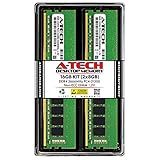
- Compatible with select DDR4 Desktop computers + Easy to install at home, no expertise required
- Maximize your system's performance, boost loading speeds and multitask with ease
- Backed by A-Tech's Lifetime Warranty + Friendly tech support team available to help before and after your purchase
- 16GB RAM Kit ( 2 x 8GB Modules ) | DDR4 DIMM 288-Pin | Speeds up to 2666MHz (2667MHz), PC4-21300 / PC4-2666V
- NON-ECC Unbuffered | 1Rx8 or 2Rx8 - Single or Dual Rank | JEDEC DDR4 standard 1.2V
TrendForce previously warned about tightening LPDDR4X supply and pressure on mainstream and entry-level smartphones. Possible manufacturer responses include:
- Retaining or reintroducing 4GB configurations.
- Reducing storage capacity.
- Using slower or older memory generations.
- Raising prices or reducing promotional discounts.
- Cutting camera, display, battery, charging, or processor specifications.
- Changing the product mix so the cheapest model disappears.
Flagship phones are not immune. Premium devices can generally absorb higher memory costs more easily, but manufacturers may still raise launch prices, reduce storage tiers, or offer smaller discounts on older models. TrendForce said memory could represent a materially larger share of smartphone bill-of-materials costs, including for higher-margin product lines.
Do not treat “RAM expansion” as equivalent to physical RAM. On many phones, the feature uses internal storage as a swap or cache area. It may help in limited situations, but it does not provide the same performance as additional physical memory. A microSD card can expand storage; it does not substitute for system RAM.
Consoles have fewer ways to respond
Console memory is generally not user-upgradeable. If costs rise, console makers have fewer configuration options than desktop-PC manufacturers. They may absorb the increase, raise prices, reduce shipments, change product timing, or alter other components.
That does not establish that a particular console will receive a memory downgrade. It means the consumer has fewer ways to correct an underspecified system after purchase, making launch capacity and long-term software support especially important.
Do these 3 things before closing this tab:
1Clear out junk files and repair common Windows errors2Scan for outdated or missing drivers - takes under a minute3Repair Windows errors before they cause bigger problemsWhat “downgraded specs” could mean
A specification downgrade is not limited to cutting RAM. Possible examples include:
- 12GB of phone RAM becoming 8GB.
- 8GB becoming 6GB or 4GB in an entry-level device.
- 512GB of storage becoming 256GB.
- A laptop launching with 16GB instead of 32GB.
- A slower memory generation or fewer memory channels.
- Fewer expansion slots or more soldered memory.
- The same RAM capacity paired with a weaker display, SSD, battery, camera, or processor.
- The same specification at a higher price.
These are possible responses, not confirmed universal changes. The important distinction for buyers is between:
- Capacity reduction: Less RAM or storage.
- Performance reduction: Slower memory or storage.
- Expandability reduction: Fewer upgrade options.
- Price increase: The same configuration costs more.
- Value reduction: The price stays similar while other components become weaker.
Who is most exposed?
- Budget smartphones: Small margins make component increases harder to absorb.
- Low-cost laptops: Entry configurations can be reduced or removed.
- Soldered-memory ultrabooks: Buyers cannot add capacity later.
- DIY PC upgraders: They see component-market volatility directly.
- SSD buyers: NAND pressure could affect storage, although NAND is distinct from DRAM.
- Premium phones and high-end desktops: These products may have more pricing or margin flexibility, but they are not fully protected.
Why manufacturers cannot simply make more memory
New wafer capacity requires years and substantial capital. HBM also needs specialized advanced packaging and testing, not just additional wafer output. Manufacturers cannot instantly switch every production line between HBM, server DDR5, PC DRAM, and mobile LPDDR.
Device qualification adds another constraint. A new memory supplier or module configuration must meet power, thermal, signal-integrity, firmware, and reliability requirements. Laptop and phone designs are built around particular memory architectures, so a late substitution may be impractical.
Crashes, No Sound, or Screen Glitches?
Random freezes, missing sound and display glitches usually trace back to one bad driver. Find and replace yours safely.Free scan · under a minuteWindows Errors? Fix Them Before They Spread
Repair common Windows errors and clear accumulated junk for a smoother, more stable PC - no reinstall needed.Free scan · no reinstallRank #4

- 【DDR3 2x 4GB 1600MHz 12800 Udimm Desktop RAM Card】DDR3-1600, PC3-12800, Unbuffered, Dual Rank, Non ECC, 2Rx8, 240-Pin, 1.5V, CL11 memoria ram
- 【Advanced Chips】All DDR3 4GB 12800 ram card are high quality ram memory module, apply for desktop computer AMD, Intel, Mac system
- 【Stable and Durable】8GB DDR3-1600MHz Udimm, 100% tested for stability, durability and compatibility. We test all rams before shipment to ensure all PC3-12800U ram card works stably and normally
- 【Increases System Performance】PC3 8GB ram will empower your computer to achieve faster loading times, system responsiveness, increase your system's ability to handle greater workloads. Note: Please make sure your desktop computer meets PC3 12800 1600 kit
- 【Lifetime Service】Compatible with Macbook, iMac, HP, Dell, Lenovo, ASUS, Acer, etc. Lifetime warranty, free technical support. Any questions, feel free to contact us, we will reply within 24hrs
Suppliers also have to avoid recreating the oversupply and price-collapse conditions that have affected the memory industry before. Increasing production too aggressively can damage profitability, so supply expansion is not simply a matter of turning up a factory.
Should you buy now or wait?
Buy now when the purchase is necessary
If your computer is failing, your current memory is insufficient for work, or a good configuration is available at an acceptable price, waiting solely for a guaranteed market recovery is risky. There is no reliable end date in the supplied forecasts.
Wait when the purchase is optional
If your current device meets your needs, do not panic-buy incompatible RAM or pay a large premium for capacity you will not use. Memory prices can vary by region, retailer, kit size, and short-term inventory.
For a desktop
- Compare the complete system price, not just the RAM cost.
- Prefer a motherboard with useful upgrade capacity if the premium is reasonable.
- Check whether the system uses one or two modules.
- Buy only the capacity your workload justifies.
For a laptop
- Treat soldered memory as a long-term commitment.
- Prefer replaceable or expandable memory when practical.
- Compare the upfront cost of 16GB or 32GB with the cost of replacing an entire laptop later.
- Verify whether advertised memory is soldered, socketed, hybrid, or unified.
For a phone
- Consider software-support life, storage, processor, display, and battery alongside RAM.
- Ignore virtual RAM when comparing physical memory capacity.
- Check whether the specific model has a microSD slot, but remember that expandable storage is not extra RAM.
- Be cautious with unusually high virtual-memory claims on very cheap phones.
For an existing PC upgrade
Confirm compatibility, maximum capacity, supported speeds, and module placement before ordering. Avoid mixing incompatible kits merely to chase capacity. If the upgrade is optional, compare the memory price with the cost of moving to a new CPU and motherboard platform.
What could ease the pressure?
Memory conditions could improve through additional wafer capacity, better HBM yields, expanded advanced-packaging capacity, weaker AI infrastructure demand, higher prices reducing demand, new suppliers, or inventory normalization. Those factors may arrive at different times for HBM, server DRAM, PC memory, mobile LPDDR, and NAND.
That is why a precise recovery date would be misleading. A fall in desktop DDR5 pricing would not necessarily mean cheaper phone LPDDR4X, and a DRAM improvement would not automatically resolve SSD pricing.
What this means for household budgets
For consumers, the main risk is not one dramatic RAM fee. It is paying more for a device that offers less headroom, less storage, fewer upgrade options, or fewer discounts.
When comparing a purchase, calculate the total cost over the expected ownership period. A cheaper laptop with permanently limited memory may cost more if it forces an early replacement. A desktop with open expansion slots may justify a slightly higher upfront price. A phone with better software support may offer greater value even if its RAM figure is not the highest.
Memory is only one component of a device, but it can be unusually difficult to fix after purchase. Capacity and expandability therefore deserve more attention than headline features such as “virtual RAM” or a large storage number.
Quick Recap
Product prices and availability are accurate as of the date/time indicated and are subject to change. Any price and availability information displayed on Amazon at the time of purchase will apply.



