Some links on this page are affiliate links: if you buy through them we may earn a commission, at no extra cost to you.
Pacific Northwest space and quantum leaders called for closer regional coordination at a July 2025 summit in Bellevue, but they did not announce a new joint venture or shared commercial project. The effort described there was about connecting existing companies, universities, investors and policymakers—and addressing gaps in funding, workforce development and political visibility.
What “team up” meant at the Bellevue summit
At the Pacific NorthWest Economic Region’s 34th Annual Summit, held July 20–24, 2025, in Bellevue, Washington, separate discussions examined quantum technology and commercial space. PNWER described its summit as a forum for legislators, business leaders, academics and policymakers from the United States and Canada; its post-event account said more than 600 leaders attended and the program included more than 40 sessions and sidebar discussions. PNWER’s summit page and post-summit account identify space and quantum computing among the industries discussed.
The phrase “team up” is best understood as a call to coordinate and present the region as a stronger technology cluster. The summit coverage did not report a signed consortium agreement, new pooled fund, joint contract or shared commercial product. Participants were comparing needs and proposing ways to make existing capabilities more visible—not announcing that the two industries had merged or that their organizations had formed one venture. GeekWire’s July 23, 2025 report describes the panels and their participants.
What’s actually slowing this PC down?
Pick the symptom - the matching free tool is one click away.
Quantum: a mix of research, companies and workforce questions
Who took part
The quantum panel brought together people from different parts of the ecosystem: University of Washington professor Charles Marcus, who leads the Northwest Quantum Nexus; Jason Yager, executive director of the Montana Photonics and Quantum Alliance; Qubit Ventures managing partner Nardo Manaloto; IonQ senior director of architecture John Gamble; and Photonic Inc. chief marketing officer Alison Berg. Their roles span academic research, regional alliance-building, venture investment and private-sector quantum development. They should not be read as representatives of a single technical platform or a unified commercial plan. GeekWire’s report identifies the panelists.
#1 Best Overall

- 【Ultra-Light Design for All Adventures】Only 3lb/1.35kg - World's Most Portable Smart Telescope! Fits perfectly in standard backpack for travel. Ideal for spontaneous stargazing trips and outdoor adventures. Take it anywhere, anytime!
- 【Dual Imaging System for Day & Night】Advanced Dual Lens Design: Telephoto lens masters wildlife & landscape & deep space objects, while wide-angle lens captures Milky Way & star trails. In daytime, telephoto for subjects, wide-angle for target location. Perfect dual-camera imaging solution!
- 【Smart Auto-Tracking & 4K Clarity】Professional 4K Auto-Tracking ensures crystal-clear shots of stars, planets, and wildlife. Advanced system automatically follows celestial objects and moving subjects for stunning results every time.
- 【Cloud-Powered Image Processing】One-touch processing through dedicated DWARFLAB App with cloud computing power. Instantly enhance your photos - no PC or complex software needed. From capture to stunning final image in minutes!
- 【Easy-to-Master for All Ages】Perfect for beginners to experts (6-98 years)! Start amazing astrophotography in just 2 minutes. Intuitive app interface and automatic features make professional imaging accessible to everyone.
The Northwest Quantum Nexus is a connector, not a regional authority
The Northwest Quantum Nexus was established in 2019 by the University of Washington, Microsoft and Pacific Northwest National Laboratory to connect quantum researchers, developers and business leaders. At the 2025 summit, Marcus described an effort to make its model more open and less centralized, potentially welcoming organizations from across—and beyond—the Pacific Northwest. The report also said its website had gone offline after a domain-registration lapse and was being redesigned with financial support from the Washington Technology Industry Association. That describes a proposed broader approach and a website redesign, not proof of a completed institutional relaunch, new funding program or fully staffed regional authority. GeekWire’s coverage provides that account.
Why quantum commercialization is hard
A useful quantum machine is not just a processor. Commercial development can depend on specialized hardware and facilities, suppliers, software and algorithms, and access to customers whose problems could benefit from quantum or hybrid computing. The summit discussion highlighted uncertainty about practical capabilities and use cases, competition for researchers and students, the need for physics and materials-science facilities, and concern about federal research funding. Those uncertainties make it difficult for investors and policymakers to judge which technical milestones will translate into durable customer demand. The panel report records these regional concerns.
Quantum work also draws on cryogenics, photonics, lasers, materials, control systems and software. These requirements create potential opportunities for suppliers and trained workers before quantum computers deliver the most ambitious promised applications. Yager pointed to Montana photonics and laser-training graduates working in communications, defense, homeland security, medical devices and information technology. He used a “gold rush supply chain” analogy for the potential value of building capabilities around the field; that is an argument for transferable skills and supplier development, not a guaranteed economic forecast. GeekWire’s account attributes the workforce example and analogy to Yager.
Free tools Windows power users keep installed
One-click scans. No signup required.
One operational hardware example: IonQ in Bothell
IonQ opened a dedicated quantum-computing manufacturing facility in Bothell, Washington, on February 15, 2024. The company said the site would support production engineering and research and serve as its second quantum data center providing cloud access to customers. In an earlier announcement, IonQ described plans for a 65,000-square-foot facility and said it intended to invest $1 billion in the Pacific Northwest over ten years. The facility opening is a reported event; the regional investment figure was a company-announced plan, not a verified total of money spent. IonQ’s facility-opening announcement and its earlier facility and investment announcement make those distinctions important.
Rank #2
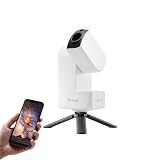
- 【Effortless Smart Telescope for Beginners】 Simply power on, connect the app, and start exploring the universe. With automatic GOTO targeting and tracking, Seestar S30 Pro finds and follows celestial objects for you. View the night sky live on your smartphone and capture stunning astrophotography images with just a few taps—even on your first night under the stars
- 【Urban-Friendly Telescope for Clear Night Skies】 Seestar S30 Pro reduces color distortion with apochromatic optics for sharper stars and higher contrast. Built-in light pollution filters help you capture clearer astrophotography even in bright urban environments
- 【Dual-Camera 4K Imaging for Stunning Detail】 Capture sharper, higher-resolution astrophotography with dual-camera imaging. From deep-sky objects to wide night landscapes, Seestar S30 Pro delivers clear 4K-quality images with impressive detail and clarity in every shot
- 【One-Tap Astrophotography: Deep Sky, Moon & Sun】 Capture stunning images of the Milky Way, star trails, nebulae, galaxies, the Moon, and the Sun—all with a single tap. Intelligent imaging modes and automatic mosaic stitching make wide-field astrophotography effortless, no complex setup required. Designed for deep-sky objects; not intended for planetary observation
- 【AI Smart Imaging for Clearer Photos】 With a single tap, AI automatically reduces noise and improves image quality, making your astrophotography clearer and more detailed. It also separates the sky and foreground for more natural and balanced night sky photos
IonQ has also described involvement with the Northwest Quantum Nexus, including a hackathon with Microsoft and regional partnerships involving Washington State University, the University of Oregon, Amazon and Boeing. This is evidence of existing connections, but it does not establish that every organization named has a continuing commercial partnership with every other participant. IonQ’s announcement describes its involvement.
Space: many regional companies, varied businesses
The summit reporting identified a substantial Seattle-area and broader Pacific Northwest space footprint. Examples include Blue Origin in Kent; SpaceX’s satellite operation in Redmond; Amazon’s Project Kuiper satellite factory in Kirkland; and companies such as Aerojet Rocketdyne/L3Harris, LeoStella, Xplore, Stoke Space, Starfish Space, Gravitics, Hubble Network, Interlune, Kymeta, New Frontier Aerospace, Radian Aerospace and RBC Signals. The companies work across different areas—including launch and propulsion, satellites, communications, satellite data, spacecraft design and in-space infrastructure—so the roster is not itself evidence of a single integrated cluster. The reporting also includes established corporations and subsidiaries, not just startups. GeekWire’s regional overview lists the companies and their context.
The same report relayed the claim that more than half of the world’s satellites are built in Redmond in connection with SpaceX’s local operation. That figure should be treated as an attributed claim, not an independently audited measure of regional production. A concentration of satellite activity can matter to suppliers and talent, but its scale alone does not show that companies are coordinating or sharing commercial work. The report provides the attribution.
Recommended Free Tools
Why regional coordination could matter
Space panelists argued that the Pacific Northwest has significant technical activity but less political visibility than California, Colorado and Washington, D.C. Their concern is that visibility can affect where policymakers look for contractors and where companies, universities and workers see opportunity. If regional capabilities are presented as scattered local stories, decision-makers may miss the scale of the supplier base or the case for workforce and infrastructure investment. The link between coordination and outcomes is a rationale voiced by participants, not proof that branding alone will generate contracts or funding. The summit report describes their concerns.
Rank #3

- SMARTPHONE-POWERED SKY TOUR: No experience needed! Just dock your phone, launch the StarSense Explorer app, and follow the on-screen arrows to locate stars, planets, nebulae, and more.
- PATENTED STARSENSE TECHNOLOGY: Unlike other astronomy apps, StarSense Explorer uses sky recognition technology to turn your phone into a celestial navigation system, analyzing star patterns overhead to pinpoint your telescope’s position.
- TONIGHT’S BEST TARGETS, INSTANTLY: The app generates a curated list of the top objects to see based on your time and location. See planets, bright nebulae, galaxies, and star clusters from the city—and even more from dark skies.
- SIMPLE SETUP, SMOOTH TRACKING: Features a manual altazimuth mount with altitude slow motion adjustment with a sliding rod. Follow the on-screen arrows to your target; when the bullseye turns green, you can view it clearly through the eyepiece.
- 114MM REFLECTOR WITH IMPRESSIVE VIEWS: The 4.5" Newtonian reflector with high-reflectivity coatings delivers sharp, vivid views of the Moon, planets like Jupiter and Saturn, and deep-sky favorites like the Orion Nebula and Andromeda Galaxy.
Space Northwest serves as an association for the region’s space industry. Redmond established its Space District in 2023 to highlight the city’s space presence, including SpaceX’s satellite operation. Xplore executive Lisa Rich discussed a proposed “405 Space Data Corridor” to draw attention to Eastside companies developing satellite-data products. PNWER, in turn, provides a cross-border forum for public, private, academic and nonprofit stakeholders. These efforts operate at different levels: an industry association, a city branding initiative, a proposed corridor and a regional convening forum. The proposed corridor should not be mistaken for an established government district or funding program. GeekWire’s report covers the initiatives, while PNWER’s summit page explains its forum.
Shared economic-development needs, different market realities
Space and quantum share several ecosystem needs: specialized engineering talent, university and laboratory research, expensive equipment, patient capital, suppliers, government involvement and regional visibility. But they are not one converging industry. Space companies often have more visible hardware, procurement and commercial-contracting pathways. Quantum faces greater uncertainty about technical timelines, useful milestones and end-user markets. A shared economic-development strategy may make sense for workforce or research infrastructure, but the industries still need distinct technical and commercial plans. The summit coverage describes the respective concerns.
Policy is another point where regional coordination meets local differences. Rich contrasted Washington with Colorado, saying some Colorado startups receive benefits such as subsidized rent or employee support. Michael Doyle of Space Northwest noted that Washington law limits some forms of direct assistance available elsewhere. Those are speakers’ characterizations, not a complete legal comparison of state programs; the summit report does not establish that all firms qualify for those forms of support or quantify their effects. GeekWire’s report attributes the statements to Rich and Doyle.
How to tell whether the effort becomes more than a pitch
A crowded company map and a well-attended summit show regional assets and interest. To judge whether coordination is producing an economic cluster, look for outcomes beyond shared branding:
- Formal organization: a signed agreement, defined membership, governance and responsibilities.
- Capital: a new grant, pooled investment, corporate commitment or public appropriation, with announced plans distinguished from money actually deployed.
- Shared infrastructure: operating laboratories, manufacturing capacity, test facilities or data systems that multiple organizations can use.
- Workforce programs: new training, apprenticeships or degree pathways tied to employers and measurable placement outcomes.
- Joint commercial activity: a shared bid, government contract, supplier arrangement or product—not simply organizations appearing at the same event.
- Results over time: attributable jobs, company formation, contracts, investment, patents or completed regional initiatives.
The 2025 summit supports a conclusion of dialogue and an effort to coordinate. It does not, on its own, establish the funding, shared facilities, workforce programs or commercial results in that checklist. The Pacific Northwest’s space and quantum identity was therefore an organizing ambition built on existing assets, not evidence of a completed unified cluster.
Quick Recap
Product prices and availability are accurate as of the date/time indicated and are subject to change. Any price and availability information displayed on Amazon at the time of purchase will apply.



