Some links on this page are affiliate links: if you buy through them we may earn a commission, at no extra cost to you.
The comparison is a useful shorthand, not a construction plan. In September 2025, OpenAI and NVIDIA announced plans for at least 10 gigawatts (GW) of NVIDIA AI systems and related infrastructure. That scale is broadly comparable to the output capacity of around ten large nuclear reactors—but it does not mean ten reactors will be built for OpenAI, or that the project is already using 10 GW of electricity.
For households and investors, the important question is what happens as these enormous power needs meet local grids, utility bills, and long-term energy investment. The answer depends on where facilities are built, how their electricity is supplied, and who pays for the infrastructure.
What OpenAI and NVIDIA actually announced
On September 22, 2025, OpenAI and NVIDIA announced a strategic partnership and a letter of intent. NVIDIA said it intended to invest up to $100 billion in OpenAI, progressively as each gigawatt of systems was deployed. The companies said OpenAI planned to deploy at least 10 GW of NVIDIA systems, representing millions of GPUs. The first 1-GW phase was scheduled for the second half of 2026 and was expected to use NVIDIA’s Vera Rubin platform. (OpenAI announcement; NVIDIA announcement)
Those figures describe related but different things:
#1 Best Overall

- PLEASE NOTE: Exporting an NVIDIA RTX Pro 6000 GPU outside the US requires strict adherence to the U.S. Export Administration Regulations (EAR) and issuance of an export license from the Bureau of Industry and Security (BIS). Compliance and Know Your Customer (KYC) screening may be required as a condition of order acceptance. [NVIDIA Blackwell Streaming Multiprocessor] The new SM features increased processing throughput, and new neural shaders that integrate neural networks inside of programmable shaders | DLSS 4: Multi Frame Generation ensures ultra-smooth frame pacing for lifelike simulations.
- [Double-Flow-Through Design] The RTX PRO 6000 Blackwell features a double-flow-through cooling design, optimizing efficiency and airflow to sustain peak performance under 600W power loads. | [5th Gen Tensor Cores] Deliver up to 3X the performance of the previous generation and support for FP4 precision for faster AI model processing times with reduced memory usage, enabling local fine-tuning of LLMs and generative AI | [4th Gen Ray Tracing Cores] Double the ray-triangle intersection rate of the previous generation to create photoreal, physically accurate scenes and immersive 3D designs with RTX Mega Geometry, which enables up to 100X more ray-traced triangles.
- [PCIe Gen 5] Support for PCIe Gen 5 provides double the bandwidth of PCIe Gen 4, improving data-transfer speeds from CPU memory and unlocking faster performance for data-intensive tasks like AI, data science, and 3D modeling. | [GDDR7 Memory] With 96 GB of GPU memory and 1.8 TB ps bandwidth, it can tackle massive 3D and AI projects, fine-tune AI models locally, explore large-scale VR environments, and drive larger multi-app workflows.
- [DisplayPort 2.1] Achieve unparalleled visual clarity and performance, driving high resolution displays at up to 8K at 240 Hz and 16K at 60 Hz. Increased bandwidth enables seamless multi-monitor setups while HDR and higher color depth support ensures superior color accuracy for precision work, such as video editing, 3D design, and live broadcasting.
- [Universal MIG] Divide a single RTX PRO 6000 Blackwell into multiple isolated instances, each with dedicated resources, allowing for concurrent execution of multiple workloads, optimized GPU utilization, and secure isolation of different applications or users. [WARRANTY] 3 YR Manufacturer's Warranty. Bulk OEM Packaging. Retail Packaging is NOT included.
- $100 billion is NVIDIA’s stated intended investment ceiling, not cash the announcement says has already been transferred. “Up to” matters: it is not a guarantee that the full amount will be invested.
- 10 GW is the planned scale of NVIDIA systems and supporting AI infrastructure, not a reported measurement of current electricity consumption.
The announcement does not provide a complete cost breakdown or say that every dollar is a direct payment for power. Nor does it establish that the full build-out is financed, connected to the grid, or operational.
How 10 GW compares with nuclear reactors
A gigawatt is 1,000 megawatts (MW). The U.S. Energy Information Administration says a single nuclear reactor generally has a capacity of 800 MW or more. So the reactor comparison depends on which reactor rating you use:
| Assumed capacity per reactor | Equivalent for 10 GW |
|---|---|
| 800 MW | 12.5 reactors |
| 1,000 MW | 10 reactors |
| 1,100 MW | About 9.1 reactors |
That makes “about ten reactors” a reasonable round-number analogy for scale, but not an exact conversion. The EIA’s 800-MW benchmark would put the equivalent above twelve reactors. (EIA explanation of reactor capacity)
These are comparisons of capacity, often called nameplate capacity: the maximum output a plant or system is designed to provide under specified conditions. Actual electricity delivered varies with maintenance, outages, utilization, and other operating conditions. A reactor-equivalent is not a reactor, and the partnership announcement does not say ten nuclear plants will be built or assigned to OpenAI.
Capacity is not the same as annual electricity use
Power capacity measures a rate at a moment in time. Electricity consumption measures the total used over a period. If a 10-GW load drew its full rated power continuously for a year, it would use:
10 GW × 8,760 hours = 87.6 terawatt-hours (TWh) per year.
That is a mathematical scenario, not an OpenAI consumption forecast. At 90% utilization, the same capacity would use about 78.8 TWh in a year; at 50%, about 43.8 TWh. A data center can be designed for a given capacity but ramp up gradually, run below it as workloads vary, or reduce demand during maintenance or grid emergencies.
Outdated Drivers Are Slowing You Down
One free scan finds every outdated or missing driver and matches the right update for your exact hardware.Free scan · exact hardware matchPC Slower Than It Used to Be?
A free scan shows the junk files, broken settings and background clutter dragging Windows down - then fixes them in one click.Free scan · Windows 10 & 11For context, the International Energy Agency estimates that data centers worldwide used about 415 TWh in 2024, around 1.5% of global electricity, and projects roughly 945 TWh by 2030 in its base case. Those are global sector estimates, not figures for this partnership. (IEA analysis of data-center demand; IEA executive summary)
Rank #2

- NVIDIA Volta GV100 Architecture — 4,608 CUDA Cores, 640 1st-Gen Tensor Cores delivering 14 TFLOPS FP32 and 112 TFLOPS deep learning performance for AI training, inference, HPC, and scientific computing workloads
- 32GB HBM2 ECC Memory — 900 GB/s Bandwidth — High-bandwidth memory on a 4096-bit bus with ECC error correction provides the memory capacity and throughput required for the largest AI models, simulations, and datasets
- PCIe 3.0 x16 Interface — 250W TDP — Standard PCIe Gen3 connectivity with passive cooling designed for enterprise rack server deployment in HPE ProLiant, Dell PowerEdge, and Supermicro platforms with adequate chassis airflow
- NVLink — Scale to 96GB Unified Memory — Connect two V100 GPUs via NVLink at 300 GB/s bi-directional bandwidth to scale GPU memory from 32GB to 96GB for larger AI training and HPC workloads
- Multi-Precision Computing — Supports FP64 (7 TFLOPS), FP32 (14 TFLOPS), FP16 (112 TFLOPS) and INT8 precision modes for flexible deployment across training, inference, and scientific simulation workloads
Why a data center needs more than GPU power
The 10-GW headline should not be read as 10 GW going directly into GPU chips. A data center also uses electricity for CPUs, networking, memory and storage, power conversion, cooling, pumps, fans, lighting, security, and other facility systems. Cooling and supporting infrastructure account for a significant share of data-center electricity demand, and AI is increasing power density. The companies have not provided a precise split between IT equipment and total facility load for this plan. (IEA on AI-related data-center demand)
It also matters whether a quoted capacity refers to equipment load, total facility demand, a grid connection, or generation contracted for the site. Those measures are related but not interchangeable. A 1-GW grid connection, for example, does not mean the site owns a 1-GW power plant.
How it fits into Stargate—and why not to add every figure together
The NVIDIA partnership sits within a broader OpenAI infrastructure push. OpenAI’s original Stargate announcement described an ambition to invest up to $500 billion over four years in U.S. AI infrastructure, with an initial $100 billion deployment. OpenAI later announced a planned 4.5-GW expansion with Oracle and additional sites, alongside a goal of securing 10 GW of U.S. AI infrastructure by 2029. (Stargate announcement; Oracle expansion; Additional sites; Infrastructure update)
Free tools Windows power users keep installed
One-click scans. No signup required.
These announcements describe overlapping strategic objectives, partners, and potentially infrastructure—not necessarily separate capacity blocks that can be added together. The NVIDIA plan should not automatically be counted as an additional 10 GW on top of every Stargate number unless the companies clarify that the figures are additive.
Where could the electricity come from?
The announcement does not specify a single electricity source. Data centers can draw from the local grid, use or contract for dedicated generation, and combine supply arrangements involving natural gas, renewables, nuclear power, storage, and other resources. The IEA says natural gas currently supplies the largest share of U.S. data-center electricity, followed by renewables, nuclear, and coal; it expects renewables to meet nearly half of additional global data-center demand through 2030, with gas and nuclear also contributing. (IEA on electricity supply)
A power-purchase agreement for renewable or nuclear electricity is a commercial supply arrangement; it does not necessarily mean a data center receives physically separate electrons from a particular generator. The mix serving a facility depends on location, grid conditions, contracts, and how new generation and transmission are developed.
Could a build-out this large affect household electricity bills?
It could, but higher household bills are not an automatic consequence. The impact depends on how a utility or regional market handles the new demand and who pays for generation, transmission, substations, and other upgrades.
Recommended Free Tools
- Costs charged to the data-center operator: The operator may fund dedicated generation or pay for some grid upgrades, limiting the burden on other customers.
- Costs shared through utility rates: Depending on regulation and contracts, some infrastructure costs could be recovered from a wider group of ratepayers.
- New supply and flexibility: Additional generation may help meet demand; operators might also agree to curtail noncritical computing during grid emergencies.
- Local congestion: In constrained areas, large new loads can increase pressure on available power and transmission, with effects that vary by market and utility.
There is no single national outcome. A household’s exposure depends on its utility, state rules, wholesale-market conditions, project location, and the terms governing the load. The plan alone is not proof that residential rates will rise.
Rank #3
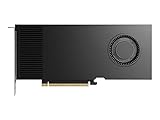
- Professional GPU with Blackwell Architecture
- Blackwell Architecture
- 24GB GDDR7 with PCIe 5.0 & Ray Tracing
- AI Workstation
Why the grid may be a bigger obstacle than the headline suggests
Connecting a very large data center requires more than buying servers. Utilities and developers may need grid interconnection approvals, transmission capacity, substations, transformers, generation, fuel supply, cooling and water plans, permits, and backup systems. The U.S. Department of Energy has warned that data-center loads of 1,000 MW or more can strain local grids and that expanding generation and transmission can take years. (DOE recommendations on powering AI and data centers)
As of the infrastructure update dated April 29, 2026, OpenAI said it was committed to securing 10 GW of U.S. AI infrastructure by 2029 and was evaluating additional locations. The original first-gigawatt target—second half of 2026—was still a future window as of August 18, 2026. That timetable is a target, not evidence by itself that the capacity has been connected or commissioned. The milestones to distinguish are announcement, contract, site selection, permitting, construction, grid connection, equipment delivery, first power, and workloads running at planned utilization.
In August 2026, Axios reported an Ohio project associated with OpenAI and NVIDIA-related infrastructure involving 8 GW of IT capacity and 10 GW of new energy generation. That is a project-level report, not proof that the entire partnership’s 10-GW target is complete or operational. (Axios report)
Do these 3 things before closing this tab:
1Scan for outdated or missing drivers - takes under a minute2Clear out junk files and repair common Windows errors3Fix the driver behind crashes, sound loss and screen glitchesEnvironmental trade-offs and economic risks
The climate impact depends on the electricity mix and what new capacity is built. Natural-gas generation produces carbon emissions; nuclear power has low direct emissions during operation but brings separate questions about fuel, waste, safety, and construction timelines. Renewables also require land and transmission, and may need storage or other resources to match supply with demand. Water use varies by cooling design and local climate, while backup generators can emit pollutants even if used infrequently.
More efficient chips can lower energy used per computation, but total demand can still grow if AI use expands faster than efficiency improves. The IEA’s projections are scenarios, not a guarantee of future demand or a forecast for this specific project.
There is a plausible business case: a coordinated hardware pipeline could help OpenAI secure computing capacity and help NVIDIA serve a major customer as demand grows. But execution matters. Grid delays can leave costly equipment underused; construction and power costs can rise; AI demand or model economics can change; and hardware generations can advance before facilities reach full utilization. NVIDIA’s intended investment also creates exposure to a large customer. The announcement alone does not establish the deal’s accounting or financing mechanics, so it is not enough to label the arrangement “circular financing” as a fact.
What to watch next
To judge whether the plan is moving from ambition to usable capacity, look for separate confirmation of:
What’s actually slowing this PC down?
Pick the symptom - the matching free tool is one click away.
- Definitive investment agreements and any disclosed transfers of cash or equity.
- Named sites, permits, and utility interconnection agreements.
- Contracts for generation, transmission, and other necessary power infrastructure.
- Construction progress and delivery of NVIDIA systems.
- Grid connection, first power, and workloads running—not just a site announcement.
- Actual ramp-up toward intended utilization, including any disclosed curtailment or delays.
A press release can establish intent; it cannot by itself establish that a facility is commissioned or consuming its planned load. That distinction is particularly important when comparing a multi-year build-out with the output of operating power plants.
Quick Recap
Product prices and availability are accurate as of the date/time indicated and are subject to change. Any price and availability information displayed on Amazon at the time of purchase will apply.



