Some links on this page are affiliate links: if you buy through them we may earn a commission, at no extra cost to you.
OpenAI and NVIDIA did not announce a completed $100 billion payment. On September 22, 2025, they announced a letter of intent for at least 10 gigawatts of NVIDIA systems, with NVIDIA intending to invest up to $100 billion progressively as capacity was deployed. In February 2026, OpenAI described a $30 billion NVIDIA investment in a broader $110 billion funding round and a 5-gigawatt Vera Rubin plan. Those are distinct public descriptions; the available announcements do not establish that the full $100 billion was invested or how the later $30 billion maps legally onto the earlier proposal.
What the September 2025 announcement actually said
OpenAI and NVIDIA announced their arrangement on September 22, 2025, describing it as a letter of intent. It called for at least 10 gigawatts of NVIDIA systems to support OpenAI’s next-generation AI infrastructure. NVIDIA said it intended to invest up to $100 billion in OpenAI progressively as each gigawatt was deployed.
The first gigawatt was targeted for the second half of 2026, using NVIDIA’s Vera Rubin platform. OpenAI said the infrastructure would support both training and running future models. The announcement described those efforts as being “on the path to deploying superintelligence”; it did not say that superintelligence had been achieved or give a date for it.
The Tool Desk
Outbyte PC Repair FREERepair Windows errors before they cause bigger problemsFix Now →Outbyte Driver Updater FREEScan for outdated or missing drivers - takes under a minuteDriver Scan →What “up to $100 billion” means
The figure was a proposed maximum tied to deployment, not a statement that NVIDIA transferred $100 billion at announcement or committed to a single immediate payment. The stated mechanism linked investment progressively to each gigawatt deployed. The announcement did not disclose a complete final legal agreement, payment schedule, or terms sufficient to treat the ceiling as money already invested.
#1 Best Overall

- PLEASE NOTE: Exporting an NVIDIA RTX Pro 6000 GPU outside the US requires strict adherence to the U.S. Export Administration Regulations (EAR) and issuance of an export license from the Bureau of Industry and Security (BIS). Compliance and Know Your Customer (KYC) screening may be required as a condition of order acceptance. [NVIDIA Blackwell Streaming Multiprocessor] The new SM features increased processing throughput, and new neural shaders that integrate neural networks inside of programmable shaders | DLSS 4: Multi Frame Generation ensures ultra-smooth frame pacing for lifelike simulations.
- [Double-Flow-Through Design] The RTX PRO 6000 Blackwell features a double-flow-through cooling design, optimizing efficiency and airflow to sustain peak performance under 600W power loads. | [5th Gen Tensor Cores] Deliver up to 3X the performance of the previous generation and support for FP4 precision for faster AI model processing times with reduced memory usage, enabling local fine-tuning of LLMs and generative AI | [4th Gen Ray Tracing Cores] Double the ray-triangle intersection rate of the previous generation to create photoreal, physically accurate scenes and immersive 3D designs with RTX Mega Geometry, which enables up to 100X more ray-traced triangles.
- [PCIe Gen 5] Support for PCIe Gen 5 provides double the bandwidth of PCIe Gen 4, improving data-transfer speeds from CPU memory and unlocking faster performance for data-intensive tasks like AI, data science, and 3D modeling. | [GDDR7 Memory] With 96 GB of GPU memory and 1.8 TB ps bandwidth, it can tackle massive 3D and AI projects, fine-tune AI models locally, explore large-scale VR environments, and drive larger multi-app workflows.
- [DisplayPort 2.1] Achieve unparalleled visual clarity and performance, driving high resolution displays at up to 8K at 240 Hz and 16K at 60 Hz. Increased bandwidth enables seamless multi-monitor setups while HDR and higher color depth support ensures superior color accuracy for precision work, such as video editing, 3D design, and live broadcasting.
- [Universal MIG] Divide a single RTX PRO 6000 Blackwell into multiple isolated instances, each with dedicated resources, allowing for concurrent execution of multiple workloads, optimized GPU utilization, and secure isolation of different applications or users. [WARRANTY] 3 YR Manufacturer's Warranty. Bulk OEM Packaging. Retail Packaging is NOT included.
The plan also involved more than buying standalone chips. It paired NVIDIA systems with the data-center and power capacity needed to operate them. In practical terms, it combined a proposed equity investment in OpenAI with a large infrastructure deployment in which NVIDIA would supply systems and related technology. That creates financial interdependence: NVIDIA could help fund a customer that may then spend on NVIDIA infrastructure. This is a reasonable issue for investors to examine, but the announcement alone does not establish that the arrangement is improper or prove exactly how invested funds would be spent.
What changed in February 2026
On February 27, 2026, OpenAI announced a broader $110 billion funding round at a $730 billion pre-money valuation. OpenAI identified $30 billion from NVIDIA, $30 billion from SoftBank, and $50 billion from Amazon. It also described an expanded NVIDIA infrastructure relationship involving Vera Rubin systems: 3 gigawatts of dedicated inference capacity and 2 gigawatts of training capacity. The figures and round are set out in OpenAI’s February update.
The $30 billion is the NVIDIA investment OpenAI publicly identified in that round. The first-party announcements do not say whether it is separate from, or legally part of, the earlier proposed investment ceiling. It should not be added to the original $100 billion as if the two were necessarily cumulative. Nor does the February description of 5 gigawatts establish that the earlier 10-gigawatt plan was cancelled or reduced; the announcements describe different stages or scopes, without resolving their full relationship.
What 10 gigawatts means—and what it does not
A gigawatt measures power capacity, not a count of GPUs or a level of AI capability. The September announcement described a planned infrastructure scale that it said would represent millions of GPUs, but did not give a final accelerator count, site-by-site schedule, total electricity consumption, or completed construction timetable.
Rank #2

- NVIDIA Volta GV100 Architecture — 4,608 CUDA Cores, 640 1st-Gen Tensor Cores delivering 14 TFLOPS FP32 and 112 TFLOPS deep learning performance for AI training, inference, HPC, and scientific computing workloads
- 32GB HBM2 ECC Memory — 900 GB/s Bandwidth — High-bandwidth memory on a 4096-bit bus with ECC error correction provides the memory capacity and throughput required for the largest AI models, simulations, and datasets
- PCIe 3.0 x16 Interface — 250W TDP — Standard PCIe Gen3 connectivity with passive cooling designed for enterprise rack server deployment in HPE ProLiant, Dell PowerEdge, and Supermicro platforms with adequate chassis airflow
- NVLink — Scale to 96GB Unified Memory — Connect two V100 GPUs via NVLink at 300 GB/s bi-directional bandwidth to scale GPU memory from 32GB to 96GB for larger AI training and HPC workloads
- Multi-Precision Computing — Supports FP64 (7 TFLOPS), FP32 (14 TFLOPS), FP16 (112 TFLOPS) and INT8 precision modes for flexible deployment across training, inference, and scientific simulation workloads
- Power capacity is the electrical load infrastructure is designed to support.
- Compute capacity depends on processors, memory, networking, and software working together.
- Utilization is how much of that capacity is operating at a given time.
- Training uses compute to develop or improve models; inference runs models to answer users or applications.
Consequently, a planned 10-GW buildout does not mean 10 GW was operating when the companies announced it. The February split between 3 GW for inference and 2 GW for training is useful because it distinguishes serving workloads from model development; it does not establish how much capacity was operational.
Why OpenAI wants more compute
OpenAI’s stated rationale is growing demand across consumers, developers, and businesses, which requires computing capacity, distribution, and capital. More infrastructure can support model training and the day-to-day operation of services, including reasoning, multimodal, and agentic workloads. Inference capacity also matters when many people or applications need responses with low latency, while geographically distributed capacity can help serve demand across regions.
More GPUs alone do not guarantee better models or products. Results also depend on data, algorithms, research, networking, power, cooling, software, and whether the systems can be deployed and kept busy enough to justify their cost.
What’s actually slowing this PC down?
Pick the symptom - the matching free tool is one click away.
Why NVIDIA would invest in a major customer
The arrangement could align NVIDIA’s financial interest with a large, long-term customer. NVIDIA may benefit from demand for its computing systems, networking, and broader data-center infrastructure, while an equity investment could give it financial exposure to OpenAI’s growth. The linkage may also help coordinate capital and deployment at a scale that would be difficult to arrange through equipment sales alone.
Rank #3
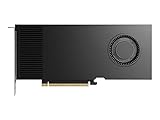
- Professional GPU with Blackwell Architecture
- Blackwell Architecture
- 24GB GDDR7 with PCIe 5.0 & Ray Tracing
- AI Workstation
That alignment has trade-offs. OpenAI could gain access to capacity and capital, but a close relationship with one dominant accelerator supplier could constrain flexibility if competing chips or cloud services become more attractive. For NVIDIA, the investment and prospective equipment demand are linked: expected growth in AI infrastructure does not eliminate execution risk, including construction, power availability, or demand that falls short of plans.
Independent reader supportYour contribution helps us test, update, and keep practical guides available for everyone.How this differs from Stargate and other OpenAI infrastructure plans
The NVIDIA announcement is not the same as Stargate. OpenAI announced Stargate on January 21, 2025, as a separate U.S. AI infrastructure initiative intended to invest $500 billion over four years, with an initial $100 billion deployment. Its initially named equity funders were SoftBank, OpenAI, Oracle, and MGX. The Stargate announcement and NVIDIA’s later letter of intent have different participants and structures, even though both concern infrastructure at very large scale.
| Announcement | Announced scale | What it describes |
|---|---|---|
| OpenAI–NVIDIA, September 2025 | At least 10 GW of planned NVIDIA systems; up to $100 billion in proposed NVIDIA investment | A letter of intent linking infrastructure deployment with progressive investment |
| Stargate, January 2025 | $500 billion intended over four years, with $100 billion initially | A separate AI infrastructure initiative; initial equity funders named were SoftBank, OpenAI, Oracle, and MGX |
| OpenAI funding round, February 2026 | $110 billion total, including $30 billion from NVIDIA | A broader funding round and an NVIDIA capacity description of 3 GW for inference and 2 GW for training |
OpenAI has also described a broader infrastructure strategy involving Microsoft, Oracle, AWS, CoreWeave, Google Cloud, NVIDIA, AMD, AWS Trainium, Cerebras, and its own chip efforts with Broadcom, as well as data-center relationships involving Oracle, SBE, and SoftBank. NVIDIA is a major part of that ecosystem, not the entirety of OpenAI’s compute strategy. See OpenAI’s broader infrastructure update.
Crashes, No Sound, or Screen Glitches?
Random freezes, missing sound and display glitches usually trace back to one bad driver. Find and replace yours safely.Free scan · under a minutePC Slower Than It Used to Be?
A free scan shows the junk files, broken settings and background clutter dragging Windows down - then fixes them in one click.Free scan · Windows 10 & 11What is known, and what remains unconfirmed
The announcements establish the original target, the proposed investment ceiling and deployment-linked mechanism, the first-gigawatt target, and OpenAI’s later public description of a $30 billion NVIDIA investment and 5 gigawatts of Vera Rubin capacity. They do not provide a full operational audit or settle all legal and scheduling details.
- The full amount, if any, invested under the original up-to-$100-billion proposal is not established by these announcements.
- The final legal terms of the September 2025 letter of intent and its exact relationship to the February 2026 investment are not stated.
- The materials do not confirm completed gigawatts, installed GPU totals, actual electricity draw, final sites, power contracts, or construction schedules.
- They do not establish whether the original 10-GW plan remains in full, or how its scope relates to the later 5-GW Vera Rubin description.
These distinctions matter: announced is not the same as committed under a final agreement, and a target is not the same as deployed or operational capacity. The phrase “on the path to superintelligence” is an expression of corporate ambition, not evidence of a technical result or guaranteed breakthrough.
Quick Recap
Product prices and availability are accurate as of the date/time indicated and are subject to change. Any price and availability information displayed on Amazon at the time of purchase will apply.



