Some links on this page are affiliate links: if you buy through them we may earn a commission, at no extra cost to you.
Short answer: The United States did not restore unrestricted Nvidia or AMD chip sales to China. In August 2025, officials reportedly expected the government to receive 15% or more of revenue from certain licensed China sales involving Nvidia H20 and AMD Instinct MI308 processors. Nvidia and AMD later disclosed the expectation in regulatory filings, but both companies said no published regulation formally established the payment requirement.
Since then, the policy has evolved. Nvidia reported limited H20 revenue under approved licenses and later received permission to ship small quantities of H200 products to specific Chinese customers. AMD began shipping licensed MI308 products and later disclosed some MI325 licenses. Each transaction remains subject to product, customer, quantity, inspection, U.S. export-control and Chinese import conditions.
What happened in August 2025?
The episode began with U.S. restrictions on exports of advanced computing hardware to China. In April 2025, Nvidia was told that exporting its China-focused H20 accelerator to China, Hong Kong, Macau and certain connected destinations or entities required a license. AMD’s Instinct MI308 was also affected by a licensing requirement.
What’s actually slowing this PC down?
Pick the symptom - the matching free tool is one click away.
The administration subsequently began granting licenses for selected China-based customers. Early reporting, including TechCrunch’s August 11, 2025 report, said the licensing process was tied to an expectation that the U.S. government would receive 15% or more of revenue from licensed sales.
#1 Best Overall

- PLEASE NOTE: Exporting an NVIDIA RTX Pro 6000 GPU outside the US requires strict adherence to the U.S. Export Administration Regulations (EAR) and issuance of an export license from the Bureau of Industry and Security (BIS). Compliance and Know Your Customer (KYC) screening may be required as a condition of order acceptance. [NVIDIA Blackwell Streaming Multiprocessor] The new SM features increased processing throughput, and new neural shaders that integrate neural networks inside of programmable shaders | DLSS 4: Multi Frame Generation ensures ultra-smooth frame pacing for lifelike simulations.
- [Double-Flow-Through Design] The RTX PRO 6000 Blackwell features a double-flow-through cooling design, optimizing efficiency and airflow to sustain peak performance under 600W power loads. | [5th Gen Tensor Cores] Deliver up to 3X the performance of the previous generation and support for FP4 precision for faster AI model processing times with reduced memory usage, enabling local fine-tuning of LLMs and generative AI | [4th Gen Ray Tracing Cores] Double the ray-triangle intersection rate of the previous generation to create photoreal, physically accurate scenes and immersive 3D designs with RTX Mega Geometry, which enables up to 100X more ray-traced triangles.
- [PCIe Gen 5] Support for PCIe Gen 5 provides double the bandwidth of PCIe Gen 4, improving data-transfer speeds from CPU memory and unlocking faster performance for data-intensive tasks like AI, data science, and 3D modeling. | [GDDR7 Memory] With 96 GB of GPU memory and 1.8 TB ps bandwidth, it can tackle massive 3D and AI projects, fine-tune AI models locally, explore large-scale VR environments, and drive larger multi-app workflows.
- [DisplayPort 2.1] Achieve unparalleled visual clarity and performance, driving high resolution displays at up to 8K at 240 Hz and 16K at 60 Hz. Increased bandwidth enables seamless multi-monitor setups while HDR and higher color depth support ensures superior color accuracy for precision work, such as video editing, 3D design, and live broadcasting.
- [Universal MIG] Divide a single RTX PRO 6000 Blackwell into multiple isolated instances, each with dedicated resources, allowing for concurrent execution of multiple workloads, optimized GPU utilization, and secure isolation of different applications or users. [WARRANTY] 3 YR Manufacturer's Warranty. Bulk OEM Packaging. Retail Packaging is NOT included.
The initial account relied substantially on anonymous government sources. The companies’ later filings provide stronger public documentation of the arrangement, but they describe it as an official expectation—not as a conventional tax or a payment requirement established by a published regulation.
What the 15% “cut” was—and was not
The most accurate description is a reported revenue-share expectation connected to export licenses. It should not be presented as a settled “export tax.”
- Export license: U.S. authorization allowing a specified transaction that would otherwise require approval.
- Revenue-share expectation: The reported expectation that the government would receive 15% or more of revenue from certain licensed China sales.
- Tariff: Generally a charge imposed on imported goods. The reported arrangement was connected to U.S. export licensing, not described as an ordinary tariff.
- Statutory tax or fee: A formally established charge under published legal authority. Nvidia and AMD said no regulation codifying the 15% requirement had been published.
That distinction matters. The cited filings establish that officials expressed the expectation and that licenses were granted, but they do not establish how the money would be collected or how much, if anything, was actually remitted to the U.S. Treasury.
Outdated Drivers Are Slowing You Down
One free scan finds every outdated or missing driver and matches the right update for your exact hardware.Free scan · exact hardware matchPC Slower Than It Used to Be?
A free scan shows the junk files, broken settings and background clutter dragging Windows down - then fixes them in one click.Free scan · Windows 10 & 11Nvidia warned that a government request for a percentage of revenue could expose it to litigation, higher costs and competitive harm. AMD made a similar disclosure. Whether the arrangement is legally permissible would depend on questions of executive authority, export-control administration, appropriations and the constitutional prohibition on export taxes. Those are legal issues, not settled conclusions established by the company filings.
Which chips were covered?
Nvidia H20
The H20 was designed for the China market around earlier U.S. export-control limits. After the April 2025 licensing requirement, Nvidia recorded a $4.5 billion charge related to H20 excess inventory and purchase obligations, according to its filing.
Nvidia later obtained licenses for certain H20 shipments. In its January 2026 filing, the company reported approximately $60 million in H20 revenue under the August 2025 licenses. That figure demonstrates that some licensed business occurred; it does not show that the entire China market reopened.
AMD Instinct MI308
AMD recorded approximately $800 million in inventory and related charges in 2025 after MI308 restrictions affected its products. The company later received licenses for shipments to certain China-based customers and said it began shipping during the fourth quarter of fiscal 2025.
AMD subsequently reversed approximately $360 million of earlier charges. The reversal reflects improved expectations or completed progress on particular shipments; it does not mean every planned MI308 sale was approved or completed.
Rank #2

- NVIDIA Volta GV100 Architecture — 4,608 CUDA Cores, 640 1st-Gen Tensor Cores delivering 14 TFLOPS FP32 and 112 TFLOPS deep learning performance for AI training, inference, HPC, and scientific computing workloads
- 32GB HBM2 ECC Memory — 900 GB/s Bandwidth — High-bandwidth memory on a 4096-bit bus with ECC error correction provides the memory capacity and throughput required for the largest AI models, simulations, and datasets
- PCIe 3.0 x16 Interface — 250W TDP — Standard PCIe Gen3 connectivity with passive cooling designed for enterprise rack server deployment in HPE ProLiant, Dell PowerEdge, and Supermicro platforms with adequate chassis airflow
- NVLink — Scale to 96GB Unified Memory — Connect two V100 GPUs via NVLink at 300 GB/s bi-directional bandwidth to scale GPU memory from 32GB to 96GB for larger AI training and HPC workloads
- Multi-Precision Computing — Supports FP64 (7 TFLOPS), FP32 (14 TFLOPS), FP16 (112 TFLOPS) and INT8 precision modes for flexible deployment across training, inference, and scientific simulation workloads
Later products: Nvidia H200 and AMD MI325
Later licenses involved different products and should not be treated as a blanket relaxation of export controls.
Nvidia said it received a license in February 2026 allowing small quantities of H200 products to be shipped to specific Chinese customers. The license required U.S. inspection before shipment, and Nvidia said the products could face a 25% tariff when imported into the United States for inspection-related processing. In the cited filing, Nvidia reported no H200 revenue under that licensing program.
AMD said it received some February 2026 licenses authorizing shipments of Instinct MI325 products to certain China-based customers, also subject to U.S. inspection. AMD said it did not yet know whether China would permit the imports.
Quick wins for a faster PC:
Clear out junk files and repair common Windows errorsFree Scan →Scan for outdated or missing drivers - takes under a minuteDriver Scan →A U.S. export license is not the same as a completed China sale
For a shipment to become a functioning commercial sale, several links in the chain must hold:
- Product eligibility: The exact model and configuration must fit the license. Export controls can depend on performance, memory bandwidth, interconnect bandwidth and combinations of technical characteristics.
- Customer eligibility: A license may apply only to named or approved China-based customers.
- Ownership and control: Restrictions can extend to companies headquartered in, or ultimately controlled from, designated destinations.
- Quantity: Permission for a small number of units does not imply approval for broad deployment or large AI clusters.
- Inspection: U.S. inspection requirements can add delay, logistics expense and tariff exposure.
- Chinese import approval: U.S. authorization does not guarantee that Chinese authorities will allow the products through customs.
- Customer demand: Buyers may hesitate when supply, import approval or future support is uncertain.
That is why “sales resumed” needs qualification. Selected shipments were licensed or began under licenses, but Nvidia and AMD did not regain unrestricted access to the Chinese market.
Was the money actually paid?
The public disclosures cited here establish three separate facts:
- Officials reportedly sought or expected a 15% or greater share of revenue from certain licensed sales.
- Licenses were granted for particular products and customers.
- Nvidia and AMD generated or began generating revenue under some of those licenses.
They do not establish the amount actually paid to the U.S. government, whether payment was made to the Treasury, or the legal mechanism used to collect it. Therefore, claims that “the government took 15%” or made billions from the arrangement go beyond the documented evidence.
Do these 3 things before closing this tab:
1Scan for outdated or missing drivers - takes under a minute2Clear out junk files and repair common Windows errors3Fix the driver behind crashes, sound loss and screen glitchesWhy the policy is controversial
The national-security case for restrictions
Supporters of strict controls argue that advanced AI accelerators can support military systems, surveillance, cyber operations and other strategic capabilities. A chip below a company’s unrestricted flagship performance can still be valuable when purchased at scale or combined into a large computing cluster.
Rank #3
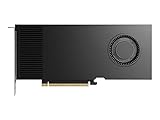
- Professional GPU with Blackwell Architecture
- Blackwell Architecture
- 24GB GDDR7 with PCIe 5.0 & Ray Tracing
- AI Workstation
From this perspective, licensing exceptions could weaken the deterrent effect of export controls. A product that is considered too risky to export would not necessarily become safer merely because the government receives a share of its sales.
The commercial and strategic criticisms
Critics of a revenue-share approach may argue that, if a product is acceptable for export, conditioning access on a government payment distorts competition and creates uncertainty. If it is not acceptable, payment does not resolve the security risk.
The arrangement also raises a precedent question: could export controls on strategic goods become bargaining tools for extracting money from companies? That is an open policy concern, not proof that the same structure will be used elsewhere.
The Tool Desk
Outbyte PC Repair FREERepair Windows errors before they cause bigger problemsFix Now →Outbyte Driver Updater FREEScan for outdated or missing drivers - takes under a minuteDriver Scan →There is a further strategic trade-off. Nvidia and AMD have warned that repeated restrictions can encourage overseas customers to buy from competitors and accelerate development of domestic alternatives. A policy intended to limit China’s access to U.S. technology could therefore also reduce U.S. companies’ market presence and customer relationships.
What the companies’ financial disclosures show
| Company | Product | Documented financial or licensing development |
|---|---|---|
| Nvidia | H20 | $4.5 billion charge after the 2025 licensing requirement; approximately $60 million of revenue under later licenses. |
| AMD | MI308 | Approximately $800 million in inventory and related charges; about $360 million later reversed after licensed shipments began. |
| Nvidia | H200 | February 2026 license for small quantities to specific Chinese customers, subject to U.S. inspection; no revenue reported under the cited program at filing time. |
| AMD | MI325 | February 2026 licenses for certain China-based customers, subject to inspection; Chinese import approval remained uncertain. |
These numbers show why the issue matters financially. Export-control changes can affect inventory planning, purchase obligations, revenue recognition, margins and customer confidence even before a final sales ban or approval is known.
Who stands to gain or lose?
- Nvidia and AMD: Limited licenses may recover some stranded inventory and preserve customer relationships, but compliance costs, possible government payments and policy reversals reduce revenue visibility.
- Chinese AI companies: They may obtain access to some U.S.-designed accelerators, but supply and import approval are unreliable.
- Chinese chipmakers: Repeated uncertainty gives domestic suppliers an incentive to improve and gives buyers a reason to reduce dependence on U.S. products.
- Non-U.S. competitors: Suppliers offering more predictable access may benefit when customers cannot depend on U.S. shipments.
- U.S. national-security agencies: They retain licensing leverage but face the challenge of balancing security controls against the risk of weakening U.S. companies’ position.
- Investors and customers: They must treat licensed China revenue as policy-sensitive rather than as a dependable return to normal trade.
What to watch next
The arrangement’s practical effect depends on more than the headline 15% figure. The important indicators are whether new regulations codify a payment requirement, whether additional licenses are granted or revoked, whether China approves imports, whether inspections cause material delays, and whether future U.S. rules change the technical thresholds.
Nvidia’s later filing continued to describe the lack of a codified 15% rule. AMD’s disclosures likewise described licensing and import uncertainty. Those filings are more useful than treating the August 2025 report as a permanent agreement.
Quick Recap
Product prices and availability are accurate as of the date/time indicated and are subject to change. Any price and availability information displayed on Amazon at the time of purchase will apply.



