Do these 3 things before closing this tab:
1Clear out junk files and repair common Windows errors2Fix the driver behind crashes, sound loss and screen glitches3Repair Windows errors before they cause bigger problemsSome links on this page are affiliate links: if you buy through them we may earn a commission, at no extra cost to you.
Motorola opened its first “Global Flagship Store” in downtown Shanghai on July 13, 2006. The store was not a new 2026 opening: it was an early experiment in experiential mobile-phone retail, combining product demonstrations, technical help and handset personalization with Motorola’s wider plan to expand its branded sales network across China.
What opened in Shanghai?
Contemporaneous reports from July 13 and July 14, 2006 place the opening on July 13. China.org.cn’s account described the location only as downtown Shanghai; the available reporting does not verify a street address, shopping mall or store size. Motorola called it its first Global Flagship Store, making it a showcase for the company’s worldwide retail initiative rather than an ordinary dealer outlet.
That distinction matters. Motorola already sold phones in China through independent retailers, distributors and mobile-network operators. The Shanghai location added a controlled, branded environment where customers could experience Motorola products and services directly.
The Tool Desk
Outbyte PC Repair FREEClear out junk files and repair common Windows errorsFree Scan →Outbyte Driver Updater FREEFix the driver behind crashes, sound loss and screen glitchesFind Drivers →Network World’s contemporaneous report and China Daily coverage reproduced by China.org.cn described the store as part showroom, service center and brand-building venue.
#1 Best Overall

- Fluid 120Hz Display: Features a large 6.7-inch HD+ display with a 120Hz refresh rate and Corning Gorilla Glass 3 for smooth scrolling and added durability.
More than a phone shop
The concept focused on interaction rather than simply handing over a boxed handset. Visitors could:
- Try Motorola’s latest phones through demonstration kiosks and interactive displays.
- Get product guidance, training and technical assistance.
- Receive help from factory-authorized technicians.
- Personalize handsets with laser etching.
- Apply decorative “phone tattoos.”
These features gave Motorola more control over how its products were presented and explained. They also made the store a place where potential buyers could compare devices and learn about features before purchasing through Motorola’s own channel or another retailer.
The flagship was only one part of the China strategy
Motorola said it planned three additional similar stores in Beijing, Chengdu and Guangzhou, as well as comparable concepts in other Asian and international markets. Those were announced plans, not proof that all three locations ultimately opened.
What’s actually slowing this PC down?
Pick the symptom - the matching free tool is one click away.
Rank #2
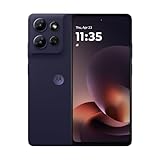
- Universal unlocked - Compatible with all major U.S. carriers, including Verizon, AT&T, T-Mobile and other prepaid carriers.
- Sharp, durable 6.8" 120Hz FHD+ display - Enjoy stunning views and a 120Hz refresh rate along with 360 degrees of protection.*
- TurboPower charging and up to 49-hour battery - Get hours of power in just minutes of charging, and nearly two full days of battery life.***
- 50MP camera system with OIS - Capture sharper low-light photos, smoother videos, and studio-quality selfies with an AI-powered camera system. ****
- 5G speeds and fast multitasking - Experience unimaginably fast 5G speeds with a MediaTek processor and up to 24GB of RAM with RAM Boost.*****
Motorola’s broader retail program was much larger than the flagship rollout. China Daily reported that the company intended to invest tens of millions of dollars over two years to revamp its retail channels and establish 500 branded stores in China’s third- and fourth-tier cities. The wider network was expected to include store-in-store displays, kiosks and other branded outlets—not 500 full-scale global flagships.
This combination reveals the trade-off in Motorola’s approach:
- Flagship stores: expensive, highly controlled venues for demonstrations, service and brand experience.
- Branded outlets and kiosks: a way to reach many more consumers at lower cost.
- Dealers, distributors and operators: the established distribution system that still handled much of Motorola’s sales.
The Shanghai store therefore complemented Motorola’s existing channel network; it did not replace it.
Rank #3
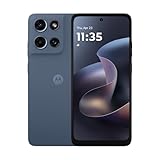
- Universal unlocked. Compatible with all major U.S. carriers, including Verizon, AT&T, T-Mobile and other prepaid carriers.
- Super-bright, super-smooth 6.7" display. See your screen clearly even outdoors in sunlight, and enjoy seamless views with a fast-refreshing 120Hz display.*
- AI-powered camera system. Take stunning photos in any light with the 50MP camera**, look your best with a 32MP selfie cam*****, and capture extreme close-ups.
- Superfast 5G performance. Unleash your entertainment at 5G speed*** with the MediaTek Dimensity 6300 chipset and up to 12GB of RAM with RAM Boost****.
- Long-lasting battery + TurboPower charging. Power through day after day with a 5200mAh battery, then get hours of power in just minutes.****
Why Shanghai and China mattered in 2006
China was already one of Motorola’s most important markets. The period’s reports put the country’s mobile-phone subscriber base at roughly 420 million or 421 million by mid-2006, depending on the publication date and source. The figures should be treated as contemporaneous estimates rather than a single precisely reconciled statistic.
Crashes, No Sound, or Screen Glitches?
Random freezes, missing sound and display glitches usually trace back to one bad driver. Find and replace yours safely.Free scan · under a minutePC Slower Than It Used to Be?
A free scan shows the junk files, broken settings and background clutter dragging Windows down - then fixes them in one click.Free scan · Windows 10 & 11Shanghai offered visibility among urban consumers, but major-city markets were becoming increasingly saturated. Motorola’s larger growth objective was to reach smaller cities and rural areas, which explains the emphasis on third- and fourth-tier locations in the 500-store plan.
The company also faced an intensifying competitive challenge. The 2006 coverage noted that Nokia had overtaken Motorola in handset sales in China. A flagship in a high-profile city could strengthen Motorola’s presentation and customer engagement while its broader retail expansion pursued volume beyond the largest metropolitan markets.
Rank #4

- Unlocked: Compatible with all major U.S. carriers, including Verizon, AT&T, T-Mobile and other major carriers.
- Super-bright 6.8" display + Bass Boost. Enjoy boundless entertainment on a massive, 120Hz display and stereo speakers with 1.7x more powerful bass***.
- Long-lasting battery + TurboPower charging. Go over a day on a single charge with a 5000mAh battery and blazing-fast charging—even charge wirelessly.*
- 50MP** camera system with OIS. Capture sharper low-light photos and smoother videos with an unshakable camera system featuring Optical Image Stabilization.
- Stylish yet durable design. Enjoy the premium look and feel of vegan leather with Corning Gorilla Glass 5 and underwater protection.
The Motorola Ming illustrated local product thinking
One product cited in the coverage was the Motorola Ming, a PDA-style handset designed by Motorola’s engineering team in China. Reports highlighted its 2-megapixel camera and optical-character-recognition software, which could read business-card information and import it into the phone’s contacts database. The Ming was described as popular with Chinese consumers at the time.
The Ming is useful context for the Shanghai opening because it shows Motorola trying to tailor products to local habits and needs. The available sources do not establish that the Ming was the store’s exclusive or primary launch product, so it should not be presented that way.
What the reports do—and do not—tell us
The contemporaneous articles explain the concept and the announced expansion, but leave several questions unanswered:
Best Value
- Unlocked: Compatible with all major U.S. carriers, including Verizon, AT&T, T-Mobile and other major carriers.
- Super-bright 6.7" display + Bass Boost: Take your entertainment to the next level with a fast-refreshing 120Hz display* and stereo sound with more powerful bass****.
- 50MP** Quad Pixel camera system: Capture sharper photos day or night with 4x the light sensitivity—and share beautiful selfies with a 16MP front camera.
- Superfast 5G performance*****: Unleash your entertainment at 5G speed with the MediaTek Dimensity 6300 chipset and up to 12GB of RAM with RAM Boost.******
- Long-lasting battery + TurboPower charging***: Work and play all day with a 5000mAh battery, then get hours of power in just minutes.
- The exact street address and floor area of the Shanghai store.
- Opening-day attendance, sales or brand-awareness results.
- Whether the planned Beijing, Chengdu and Guangzhou flagships all opened.
- Whether Motorola achieved its 500-branded-store ambition.
- The long-term financial performance of the retail strategy.
Accordingly, the Shanghai opening is best understood as a strategic experiment, not as proof that Motorola’s retail plan succeeded or failed.
Is there a Motorola flagship store in Shanghai today?
This 2006 event should not be confused with a current Motorola-branded Shanghai opening. Motorola’s handset business now operates under Lenovo ownership, and current Lenovo Shanghai listings cover a broader consumer portfolio that can include phones. The available evidence does not establish that either listing is a standalone Motorola-branded successor to the 2006 flagship.
Why the opening still matters
Motorola’s Shanghai flagship was an early example of treating phone retail as an experience: customers could handle devices, receive expert help and personalize hardware instead of simply buying from a conventional counter. At the same time, Motorola recognized that a prestige store could reach only a limited audience. Its answer was to use the flagship as a visible model while extending distribution through kiosks, shop-in-shop displays and hundreds of branded outlets in smaller Chinese cities.
In short, the July 13, 2006 opening joined brand theater with a much broader distribution strategy. It marked Motorola’s attempt to make the store itself part of the product—and to use Shanghai as the starting point for a wider Chinese retail push.
Quick Recap
Product prices and availability are accurate as of the date/time indicated and are subject to change. Any price and availability information displayed on Amazon at the time of purchase will apply.



