What’s actually slowing this PC down?
Pick the symptom - the matching free tool is one click away.
Some links on this page are affiliate links: if you buy through them we may earn a commission, at no extra cost to you.
Short answer: AMD Ryzen 7 processors can mine Monero effectively, but mining is usually sensible only when you already own the system and electricity is inexpensive. Buying a complete Ryzen platform solely for Monero mining is difficult to justify once you include the CPU, motherboard, memory, cooling, power, and changing mining revenue.
The original Ryzen 7 results remain useful historical evidence, not a current performance table. For a meaningful 2026 comparison, benchmark each system with a current official XMRig release, measure whole-system wall power, and compare sustained efficiency rather than peak hashrate alone.
What the original Ryzen 7 Monero benchmark found
ServeTheHome’s March 25, 2017 benchmark tested first-generation AMD Ryzen 7 systems for Monero CPU mining. Its Ryzen 7 1700 system consumed approximately 133 watts while mining and achieved about 3.6 H/s per watt, according to the test.
Do these 3 things before closing this tab:
1Clear out junk files and repair common Windows errors2Scan for outdated or missing drivers - takes under a minute3Repair Windows errors before they cause bigger problemsServeTheHome concluded that Ryzen performed well for its era, but generally was not worth buying solely for Monero mining unless electricity was unusually cheap or the hardware was already deployed for another purpose. That remains the right starting point for evaluating Ryzen 7 mining today.
#1 Best Overall
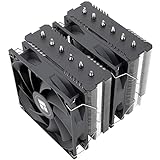
- [Brand Overview] Thermalright is a Taiwan brand with more than 20 years of development. It has a certain popularity in the domestic and foreign markets and has a pivotal influence in the player market. We have been focusing on the research and development of computer accessories. R & D product lines include: CPU air-cooled radiator, case fan, thermal silicone pad, thermal silicone grease, CPU fan controller, anti falling off mounting bracket, support mounting bracket and other commodities
- [Product specification] Thermalright PA120 SE; CPU Cooler dimensions: 125(L)x135(W)x155(H)mm (4.92x5.31x6.1 inch); heat sink material: aluminum, CPU cooler is equipped with metal fasteners of Intel & AMD platform to achieve better installation, double tower cooling is stronger((Note:Please check your case and motherboard for compatibility with this size cooler.)
- 【2 PWM Fans】TL-C12C; Standard size PWM fan:120x120x25mm (4.72x4.72x0.98 inches); fan speed (RPM):1550rpm±10%; power port: 4pin; Voltage:12V; Air flow:66.17CFM(MAX); Noise Level≤25.6dB(A), leave room for memory-chip(RAM), so that installation of ice cooler cpu is unrestricted
- 【AGHP technique】6×6mm heat pipes apply AGHP technique, Solve the Inverse gravity effect caused by vertical / horizontal orientation, 6 pure copper sintered heat pipes & PWM fan & Pure copper base&Full electroplating reflow welding process, When CPU cooler works, match with pwm fans, aim to extreme CPU cooling performance
- 【Compatibility】The CPU cooler Socket supports: Intel:115X/1200/1700/17XX AMD:AM4;AM5; For different CPU socket platforms, corresponding mounting plate or fastener parts are provided(Note: Toinstall the AMD platform, you need to use the original motherboard's built-in backplanefor installation, which is not included with this product)
Those measurements must be treated as historical. They used first-generation Ryzen hardware and an older mining software environment. They do not establish the performance of Zen 2, Zen 3, Zen 4, newer Ryzen 7 processors, or laptop Ryzen 7 chips.
Why old and current results cannot be compared directly
Monero uses the RandomX proof-of-work algorithm, which is designed to make CPU performance important. However, a result depends on much more than the processor’s product name:
- XMRig version and build
- CPU architecture, cache, and sustained all-core frequency
- SMT status and the number of mining threads
- Dual-channel or single-channel memory
- Memory speed, timings, and latency
- Huge pages and MSR optimization
- BIOS power limits, PBO, Curve Optimizer, or undervolting
- Cooling, room temperature, and thermal throttling
- Operating system and background workload
A short offline benchmark also is not the same as a pool’s reported average hashrate. Pool figures vary with submitted shares, network latency, rejected shares, downtime, and the averaging period.
What to measure
- Hashrate
- RandomX work completed per second, reported in H/s or kH/s. Sustained average hashrate is more useful than a brief peak.
- Wall power
- Electricity consumed by the entire computer, ideally measured with a plug-in watt meter. CPU telemetry can omit memory, motherboard, storage, fans, graphics, and power-supply losses.
- Efficiency
- Hashrate divided by watts. Calculate both gross efficiency and incremental efficiency over the computer’s idle power.
- Temperature and clocks
- These reveal whether the processor is throttling or losing performance during a long run.
For an existing computer, incremental power is especially important. If the machine would remain on for a homelab, server, or other workload, mining may add less cost than the full mining-load wattage suggests.
How to benchmark a Ryzen 7 system with XMRig
Download XMRig only from the official project or its official releases. XMRig is open-source and provides binaries for Windows, Linux, macOS, and FreeBSD. Record the exact version before testing; release versions change, so do not assume any particular release is current without checking the repository.
1. Run an offline RandomX benchmark
From the directory containing the executable, use:
./xmrig --bench=1MOn Windows PowerShell:
xmrig.exe --bench=1MFor a longer run that is more useful for detecting thermal behavior, use:
Rank #2

- [5-inch IPS LCD Screen] The radiator features a magnetic top cover with a built-in display, offering a resolution of 480x854. It allows real-time monitoring of various system parameters and, combined with the TRCC control software, supports custom background themes for personalized display.
- [Excellent Cooling Performance] The CPU cooler is primarily composed of a dual-tower design, two fans, and a magnetically attached top cover featuring a 5-inch IPS LCD screen. Six pure copper heat pipes paired with a nickel-plated copper base ensure optimal contact with the CPU. Combined with a high-speed rotation of 2150 RPM, this configuration delivers superior cooling efficiency for the heatsink.
- [Heatsink Specifications] Overall dimensions of the CPU cooler: 125x135x164mm (LxWxH), fan dimensions: 120x120x25mm, fan speed: 2150 RPM±10%, airflow: 69 CFM, operating noise ≤27 dB(A), fan power interface: 4-pin PWM, RGB interface: 5V 3-pin ARGB. The dual fans included with the heatsink feature S-FDB V2 bearings, known for their longevity, ensuring sustained cooling performance over time.
- [AGHP Heat Pipe Technology] The 6x6mm heat pipes utilize AGHP Gen 5.0 technology, effectively countering the adverse effects of gravity in both vertical and horizontal orientations. The pure copper heat pipes, combined with a nickel-plated micro-engraved copper base via reflow soldering, enhance cooling performance across dual platforms while accommodating GPU and RAM clearance with a designed offset.
- [164mm Height] The heatsink cooler stands at 164mm in height, ensuring compatibility with mainstream ATX cases. The cooling towers feature a matte black coating, while the magnetic top cover incorporates a display screen, blending high-performance cooling with innovative design. The dual-tower, dual-fan layout is engineered for seamless compatibility with tall RAM heat spreaders and GPU installations.
./xmrig --bench=10MAccording to the official benchmark documentation, these tests run locally and do not require an internet connection. Check the reported checksum. An invalid checksum means the result is not acceptable, regardless of how high the hashrate appears.
The Tool Desk
Outbyte PC Repair FREEClear out junk files and repair common Windows errorsFree Scan →Outbyte Driver Updater FREEScan for outdated or missing drivers - takes under a minuteDriver Scan →2. Test thread counts rather than assuming all threads are best
For an eight-core, 16-thread Ryzen 7, a practical test series is 8, 10 or 12, 14, and 16 threads. You can also compare controlled percentage settings:
xmrig --bench=1M --cpu-max-threads-hint=50
xmrig --bench=1M --cpu-max-threads-hint=75
xmrig --bench=1M --cpu-max-threads-hint=100
Compare physical-core-only and SMT-inclusive configurations. More threads can increase total hashrate, but cache contention, memory pressure, temperature, and power consumption can reduce efficiency or even reduce sustained output.
3. Confirm huge pages and MSR optimization
Before accepting a result, verify that XMRig reports full huge-page allocation for both the RandomX dataset and mining threads. Also verify that MSR optimization was applied where supported. Missing either optimization can substantially reduce performance.
The XMRig CPU documentation lists options including "huge-pages": true, "1gb-pages": true on supported Linux systems, "wrmsr": true, and Ryzen-specific assembly settings. XMRig documents 1 GB pages as a possible 1–3% improvement and MSR optimization as providing up to 15% in some systems. These are possible, system-dependent gains—not guaranteed results for every Ryzen 7.
4. Run a sustained stress test
./xmrig --stressXMRig documents --stress as a continuous RandomX stress test that does not require pool configuration. Use it to expose thermal throttling, unstable memory, excessive noise, or power-limit behavior. Stop if temperatures become unsafe or the system becomes unstable.
Rank #3

- 【Better Heat Dissipation】The CPU cooler comes with a dual-tower heatsink and two 120mm PWM fans to ensure excellent heat dissipation from the CPU.
- 【Aesthetic Appeal】A blackout cooler can blend seamlessly into the design of many computer cases, especially those with black or dark-colored interiors.
- 【157mm Height】The dual-tower CPU air cooler can fit most tower cases due to a 157mm height in total.
- 【RAM Compatibility】The CPU air cooler gives 40mm clearance for standard RAM and a maximum of 63mm height with the cut-out fin.
- 【6 Heat Pipes】Six Ф6mm copper heat pipes can efficiently absorb heat from the CPU and transfer it to the heatsink.
Record enough information to make results comparable
For every run, record:
- Exact Ryzen 7 model and architecture
- Motherboard and BIOS version
- Memory capacity, number of modules, speed, and timings
- Operating system and kernel or build
- XMRig version
- Thread count and SMT status
- PBO, Curve Optimizer, Eco Mode, undervolting, or overclocking settings
- Cooling hardware and sustained temperature
- Average hashrate, checksum status, and wall power
Close browsers, synchronization tools, launchers, and other heavy applications. Repeat each configuration and state whether the first initialization run was excluded. A useful results table is:
| CPU | Architecture | Threads | Memory | XMRig | Average H/s | Wall W | H/s/W | Temperature |
|---|---|---|---|---|---|---|---|---|
| Record exact model | Zen generation | Tested count | Dual-channel details | Exact version | Measured result | Measured result | H/s ÷ W | Sustained value |
Do not populate such a table with numbers copied from unrelated systems. Public results can be useful as a sanity check, but the OpenBenchmarking XMRig profile is based on opt-in submissions, not a controlled laboratory comparison. Differences in memory, BIOS, cooling, operating system, power limits, XMRig build, and test duration can be large.
What matters most on Ryzen 7
Architecture and cache
Ryzen generations differ in cache organization, memory latency, instructions, power management, and sustained frequency. Do not call one model the “best CPU for Monero” without specifying the generation, price, electricity rate, and configuration.
Recommended Free Tools
Memory configuration
Use dual-channel memory where the platform supports it. Single-channel operation can constrain RandomX performance. Faster memory and tighter timings may help, but the gain is system-dependent and must be weighed against stability and power consumption.
SMT
SMT may improve total output on some Ryzen systems, while physical-core-only mining can offer better efficiency, lower temperatures, or a more responsive computer. Test both rather than assuming.
Cooling and power limits
A configuration that produces a high initial hashrate but throttles after several minutes is not a strong mining configuration. Lower power limits, undervolting, or Curve Optimizer adjustments may improve H/s per watt by reducing heat and allowing steadier clocks. Test for reboots, WHEA errors, hardware errors, and invalid benchmark checksums before trusting an optimized setting.
Rank #4

- [Brand Overview] Thermalright is a Taiwan brand with more than 20 years of development. It has a certain popularity in the domestic and foreign markets and has a pivotal influence in the player market. We have been focusing on the research and development of computer accessories. R & D product lines include: CPU air-cooled radiator, case fan, thermal silicone pad, thermal silicone grease, CPU fan controller, anti falling off mounting bracket, support mounting bracket and other commodities
- [Product specification] Thermalright PA120 SE ARGB; CPU Cooler dimensions: 125(L)x135(W)x155(H)mm (4.92x5.31x6.1 inch); heat sink material: aluminum, CPU cooler is equipped with metal fasteners of Intel & AMD platform to achieve better installation, double tower cooling is stronger
- 【2 PWM Fans】Model:TL-C12C-S; Colorful and gorgeous ARGB light effects; Standard size PWM fan:120x120x25mm (4.72x4.72x0.98 inches); Product weight:0.97kg(2.1lb); fan speed (RPM):1500rpm±10%; power port: 4pin; Voltage:12V; Air flow:66.17CFM(MAX); Noise Level≤25.6dB(A), leave room for memory-chip(RAM), so that installation of ice cooler cpu is unrestricted
- 【AGHP technique】6×6mm heat pipes apply AGHP technique, Solve the Inverse gravity effect caused by vertical / horizontal orientation, cpu cooler TDP is 120 to 245W. 6 pure copper sintered heat pipes & PWM fan & Pure copper base&Full electroplating reflow welding process, When CPU cooler works, match with ultra-silent airflow fans, aim to extreme CPU cooling performance
- 【Compatibility】The CPU cooler Socket supports: Intel:115X/1200/1700/17XX AMD:AM4;AM5; For different CPU socket platforms, corresponding mounting plate or fastener parts are provided
Background workload
Mining while using the computer can cause stuttering, higher latency, and lower pool-side performance. Use conservative thread and priority settings. The XMRig CPU documentation warns that mining-thread priority above 2 can make the computer unresponsive.
Huge-page and MSR troubleshooting
Hashrate is unexpectedly low
- Check that memory is operating in dual-channel mode.
- Confirm the XMRig version and RandomX benchmark mode.
- Verify that huge pages show 100% allocation.
- Check whether MSR configuration succeeded.
- Look for thermal throttling and background CPU use.
- Repeat the run with stock, stable settings.
Huge pages are not fully enabled
Run XMRig with the required permissions for your operating system and repeat the test only after its output confirms full allocation. Some systems require a reboot after a permission or driver change. Use the official documentation rather than downloading third-party “optimization” utilities.
MSR setup fails
Run with appropriate administrator or root permissions and follow the OS-specific method in XMRig’s documentation. If the system becomes unstable after an MSR modification, disable it and return to stock settings. Avoid unsigned utilities from unrelated download sites.
The result is unstable
Reduce memory overclocking, reverse aggressive voltage changes, check cooling, and inspect system logs for hardware errors. A failed checksum or invalid result is a failed benchmark, not evidence of superior performance.
Independent reader supportYour contribution helps us test, update, and keep practical guides available for everyone.Calculating whether mining pays
Use whole-system power and a current revenue estimate rather than a historical article’s profitability conclusion. The electricity calculation is:
Daily electricity cost = (watts ÷ 1000) × 24 × electricity price per kWhA simplified daily result is:
Net daily result = estimated mining revenue − electricity cost − pool fees − additional operating costsFor example, a system drawing 133 watts consumes approximately 3.192 kWh in 24 hours:
Best Value

- Premium Dual-Tower Design: Adopts premium dual-tower dual-fan construction, paired with minimalist top cover and elegant black spray paint finish, designed with 9 turbo fan blades to increase air pressure efficiently, delivering stronger and more concentrated airflow for outstanding heat dissipation
- PWM Fan Specifications: Size 120x120x25mm (4.7x4.7x0.98 inches); Rotation Speed: 800-2000 RPM; 4-pin power connector; Max Airflow: 78 CFM; Noise Level: 32 dBA
- Ultimate Cooling Performance: Experience peak thermal efficiency with the IX20 ARGB, featuring 6 premium copper heat pipes and advanced Black coating technology, effortlessly handling TDP ranges from 120W to 265W, ensuring your high-performance CPU remains cool and stable under any workload with ultra-quiet operation for both work and gaming scenarios
- Easy Installation Process: Installation is simple and easy thanks to a modular mounting bracket design that requires no specialized tools, high-quality thermal paste is included in the package, enabling a hassle-free, out-of-the-box setup
- ARGB Lighting Synchronization: Features 5V ARGB lighting fully compatible with major motherboard RGB synchronization technologies such as Aura Sync and Mystic Light, with top-integrated shroud providing a seamless and immersive lighting experience
(133 ÷ 1000) × 24 = 3.192 kWh per dayIts daily electricity cost is therefore 3.192 multiplied by your local price per kWh. The example does not establish current profitability because Monero price, network difficulty, block reward, pool fees, and the system’s actual hashrate change over time.
For a new purchase, add the complete platform cost: CPU, motherboard, RAM, cooler, power supply, storage, case, tax, shipping, and expected maintenance. A machine can generate more mining revenue than its electricity cost and still be a poor investment if hardware payback takes longer than the hardware’s useful life or resale value is uncertain.
Desktop and laptop Ryzen 7 results are separate categories
Do not combine desktop and mobile Ryzen 7 hashrates in one ranking. Laptop performance depends on configurable TDP, manufacturer performance modes, fan curves, shared heat pipes, plugged-in operation, and whether memory is single- or dual-channel.
A mobile Ryzen 7 may achieve attractive efficiency at a restricted power level, but its sustained hashrate may be lower than a desktop part. Measure the laptop at the power mode and plugged-in state you would actually use, and account for the cost of battery wear, heat, and noise.
Offline benchmarks are not pool earnings
--bench=1M and --bench=10M measure local RandomX throughput. They do not include pool fees, rejected shares, network latency, payout thresholds, wallet configuration, pool downtime, or pool-side hashrate variance.
If you proceed to pool mining, keep the benchmark result as a performance reference and judge the pool by a sufficiently long average. Do not turn a short benchmark score into a fixed daily dollar claim.
Security precautions
- Download XMRig from its official repository or official release page.
- Avoid repacked miners, unofficial mirrors, and installers that bundle unrelated software.
- Use a separate wallet or mining account where appropriate.
- Do not expose XMRig’s API to the public internet.
- Expect that antivirus software may flag mining software, but do not disable security protections for an untrusted binary.
- Be skeptical of guaranteed-profit claims and cloud-mining contracts.
Ryzen 7 mining decision guide
| Situation | Practical decision |
|---|---|
| You already own a Ryzen 7, it has spare capacity, and electricity is cheap. | Benchmark it and consider mining as a measured experiment. |
| You already own a Ryzen 7 but electricity is expensive. | Treat mining primarily as a hobby or learning project. |
| You would buy a complete new system only to mine. | Usually avoid the purchase unless your own calculation shows a credible payback. |
| You need a quiet, efficient system. | Test fewer threads, lower power limits, and sustained H/s per watt. |
| You want maximum output. | Optimize memory, cooling, huge pages, MSR, and stable sustained power—not just thread count. |
Final recommendation
Ryzen 7 remains a capable CPU-mining platform for RandomX, but raw hashrate is not the investment case. The historically reported 133 watts and 3.6 H/s per watt from the first-generation Ryzen 7 era show why electricity and system power matter. They do not predict what a modern Ryzen 7 will deliver.
Windows Errors? Fix Them Before They Spread
Repair common Windows errors and clear accumulated junk for a smoother, more stable PC - no reinstall needed.Free scan · no reinstallCrashes, No Sound, or Screen Glitches?
Random freezes, missing sound and display glitches usually trace back to one bad driver. Find and replace yours safely.Free scan · under a minuteFor most readers, the rational sequence is: benchmark hardware already owned, confirm huge pages and MSR, measure wall power, test sustained efficiency, and calculate electricity cost using the local rate. Buy new Ryzen hardware for mining only if the complete-cost calculation remains attractive under conservative revenue assumptions. In many cases, the best mining purchase is no purchase at all.
Quick Recap
Product prices and availability are accurate as of the date/time indicated and are subject to change. Any price and availability information displayed on Amazon at the time of purchase will apply.



