Recommended Free Tools
Some links on this page are affiliate links: if you buy through them we may earn a commission, at no extra cost to you.
SAF book and claim can help finance and allocate verified sustainable aviation fuel (SAF) emissions reductions to air freight without physically loading SAF onto the aircraft carrying a particular shipment. It is not proof that a parcel or pallet flew on SAF, and it does not make the shipment emission-free.
For shippers, the value is access to documented SAF attributes despite limited fuel availability and shared airport infrastructure. The central buying question is whether the provider can show certified fuel, credible lifecycle accounting, unique retirement and clear reporting boundaries.


Why air freight needs a scalable SAF model
Aircraft require energy-dense liquid fuel, while SAF production remains small relative to global jet-fuel demand. SAF is also concentrated at particular airports and is commonly blended into shared fuel systems. Once it enters that infrastructure, it is difficult to identify which molecules powered a particular aircraft or shipment.
Global freight networks add another complication: one shipper may use several airlines, routes and forwarders. A physical-matching model would exclude many customers. Book and claim aggregates demand and separates the physical fuel flow from the environmental-attribute flow.
That makes book and claim a way to direct capital and demand toward SAF while supply and airport infrastructure expand. It is not a loophole, a replacement for avoiding unnecessary air freight, or a guarantee of SAF-powered transport.
What is sustainable aviation fuel?
SAF is aviation fuel made from non-fossil feedstocks or processes that meet applicable fuel, sustainability and lifecycle-emissions requirements. It is generally blended with conventional jet fuel under current aviation-fuel rules rather than used as an unlimited-concentration replacement.
“Sustainable” does not automatically mean low-carbon. The result depends on the feedstock, production pathway, land-use effects, energy inputs, transport and the lifecycle methodology being applied. A credible offer should identify the pathway or feedstock category, certification scheme and lifecycle-emissions value where available.
Free tools Windows power users keep installed
One-click scans. No signup required.
Proof-of-Sustainability documentation is important evidence that a SAF batch meets the requirements of a relevant scheme or regulatory framework. IATA’s certification guidance explains how such documentation supports claims under frameworks including CORSIA and EU ETS, which have different requirements.
How SAF book and claim works
Book and claim creates two linked but separate flows:
| Physical fuel flow | Environmental-attribute flow |
|---|---|
| SAF producer → fuel supplier → airport fuel system → aircraft | Producer or airline → registry → forwarder or customer → retirement |
- A producer supplies a specified quantity of certified SAF into an aviation fuel supply chain.
- The fuel’s sustainability and lifecycle attributes are documented and recorded.
- An airline, intermediary, forwarder or other eligible buyer acquires the associated attributes.
- The attributes are allocated to eligible freight activity.
- The customer receives evidence of the allocated amount and retires the corresponding claim so it cannot be sold or used again.
For example, a provider might physically use SAF at an airport where a customer’s aircraft never lands. A registry records the associated environmental attributes, and the provider allocates and retires an agreed share against that customer’s freight. IATA’s SAF Accounting and Reporting Methodology describes a purchase-based approach that can allocate reductions to shipments independently of where the SAF was uplifted, subject to accounting controls.
Providers must describe this accurately. DHL says its GoGreen Plus service may use SAF elsewhere in its network when it is unavailable at the airport serving a shipment. DHL’s explanation distinguishes network allocation from physical use by the specific aircraft.
Do these 3 things before closing this tab:
1Repair Windows errors before they cause bigger problems2Scan for outdated or missing drivers - takes under a minute3Clear out junk files and repair common Windows errorsWhat can a shipper claim?
A defensible statement is:
“We purchased and retired verified SAF-related emissions attributes allocated to our air-freight activity. The SAF may have been physically used elsewhere in the network.”
Avoid saying “our shipment flew on SAF” unless the provider can demonstrate physical matching. Also avoid “zero-emission shipment,” “carbon-neutral shipment” and any suggestion that the flight’s actual fuel burn disappeared.
The reporting chain can include:
- Fuel supplier: provides certified fuel and sustainability documentation.
- Airline: physically consumes the fuel and may report associated operational emissions information.
- Freight forwarder: purchases, allocates or retires attributes for customers.
- Corporate shipper: may have a Scope 3 reporting interest for purchased freight services.
More than one value-chain actor may have a legitimate reporting interest, but the same environmental attribute must not be counted as multiple independent reductions. RSB’s June 2026 guidance addresses scenarios involving fuel suppliers, airlines, forwarders and corporate end users.
What emissions are actually reduced?
SAF claims require careful terminology:
- Tank-to-wake (TTW): emissions released when fuel is burned.
- Well-to-tank (WTT): emissions from producing and delivering the fuel.
- Well-to-wake (WTW): the combined lifecycle result.
- CO₂: carbon dioxide alone.
- CO₂e: carbon-dioxide equivalent, potentially including other greenhouse gases and lifecycle effects.
A SAF certificate generally concerns lifecycle greenhouse-gas attributes. It should not automatically be presented as neutralizing contrails, nitrogen oxides or every other non-CO₂ climate effect of aviation.
What’s actually slowing this PC down?
Pick the symptom - the matching free tool is one click away.
Headlines such as “up to 80% lower emissions” are pathway-specific. DHL uses an “up to” lifecycle-reduction figure, while Kuehne+Nagel cites reductions as high as 94% for particular applications. Those figures are not universal shipment results. They depend on the fuel pathway, feedstock, lifecycle method, fossil comparator and allocation rules. See DHL’s disclosure and Kuehne+Nagel’s SAF information.
Illustrative calculation only
Suppose a shipment has a fossil-fuel baseline of 100 emissions units. A certified SAF pathway has a lifecycle result of 30 units against the applicable comparator. The eligible reduction would be 70 units—but the customer receives only the share allocated and retired to it.
The remaining 30 units are not zero emissions. The physical shipment may still have flown using conventional fuel, and this simplified example is not a regulatory calculation.
Rank #3
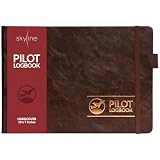
- PILOT LOGBOOK FOR ALL LEVELS OF FLYERS – Keep flight records, training progress, certificates, ratings, endorsements, and proficiency history organized in one professional pilot log book, perfect for both students and experienced pilots.
- LOG UP TO 528 FLIGHTS – Spacious pilots logbook pages give you room to record up to 528 flights, with structured tables for dates, aircraft details, flight time, and pilot-in-command time.
- TRACK CERTIFICATES & RATINGS – This professional pilot logbook has dedicated sections to record pilot certificates, ratings, certificate numbers, issue dates, and other key aviation credentials in one place.
- MONITOR MEDICAL & PROFICIENCY HISTORY – Easily log medical certificates, flight reviews, instrument proficiency checks, and related dates to keep your aviation records current and accessible.
- RECORD GROUND INSTRUCTION – This flight log book for student pilots includes dedicated ground instruction pages to document lesson dates, lesson plans, instructor endorsements, lesson duration, and accumulated training time.
How providers should calculate and document the reduction
Providers do not necessarily use identical formulas, so buyers should request the underlying method. A typical process is:
Quick wins for a faster PC:
Fix the driver behind crashes, sound loss and screen glitchesFind Drivers →Clear out junk files and repair common Windows errorsFree Scan →Scan for outdated or missing drivers - takes under a minuteDriver Scan →- Calculate baseline shipment emissions.
- Identify the SAF quantity or environmental attribute allocated.
- Obtain the pathway’s certified lifecycle-emissions value.
- Compare it with the applicable fossil-jet baseline.
- Apply the relevant blending, allocation and accounting rules.
- Record the result against the shipment or reporting category.
- Retire the corresponding attribute.
- Keep the certificate, retirement statement and supporting activity data.
IATA’s methodology describes a six-step approach based on SAF transaction records, lifecycle-assessment values, emissions factors and calculation of the associated reduction.
Standards, registries and regulatory frameworks
These systems serve different roles and should not be treated as interchangeable:
- ICAO CORSIA: a global aviation market-based measure with sustainability criteria and fuel-eligibility rules. IATA’s SAF handbook describes accounting based on purchasing and blending records and comparison with conventional aviation fuel.
- EU ETS: a regional regulatory system with its own eligibility and documentation requirements. CORSIA eligibility does not automatically establish EU ETS eligibility.
- IATA SAF Accounting and Reporting Methodology: an industry methodology for airline accounting and allocation of SAF-related reductions to passengers and shipments.
- RSB Book & Claim System: a framework containing a manual, registry and recognition procedure for registration, transfers, retirement, sustainability data and controls. See RSB’s system.
- IATA/CADO SAF Registry: registry infrastructure intended to track SAF environmental attributes for airlines and customers across locations. The registry is operated by the Civil Aviation Decarbonization Organization, according to its official site.
- SAFc Registry: an alternative registry structure using SAF certificates and retirement rules. Its rulebook explains the system.
A registry is not, by itself, proof that a claim is climate-effective. Fuel quality, lifecycle data, allocation, verification and retirement rules remain critical.
Due diligence checklist for buyers
Before purchasing a SAF add-on, ask the carrier or forwarder for:
- Producer and supplier identity.
- Feedstock or production-pathway category.
- Certification scheme and Proof of Sustainability.
- Neat SAF quantity and blend ratio, where relevant.
- Lifecycle-emissions value and fossil baseline.
- Whether the result is TTW, WTW or another basis.
- CO₂ or CO₂e treatment.
- Registry and certificate identification.
- Retirement statement showing the amount allocated to you.
- Reporting period and allocation method.
- Treatment of residual emissions and non-CO₂ effects.
- Double-counting controls and independent assurance.
- Whether the claim is intended for voluntary reporting, CORSIA, EU ETS or another regime.
Retirement matters. Buying fuel or a certificate is not necessarily the same as retiring the claim. Retirement or cancellation is the control that prevents the same attribute from being transferred or sold again.
Red flags
- No evidence of physical SAF purchase or delivery.
- No identifiable registry, certificate or retirement record.
- No lifecycle methodology or pathway information.
- A generic SAF percentage without an emissions-reduction value.
- Language implying the specific shipment used SAF despite book-and-claim terms elsewhere.
- The same reduction apparently sold to multiple customers.
- No explanation of airline, forwarder and customer reporting boundaries.
- No distinction between CO₂ and CO₂e or between TTW and WTW.
- A claimed reduction larger than the allocated fuel’s lifecycle benefit.
- No retirement step.
- “Carbon neutral” or “zero-emission” shipment language.
- A future procurement commitment presented as a delivered reduction.
- SAF reductions combined with offsets without explaining the interaction.
- Assuming CORSIA eligibility means EU ETS eligibility.
- A certificate supplied without the underlying activity data.
Comparing commercial options
DHL Express GoGreen Plus
DHL offers GoGreen Plus for eligible air shipments and says it may be selected for individual shipments or purchased through contractual arrangements, depending on market and account setup. Its 2026 US service-and-rate guide describes the service as book and claim but does not provide a universal standalone price. See DHL Germany, DHL’s business resource and the 2026 US guide.
Rank #4

- PILOT LOGBOOK FOR ALL LEVELS OF FLYERS – Keep flight records, training progress, certificates, ratings, endorsements, and proficiency history organized in one professional pilot log book, perfect for both students and experienced pilots.
- LOG UP TO 528 FLIGHTS – Spacious pilots logbook pages give you room to record up to 528 flights, with structured tables for dates, aircraft details, flight time, and pilot-in-command time.
- TRACK CERTIFICATES & RATINGS – This professional pilot logbook has dedicated sections to record pilot certificates, ratings, certificate numbers, issue dates, and other key aviation credentials in one place.
- MONITOR MEDICAL & PROFICIENCY HISTORY – Easily log medical certificates, flight reviews, instrument proficiency checks, and related dates to keep your aviation records current and accessible.
- RECORD GROUND INSTRUCTION – This flight log book for student pilots includes dedicated ground instruction pages to document lesson dates, lesson plans, instructor endorsements, lesson duration, and accumulated training time.
It is practical for existing DHL customers, including smaller businesses wanting a shipment-level option. It is less suitable for buyers demanding physical matching for every consignment or a public, comparable per-tonne price.
Kuehne+Nagel
Kuehne+Nagel describes a book-and-claim SAF option available regardless of airline or route, with opt-in quoting and a retroactive allocation model. No public price is shown on its official page. It may suit shippers using multiple airlines who want a forwarder-managed solution, but not buyers requiring a public tariff or certificate model independent of the forwarder.
Crashes, No Sound, or Screen Glitches?
Random freezes, missing sound and display glitches usually trace back to one bad driver. Find and replace yours safely.Free scan · under a minuteWindows Errors? Fix Them Before They Spread
Repair common Windows errors and clear accumulated junk for a smoother, more stable PC - no reinstall needed.Free scan · no reinstallDB Schenker
DB Schenker describes Carbon X, a chosen percentage-reduction model, and BUY & SELL, based on purchasing a fuel amount and corresponding emissions saving. Pricing is not public and may vary by model, volume and trade lane. Its air-freight sustainability page is more relevant to larger shippers seeking customization than to one-off buyers seeking instant checkout pricing.
Registry infrastructure
The IATA/CADO SAF Registry and RSB Registry are not ordinary freight-booking products. They are relevant when airlines, intermediaries and larger corporate buyers need traceability, transfers and retirement records.
Across these offerings, no universal public per-shipment SAF price is identified in the supplied official materials. Costs are generally quote-based, contract-based or embedded in the freight-booking workflow.
Questions to send a freight provider
- Is this physical matching, network allocation or book and claim?
- Can you identify the SAF producer, pathway, feedstock and certification?
- What are the lifecycle emissions, fossil baseline and accounting boundary?
- Is the result reported as CO₂ or CO₂e, and TTW or WTW?
- How much SAF or SAF attribute is allocated to my freight?
- Which registry records the transaction?
- Will you provide an irreversible retirement certificate?
- Who else may report the same reduction?
- How are residual and non-CO₂ emissions described?
- Is the claim suitable for my intended voluntary, Scope 3, CORSIA or EU ETS reporting?
- Is the quoted reduction shipment-specific, route-based, annual or portfolio-based?
- What happens if the provider has not yet purchased or retired the attributes?
What SAF book and claim cannot solve
Book and claim does not eliminate the actual emissions of the customer’s flight. It also depends on scarce certified SAF: it expands access to attributes but does not create unlimited physical supply.
It should sit alongside, not replace:
- avoiding unnecessary air transport;
- moving suitable freight to ocean, rail or road;
- consolidating shipments and improving load factors;
- reducing empty repositioning;
- choosing efficient aircraft and carriers;
- improving shipment-level emissions data; and
- reducing packaging weight and volume.
Traditional offsetting should not be conflated with SAF book and claim. Offsetting generally finances projects outside the freight activity, whereas SAF book and claim allocates attributes from fuel used within the aviation or logistics value chain. “Insetting” is not a universal legal or regulatory category, so providers should explain precisely what is being purchased and reported.
Bottom line
SAF book and claim is credible when it is backed by certified fuel, transparent lifecycle data, a controlled registry, unique retirement, independent assurance and precise language. It can let a shipper support real SAF use and receive a documented value-chain emissions reduction even when its own aircraft did not physically use the fuel.
Buy it as a documented contribution to SAF deployment—not as proof of a SAF-powered shipment or a substitute for reducing air freight. The quality of the claim depends less on the label “SAF” than on the evidence behind the fuel, the accounting boundary and the retired attribute.
Quick Recap
Product prices and availability are accurate as of the date/time indicated and are subject to change. Any price and availability information displayed on Amazon at the time of purchase will apply.
The Tool Desk
Outbyte PC Repair FREERepair Windows errors before they cause bigger problemsFix Now →Outbyte Driver Updater FREEScan for outdated or missing drivers - takes under a minuteDriver Scan →



