Free tools Windows power users keep installed
One-click scans. No signup required.
Some links on this page are affiliate links: if you buy through them we may earn a commission, at no extra cost to you.
Meta’s reported Reality Labs layoffs and VR-studio closures are a serious warning for companies and creators that depend on its virtual-reality strategy. They do not prove that Meta is abandoning VR—or that the entire industry has entered a “VR winter.” The clearest signal is a shift in priorities: Meta is directing more resources toward AI glasses and wearables while narrowing its investment in VR and Horizon.
What the reported cuts mean
Reports in January 2026 said Meta planned to cut roughly 10% of Reality Labs staff—more than 1,000 jobs—and close three VR studios. The reports described VR hardware, Horizon Worlds and first-party game development as more exposed than wearables and AI-glasses work. Meta’s public filings discuss restructuring and layoffs generally, but do not provide a complete public breakdown confirming those reported headcount and studio figures. Treat the specific numbers and closures as reported, not as a fully disclosed company announcement. PC Gamer’s report outlines the claims.

That distinction matters. A company can cut teams and reduce spending on experimental content without shutting down its hardware platform. The evidence points to a narrower, more selective VR business—not a confirmed end to VR at Meta.
Recommended Free Tools
The financial pressure is real, but Reality Labs is not just VR
Meta reported that Reality Labs generated $2.207 billion in 2025 revenue and recorded a $19.193 billion operating loss, including a $6.021 billion loss in the fourth quarter. Meta said it expected the segment’s operating loss in 2026 to remain similar to 2025. Those figures explain why investors are watching the business closely, but they are not a clean accounting of what Quest VR costs or earns. Meta’s full-year results report the segment totals.
#1 Best Overall

- CARDBOARD MONKENAUT — Get our best Gorilla Tag bundle yet with this Amazon exclusive deal. Purchase Meta Quest 3S to get exclusive items, including the Gorilla Space Program Suit and Helmet, plus 2,000 SHINY ROCKS.
- NO WIRES, MORE FUN — Break free from cords. Game, play and explore immersive worlds — untethered and without limits.
- 2X GRAPHICAL PROCESSING POWER — Enjoy lightning-fast load times and next-gen graphics for smooth gaming powered by the Snapdragon XR2 Gen 2 processor.
- EXPERIENCE VIRTUAL REALITY — Take gaming to a new level and blend virtual objects with your physical space to experience two worlds at once in your VR headset.
- 2+ HOURS OF BATTERY LIFE — Charge less, play longer and stay in the action with an improved battery that keeps up. *Based on the graphic performance of the Qualcomm Snapdragon XR2 Gen 2 platform vs the Meta Quest 2 platform.
Reality Labs includes Quest headsets and VR software, but also augmented-reality work, AI glasses and other wearables. In its 2025 annual filing, Meta said about 70% of Reality Labs operating expenses in 2026 would go to wearables and roughly 30% to VR and Horizon. So “Meta lost $19 billion on VR” is misleading: the reported loss belongs to a broader segment, and most of the planned spending is directed elsewhere. Meta’s annual filing describes the allocation.
Quarterly figures reinforce the need to separate the businesses. Reality Labs reported $402 million in revenue and a $4.028 billion operating loss in Q1 2026, compared with $412 million in revenue in Q1 2025. In Q2 2026, revenue was about $431 million; secondary coverage put the operating loss at roughly $4.6 billion. The revenue increase does not establish that Quest sales recovered: reports attributed much of the growth to AI glasses. Meta’s Q1 results and its Q2 results summary provide the available figures; the Q2 loss figure is reported by VR.org.
Horizon’s move to mobile is a strategic signal
Meta said Horizon Worlds would remain accessible in VR until June 15, 2026. After that, the app would be removed from Quest, with Worlds available through the Meta Horizon mobile app. Meta’s 2026 Quest update describes the change.
Rank #2

- CARDBOARD MONKENAUT — Get our best Gorilla Tag bundle yet with this Amazon exclusive deal. Purchase Meta Quest 3 to get exclusive items, including the Gorilla Space Program Suit and Helmet, plus 2,000 SHINY ROCKS.
- NEARLY 30% LEAP IN RESOLUTION — Experience every thrill in breathtaking detail with sharp graphics and stunning 4K+ Infinite Display.
- NO WIRES, MORE FUN — Break free from cords. Game, play and explore in immersive worlds — untethered and without limits.
- 2X GRAPHICAL PROCESSING POWER — Enjoy lightning-fast load times and next-gen graphics for smooth gaming powered by the Snapdragon XR2 Gen 2 processor.
- EXPERIENCE VIRTUAL REALITY — Blend virtual objects with your physical space and experience two worlds at once in your VR headset.
Moving a social platform to phones can reduce the friction of requiring a headset and potentially reach more people. But it also changes what Horizon means to Quest owners: Meta is no longer treating VR as the primary way to access its own social worlds. That may weaken one reason to buy a headset, especially for people who want Horizon specifically. It does not, by itself, mean Quest hardware, its operating system or third-party games are being discontinued.
Is this a “VR winter”?
“VR winter” is an analogy, not a formal market measure. It usually describes a period when investment, product development and adoption all retreat: companies reduce research and development, launches slow, studios cancel projects, funding dries up and buyers delay purchases. Meta’s cuts are evidence of retrenchment at a major platform holder. They are not enough on their own to establish that the whole industry is contracting.
| Signal | What the evidence supports |
|---|---|
| Corporate cuts and studio closures | Reported inside Meta Reality Labs; the scale and closures have not been fully detailed in public company disclosures. |
| Less emphasis on Meta’s VR social platform | Horizon Worlds is moving from Quest VR to mobile. |
| VR hardware abandonment | Not established. Meta has not publicly announced that it is ending VR hardware investment. |
| Industry-wide funding or adoption collapse | Not established by Meta’s decisions or the available figures alone. |
| Shift toward adjacent technology | Clear: Meta plans to direct most Reality Labs operating expenses toward wearables. |
The concern is still reasonable. Meta is a major consumer VR platform, and fewer first-party games, subsidies or developer guarantees could affect studios that rely on its support. But an ecosystem-wide downturn requires broader evidence—such as sustained declines in headset shipments or usage, cuts by multiple platform holders, falling independent investment, and widespread project cancellations. Those indicators should be assessed separately rather than inferred from one company’s restructuring.
Rank #3
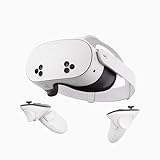
- NO WIRES, MORE FUN — Break free from cords. Game, play, exercise and explore immersive worlds — untethered and without limits.
- 2X GRAPHICAL PROCESSING POWER — Enjoy lightning-fast load times and next-gen graphics for smooth gaming powered by the SnapdragonTM XR2 Gen 2 processor.
- EXPERIENCE VIRTUAL REALITY — Take gaming to a new level and blend virtual objects with your physical space to experience two worlds at once.
- 2+ HOURS OF BATTERY LIFE — Charge less, play longer and stay in the action with an improved battery that keeps up.
- 33% MORE MEMORY — Elevate your play with 8GB of RAM. Upgraded memory delivers a next-level experience fueled by sharper graphics and more responsive performance.
Why Meta may be favoring glasses
Glasses are lighter and less isolating than a headset, can be worn in ordinary settings and may offer repeated utility through an AI assistant. They may also fit existing consumer-electronics and eyewear distribution better than a device used primarily for immersive sessions. That provides a plausible strategic reason for Meta’s shift, particularly alongside reported momentum in AI glasses.
Outdated Drivers Are Slowing You Down
One free scan finds every outdated or missing driver and matches the right update for your exact hardware.Free scan · exact hardware matchWindows Errors? Fix Them Before They Spread
Repair common Windows errors and clear accumulated junk for a smoother, more stable PC - no reinstall needed.Free scan · no reinstallIt is a strategic bet, not proof that glasses will succeed or that they will replace VR. The categories serve different purposes: glasses are designed for everyday use, while headsets remain suited to immersive games, fitness, training and spatial applications. Meta’s investment mix shows where it is prioritizing resources, not which category will ultimately have stronger economics.
What Quest owners should—and shouldn’t—infer
Existing Quest owners should not assume their headsets will stop working because Reality Labs is restructuring. The Horizon change affects Meta’s social-world product and its VR distribution strategy; it does not announce the end of Quest’s operating system, store or third-party software. At the same time, Meta has not provided a specific support lifespan that would justify a guarantee about how long any device will receive updates, new exclusives or future hardware support.
Rank #4

- NEARLY 30% LEAP IN RESOLUTION — Experience every thrill in breathtaking detail with sharp graphics and stunning 4K Infinite Display.
- NO WIRES, MORE FUN — Break free from cords. Play, explore and exercise in immersive worlds — untethered and without limits.
- 2X GRAPHICAL PROCESSING POWER — Enjoy lightning-fast load times and next-gen graphics for smooth gaming powered by the Snapdragon XR2 Gen 2 processor.
- EXPERIENCE VIRTUAL REALITY — Blend virtual objects with your physical space and experience two worlds at once.
- 2+ HOURS OF BATTERY LIFE — Charge less, play longer and stay in the action with an improved battery that keeps up.
- Lower immediate exposure: People who use Quest for current games, fitness, PC VR or mixed-reality apps are less dependent on Horizon Worlds specifically.
- Higher platform risk: People buying mainly for Horizon, anticipated first-party exclusives or a promised next-generation headset should recognize that Meta’s priorities and timing can change.
- Practical buying test: Buy for software and features available now, and decide whether the current library justifies the cost without assuming a particular future support period.
What developers and studios should reassess
Developers should distinguish between Meta continuing to build headsets and Meta continuing to subsidize the same kinds of content. Hardware investment is not a promise of grants, guaranteed minimums, exclusivity payments or a steady pipeline of first-party games.
A studio’s risk depends on how much its business relies on Meta funding, Quest exclusivity, Horizon distribution or direct Quest-store sales. Cross-platform releases can reduce dependence on one platform where the product and development budget make that practical. Teams building for Horizon should account for its mobile transition: a larger potential audience may come with different interface, session, discovery and monetization expectations than a headset-first social experience.
What enterprise buyers should check
Meta’s restructuring is a reason to examine project dependencies, not an automatic reason to cancel every Quest-based training or visualization deployment. Before committing to a multi-year program, buyers should ask:
- Does the application depend on Horizon Worlds, or does it run independently?
- What written support, security and device-management commitments does the vendor provide?
- Can the training content, user data and workflows be moved to another headset or platform?
- Is replacement hardware available, and what is the plan if a device or service is retired?
- What is the total cost of ownership, including content updates, administration and replacement—not just the headset purchase?
Portability and contractual clarity matter most when a deployment depends on a single vendor’s service or funding. Those safeguards reduce platform risk without requiring buyers to assume VR is ending.
What would confirm—or weaken—the winter thesis?
Watch for Quest sales or usage figures reported separately from glasses; new headset announcements and delivery plans; changes to developer funding and exclusivity programs; Horizon’s mobile engagement; further studio closures or acquisitions; and Reality Labs losses over multiple quarters. Broader evidence from other platform holders, independent studios and enterprise deployments would also matter.
A stronger Quest business, sustained third-party releases, new hardware and continued enterprise projects would weaken the idea of an industry-wide winter, even if Meta’s own strategy remains more cautious. Continued cuts across companies, delayed hardware, falling engagement and canceled projects would strengthen it. Until those signals converge, the most accurate reading is that Meta is shrinking its metaverse ambitions and placing a larger bet on glasses while preserving an option on VR.
Quick Recap
Product prices and availability are accurate as of the date/time indicated and are subject to change. Any price and availability information displayed on Amazon at the time of purchase will apply.



