The Tool Desk
Outbyte PC Repair FREERepair Windows errors before they cause bigger problemsFix Now →Outbyte Driver Updater FREEScan for outdated or missing drivers - takes under a minuteDriver Scan →Some links on this page are affiliate links: if you buy through them we may earn a commission, at no extra cost to you.
Medusa ransomware operations are moving quickly, particularly against organizations with vulnerable internet-facing systems. Microsoft reported in April 2026 that some intrusions it tracks under the name Storm-1175 reached ransomware deployment within a few days—and, in some cases, within 24 hours. A joint FBI, CISA and MS-ISAC advisory reported more than 300 victims as of February 2025. Those findings show scale and a faster operational tempo, but they do not establish a precise, comparable 2026 increase in victim numbers.
Medusa is a ransomware-as-a-service operation that uses affiliates and, in some cases, initial-access brokers. Its attacks can involve both data theft and file encryption, so restoring from backup alone may not resolve the consequences. Here is what the threat means and what organizations can do to reduce their exposure.
What is Medusa ransomware?
Medusa is a ransomware-as-a-service (RaaS) operation first identified in June 2021, according to the FBI, CISA and MS-ISAC advisory. In this model, developers maintain the ransomware operation while affiliates help conduct attacks. The advisory says developers recruit initial-access brokers through criminal forums and marketplaces; brokers can sell access to compromised organizations. The developers retain control over important functions, including ransom negotiation.
This division of work can help the operation reach more targets than a single crew could manage alone. The advisory cites offers for access or opportunities ranging from $100 to $1 million. Those figures describe broker-market offers, not standard Medusa ransom demands or amounts typically paid by victims.
#1 Best Overall
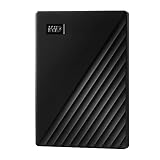
- Slim durable design to help take your important files with you
- Vast capacities up to 6TB[1] to store your photos, videos, music, important documents and more
- Back up smarter with included device management software[2] with defense against ransomware
- Help secure your important files with password protection and hardware encryption
- 3-year limited warranty
Medusa attacks commonly use double extortion: attackers steal sensitive data and encrypt systems, then threaten to publish the stolen information. A working backup can help restore encrypted systems, but it cannot undo data theft or remove potential privacy, regulatory, legal and reputational consequences.
What has changed—and what the evidence does not prove
The clearest recent change is speed. In an April 2026 report, Microsoft described high-tempo operations by an actor it tracks as Storm-1175, which deploys Medusa ransomware. Microsoft said some intrusions moved from initial access to ransomware deployment within days, and some within 24 hours. It also reported recent activity affecting healthcare, education, professional services and finance organizations in the United States, United Kingdom and Australia.
Quick wins for a faster PC:
Fix the driver behind crashes, sound loss and screen glitchesFind Drivers →Repair Windows errors before they cause bigger problemsFix Now →Separately, the joint government advisory recorded more than 300 victims as of February 2025 across critical-infrastructure sectors. That is a dated snapshot—not a current 2026 victim count. Taken together, the sources support saying that Medusa remains active and that researchers have observed rapid operations. They do not provide a single comparable time series establishing a particular percentage rise in victims or attacks in 2026. “Accelerating” describes the observed tempo, not a measured global surge.
Microsoft’s Storm-1175 label is its own actor-tracking designation; it should not be treated as a claim that every organization’s naming system maps actors in precisely the same way. Nor should every rapidly exploited flaw be called a zero-day. A zero-day is exploited before a patch is available or before defenders have had meaningful time to respond; a known, patched flaw that remains unaddressed is a different risk.
Rank #2
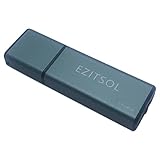
- SuperSpeed: A super-fast 64GB USB3.0 USB drive with read speed up to 150MB/S and write speed up to 80MB/S. It has super speed but DOESN'T overheat. Also available in a 128GB capacity. See the A+ comparison chart for details.
- Safety: It comes with A physical write-protect switch and can safely connect to any computer while the switch set to “Read-Only”. In the Protected mode, your data is safe from viruses, malware, data tampering and accidental deletion.
- High Endurance: This flash drive has higher performance and endurance/durability as it adopts A+ MLC memory chip compared with other USB flash drives which use TLC or QLC chips.
- Capacity: This listing is for the 64GB version. A 128GB option is also available. See the A+ comparison chart for details.
- Plug and Play: Simply plug the thumb drive into any USB port and then start data transfer and storage. It is compatible with USB 3.0/3.1 and USB 2.0 ports and works on Windows2000/XP/Vista/7/8/10/11/Server, Mac OS, and Linux. The default format is exFAT file system which allows individual files larger than 4 GB, but you can always re-format to FAT32.
How a Medusa attack can unfold
Incidents vary, and not every attack uses every step. A typical high-level sequence looks like this:
- Initial access: Attackers may use phishing, stolen credentials, a broker-supplied foothold or a vulnerability in an exposed service.
- Discovery: They map users, devices, servers, network connections and reachable services to find valuable targets.
- Credential and privilege expansion: They seek credentials or access that let them control more systems.
- Lateral movement and defense evasion: They move across the environment and may abuse legitimate administrative tools or weaken security controls.
- Data theft: They collect and exfiltrate information that can add pressure to a ransom demand.
- Encryption and extortion: They deploy ransomware, disrupt access to files and systems, and threaten to disclose stolen data.
- Negotiation or leak-site pressure: The operation may use centralized ransom negotiations and public disclosure threats.
The advisory reports “living off the land” activity and legitimate network-scanning tools, including Advanced IP Scanner and SoftPerfect Network Scanner. It also notes observed traffic on common ports such as FTP (21) and SSH (22). None of these tools or ports alone identifies a Medusa attack: administrators may use them legitimately. Investigate in context, looking for unusual execution, accounts, timing, destinations and activity across multiple systems. The official advisory contains further technical details and indicators.
Entry points and systems to check first
Microsoft says Storm-1175 focuses on vulnerable public-facing systems, seeking organizations that have not yet patched or adequately isolated a weakness. Being internet-facing does not automatically make a system vulnerable; risk depends on factors including software version, patch status, configuration, authentication, privilege and monitoring. But a public service is reachable by attackers around the clock, so it deserves priority in an inventory and patching plan.
The FBI-CISA-MS-ISAC advisory identifies phishing, credential theft, exploitation of unpatched vulnerabilities, broker-supplied access and abuse of exposed services as possible routes in. It names the ScreenConnect authentication-bypass vulnerability CVE-2024-1709 and Fortinet EMS SQL-injection vulnerability CVE-2023-48788 among observed examples. These are examples from the advisory, not an exhaustive or current list of flaws, and they do not mean every Medusa incident uses either one.
Start by reviewing exposed VPN and remote-access infrastructure, remote-management platforms, file-transfer systems, administrative interfaces and internet-facing servers. Check whether each service is still needed, supported, patched and protected by strong authentication. Where a critical update cannot be installed immediately, reduce exposure—for example, restrict access to private connectivity or trusted addresses, disable a vulnerable feature if the vendor advises it, and increase monitoring. Temporary mitigation reduces risk; it is not a substitute for applying the fix.
Rank #3

- Slim durable design to help take your important files with you
- Back up smarter with included device management software[2] with defense against ransomware
- Help secure your important files with password protection and hardware encryption
- 3-year limited warranty
Who should be especially alert?
The government advisory identifies victims in medical and healthcare, education, legal, insurance, technology, manufacturing and other critical-infrastructure sectors. Microsoft’s later reporting includes healthcare, education, professional services and finance. These observations do not mean that every organization in those fields is a target or that other sectors are safe.
Exposure is often higher when an organization has public systems it cannot fully inventory, unpatched or end-of-life software, a flat network, broad administrator privileges, remote access without strong multi-factor authentication, limited overnight monitoring or backups that attackers can reach from production systems. Sensitive data and pressure to restore operations quickly can also increase extortion leverage. Smaller organizations may face these risks without a dedicated security operations center, making clear priorities and outside response support particularly important.
Practical steps to lower the risk
1. Inventory and patch exposed assets first
Maintain a reliable list of internet-facing services, their owners, software versions and dependencies. Prioritize patches for public systems, remote access, identity infrastructure, file-transfer and remote-management platforms, and systems holding sensitive or operationally critical data. The joint advisory recommends keeping operating systems, software and firmware patched on a risk-informed schedule. If patching must wait, use vendor-recommended mitigations and reduce exposure in the meantime.
2. Restrict remote access and strengthen authentication
Remove services that do not need to be public. Put necessary public web applications behind a web application firewall (WAF), reverse proxy or perimeter network, and prevent direct access to the origin server where possible. Restrict administrative interfaces to private connectivity or trusted sources, disable unused remote-management protocols and require MFA for remote access—preferably phishing-resistant MFA. Monitor unusual sign-ins, new administrator accounts and unexpected changes to authentication settings. A WAF can help protect web applications; it does not protect an exposed VPN or a compromised endpoint by itself.
3. Limit how far an intruder can move
Separate ordinary user devices from critical servers, isolate backup infrastructure, limit workstation-to-workstation communication and keep administrative networks distinct from everyday user networks. Give users and service accounts only the privileges they need. Use controlled, logged routes for privileged administration. Segmentation will not prevent every breach, but it can limit how much of the organization is reachable from one compromised system.
Free tools Windows power users keep installed
One-click scans. No signup required.
Rank #4
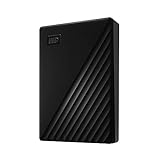
- Slim durable design to help take your important files with you
- Vast capacities up to 6TB[1] to store your photos, videos, music, important documents and more
- Back up smarter with included device management software[2] with defense against ransomware
- Help secure your important files with password protection and hardware encryption
- 3-year limited warranty
4. Protect backups—and test restores
Maintain offline, isolated or immutable backup copies, with backup administration and credentials separated from production as much as possible. Use MFA and least privilege for backup access, watch for mass deletion or alteration, and test restores regularly. Document which systems must return first and how long the business can tolerate their loss. Verify that restored systems will not immediately be reinfected.
Backups are a recovery control, not a complete ransomware defense. They can help with encryption, but not erase the consequences of stolen data. Pair them with identity protection, segmentation, endpoint monitoring, patching and an incident-response plan.
5. Monitor for activity before encryption
Endpoint detection and response (EDR) and security monitoring can help identify suspicious credential use, abnormal administrative tools, rapid network discovery, efforts to disable security software, new privileged accounts, unusual scripts, data staging, unexpected outbound transfers and mass file changes. Alerts need investigation: legitimate IT work can resemble some of these behaviors. If no one can monitor and act on alerts around the clock, consider whether a managed detection and response service (MDR) or another qualified provider can fill that gap.
Microsoft describes detection and automatic-disruption capabilities in its Defender products, but that is a vendor description, not a guarantee of prevention. No endpoint tool, backup service, WAF or managed provider covers the whole attack chain. Match tools to an identified gap and make sure someone owns configuration, monitoring, escalation and recovery.
Recommended Free Tools
If you suspect an attack
- Contain affected systems: Isolate affected endpoints and servers from the network to limit spread. Follow your incident-response plan; avoid powering systems off unnecessarily if doing so could destroy evidence or hinder forensic work.
- Protect accounts and backups: Disable compromised accounts, revoke active sessions or tokens, and limit access to backup systems. Block confirmed malicious infrastructure and suspicious outbound transfers when your responders can do so safely.
- Preserve evidence: Keep ransom notes, logs, alerts, affected files and timestamps. Avoid deleting evidence or rebuilding systems before incident responders and counsel advise on preservation needs.
- Bring in help and report: Notify security leadership and your incident-response or managed-security provider, if you have one. Contact cyber-insurance breach-response contacts, outside counsel and forensic specialists as appropriate. The FBI says victims can contact their local field office or file a report through IC3; coordinate with CISA and relevant sector authorities as applicable.
- Assess obligations and recovery: Determine whether regulators, customers, employees or partners need notification under applicable rules. Restore from known-good backups only after responders address persistence and access paths, and prioritize recovery according to business impact.
The FBI does not support paying ransom. Payment does not guarantee that files will be recovered, that stolen data will not be published, or that attackers have removed access. It can also raise legal, sanctions, insurance and compliance issues. Decisions require advice from qualified legal, incident-response and insurance professionals; this is not a substitute for legal guidance.
Best Value
- Slim durable design to help take your important files with you
- Vast capacities up to 6TB[1] to store your photos, videos, music, important documents and more
- Back up smarter with included device management software[2] with defense against ransomware
- Help secure your important files with password protection and hardware encryption
- 3-year limited warranty
Choosing security services by the gap they fill
For a smaller organization, the question is not simply which product has the longest feature list. It is whether the organization can deploy it correctly, review alerts, contain incidents and recover systems. Consider categories first:
| Gap | Category to consider | Question to ask |
|---|---|---|
| No continuous endpoint monitoring | MDR or managed EDR | Who investigates and contains alerts outside business hours? |
| Microsoft-heavy environment | Microsoft Defender for Business or a Microsoft 365 security plan | Are licensing, deployment and policy management included in the plan? |
| Weak recovery capability | Immutable cloud backup or business continuity and disaster recovery (BCDR) | Can a production administrator—or an attacker using that account—delete backup copies? |
| Public-facing web application | WAF, reverse proxy or DMZ service | Does traffic actually pass through the protection layer, and is origin access restricted? |
| Poor vulnerability visibility | Vulnerability-management platform or managed service | Can it prioritize exposed, exploitable assets rather than only list vulnerabilities? |
| Limited in-house expertise | Managed security provider or incident-response retainer | Does the service include investigation, containment and clear escalation terms? |
Vendor examples can help frame a buying conversation, but they are not endorsements or complete security programs. Microsoft lists Defender for Business at $3 per user per month, paid yearly, with a 30-day trial shown on its buying page; its page describes a plan for up to 300 users and endpoint detection, response and vulnerability-management capabilities. Confirm current terms and what is included. Licensing alone does not provide a staffed response team or replace backups, identity controls and incident planning.
Huntress lists Managed EDR at $8.99 per endpoint per month and shows a 50-endpoint example at $449.50 monthly; it says minimums may apply and that its standard Managed EDR commitment starts at 50 agents. Check its current pricing and service terms. A managed service may suit a small team that cannot continuously investigate alerts, but is less compelling if it duplicates an existing, staffed 24/7 operation.
Do these 3 things before closing this tab:
1Fix the driver behind crashes, sound loss and screen glitches2Repair Windows errors before they cause bigger problems3Scan for outdated or missing drivers - takes under a minuteBackblaze lists Business Computer Backup at $99 per computer per year, with Enterprise Control listed as an additional $24 per computer per year. For object storage, it advertises B2 at $6.95 per TB per month and describes Object Lock and integrations with backup platforms. See its pages for Business Backup and ransomware readiness and recovery. Verify server and SaaS coverage, retention, administrative separation, restore testing and immutability requirements; object storage is not, by itself, a managed backup-and-recovery service. Prices and plan terms can change.
Cloudflare advertises WAF and managed ruleset capabilities among its offerings; its plans page shows a free tier and paid plans, but suitability and pricing depend on application, traffic and required features. A WAF helps only for the traffic routed through it, and it does not patch an origin server or protect unrelated remote-access systems. Whichever provider you consider, verify that it addresses a real gap and that your team can operate it.
Quick Recap
Product prices and availability are accurate as of the date/time indicated and are subject to change. Any price and availability information displayed on Amazon at the time of purchase will apply.



