Quick wins for a faster PC:
Repair Windows errors before they cause bigger problemsFix Now →Scan for outdated or missing drivers - takes under a minuteDriver Scan →Clear out junk files and repair common Windows errorsFree Scan →Some links on this page are affiliate links: if you buy through them we may earn a commission, at no extra cost to you.
MCP can be a strategic foundation for enterprise AI agents—but it is not an enterprise-agent platform by itself. The Model Context Protocol (MCP) gives AI applications a common way to discover and use tools, data, and other context. It can reduce duplicated integrations and make capabilities more portable across compatible agent runtimes. It does not supply the identity, policy, workflow, security, or operational controls that make those capabilities safe to use in a business.
For technology and finance leaders, the useful distinction is this: MCP is a capability interface. Enterprise readiness comes from the control plane around it—identity, authorization, gateways, registries, audit, evaluation, and lifecycle management.
What MCP standardizes
Introduced by Anthropic in November 2024, MCP is an open protocol for connecting AI applications to external tools, data, and contextual resources. Its core arrangement separates the application using AI, the protocol client inside that application, and the server exposing capabilities. The protocol defines interactions for discovering and invoking tools, retrieving resources, and working with reusable prompts. Local servers may communicate over STDIO; remote deployments use HTTP-based transports. See the MCP introduction and protocol documentation.
Free tools Windows power users keep installed
One-click scans. No signup required.
- Host: The AI application or agent runtime.
- Client: The host component that connects to an MCP server and handles protocol interactions.
- Server: A service that presents selected tools, resources, or prompts.
- Tools: Callable actions, such as looking up an order or creating a support ticket.
- Resources: Data or context that a client can retrieve.
- Prompts: Reusable prompt templates or interaction patterns.
The architectural appeal is reuse: one compatible client can connect to multiple servers, and one server can support multiple compatible clients. MCP is sometimes likened to USB-C for AI, but that analogy can obscure the hard part. A shared connector does not make every device, permission, or operation safe or interchangeable.
#1 Best Overall
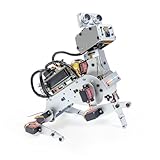
- AI-Powered Raspberry Pi Robot Dog — PiDog: Powered by Raspberry Pi (5/4B/3B+/3B/Zero 2W), OpenClaw, and multi-LLMs like ChatGPT, Gemini, Grok, DeepSeek, Qwen & Ollama. With 12 servos, camera, gyroscope, hearing & touch sensors, PiDog can see, listen, talk, move, and interact intelligently. Supports OpenCV, MediaPipe, TTS & STT, app control, FPV & Python. A great STEM robotics gift for students, makers & tech enthusiasts—perfect for birthdays and holidays. (Raspberry Pi not included)
- Realistic Dog-like Movements: PiDog's 12 powerful servos enable 32 dog-like actions, including walking, sitting, standing, shaking its head, wagging its tail, and performing playful tricks, closely mimicking a real dog and providing an engaging experience. This is an AI development robot product designed for engineers, suitable for ages 15 and above
- Rich Sensor Suite for Interactive Experiences: PiDog features ultrasonic, touch, gyroscope, sound, camera, speaker and microphone. These provide it with advanced hearing, vision, and touch, enabling it to see, detect obstacles, respond to touch, and recognize sounds, making interactions highly engaging
- AI-Powered Interactions with OpenClaw & Multi-LLMs. PiDog combines voice, vision, and gesture recognition for immersive AI experiences. Powered by OpenClaw and multi-LLMs like ChatGPT, Gemini, Grok, DeepSeek, Qwen, Doubao, and Ollama (local LLMs), it can understand questions, respond naturally through TTS & STT, recognize math problems, interpret hand gestures, and hold smart conversations. OpenClaw also enables customizable AI behaviors and personalized robotics development, helping users create their own intelligent robotic companion
- Comprehensive Learning Resources and Support: PiDog offers detailed online documentation, video tutorials, prompt technical support, and an active forum community, ensuring beginners can easily complete all projects and enjoy a great experience
Why enterprises care—and what MCP does not replace
Without a common agent-facing boundary, teams may build and maintain separate integrations for each model or application. MCP can make selected enterprise capabilities easier to expose to multiple compatible agent runtimes, support a catalog of approved tools, and separate changes to agent software from changes to backend integrations. It does not eliminate the underlying APIs, data mapping, permission design, or maintenance.
Think of the layers this way:
- APIs remain the system-to-system interfaces used by applications and services.
- MCP servers adapt selected data and operations into an agent-oriented interface.
- Gateways and policy layers control access to those capabilities.
- Agent runtimes decide what to do, when to use a tool, and whether to seek approval.
Microsoft describes MCP servers as a way to expose internal APIs and services to Foundry agents, while its API Management product positions MCP alongside APIs and agent endpoints (custom MCP servers; Azure API Management).
MCP does not choose the model, provide reliable reasoning, orchestrate business workflows, ensure data quality, define HR or financial approvals, guarantee rollback, evaluate agent behavior, or set an enterprise’s audit-retention rules. Protocol support for authorization is not a substitute for enterprise identity governance or transaction-level policy. Calling MCP “just a connector format” understates its strategic value; calling it a complete agent platform overstates its scope.
A practical enterprise architecture
MCP should sit within a broader stack, not directly stand in for one:
- Agent experience: The assistant or workflow the employee or customer uses.
- Agent runtime: Model selection, planning, state, retries, session management, evaluation, and human approval.
- MCP client: Connection to approved servers, capability discovery, protocol-response handling, and client-side approval requirements.
- Gateway or broker: Central authentication and authorization, credential isolation, token exchange, rate limits, network controls, logging, tool allowlists, policy enforcement, usage attribution, routing, and kill switches.
- MCP servers: Narrow, owned services that expose specific business capabilities.
- Enterprise systems: SaaS products, internal APIs, databases, data stores, developer platforms, and workflow systems.
A gateway can keep backend credentials out of agent applications and provide a common policy and telemetry boundary. Microsoft documents an AI Gateway for model and MCP traffic, while AWS Bedrock AgentCore Gateway describes a managed entry point that can turn APIs, Lambda functions, and existing services into MCP-compatible tools (Azure AI Gateway; AWS AgentCore Gateway). A gateway also adds cost, latency, operational responsibility, and a potential point of failure; it should be resilient and should not become an unexamined bottleneck.
Rank #2

- Optimized AI Arm Kit for LeRobot & Hugging Face Projects – The SO-ARM101 is an upgraded low-cost robotic arm servo motor kit designed for AI robotics enthusiasts and developers. Fully compatible with LeRobot and Hugging Face frameworks, it supports imitation learning and reinforcement learning, making it ideal for real-world robotics applications. (3D-printed parts not included.)
- Enhanced Wiring & Performance – Compared to the SO-ARM100, the SO-ARM101 features improved wiring to prevent disconnection at joint 3 and eliminates range-of-motion limitations. The leader arm uses optimized gear ratio motors for smoother performance—no external gearboxes required.
- Real-Time Leader-Follower Functionality – New real-time tracking allows the leader arm to follow the follower arm, enabling human intervention and correction during reinforcement learning (RL) training. Perfect for hands-on AI robotics development and research.
- Open-Source, DIY-Friendly & Nvidia-Compatible – Developed by TheRobotStudio, this open-source AI Arm kit integrates seamlessly with the LeRobot platform, offering PyTorch-based datasets, simulation, training, and deployment tools. Fully compatible with Nvidia Jetson edge devices, including reComputer Mini J4012 Orin NX 16 GB.
- Comprehensive Learning Resources – Includes detailed open-source assembly and calibration guides, testing tutorials, and deployment instructions. From wiring to AI training, get everything you need to start building, teaching, and optimizing your robotic arm for grasping and placing tasks.
Keep the server boundary deliberate. A read-only CRM lookup, purchase-order status query, or deployment-approval request is easier to understand and govern than a single “god server” exposing a broad set of unrelated, high-privilege operations.
The MCP 2026-07-28 specification: progress, not automatic compatibility
The MCP project’s specification dated July 28, 2026 moves toward a stateless core, production-oriented authorization, and extensions including MCP Apps, Tasks, and Enterprise-Managed Authorization. The project presents the direction as better suited to scalable distributed and serverless deployment (specification announcement; Anthropic implementation context).
A stateless core can simplify horizontal scaling, recovery, and serverless hosting. It does not remove the need to manage state for long-running tasks, approvals, streaming operations, or transactions; that state may belong in the runtime or a separate workflow service.
Do not assume that “MCP-compatible” means every client, gateway, and server supports the same revision or extension. For example, the reviewed AWS AgentCore Gateway usage documentation lists support for MCP versions 2025-06-18, 2025-03-26, and 2025-11-25, not every later revision (AWS compatibility documentation). Before deploying, record each component’s protocol revision, transport, authorization method, extensions, tool-schema behavior, approval semantics, streaming behavior, error format, and payload or tool-count limits.
Authorization is necessary; it is not a safety guarantee
The 2026-07-28 authorization specification covers HTTP-based MCP deployments and uses OAuth-related mechanisms, including protected-resource metadata and resource indicators. It addresses matters such as authorization-server discovery, PKCE, HTTPS, redirect-URI protection, token audience binding, and risks including token theft, mix-up, and confused-deputy attacks. It also includes security guidance for client metadata and refresh-token handling (authorization specification; security considerations).
Rank #3
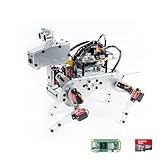
- Raspberry Pi AI Robot: powered by Raspberry Pi (5/4B/3B+/3B/Zero 2W), features 12 servos and sensors for vision, hearing, and touch. Integrated with ChatGPT-4o, it responds to complex queries. With app control and FPV, users can manage and see its view in real-time. It supports Python programming
- Realistic Movements: 12 powerful servos enable 32 actions, including walking, sitting, standing, shaking its head, wagging its tail, and performing playful tricks, closely mimicking a real and providing an engaging experience
- Rich Sensor Suite for Interactive Experiences: features ultrasonic, touch, gyroscope, sound, camera, speaker and microphone. These provide it with advanced hearing, vision, and touch, enabling it to see, detect obstacles, respond to touch, and recognize sounds, making interactions highly engaging
- Engaging Interactions with ChatGPT-4o: with ChatGPT-4o enables voice interactions and visual recognition, making it smarter and more responsive. Users can have natural conversations, solve math problems via the camera, and interpret gestures, creating diverse and fun interactions
- Comprehensive Learning Resources and Support: offers detailed online documentation, video tutorials, prompt technical support, and an active forum community, ensuring beginners can easily complete all projects and enjoy a great experience
Authorization is not mandatory for every MCP implementation, and transport matters. The current documentation says HTTP implementations should follow the authorization specification when supported; STDIO implementations generally obtain credentials from the environment. An organization must still decide how identities, scopes, credentials, and permissions map to its systems.
The MCP project’s Enterprise-Managed Authorization extension, reported stable on June 18, 2026, is intended to let organizations provision MCP server access centrally through an identity provider rather than relying on repeated individual consent flows. That can help with approved-server assignment, role-based access, joiner-mover-leaver processes, and revocation. It does not decide whether a particular invocation is appropriate for a transaction, user, or data item.
Threats a protocol cannot remove
- Tool poisoning: A compromised or untrusted server can provide misleading descriptions, schemas, or results. Use a private registry, verify publishers and deployment provenance, review schema changes, and maintain runtime allowlists.
- Prompt injection in tool results: Retrieved text can contain instructions designed to manipulate the agent. Treat tool output as untrusted data, separate it from trusted instructions, and restrict what actions can follow a retrieval.
- Excessive authority: A server may expose write access when the task needs only a read. Separate read and write tools, use least-privilege identities and per-tool scopes, and require approval for consequential actions.
- Token misuse: Validate issuer, audience, expiry, and scope. Do not forward tokens to downstream systems without an explicit secure design; keep client, gateway, server, and backend trust boundaries distinct. The earlier authorization guidance discusses token passthrough and confused-deputy risks.
- Supply-chain compromise: Review dependencies, pin versions, scan images, keep a software bill of materials, isolate server execution, and limit outbound network access.
- Data exfiltration: A read tool can expose sensitive data that an agent then sends through another tool. Apply classification, purpose-bound access, tenant-aware authorization, DLP, and egress controls across tool chains.
- Audit gaps: Record the human or service principal, agent and application versions, client, server and server version, tool and arguments, policy decisions, approvals, result, downstream request, timestamp, correlation ID, and available data classification.
Authentication answers who can connect; it does not answer whether a tool is safe, whether a result is trustworthy, or whether information may flow from one system to another.
Design MCP tools as governed business capabilities
Tool design determines how well capabilities can be authorized, audited, tested, and safely invoked. A broad tool such as execute_sql(query) gives the model a large and difficult-to-review surface. A typed, purpose-specific tool such as get_customer_credit_status(customer_id) is easier to restrict and audit. Similarly, request_production_deployment(service, version, change_ticket) is clearer than a generic command runner.
For tools that change state:
- Validate arguments on the server; do not rely on model instructions.
- Make operations idempotent where possible, and accept idempotency keys for retried writes.
- Offer a preview or dry-run before consequential execution.
- Document downstream and transitive side effects, including notifications or billing triggers.
- Return a durable operation ID for long-running work, and report partial completion explicitly.
- Use compensating actions where rollback is not possible. MCP does not provide distributed transactions or automatic rollback.
Place approval near execution. It is most valuable for money movement, external communication, deletion, production changes, privilege changes, regulatory submissions, and actions affecting third parties. Show the exact tool, arguments, target, data sent, expected side effect, identity, scope, expiry, and reversibility. Avoid approval fatigue by matching friction to risk rather than prompting for every trivial action. Microsoft Foundry documents an MCP request flow with approval request and response objects (Foundry MCP integration).
Rank #4
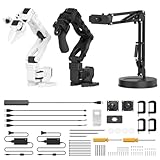
- 【End-to-End Imitation Learning】Hiwonder SO-ARM101 robot arm is an embodied intelligent hardware platform compatible with the Lerobot open-source framework. It provides developers with streamlined access to shared code, templates, and pre-trained models to explore the latest advancements in AI research.
- 【Dual-Camera Vision System】Equipped with both a gripper-mounted camera and an external camera, the system supports both precise manipulation and environmental awareness for accurate imitation learning.
- 【Hiwonder High-Performance Bus Servos】Featuring 12 high-torque bus servo motors with magnetic feedback, the Hiwonder SO-Arm101 robotic arm delivers smooth, stable motion, eliminating issues like power deficiency and jitter.
- 【Professional Control & Debugging】Integrated with the Hiwonder BusLinker V3.0 debugging board, the system supports servo scanning, real-time status monitoring, and trajectory control. The professional PC software simplifies device calibration and debugging, making it accessible for both researchers and hobbyists.
- 【Open-Source Compatibility】The SO-ARM101 robotic arm is designed to be fully compatible with the LeRobot open-source project. We acknowledge the contributions of the open-source community; all trademarks and copyrights belong to their respective owners.
Each production server should have an accountable owner, purpose, data classification, access model, supported protocol versions, versioned tool catalog, service targets, test coverage, incident process, deprecation policy, usage metrics, and rollback or kill-switch procedure. Treat tool descriptions as controlled artifacts: review changes and test them against adversarial prompts.
Independent reader supportYour contribution helps us test, update, and keep practical guides available for everyone.Local, remote, and gateway-mediated deployment
| Pattern | Useful for | Principal concerns |
|---|---|---|
| Local STDIO server | Developer tools, IDEs, local files, prototyping, personal automation | Workstation credentials and privileges, uncontrolled installation, version drift, limited central monitoring, host compromise |
| Remote server | Shared services, multi-user applications, cloud deployment, centralized monitoring | Requires TLS, strong identity, scoped authorization, network segmentation, rate limits, logging, versioning, health checks, and abuse monitoring |
| Gateway-mediated | Organizations with many agents or servers, multiple runtimes, central policy needs, or credential sprawl | More infrastructure, latency, cost, operational complexity, and concentration risk |
A local server is not enterprise-ready merely because it speaks MCP. Conversely, a remote endpoint being publicly reachable does not make it appropriate for confidential data. Microsoft documents public and private Foundry MCP endpoints and private-networking considerations (endpoint guidance).
Build, buy, or put a gateway in front
- Build a server when the capability contains proprietary business logic, existing APIs do not map cleanly to safe agent actions, precise domain authorization is needed, or sensitive data demands direct control—and the organization can own long-term operations.
- Use a vendor or managed server when the capability is commodity, the system vendor maintains the integration, and its support, permission model, and security practices meet requirements.
- Use a gateway when the number of servers and agent applications grows, multiple models need access, central logging and policy are required, credentials are proliferating, or private networking and an approved catalog matter.
Direct API or function-calling integrations can be simpler for one application and a handful of tools, especially where portability is not a priority. OpenAPI may be a good route when REST operations are already documented and existing API governance is mature; it can complement MCP rather than compete with it. MCP focuses on agent-to-tool and agent-to-context interactions, not agent-to-agent delegation. Vendor-native connectors may provide deeper integration and support, in exchange for possible lock-in or less control over deployment and tool semantics.
Evaluate any platform or server on a compatibility matrix, not a badge. Include protocol versions, transports, extensions, schema validation, identity-provider support, user-delegated versus service identity, token exchange, per-tool scopes, tenant isolation, registry and approval features, sandboxing, DLP and egress, tamper-resistant audit, metrics and traces, quotas, rollback, developer tooling, hosting and gateway cost, backend charges, and the ongoing cost of engineering and review.
Commercial options are control planes, not “MCP itself”
MCP is an open protocol; organizations generally buy or operate the infrastructure around it. Choose by cloud alignment, identity, private networking, data residency, supported protocol revision, operational ownership, and acceptable vendor dependence—not by an unsupported universal ranking.
- Anthropic Claude Enterprise: A potential fit for organizations standardizing on Claude and seeking an enterprise assistant and first-party MCP experience. Anthropic describes governance, authorization, observability, and tool connections on its enterprise page. The reviewed public page did not show a seat price.
- Microsoft Foundry Agent Service: A potential fit for Azure- and Entra-centric organizations that need agent development, remote MCP, approvals, private networking, identities, tracing, and evaluation. The documentation requires an Azure subscription and Foundry project; costs should be checked against Azure’s service-specific pricing (MCP documentation; service overview).
- Azure API Management and API Center: A potential fit for API platform teams seeking to expose, discover, secure, and monitor MCP servers through existing governance patterns (MCP server management).
- Azure API Management AI Gateway tier: The reviewed documentation described a public preview on August 16, 2026, with pricing and the business model to be announced later. Preview availability, regions, limits, and APIs may change; do not assume a stable SLA or settled commercial terms (AI Gateway overview; tool management).
- AWS Bedrock AgentCore Gateway: A potential fit for AWS-native teams using Lambda, OpenAPI, or related services and seeking a managed gateway. Check the explicitly listed protocol versions against the clients and extensions the organization requires (gateway overview; usage and compatibility).
A measured adoption path
- Inventory and classify: Choose a business task; map its APIs, data sensitivity, users, and side effects. Start with a low-risk, read-only capability where possible.
- Pilot narrowly: Build or select one or two focused servers, use an approved private catalog, require approval for writes, and instrument every invocation.
- Platformize: Integrate identity, a gateway where justified, policy-as-code, contract testing, a compatibility matrix, cost attribution, and incident procedures.
- Scale deliberately: Add more agents and workflows only after evaluating reliability, security, operational load, and economics. Use durable workflow services for long-running tasks and formal evaluation for agent behavior.
Before production, test authorization denials, approval paths, token expiry and revocation, adversarial tool results, partial failures, retries, and rollback. Scan dependencies, establish an owner and on-call contact, set log privacy and retention rules, and verify that a kill switch actually stops access.
Bottom line for enterprise leaders
Adopt MCP when a common, reusable agent-facing capability interface will help your teams—but do not confuse interoperability with autonomy or safety. Start with narrowly scoped tools and a clearly classified use case. Then surround MCP with enterprise identity, least-privilege authorization, policy enforcement, registry controls, audit, evaluation, and lifecycle ownership. Whether those controls come from a cloud platform, an API gateway, a managed service, or internal engineering, the organization remains responsible for the permissions and consequences of every action an agent can take.
Quick Recap
Product prices and availability are accurate as of the date/time indicated and are subject to change. Any price and availability information displayed on Amazon at the time of purchase will apply.
Recommended Free Tools



