Some links on this page are affiliate links: if you buy through them we may earn a commission, at no extra cost to you.
Excel’s financial functions can calculate loan payments, savings balances, investment returns and more—but only when the rate, payment frequency, timing and cash-flow signs match the real situation. Start by identifying whether cash flows are regular or irregular; then choose a function family and make its assumptions explicit.
This guide connects the main functions, shows practical formulas and explains when a row-by-row cash-flow schedule is safer than a single formula. The examples use standard Excel syntax; function availability and interfaces can vary by edition and platform. Microsoft’s financial-functions reference lists supported functions and compatibility.
Start with the model, not the function
Excel financial functions solve for one financial quantity from others. For an ordinary loan or savings plan, the inputs commonly include:
Do these 3 things before closing this tab:
1Clear out junk files and repair common Windows errors2Fix the driver behind crashes, sound loss and screen glitches3Repair Windows errors before they cause bigger problemsrate: interest or discount rate for one period.nper: total number of periods.pv: value at the start of the model.fv: target or ending value.pmt: recurring payment or contribution.type: payment timing—usually 0 for end-of-period or 1 for beginning-of-period.
Most of the annuity functions assume a constant rate, equal payments and regular periods. Those assumptions make them useful for standard fixed-rate loans and recurring savings plans, but not for every real contract or investment.
#1 Best Overall
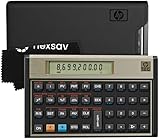
- HP 12C: INDUSTRY STANDARD SINCE 1981 – Trusted by professionals in real estate, banking, and finance for over 40 years. The HP 12C finance calculator remains the go-to tool for fast and accurate calculations in high-stakes business environments.
- 120+ FUNCTIONS FOR FINANCIAL ANALYSIS – Calculate loan amortization, bond pricing, mortgage payments, NPV, IRR, depreciation, and more with this large calculator. Built-in business and statistical functions allow you to perform complex calculations in just a few keystrokes.
- RPN ENTRY FOR FASTER WORKFLOWS – Reverse Polish Notation (RPN) allows for efficient data entry with fewer keystrokes and no formulas. This RPN calculator is perfect for a mortgage payment calculator, accounting calculator, business calculator, or real estate calculator for desktop.
- PROGRAMMABLE FOR REPEAT TASKS – The HP12C desk calculator stores custom keystroke sequences for repeated use. This large calculator supports up to 20 cash flows for IRR/NPV analysis, modeling investment scenarios, projecting returns, and automating routine calculations.
- INCLUDES CLEANING CLOTH, CASE & BATTERIES – Compact design fits easily on a desk or crowded table area. Includes a protective carrying case, cleaning cloth, and comes with pre-installed batteries so it's ready to use out of the box. A great choice for home finances, business professionals, and accountants.
Match the rate to the period
This is the central rule: the rate and number of periods must use the same frequency as the payment. For a nominal annual rate of 7.2% and monthly payments, use a monthly rate of 7.2% divided by 12 and a period count of years multiplied by 12:
Monthly rate = 7.2% / 12
Number of periods = years * 12
For a $25,000, five-year loan with monthly payments:
=-PMT(7.2%/12, 5*12, 25000)Using =PMT(7.2%,60,25000) treats 7.2% as a monthly rate. Using =PMT(7.2%/12,5,25000) counts only five monthly payments. Both are frequency errors.
What’s actually slowing this PC down?
Pick the symptom - the matching free tool is one click away.
Do not automatically divide every annual rate by 12. A nominal annual rate is often converted by dividing by the number of compounding periods; an effective annual rate already reflects compounding. The applicable periodic rate depends on how the rate was quoted and how the contract compounds. Microsoft’s PV and FV guidance also emphasizes matching rate and period inputs.
Use cash-flow signs consistently
Excel uses signs to represent direction, not to label an answer as good or bad. From the perspective of the person modeling their own finances:
- Money paid or invested is negative.
- Money received is positive.
- A borrower receives loan principal (positive) and makes repayments (negative).
- A saver makes contributions (negative) and receives a future balance or withdrawal (positive).
For example, =PMT(7.2%/12,60,25000) returns a negative payment because it models repayments leaving the borrower’s account. Add a minus sign in front when you want to display the payment as a positive consumer-facing amount: =-PMT(7.2%/12,60,25000). Keep the underlying model’s signs consistent rather than changing signs arbitrarily to make outputs look positive. Microsoft explains this convention in its PV and FV documentation.
Build the loan model with PMT
PMT calculates a periodic payment for a loan or annuity with constant payments and a constant rate. Its syntax is:
PC Slower Than It Used to Be?
A free scan shows the junk files, broken settings and background clutter dragging Windows down - then fixes them in one click.Free scan · Windows 10 & 11Outdated Drivers Are Slowing You Down
One free scan finds every outdated or missing driver and matches the right update for your exact hardware.Free scan · exact hardware match=PMT(rate, nper, pv, [fv], [type])For a loan, the usual setup is:
=-PMT(annual_rate/12, years*12, loan_amount)The minus sign turns the borrower’s modeled outflow into a positive displayed payment. By default, fv is zero and type is 0, meaning payments occur at the end of each period. Use type=1 for a payment at the beginning of each period, as with some annuity-due or rent arrangements:
=PMT(rate, nper, pv, fv, 1)Beginning-of-period payments change the result because each payment is made one period earlier. Check the actual payment timing before using the default. For more on its assumptions and arguments, see Microsoft’s PMT reference.
Calculate a savings contribution
Suppose you have $5,000 now and want $50,000 in 10 years, contributing monthly. If the annual assumption is a nominal rate that can appropriately be converted to a monthly rate, a formula pattern is:
Rank #2
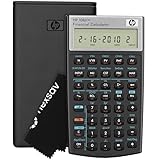
- HP 10BII+ FOR STUDENTS & PROFESSIONALS – This HP calculator is built for business, finance, accounting, and statistics courses. Perfect for learners and professionals who need to solve common financial problems quickly without memorizing formulas or relying on spreadsheets.
- 100+ FUNCTIONS FOR REAL WORLD MATH – Quickly solve time value of money, interest rates, loan payments, NPV, IRR, cash flows, and more. The 10bII+ also includes probability distributions for statistics courses—a feature not often found in financial calculators.
- ALGORITHMIC INPUT WITH DEDICATED KEYS – This high-school/college calculator uses algebraic and chain logic with minimal keystrokes. Layout appears the same as standard calculators for easy learning. Dedicated keys give quick access to commonly used financial and statistical functions
- APPROVED FOR MAJOR EXAMS – The HP 10bII+ algebra calculator is permitted for use on SAT, PSAT/NMSQT, and AP tests. An ideal statistics calculator and business calculator for school finance and accounting students preparing for class, coursework, or standardized exams.
- INCLUDES TRAVEL CASE, CLEANING CLOTH & BATTERIES– Slim, durable, and easy to keep on hand or store in a backpack or locker. Includes a protective case, cleaning cloth, and batteries so it’s ready out of the box. Large screen with clear contrast (non-backlit) is easy to read during exams or lectures.
=-PMT(annual_rate/12, 10*12, 5000, -50000)The contribution and target balance use opposite signs. The formula’s result is a contribution per period under the constant-rate and constant-contribution assumptions—not a guarantee that an investment will earn the assumed return.
The Tool Desk
Outbyte PC Repair FREERepair Windows errors before they cause bigger problemsFix Now →Outbyte Driver Updater FREEScan for outdated or missing drivers - takes under a minuteDriver Scan →Break payments into interest and principal
IPMT returns the interest portion of a particular payment; PPMT returns the principal portion. Both take a period number, and that number starts at 1, not 0:
=IPMT(rate, per, nper, pv, [fv], [type])
=PPMT(rate, per, nper, pv, [fv], [type])
For the first month on the example loan:
=-IPMT(7.2%/12, 1, 60, 25000)
=-PPMT(7.2%/12, 1, 60, 25000)
These positive versions show interest paid and principal repaid from the borrower’s perspective. Before adding the display minus signs, the signed interest and principal amounts reconcile to the signed payment from PMT. The period must be between 1 and nper; an out-of-range period can produce an error. See Microsoft’s IPMT and PPMT references.
For totals across a range of periods, use CUMIPMT for cumulative interest and CUMPRINC for cumulative principal. For example:
=-CUMIPMT(rate/12, nper, pv, start_period, end_period, 0)
=-CUMPRINC(rate/12, nper, pv, start_period, end_period, 0)
These are useful for summing interest or principal over a year or comparing early and later stages of a loan. The final argument is the payment-timing convention; confirm that it matches the loan.
Free tools Windows power users keep installed
One-click scans. No signup required.
Use PV, FV and NPER for goals
These functions solve related versions of the same constant-rate, regular-payment problem:
PV(rate,nper,pmt,[fv],[type])calculates present value.FV(rate,nper,pmt,[pv],[type])calculates future value.NPER(rate,pmt,pv,[fv],[type])calculates the number of periods.
Present value: what is a payment stream worth today?
To estimate the principal supported by a fixed monthly payment:
=-PV(annual_rate/12, years*12, monthly_payment)To calculate the present amount needed to reach a future target with no recurring payments:
=-PV(annual_return/12, years*12, 0, target_amount)PV assumes level periodic payments and a constant rate. It is not a general discounted-cash-flow tool for irregular or changing cash flows.
Recommended Free Tools
Future value: what might recurring contributions accumulate to?
For a starting balance and monthly contributions:
=FV(annual_return/12, years*12, -monthly_contribution, -starting_balance, 0)For a lump sum growing annually:
=FV(annual_return, years, 0, -initial_investment)A negative result usually reflects the chosen cash-flow direction. It does not, by itself, mean the calculation failed. The result is only as realistic as the rate assumption, payment pattern and period conversion.
Rank #3

- Solves time-value-of-money calculations such as annuities, mortgages, leases, savings, and more
- Performs cash-flow analysis for up to 32 uneven cash flows with up to 4-digit frequencies
- Calculates various financial functions: Net Future Value Net present Value Modified Internal Rate of Return Internal Rate of Return Modified Duration Payback Discounted Payback
- The Texas Instruments BAII Plus Professional features an Automatic Power Down (APD) function for extended battery life
- Prompted display guides you through financial calculations showing current variable and label. Ten-digit display
Number of periods: how long will the goal take?
NPER can estimate the number of periods needed to pay off a loan or reach a balance:
=NPER(annual_rate/12, -monthly_contribution, -starting_balance, target_amount)If the rate and payments are monthly, divide the result by 12 to express it in years:
=NPER(annual_rate/12, -monthly_contribution, -starting_balance, target_amount)/12Solve for the rate with RATE
When the payment, term and principal are known, RATE estimates the periodic interest rate:
Quick wins for a faster PC:
Clear out junk files and repair common Windows errorsFree Scan →Fix the driver behind crashes, sound loss and screen glitchesFind Drivers →Repair Windows errors before they cause bigger problemsFix Now →=RATE(nper, pmt, pv, [fv], [type], [guess])For 60 monthly payments, annualize the periodic result by multiplying by 12 to get a nominal annualized rate:
=RATE(60, -monthly_payment, loan_amount)*12That is not automatically an effective annual rate or a legally defined APR. To compound a monthly periodic rate into an effective annual rate:
=(1+RATE(60, -monthly_payment, loan_amount))^12-1RATE solves iteratively, so results depend on the cash flows and may need a reasonable guess. Its implied rate also excludes fees and other costs unless those are represented in the cash flows.
Evaluate projects with NPV and IRR
Use NPV and IRR when cash flows occur at regular intervals. They answer different questions: NPV expresses value at a chosen discount rate, while IRR finds the rate that makes NPV zero.
NPV: keep the initial cash flow at time zero
Excel treats the values supplied to NPV as occurring at the ends of successive periods. An initial investment at time zero belongs outside the function. If the initial investment is in B2 and future period cash flows are in C2:G2:
=NPV(discount_rate, C2:G2) + B2Do not include the initial investment inside the NPV range unless it truly occurs at the end of the first period; otherwise Excel discounts it by one period. Microsoft describes this timing distinction in its NPV and IRR guidance.
- NPV above zero: the modeled project exceeds the selected discount-rate hurdle.
- NPV at zero: it meets that hurdle.
- NPV below zero: it falls short of that hurdle.
NPV is not simply profit: it discounts the modeled cash flows at the rate you supply.
Rank #4

- Sold as 1 Each.
- Ideal for students and professionals. Over 100 built-in functions including probability distributions.
- Intuitive keyboard layout with minimal keystrokes required for many common functions.
- Easy-to-read display with adjustable contrast and on-screen labels.
- Permitted for use on SAT, PSAT/NMSQT and College Board AP tests.
IRR: a return estimate, not a complete decision
IRR calculates the rate that makes NPV equal to zero for a regular-period cash-flow series:
=IRR(B2:G2)The series must contain at least one positive and one negative cash flow. Excel uses an iterative search and a default guess of 10%; if it cannot find a result, try another guess, such as:
=IRR(B2:G2, 0.05)When a cash-flow sequence changes sign more than once, it can have multiple mathematically valid IRRs—or no useful single answer. IRR also does not show the absolute value created, so it can mislead when comparing projects of different sizes or lifetimes. Pair it with NPV at an appropriate hurdle rate and inspect the cash flows. Microsoft discusses the iterative behavior and cash-flow requirements in its IRR reference.
Use actual dates with XNPV and XIRR
If cash flows occur on irregular dates, use the date-aware functions rather than forcing them into artificial monthly or annual buckets:
=XNPV(rate, values, dates)
=XIRR(values, dates, [guess])
For example, put the actual transaction dates in A2:A5 and corresponding cash flows in B2:B5:
=XNPV(10%, B2:B5, A2:A5)
=XIRR(B2:B5, A2:A5)
Use the first date as the valuation date for the schedule. Ensure the date and value ranges have the same number of entries, the dates are real Excel dates rather than text, and the schedule has both positive and negative flows. Keep dates in a coherent chronological order. Use XNPV alongside XIRR when both valuation and return analysis should reflect actual timing. See Microsoft’s guidance on cash flows and these functions.
Use MIRR for separate financing and reinvestment assumptions
Conventional IRR effectively uses one rate for the return calculation. MIRR allows a separate finance rate for negative cash flows and reinvestment rate for positive ones:
=MIRR(values, finance_rate, reinvest_rate)This can make the assumptions more explicit when borrowing costs and returns on interim proceeds differ. The result remains sensitive to both rates, so document them and do not treat MIRR as a universal replacement for NPV.
Independent reader supportYour contribution helps us test, update, and keep practical guides available for everyone.Convert annual rate representations with EFFECT and NOMINAL
EFFECT converts a nominal annual rate to an effective annual rate for a stated compounding frequency; NOMINAL converts in the other direction:
=EFFECT(nominal_rate, periods_per_year)
=NOMINAL(effective_rate, periods_per_year)
For example, compare:
=EFFECT(6%, 12)
=NOMINAL(6.1678%, 12)
These functions address compounding conventions. They do not account for fees, taxes, irregular payment dates or lender-specific rules for calculating a quoted APR.
Best Value

- HP 12C: INDUSTRY STANDARD SINCE 1981 – Trusted by professionals in real estate, banking, and finance for over 40 years. The HP 12C finance calculator remains the go-to tool for fast and accurate calculations in high-stakes business environments.
Depreciation functions: select the method your model requires
Excel includes several mathematical depreciation methods:
SLN: straight-line depreciation.SYD: sum-of-years’-digits.DB: fixed-declining balance.DDB: double-declining or another specified declining-balance factor.VDB: variable declining balance, including partial periods.
The appropriate method depends on the purpose and applicable rules. Book depreciation, tax depreciation and management-use depreciation may differ. An Excel calculation does not automatically apply the tax rules of a particular jurisdiction or replace accounting guidance.
Bond and security functions are a specialist group
For securities, Excel provides functions including PRICE, PRICEDISC and PRICEMAT for price; YIELD, YIELDDISC and YIELDMAT for yield; and TBILLPRICE, TBILLYIELD and TBILLEQ for Treasury bills. DURATION and MDURATION calculate duration measures. Coupon-schedule functions include COUPDAYBS, COUPDAYS, COUPNCD, COUPNUM, COUPPCD and COUPDAYSNC.
Quick wins for a faster PC:
Repair Windows errors before they cause bigger problemsFix Now →Fix the driver behind crashes, sound loss and screen glitchesFind Drivers →These functions rely on inputs such as settlement and maturity dates, coupon rate, redemption value, coupon frequency and day-count basis. Confirm each argument and convention in Microsoft’s financial-functions reference before using them; security calculations are not interchangeable with ordinary loan formulas.
Make a loan model auditable
A small input block makes assumptions visible and helps catch frequency mistakes:
| Input | Example |
|---|---|
| Loan amount | 25,000 |
| Annual nominal rate | 7.2% |
| Term in years | 5 |
| Payments per year | 12 |
| Payment timing | 0 |
Calculate the periodic rate as annual rate divided by payments per year, and periods as years multiplied by payments per year. Then calculate payment with =-PMT(PeriodicRate, NumberOfPeriods, LoanAmount). For a schedule, use a period number in A20:
Interest paid: =-IPMT(PeriodicRate, A20, NumberOfPeriods, LoanAmount)
Principal paid: =-PPMT(PeriodicRate, A20, NumberOfPeriods, LoanAmount)
Ending balance: =BeginningBalance - PrincipalPaid
Compare scheduled payment components with the payment formula and verify that the ending balance behaves as expected. A schedule is essential when the loan includes extra payments, payment holidays, rate resets, fees, balloon amounts, partial periods or contractual rounding. A single PMT calculation cannot represent those features accurately.
Free tools Windows power users keep installed
One-click scans. No signup required.
Troubleshoot implausible results and errors
- Wrong sign: decide whose perspective the model represents—borrower, lender or investor—and label outflows and inflows consistently.
- Wrong frequency: match the periodic rate and
nperto the payment interval. Do not pair a monthly payment with a yearly period count. - Wrong timing: check whether payments are at the beginning or end of the period;
typechanges results. #NUM!in IRR, XIRR or RATE: confirm positive and negative cash flows, check that a solution is plausible, and try a reasonable guess such as 5%, 10% or -5%. Multiple sign changes can produce multiple roots. For IRR, NPV at several trial rates can help reveal the issue; use XIRR when dates are irregular.#VALUE!: check for text in numeric inputs, dates stored as text, invalid arguments, or locale-specific decimal and separator conventions.- NPV seems too low: confirm that the initial time-zero investment is added separately rather than discounted as the first future-period flow.
- Schedule does not end at zero: avoid rounding intermediate rates and balances unless the real contract requires it. Contractual rounding may require adjusting the final payment.
- Fees, taxes or variable rates: include relevant charges as separate cash flows, or build a period-by-period schedule with the actual rate and timing. A fixed-rate payment formula cannot model a rate that resets.
For more on IRR’s iterative search and common calculation issues, consult Microsoft’s IRR documentation.
When a schedule is better than a built-in function
Use annuity functions for a quick, transparent calculation when payments are constant, the rate is constant and periods are regular. Use a cash-flow schedule when there are changing payments or rates, fees, taxes, extra principal, irregular dates, a balloon balance, partial periods or rounding rules. A schedule is also easier to audit because every period’s opening balance, cash flow, interest and closing balance is visible.
For investment appraisal, choose NPV and IRR for regular periods and XNPV and XIRR for actual irregular dates. Prefer NPV when ranking projects that differ in scale or timing, or when IRR is ambiguous; the conclusion always depends on the cash-flow assumptions and discount rate. Microsoft’s current function reference is the authoritative index for syntax and supported functions.
Quick Recap
Product prices and availability are accurate as of the date/time indicated and are subject to change. Any price and availability information displayed on Amazon at the time of purchase will apply.
Recommended Free Tools



