Some links on this page are affiliate links: if you buy through them we may earn a commission, at no extra cost to you.
Maine did not enact a statewide freeze on large data centers. Lawmakers passed L.D. 307, which would have paused approval of facilities drawing at least 20 megawatts (MW), but Gov. Janet Mills vetoed it on April 24, 2026. The Legislature sustained that veto on April 29, so the proposed moratorium never became law.
Maine instead created a 15-member Data Center Advisory Council. Its work will shape how the state handles electricity costs, grid reliability, water, emissions, local impacts and economic-development claims as AI-related demand grows.
What happened to Maine’s proposed data-center freeze?
L.D. 307 began as a proposal to create a statewide coordination council. Amendments added a temporary restriction on state and local approval of data centers with an electric load of 20 MW or more. The enacted legislative version would have kept that restriction in place until November 1, 2027 and limited certain state-funded incentives.
Gov. Mills vetoed the bill on April 24. The Legislature sustained the veto five days later. The bill’s final disposition means Maine currently has no statewide data-center moratorium or blanket ban.
#1 Best Overall

- Ultra-Lightweight: At only 7.5 lbs, the Explorer 300 delivers a robust 292Wh capacity while remaining 17% lighter than the industry average. The sleek, integrated handle makes it effortless to carry on long hikes or pack with your camping gear, providing reliable off-grid power without adding bulk to your load.
- Versatile Power for 6 Devices: Equipped with 2 AC outlets, a 100W USB-C PD port, 2 USB-A ports, and a 120W car port. With a 300W rated output (600W peak surge), it easily handles laptops, drones, and cameras, while also serving as a dependable cpap battery for camping or a robust solar powered generator when paired with panels.
- Built to Last: Upgraded with premium LiFePO4 chemistry, this portable generator delivers over 4,000 charge cycles before reaching 70% capacity. This ensures more than 11 years of reliable service life, making it a sustainable and durable energy partner for a decade of exploration.
- Fast Solar Charging: Perfect for off-grid use, this solar powered generator pairs seamlessly with Jackery panels. Reach 80% capacity in approximately 2.8 hours with a 100W solar panel, or maintain your gear with a portable 40W panel (80% in 7.5 hours), making it an essential part of your hunting essentials.
- WHAT YOU GET: 1* Jackery Explorer 300 Portable Power Station, 1*AC adapter, 1* car charger cable, 1* user guide (𝐒𝐨𝐥𝐚𝐫 𝐏𝐚𝐧𝐞𝐥 𝐍𝐨𝐭 𝐈𝐧𝐜𝐥𝐮𝐝𝐞𝐝.)
The veto was not a rejection of every new safeguard. Mills said she supported studying large data centers but objected to applying the pause to a redevelopment project at the former Androscoggin Mill in Jay without an exemption.
Why the 20-MW threshold mattered
Twenty megawatts is a continuous electric-demand threshold, not an annual-consumption figure. A facility drawing 20 MW every hour of a non-leap year would use about 175,200 megawatt-hours, or 175.2 million kilowatt-hours.
That calculation is illustrative. A project’s actual demand can differ because of utilization, backup generation, storage, phased construction and cooling equipment. Policymakers also must decide whether a threshold applies to:
Recommended Free Tools
- IT equipment alone or the entire facility, including cooling and other systems;
- contracted or nameplate capacity, measured peak demand or average demand;
- one building or an entire multi-building campus; and
- an initial phase or the project’s eventual full build-out.
A 20-MW rule could therefore reach projects beyond the largest hyperscale campuses. Dividing construction into phases, expanding an existing site, or using on-site generation would also require clear rules.
Rank #2

- 【SLIM & POCKETABLE】This portable power bank is about the size of a smartphone (6.5×3.3×4 inches) and weighs only 2.54 pounds. It features an ergonomic soft handle for easy portability. It easily fits into a backpack for convenient portability. Pro Tip: Fully charge and discharge the battery twice initially for the best experience.(Solar panel and cable not included)
- 【DUAL INPUT/OUTPUT (AC + DC)】The portable power station comes with a 89.6Wh capacity LiFePO4 battery pack(not NCM) and 100W, features 7 output ports, including 2 AC sockets (100W),2 USB-C port (45W/15W), 2 USB-A port (18W/15W), and DC5521 ports (60W). The LED display can clearly show the working status and remaining power.(Please peel off the protective film on the screen after unboxing)
- 【Ultra Fast Charging】With unique fast charging technology,the portable generator can be charged from 0-80% just in 1.5hrs. The solar power bank power station has Four methods to charging: AC wall socket fast charging, USB-C DC two-way PD fast charging(AC and DC can be charged at the same time) ,car charging and solar panel charging.Fast charging solar power bank portable charger suitable for for emergency home backyard outdoor power outages off-grid camping essentials
- 【ULTRA-QUIET & EMERGENCY-READY POWER STATION】Experience silent, fanless operation perfect for sleeping, working, or camping, while the built-in 4-level LED flashlight (with steady/SOS modes) ensures emergency readiness. Its accidental-touch-proof design requires a long-press to activate, ideal for charging devices during outages or outdoor adventures without noise disruption.(Only suitable for powering devices within 100W).
- 【Long-Lasting & Safe LiFePO4 Battery】: 3500+ life cycles (far exceeding standard batteries). Durable LiFePO4 batteries last 3x longer than standard lithium batteries! Advanced BMS provides 12 safety protections, monitoring voltage, current & temperature. Powers your smartphone, laptop, mini-fridge, camera, and drone simultaneously.
Why the Jay project drove the veto
In her veto message, Mills described the former mill redevelopment as an approximately $550 million project that was under contract and had received several permits. She said it was projected to create more than 800 construction jobs and at least 100 high-paying permanent jobs, while reusing existing industrial buildings, water infrastructure and electrical infrastructure.
Those figures are projections attributed to the governor’s office, not guarantees of the project’s eventual performance. Mills also cited support from Jay officials, Franklin County commissioners and a regional chamber of commerce, noting the severe economic and tax-base damage caused by the mill’s closure.
The dispute illustrates the policy trade-off. A uniform pause could give Maine time to write statewide rules, but it could also stop a brownfield redevelopment that local officials consider unusually valuable. An exemption, meanwhile, raises questions about fairness, precedent and whether a project with contracts or permits should be treated differently from later applicants.
The real issue is cost and capacity—not a declared power shortage
AI training and inference can require large, concentrated loads. Maine also expects electricity demand to rise from broader electrification and other uses. The question is whether utilities and regulators can serve additional load reliably and allocate the resulting costs fairly.
Rank #3
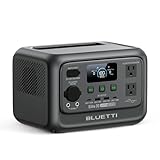
- [288Wh On-the-Go Power] - Only 9.4 lbs lightweight, carry it anywhere during storms! 288Wh capacity meets daily & outdoor needs—camping, road trips, beach visits, or home emergencies. Extend your smart green energy life to every corner of your ideal lifestyle with this compact entry-level power station.
- [600W Continuous & 1500W Surge Power] - Get a full 600W output—twice as much as others. When you need serious power, activate Power Lifting Mode for 1500W power (vs. the typical 600W). It runs everything from essential camping lights, speakers, and car fridges to critical devices like laptops and CPAP machines and even a small kettle or toaster—ideal for stormy days at home or outdoor trips.
- [50% Lower Power Consumption] - Upgraded UltraCell tech & smart cooling system cut power consumption by 50%. Enhances overall energy efficiency, extends device runtime. Excellent durability & environmental adaptability for extreme outdoor climates and long-term operation.(Standby power only 4.5W, DC 5W, AC 8W)
- [8 Charging Modes & 380W Fast Wall Charge] - Supports AC wall charge (380W/200W adjustable), solar, car charging, etc. 0-80% in 45 mins, 0-100% in 70 mins (battery-safe). Match PV60L solar panel for on-the-go recharging. Flexible charging solutions for city, wilderness, daily or emergency scenarios.
- [Reliable UPS] - Never lose data or stop your devices during winter storms/blackouts! 10ms ultra-fast UPS switch protects CPAP, laptops, routers—critical for home emergencies when power cuts suddenly.
Large projects may require new substations, distribution equipment, transmission upgrades, generation or power purchases. If a project is delayed, downsized or canceled after that infrastructure is built, unused capacity can become a stranded asset. Conversely, refusing a viable project could leave existing industrial infrastructure underused and cost a community jobs and tax revenue.
The governor’s Executive Order 5 directs state agencies to examine supply costs, transmission and distribution costs, reliability and stranded-asset risk. It does not declare that Maine has an immediate statewide shortage or that data centers have caused blackouts.
Who should pay for upgrades?
For residents and small businesses, the central ratepayer question is whether a new data center pays the incremental cost of serving it or whether some costs are spread across utility customers. Important issues include:
What’s actually slowing this PC down?
Pick the symptom - the matching free tool is one click away.
- the price of a dedicated substation or interconnection;
- transmission costs allocated through the ISO New England market;
- minimum-demand commitments, collateral or take-or-pay obligations if a project does not materialize;
- special tariffs, impact fees or other charges for unusually large loads; and
- whether flexible computing, batteries or curtailment can reduce peak-system costs.
Executive Order 5 calls for mechanisms ensuring that costs attributable to data-center development are borne by the entities creating them. That is a policy direction, not proof that Maine ratepayers are currently paying for a particular facility. Any such conclusion would require a utility filing or Public Utilities Commission decision.
Rank #4

- Powerful yet Compact: Boasting a 1,500W AC output and a 3,000W surge peak, the Solar Generator 1000 V2 can power multiple appliances, including AC units, fridges, and electric pots. With a 1,070Wh capacity and a lightweight build of only 23.8 lbs, along with a foldable handle, it makes an excellent companion for outdoor camping, road trips, or emergencies.
- One Hour Fast Charging: Charge your Explorer 1000 v2 Portable Power Station from 0% to 100% battery level in just one hour with emergency charging activated via the Jackery App. It defaults to 1.7 hours for a full charge to optimize battery health. Engineered with advanced ChargeShield 2.0 technology, this power station charges safer, faster, and smarter.
- 10 Year Lifespan: The Explorer 1000 v2 portable power station is equipped with a durable LFP battery, maintaining over 70% of its original capacity even after 4,000 charge cycles, offering longevity exceeding 10 years.
- Tailored for Versatility: Featuring two USB-C ports, one USB-A port, one DC car port, and three pure sine wave AC ports, along with LED lights, the Solar Generator 1000 V2 is capable of charging multiple devices simultaneously, meeting power needs in various scenarios. PD 100W fast USB-C charging ensures a rapid charging speed, even without power adapters.
- Smart App Control: Effortlessly switch between different charging modes with Jackery’s App—including one hour emergency charging from 0 to 100%, 30 dB quiet overnight charging mode, and energy efficiency mode. Maximize the freedom to adjust the power station to meet your needs.
Environmental impacts extend beyond electricity
Project-specific review is essential because data centers do not all have the same footprint. Cooling design determines whether water use is low, intermittent or substantial. Regulators may need data on daily maximum and annual water consumption, drought conditions, discharge and water-quality effects.
Other issues include backup diesel or gas generators, emissions during outages or grid emergencies, cooling-equipment noise, waste heat, land disturbance, traffic, emergency response, transmission lines and substations. Renewable-energy purchases may reduce some carbon impacts, but they do not automatically eliminate peak-load, wiring, water or local infrastructure effects.
The advisory council’s mandate expressly includes water use, emissions, land use, natural resources and host-community impacts.
Free tools Windows power users keep installed
One-click scans. No signup required.
What rules still apply?
The veto did not create a regulatory vacuum. Proposed facilities remain subject to utility service and interconnection procedures, Public Utilities Commission oversight where applicable, environmental permitting, water and natural-resource requirements, land-use and local permitting, and reliability standards. Mills’ veto message says projects remain subject to federal and state energy-interconnection requirements and Maine environmental standards.
Best Value
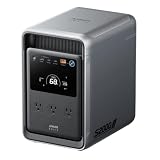
- 𝐔𝐩 𝐭𝐨 𝟑𝟓-𝐇𝐨𝐮𝐫 𝐅𝐫𝐢𝐝𝐠𝐞 𝐁𝐚𝐜𝐤𝐮𝐩: With 6W idle power draw and 10% higher efficiency, this power station runs 20% longer than other 2kWh systems, keeping your fridge powered for 35 hours.
- 𝟏𝟎,𝟎𝟎𝟎-𝐂𝐲𝐜𝐥𝐞 𝐋𝐅𝐏 𝐁𝐚𝐭𝐭𝐞𝐫𝐲: Powered by 314Ah LFP cells, S2000 has a 15-year lifespan, equivalent to 10,000 charge cycles.
- 𝐒𝐦𝐚𝐥𝐥𝐞𝐬𝐭 𝐚𝐧𝐝 𝐋𝐢𝐠𝐡𝐭𝐞𝐬𝐭 𝟐𝐤𝐖𝐡 𝐏𝐨𝐰𝐞𝐫 𝐒𝐭𝐚𝐭𝐢𝐨𝐧: 30% smaller and 25% lighter than the industry average, this power station measures just 8.2 × 11.1 × 12.7 in and weighs only 35.7 lbs.
- 𝐏𝐨𝐰𝐞𝐫𝐬 𝟗𝟗% 𝐨𝐟 𝐇𝐨𝐦𝐞 𝐄𝐬𝐬𝐞𝐧𝐭𝐢𝐚𝐥𝐬: 1,500W continuous output and 3,000W peak output keep nearly every essential appliance running. Actual runtime will vary depending on your refrigerator model, usage habits, and ambient temperature.
- 𝟔 𝐖𝐚𝐲𝐬 𝐭𝐨 𝐑𝐞𝐜𝐡𝐚𝐫𝐠𝐞: Supports up to 400W solar input. Power up via AC + solar, a wall outlet, a generator, solar panels, an alternator charger, or a car outlet—anytime, anywhere.
That does not mean Maine has one comprehensive data-center siting statute or a guaranteed formula for assigning every system cost to a developer. It means projects must proceed through existing, sometimes separate, reviews while broader policy is developed.
The advisory council and next decision point
Executive Order 5 created the Maine Data Center Advisory Council on April 29, 2026. The 15-person body includes state agencies, the Public Utilities Commission, the Public Advocate, municipal and tribal interests, utilities, environmental advocates and other stakeholders. It must send recommendations to the governor and Legislature by January 29, 2027.
The Department of Energy Resources is coordinating with the PUC on ratepayer-protection strategies. The department’s council page posts meetings and materials, and the PUC has opened a docket to gather information about how existing processes handle large data centers.
Quick wins for a faster PC:
Repair Windows errors before they cause bigger problemsFix Now →Fix the driver behind crashes, sound loss and screen glitchesFind Drivers →Clear out junk files and repair common Windows errorsFree Scan →The council can recommend policy; it is not itself a moratorium authority or a permitting agency. New legislation, PUC decisions, utility filings and local permits will determine what changes actually take effect.
Questions Maine’s future rules must answer
- How is load measured? Nameplate, contracted, peak and total-facility demand produce different results.
- How are phases and expansions treated? Rules should prevent artificial threshold avoidance while recognizing genuine staged construction.
- What financial security is required? Developers may need guarantees for upgrades if construction is delayed or canceled.
- How are behind-the-meter resources counted? Gas or diesel generation, batteries and solar can change grid imports without eliminating local impacts.
- What information is public? Regulators need enough data to test costs and reliability while protecting legitimate commercial confidentiality.
- What makes a project worthwhile locally? Construction jobs, permanent employment, taxes, incentives and public infrastructure costs should be evaluated together.
What residents and officials should watch
- Advisory-council meetings, draft recommendations and the January 29, 2027 report.
- PUC docket filings and proposed rate designs or developer cost guarantees.
- Utility interconnection requests and transmission or substation plans.
- Permits and construction activity at the Jay site.
- Any legislation introduced after the council’s recommendations.
The Bottom Line
Bottom line: Maine did not put a statewide brake on large data centers. The proposed 20-MW moratorium died when lawmakers sustained Gov. Mills’s veto. The state’s next test is whether its advisory council and PUC process can protect ratepayers and the grid without shutting out economically significant projects such as the proposed Jay redevelopment.
Quick Recap
Product prices and availability are accurate as of the date/time indicated and are subject to change. Any price and availability information displayed on Amazon at the time of purchase will apply.



