Some links on this page are affiliate links: if you buy through them we may earn a commission, at no extra cost to you.
Jefferies did predict a $50 increase across Apple’s iPhone 17 lineup—but that was an analyst forecast, not an Apple announcement, and Apple’s eventual U.S. pricing did not follow that pattern exactly. Apple currently lists the standard iPhone 17 from $799, while the new iPhone Air and iPhone 17 Pro occupy different price and feature positions.
What Jefferies predicted
On July 30, 2025, Jefferies analyst Edison Lee reportedly forecast that Apple would raise prices by $50 across the iPhone 17 family. The forecast covered the iPhone 17, iPhone Air, iPhone 17 Pro, and iPhone 17 Pro Max.
The report, covered by MacRumors, attributed the expected increase to rising component costs and China-related tariffs. Jefferies also suggested Apple could pair higher prices with new features and design changes. Lee maintained a Hold rating on Apple stock and cited 22% year-over-year growth in telecommunications equipment, reportedly the strongest result in six quarters.
Do these 3 things before closing this tab:
1Fix the driver behind crashes, sound loss and screen glitches2Clear out junk files and repair common Windows errors3Scan for outdated or missing drivers - takes under a minuteThose points were analyst expectations—not confirmed Apple pricing. The wording “may see” and “expected” reflected uncertainty, and Apple had not announced a blanket $50 increase when the report was published.
#1 Best Overall
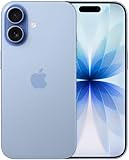
- This phone is unlocked and compatible with any carrier of choice on GSM and CDMA networks (e.g. AT&T, T-Mobile, Sprint, Verizon, US Cellular, Cricket, Metro, Tracfone, Mint Mobile, etc.).
- Please check with your carrier to verify compatibility.
- When you receive the phone, insert a SIM card from a compatible carrier. Then, turn it on, connect to Wi-Fi, and follow the on screen prompts to activate service.
- The device does not come with headphones or a SIM card. It does include a generic (Mfi certified) charger and charging cable.
- Tested for battery health and guaranteed to have a minimum battery capacity of 80%.
Apple’s eventual U.S. prices
Apple’s later retail listings show why a single “$50 across the lineup” summary is too broad:
| Model | Apple-listed starting price | Meaningful comparison |
|---|---|---|
| iPhone 17 | $799 | Matches the $799 headline starting price cited for the iPhone 16 in the original report; it is not a $50 increase. |
| iPhone Air | $999 | A new model occupying the former Plus-tier position, not a same-name iPhone 16 Plus successor. |
| iPhone 17 Pro | $1,099 | $100 above the $999 iPhone 16 Pro starting price cited in the 2025 coverage. |
| iPhone 17 Pro Max | Varies by model and storage | Apple’s purchase page combines Pro and Pro Max configurations, so capacity-specific comparisons are necessary. |
Apple’s current U.S. pages list the iPhone Air from $999 and the iPhone 17 Pro range from $1,099. These are current retail listings, not necessarily the prices available when Jefferies issued its forecast.
Why the comparison is more complicated than $50
The iPhone Air is not simply an iPhone 17 Plus
Apple introduced the iPhone Air in the position previously associated with the Plus tier, but it changed the product itself. Apple describes it as a 6.5-inch phone with an A19 Pro chip, titanium frame, 18-megapixel Center Stage front camera, and a single 48-megapixel Fusion camera system.
What’s actually slowing this PC down?
Pick the symptom - the matching free tool is one click away.
That makes a direct iPhone Air-versus-iPhone 16 Plus comparison imperfect. The Air’s price reflects a different design and feature mix, so it should not be described as an iPhone 17 Plus costing $999.
Rank #2
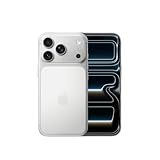
- This phone is unlocked and compatible with any carrier of choice on GSM and CDMA networks (e.g. AT&T, T-Mobile, Sprint, Verizon, US Cellular, Cricket, Metro, Tracfone, Mint Mobile, etc.).
- Please check with your carrier to verify compatibility.
- When you receive the phone, insert a SIM card from a compatible carrier. Then, turn it on, connect to Wi-Fi, and follow the on screen prompts to activate service.
- The device does not come with headphones or a SIM card. It does include a generic (Mfi certified) charger and charging cable.
Storage can change the apparent increase
Apple’s “from” price is only the entry point. The current store flow lists the iPhone 17’s displayed configurations from $829 for 256GB and $1,029 for 512GB. The iPhone Air is listed at $999 for 256GB, $1,199 for 512GB, and $1,399 for 1TB.
The combined Pro purchase page shows different prices by model and capacity, including configurations at $1,099, $1,199, $1,299, $1,399, $1,499, $1,599, and as high as $1,999. A comparison that uses different storage tiers can make a product change look like a price increase—or hide one.
MSRP is not the same as the effective price
Apple’s advertised price is different from what a buyer may ultimately pay through a carrier, trade-in, or installment plan. The Apple Store currently displays conditional carrier savings of up to hundreds of dollars, including offers advertised at up to $800, $999, or more depending on the model and carrier.
Free tools Windows power users keep installed
One-click scans. No signup required.
Those offers may require an eligible plan, a new line, qualifying financing, a trade-in, or monthly bill credits over a multiyear period. A phone advertised as “free” is not an unconditional $0 purchase if the discount depends on staying with a carrier and receiving future credits.
Rank #3

- This phone is unlocked and compatible with any carrier of choice on GSM and CDMA networks (e.g. AT&T, T-Mobile, Sprint, Verizon, US Cellular, Cricket, Metro, Tracfone, Mint Mobile, etc.).
- Please check with your carrier to verify compatibility.
- When you receive the phone, insert a SIM card from a compatible carrier. Then, turn it on, connect to Wi-Fi, and follow the on screen prompts to activate service.
- The device does not come with headphones or a SIM card. It does include a generic (Mfi certified) charger and charging cable.
- Tested for battery health and guaranteed to have a minimum battery capacity of 80%.
Did tariffs cause the final prices?
That has not been established by the cited evidence. Jefferies linked its forecast to component-cost pressure and China-related tariffs, but Apple did not publicly confirm that tariffs alone determined the final U.S. prices.
The careful conclusion is that tariffs and supply-chain costs were part of Jefferies’ rationale—not a verified explanation for every price Apple eventually published. It would be inaccurate to say Apple directly passed a tariff bill to consumers without Apple confirming that claim.
What the specifications add to the price discussion
Apple lists the standard iPhone 17 with an A19 chip, 6.3-inch display, ProMotion, a 48-megapixel Dual Fusion camera system, an 18-megapixel Center Stage camera, up to 30 hours of video playback, and Apple Intelligence.
Recommended Free Tools
The Air emphasizes thinness and design, with an A19 Pro chip, titanium frame, 6.5-inch display, and a simpler single-camera system. The iPhone 17 Pro adds an A19 Pro chip, aluminum unibody, triple 48-megapixel Pro Fusion cameras, USB 3 support, and up to 39 hours of video playback.
Rank #4

- This phone is unlocked and compatible with any carrier of choice on GSM and CDMA networks (e.g. AT&T, T-Mobile, Sprint, Verizon, US Cellular, Cricket, Metro, Tracfone, Mint Mobile, etc.).
- Please check with your carrier to verify compatibility.
- When you receive the phone, insert a SIM card from a compatible carrier. Then, turn it on, connect to Wi-Fi, and follow the on screen prompts to activate service.
- The device does not come with headphones or a SIM card. It does include a generic (Mfi certified) charger and charging cable.
- Tested for battery health and guaranteed to have a minimum battery capacity of 80%.
These differences help explain why a lineup-wide dollar comparison is limited. They do not, by themselves, prove that Apple used any particular feature to justify a price.
Independent reader supportYour contribution helps us test, update, and keep practical guides available for everyone.How buyers should evaluate the cost
If you want the lowest Apple-listed entry price
The standard iPhone 17, listed from $799, is the clearest choice. Its headline price did not rise by the $50 Jefferies predicted when compared with the $799 iPhone 16 baseline cited in the 2025 report.
If you are considering an iPhone 16
A discounted iPhone 16 may offer better value if its lower sale price outweighs the iPhone 17’s newer hardware and features. Compare the actual sale price, storage capacity, trade-in value, and expected ownership period rather than relying on launch prices alone.
If you want a larger, thinner design
The $999 iPhone Air is aimed at buyers who value its 6.5-inch display, thin design, and A19 Pro chip. It is not automatically the best value for everyday use, particularly if you would benefit more from a lower-priced standard model or a Pro camera system.
Best Value

- This phone is unlocked and compatible with any carrier of choice on GSM and CDMA networks (e.g. AT&T, T-Mobile, Sprint, Verizon, US Cellular, Cricket, Metro, Tracfone, Mint Mobile, etc.).
- Please check with your carrier to verify compatibility.
- When you receive the phone, insert a SIM card from a compatible carrier. Then, turn it on, connect to Wi-Fi, and follow the on screen prompts to activate service.
- The device does not come with headphones or a SIM card. It does include a generic (Mfi certified) charger and charging cable.
If cameras and storage matter most
The iPhone 17 Pro or Pro Max may justify the higher price for buyers who will use the Pro camera system, need more storage, or want the highest-end performance. Compare the same capacity across models before deciding that one generation is more expensive.
If you are considering carrier financing
- Write down the phone’s full retail price.
- Calculate the total installment payments.
- Check the required plan, new-line requirement, trade-in condition, and bill-credit period.
- Confirm what happens to remaining credits if you switch carriers or pay off the phone early.
- Compare the carrier’s total cost with Apple’s unlocked purchase path.
Apple says an iPhone bought directly from Apple is generally unlocked, while a carrier-financed phone may remain locked until it is paid in full. U.S.-purchased iPhone 17-family models also use eSIM rather than a physical SIM tray, which matters to travelers and customers whose destination carrier does not support eSIM.
Other costs to include
Apple’s displayed prices exclude taxes. The real ownership cost may also include a case, charger, cellular service, AppleCare, and financing costs or obligations. AppleCare pricing is model- and plan-specific; AppleCare One is listed at $19.99 per month for three Apple devices, with additional devices at $5.99 per month. See Apple’s AppleCare page for current coverage and checkout pricing.
If you buy directly from Apple, its free Personal Setup service can help with transferring data and configuring the phone. That is a useful convenience, but it should not be treated as a reason to pay substantially more than an equivalent purchase elsewhere.
The verdict
Jefferies’ July 2025 forecast was a legitimate analyst prediction, but it was not an Apple announcement and it was not an exact description of Apple’s final U.S. pricing. The standard iPhone 17 remained at a $799 headline starting price, the iPhone 17 Pro started $100 above the iPhone 16 Pro baseline cited in the report, and the iPhone Air introduced a new comparison in place of the Plus tier.
For buyers, the useful question is not whether every iPhone rose by $50. Compare the same model tier and storage capacity, separate unlocked MSRP from carrier promotions, and calculate the full cost of financing and service.
Quick Recap
Product prices and availability are accurate as of the date/time indicated and are subject to change. Any price and availability information displayed on Amazon at the time of purchase will apply.



