Free tools Windows power users keep installed
One-click scans. No signup required.
Some links on this page are affiliate links: if you buy through them we may earn a commission, at no extra cost to you.
Apple’s iPhone prices have not climbed in a straight line. The U.S. entry point has stayed within a relatively narrow range at various times, while Apple expanded the premium tier, changed base storage, and shifted from carrier-subsidized prices to full retail, installments, trade-ins, and leasing. The fairest comparisons separate a phone’s launch price from how customers paid for it—and compare storage and model tier as well as dollars.
U.S. iPhone launch prices by generation
The table lists advertised U.S. starting prices before sales tax. Early prices generally required a two-year carrier contract; later prices are full-retail launch prices. These are not identical products: screen size, storage, cameras, and included features changed substantially. The historical archive of Apple announcements is available at Apple’s iPhone newsroom archive; early pricing history, including the original iPhone’s price cut, is summarized in the History of the iPhone.
| Year | Model | U.S. launch starting price | Base storage | Price basis |
|---|---|---|---|---|
| 2007 | iPhone | $499 (4GB); $599 (8GB) | 4GB / 8GB | Two-year AT&T contract |
| 2008 | iPhone 3G | $199 (8GB); $299 (16GB) | 8GB / 16GB | Subsidized two-year contract |
| 2009 | iPhone 3GS | $199 | 16GB | Subsidized contract |
| 2010 | iPhone 4 | $199 | 16GB | Subsidized contract |
| 2011 | iPhone 4S | $199 | 16GB | Subsidized contract |
| 2012 | iPhone 5 | $199 | 16GB | Subsidized contract |
| 2013 | iPhone 5c | $99 | 16GB | Subsidized contract |
| 2013 | iPhone 5s | $199 | 16GB | Subsidized contract |
| 2014 | iPhone 6 | $199 | 16GB | Subsidized contract |
| 2014 | iPhone 6 Plus | $299 | 16GB | Subsidized contract |
| 2015 | iPhone 6s | $199 | 16GB | Subsidized contract |
| 2015 | iPhone 6s Plus | $299 | 16GB | Subsidized contract |
| 2016 | iPhone SE | $399 | 16GB | Full retail |
| 2016 | iPhone 7 | $649 | 32GB | Full retail |
| 2016 | iPhone 7 Plus | $769 | 32GB | Full retail |
| 2017 | iPhone 8 | $699 | 64GB | Full retail |
| 2017 | iPhone 8 Plus | $799 | 64GB | Full retail |
| 2017 | iPhone X | $999 | 64GB | Full retail |
| 2018 | iPhone XR | $749 | 64GB | Full retail |
| 2018 | iPhone XS | $999 | 64GB | Full retail |
| 2018 | iPhone XS Max | $1,099 | 64GB | Full retail |
| 2019 | iPhone 11 | $699 | 64GB | Full retail |
| 2019 | iPhone 11 Pro | $999 | 64GB | Full retail |
| 2019 | iPhone 11 Pro Max | $1,099 | 64GB | Full retail |
| 2020 | iPhone SE | $399 | 64GB | Full retail |
| 2020 | iPhone 12 mini | $699 | 64GB | Full retail |
| 2020 | iPhone 12 | $799 | 64GB | Full retail |
| 2020 | iPhone 12 Pro | $999 | 128GB | Full retail |
| 2020 | iPhone 12 Pro Max | $1,099 | 128GB | Full retail |
| 2021 | iPhone 13 mini | $699 | 128GB | Full retail |
| 2021 | iPhone 13 | $799 | 128GB | Full retail |
| 2021 | iPhone 13 Pro | $999 | 128GB | Full retail |
| 2021 | iPhone 13 Pro Max | $1,099 | 128GB | Full retail |
| 2022 | iPhone SE | $429 | 64GB | Full retail |
| 2022 | iPhone 14 | $799 | 128GB | Full retail |
| 2022 | iPhone 14 Plus | $899 | 128GB | Full retail |
| 2022 | iPhone 14 Pro | $999 | 128GB | Full retail |
| 2022 | iPhone 14 Pro Max | $1,099 | 128GB | Full retail |
| 2023 | iPhone 15 | $799 | 128GB | Full retail |
| 2023 | iPhone 15 Plus | $899 | 128GB | Full retail |
| 2023 | iPhone 15 Pro | $999 | 128GB | Full retail |
| 2023 | iPhone 15 Pro Max | $1,199 | 256GB | Full retail |
| 2024 | iPhone 16 | $799 | 128GB | Full retail |
| 2024 | iPhone 16 Plus | $899 | 128GB | Full retail |
| 2024 | iPhone 16 Pro | $999 | 128GB | Full retail |
| 2024 | iPhone 16 Pro Max | $1,199 | 256GB | Full retail |
| 2025 | iPhone 17 | not stated in cited launch source | 256GB | See Apple’s launch announcement |
| 2025 | iPhone Air | not stated in cited launch source | not stated | See Apple’s announcement |
| 2025 | iPhone 17 Pro | $1,099 | 256GB in Apple’s published example | See Apple’s 2026 example |
| 2025 | iPhone 17 Pro Max | not stated | not stated | Not stated in the cited sources |
| 2026 | iPhone 17e | not stated | not stated | Current exact price not stated in cited source |
Why the original iPhone’s $499 price is not a modern-price comparison
The 2007 iPhone launched at $499 for 4GB and $599 for 8GB, but those were prices tied to a two-year AT&T contract—not modern unlocked retail prices. Apple discontinued the 4GB version after a few months and cut the 8GB model from $599 to $399 in September 2007. After customer complaints, Apple offered affected buyers a $100 store credit. The iPhone 3G followed in 2008 with a $199 advertised price for 8GB and $299 for 16GB under a subsidized contract, shifting more of the apparent cost away from the checkout price and into the carrier relationship. Details are summarized in the iPhone history reference.
A complete ownership comparison would include the required service plan as well as the handset. The available figures here do not establish the incremental plan cost attributable to owning an iPhone versus another phone, so the $199 early-contract price cannot be converted into a reliable all-in ownership total from handset prices alone.
#1 Best Overall
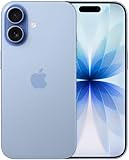
- This phone is unlocked and compatible with any carrier of choice on GSM and CDMA networks (e.g. AT&T, T-Mobile, Sprint, Verizon, US Cellular, Cricket, Metro, Tracfone, Mint Mobile, etc.).
- Please check with your carrier to verify compatibility.
- When you receive the phone, insert a SIM card from a compatible carrier. Then, turn it on, connect to Wi-Fi, and follow the on screen prompts to activate service.
- The device does not come with headphones or a SIM card. It does include a generic (Mfi certified) charger and charging cable.
- Tested for battery health and guaranteed to have a minimum battery capacity of 80%.
How the meaning of “iPhone price” changed
2007–2012: low advertised prices with carrier contracts
From iPhone 3G through the iPhone 5, the familiar $199 starting price generally meant the customer accepted a two-year carrier contract. It was an upfront device price, not evidence that the phone’s full retail cost was $199. The subsidy model made the purchase appear more affordable at the counter while tying the customer to a service arrangement.
2013–2016: more models and a transition toward full retail
The iPhone 5c and 5s brought two price positions into one launch cycle: a lower-cost plastic model and a premium flagship. The iPhone SE added a deliberately lower-priced option in 2016. That year’s iPhone 7 launch table also shows the move to full-retail pricing, rather than the old contract-price convention.
Installments, promotions, and monthly prices
As carrier device installments and early-upgrade offers replaced traditional subsidies, monthly payments became more prominent. A monthly figure may be a device installment, a lease, or a bill credit that depends on a trade-in, eligible plan, or staying with a carrier for a set term. It is not the same as the phone’s purchase price. For a true cost comparison, count device payments, taxes, required plan costs and protection, then subtract credits and rebates.
Windows Errors? Fix Them Before They Spread
Repair common Windows errors and clear accumulated junk for a smoother, more stable PC - no reinstall needed.Free scan · no reinstallCrashes, No Sound, or Screen Glitches?
Random freezes, missing sound and display glitches usually trace back to one bad driver. Find and replace yours safely.Free scan · under a minuteRank #2
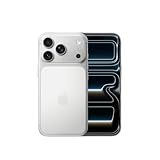
- This phone is unlocked and compatible with any carrier of choice on GSM and CDMA networks (e.g. AT&T, T-Mobile, Sprint, Verizon, US Cellular, Cricket, Metro, Tracfone, Mint Mobile, etc.).
- Please check with your carrier to verify compatibility.
- When you receive the phone, insert a SIM card from a compatible carrier. Then, turn it on, connect to Wi-Fi, and follow the on screen prompts to activate service.
- The device does not come with headphones or a SIM card. It does include a generic (Mfi certified) charger and charging cable.
The iPhone X created a premium price tier, not a $1,000 floor
The 2017 iPhone X began at $999, while the iPhone 8 started at $699. That split was strategically important: Apple could charge close to four figures for a redesigned premium model with OLED and Face ID without making every new iPhone a $1,000 product. Subsequent XR, XS, Pro, Pro Max, Plus, and mini models widened the choice of size, features, and price. The central trend is therefore a higher premium ceiling and a broader ladder, not a uniform increase across the whole range.
Did the regular iPhone keep getting more expensive?
Not steadily. Standard-model U.S. launch pricing stayed around $699–$799 across many years even as the phones changed in size, cameras, processors, storage, and features. For instance, the iPhone 11 launched at $699 in 2019, while the iPhone 16 launched at $799 in 2024. Apple also reduced the price of an older generation when it remained on sale: the iPhone 16 later became a $699 previous-generation option, according to MacRumors’ February 4, 2026 report. A buyer’s actual options in any year may therefore include a new flagship, a discounted older model, refurbished stock, or a carrier offer—not just the newest launch price.
Storage changes what a price comparison means
Storage is one of the clearest reasons a simple dollar timeline can mislead. The original iPhone began at 4GB or 8GB; later base configurations moved through 16GB, 32GB, 64GB, and 128GB. The iPhone 15 Pro Max and iPhone 16 Pro Max each started at $1,199 with 256GB, double the 128GB entry storage of their Pro counterparts. Apple says the iPhone 17 starts at 256GB, twice the previous generation’s entry storage, in its iPhone 17 launch announcement.
Rank #3

- This phone is unlocked and compatible with any carrier of choice on GSM and CDMA networks (e.g. AT&T, T-Mobile, Sprint, Verizon, US Cellular, Cricket, Metro, Tracfone, Mint Mobile, etc.).
- Please check with your carrier to verify compatibility.
- When you receive the phone, insert a SIM card from a compatible carrier. Then, turn it on, connect to Wi-Fi, and follow the on screen prompts to activate service.
- The device does not come with headphones or a SIM card. It does include a generic (Mfi certified) charger and charging cable.
- Tested for battery health and guaranteed to have a minimum battery capacity of 80%.
Price per gigabyte can illustrate the changing storage bundle, but it is not a measure of overall value: it treats storage as if it were the only product feature and ignores performance, camera, display, and support differences. The cited figures permit a straightforward calculation for some models—for example, a $1,199 iPhone 15 Pro Max with 256GB is about $4.68 per GB at launch—but do not establish a consistent, like-for-like series across generations. There is no defensible single percentage for how much the iPhone became more expensive after adjusting for storage without choosing comparable tiers and accounting for all the other product changes.
Nominal prices versus inflation-adjusted prices
A dollar amount from 2007 has less purchasing power than the same nominal amount today, so comparing $499 in 2007 with a modern price without inflation context understates the earlier price’s real value. A precise inflation comparison must specify the CPI series, start and end months, and calculation date; a launch-month comparison will differ from one using annual averages. The U.S. Bureau of Labor Statistics CPI Inflation Calculator provides a government-backed method, but the available material does not provide completed calculations for the relevant launch months. Accordingly, no specific inflation-adjusted dollar figures or real-price percentage changes are asserted here.
How Apple expanded the price ladder
Apple moved from a single flagship concept toward a portfolio that can address different budgets and feature preferences within one generation. The SE and e models target buyers seeking a less expensive entry; mini models offered smaller phones; Plus and Pro Max models added larger-screen options; Pro models occupied the premium tier; and the iPhone Air adds another premium form factor. These tiers are not interchangeable: lower-priced devices may differ in display, camera system, size, or other hardware. Apple’s 2026 U.S. announcement describes the iPhone 17e as value-oriented, iPhone 17 as mainstream, Air as a thin premium design, and the Pro models as its highest-performance options.
Rank #4

- This phone is unlocked and compatible with any carrier of choice on GSM and CDMA networks (e.g. AT&T, T-Mobile, Sprint, Verizon, US Cellular, Cricket, Metro, Tracfone, Mint Mobile, etc.).
- Please check with your carrier to verify compatibility.
- When you receive the phone, insert a SIM card from a compatible carrier. Then, turn it on, connect to Wi-Fi, and follow the on screen prompts to activate service.
- The device does not come with headphones or a SIM card. It does include a generic (Mfi certified) charger and charging cable.
- Tested for battery health and guaranteed to have a minimum battery capacity of 80%.
This segmentation lets Apple retain a mainstream starting point while offering buyers who want larger screens or more advanced hardware a path to spend more. For buyers, it makes the question “How much is an iPhone?” incomplete unless it also specifies model tier, storage, and whether the price is a launch MSRP or a discounted offer.
Independent reader supportYour contribution helps us test, update, and keep practical guides available for everyone.What an iPhone costs in the United States in 2026
As of Apple’s July 2026 U.S. announcement, its lineup includes iPhone 17e, iPhone 17, iPhone Air, iPhone 17 Pro, and iPhone 17 Pro Max. Exact live purchase prices for every model are not established by the cited announcement; check Apple’s U.S. iPhone Store for current configurations and availability. U.S. prices generally exclude sales tax, while international prices may reflect VAT, exchange rates, tariffs, and local pricing decisions.
Quick wins for a faster PC:
Fix the driver behind crashes, sound loss and screen glitchesFind Drivers →Clear out junk files and repair common Windows errorsFree Scan →Scan for outdated or missing drivers - takes under a minuteDriver Scan →Outright purchase and financing
Apple says its U.S. iPhone Upgrade Program and iPhone Payments are no longer offered. Its stated alternatives include outright purchase, Apple Card Monthly Installments, carrier financing, and Apple Upgrade. Apple’s published example gives a 256GB iPhone 17 Pro a $1,099 purchase price and a typical 24-month Apple Upgrade lease payment of $31.99 per month before taxes or trade-in credits. The payment is a lease amount, not the phone’s full purchase price or proof of ownership at the end of the term. Apple says approval and carrier selection apply, and early termination can involve substantial fees. See the Apple Upgrade announcement for program terms.
Best Value

- This phone is unlocked and compatible with any carrier of choice on GSM and CDMA networks (e.g. AT&T, T-Mobile, Sprint, Verizon, US Cellular, Cricket, Metro, Tracfone, Mint Mobile, etc.).
- Please check with your carrier to verify compatibility.
- When you receive the phone, insert a SIM card from a compatible carrier. Then, turn it on, connect to Wi-Fi, and follow the on screen prompts to activate service.
- The device does not come with headphones or a SIM card. It does include a generic (Mfi certified) charger and charging cable.
Trade-ins and carrier offers
Trade-in credits can lower a displayed monthly payment, but their value and timing depend on eligibility and the offer terms. Carrier promotions may require a particular plan, new line, qualifying trade-in, or bill credits spread over a fixed period. Add the plan cost for the full promotional period and check what happens if you leave early before treating a phone as “free” or comparing its price with an unlocked device.
Previous-generation and refurbished phones
Older models can be cheaper through Apple’s standard store or refurbished inventory, but those are different price categories from a new-model launch MSRP. Apple’s refurbished store displayed a refurbished iPhone 16 128GB at $619 against a $729 reference price when accessed for this article’s source material; this is a dated inventory snapshot, not a guaranteed current offer. Apple’s product page for that configuration is here, and its refurbished iPhone store can change with stock.
How to compare two iPhone offers by total cost
- Identify the transaction: write down model, storage, purchase price, and whether it is an outright purchase, installment, or lease.
- Add required costs: include taxes and any wireless plan, activation charge, or protection plan required for the offer.
- Subtract only certain credits: count trade-in value and rebates only if you qualify, and note whether credits arrive upfront or over monthly bills.
- Check the commitment: read the term, early-upgrade or lease conditions, and any amount due if you switch carriers before credits finish.
- Compare like configurations: match storage and model tier where possible, then consider display, camera, battery, and support needs rather than relying on price per gigabyte alone.
A useful framework is: total cost = device payments + taxes + required plan costs + protection costs − trade-in credit − rebates. For an unlocked outright purchase, exclude carrier-plan costs that are not required by the transaction.
Do these 3 things before closing this tab:
1Fix the driver behind crashes, sound loss and screen glitches2Clear out junk files and repair common Windows errors3Scan for outdated or missing drivers - takes under a minuteQuick Recap
Product prices and availability are accurate as of the date/time indicated and are subject to change. Any price and availability information displayed on Amazon at the time of purchase will apply.



