Some links on this page are affiliate links: if you buy through them we may earn a commission, at no extra cost to you.
When the iPhone 16 launched in September 2024, waiting made sense if you wanted Apple Intelligence, newer camera features or a phone with more hardware headroom. Buying the iPhone 15 made sense if you could get it at a substantial discount and did not need those upgrades. In 2026, the launch-day choice is history: the iPhone 16 is already an older generation, and Apple’s current U.S. lineup includes the iPhone 17 and iPhone 17e. Compare those models before paying near-current-generation prices for either older phone.
This comparison uses U.S. launch prices for the original decision and Apple’s displayed U.S. pricing for current context. Prices, stock, promotions and carrier requirements can change.
The short answer
- At launch: Wait for the iPhone 16 if Apple Intelligence, Camera Control, the Action button, macro photography or longer-term hardware headroom mattered to you. Buy the iPhone 15 if it was meaningfully cheaper and your needs were everyday apps, USB-C, Dynamic Island and ordinary photography.
- In 2026: Do not buy a new iPhone 15 at anything close to an iPhone 16’s price. Consider it only at a substantial discount, or from a reputable refurbished seller with clear warranty, battery and return terms. Compare the iPhone 16 with the iPhone 17 and iPhone 17e before deciding.
- For a long ownership period: Favor the newer model if the price gap is modest. Apple does not promise a fixed number of iOS-support years, but the iPhone 16 is a year newer, has a newer chip and supports Apple Intelligence.
The iPhone 16 was announced on September 9, 2024, and became available September 20, 2024 (Apple’s launch announcement). Its upgrades were meaningful in processor, AI eligibility and controls, but it was not a major screen or design overhaul.
Price: compare the amount you will actually pay
At U.S. launch, both phones started at $799 for 128GB. That made the iPhone 16 a straightforward choice at list price; the iPhone 15 became more compelling when retailers and carriers discounted it after the new model arrived.
#1 Best Overall

- 6.1" Super Retina XDR OLED, HDR10, Dolby Vision, 1000nits (typ), 2000nits (HBM), 2556x1179px at 460ppi, 3561mAh Battery
- 128GB 8GB RAM, Apple A18 (3nm), Hexa-core (2x4.04 GHz + 4x2.20 GHz), Apple GPU 5-core, 16‑core Neural Engine
- Rear camera: 48MP, f/1.6, wide + 12MP, f/2.2, ultrawide, Front Camera: 12MP, f/1.9, wide, iOS 18, upgradable to iOS 18.5
- 4G LTE: 1/2/3/4/5/7/8/12/13/14/17/18/19/20/25/26/28/29/30/32/34/38/39/40/41/42/48/53/66/71, 5G: n1/2/3/5/7/8/12/14/20/25/26/28/29/30/38/40/41/48/53/66/70/71/75/76/77/78/79 - Dual eSIM
- Unlocked for freedom to choose your carrier. Compatible with both GSM & CDMA networks. The phone is unlocked to work with all GSM Carriers & CDMA Carriers Including AT&T, T-Mobile, Verizon, Sprint., Etc.
For current context, Apple’s U.S. shopping pages showed the iPhone 16 starting at $699 in the pricing structure available in the cited listings. Apple’s lineup page also showed the iPhone 17 from $799 and iPhone 17e from $599. These are page-specific price signals, not a guarantee of the price or inventory you will see today: storage, purchase method, carrier activation, promotions and region affect the total. The iPhone 15 is not prominently featured in Apple’s current lineup, so do not assume Apple has new stock at a particular price. Check Apple’s current iPhone lineup and the terms on the unlocked iPhone 16 page before purchasing.
When a deal advertises a low monthly cost or a near-zero phone price, separate these amounts:
- Unlocked or connect-later price: what the device costs without qualifying for a carrier offer.
- Carrier-activation price: a conditional price that may require activating service with a specific carrier or plan.
- Trade-in credit: value tied to the eligible device’s condition and offer rules—not an unconditional discount.
- Monthly financing: the payment schedule, which may run for 24 or 36 months.
- Total cost and commitment: device payments plus required service, and whether bill credits stop if you leave early.
A carrier’s advertised discount may depend on a new line, an eligible trade-in and staying through the full bill-credit period. Compare the total you would pay for service and the phone against the unlocked price, not just the headline monthly figure. Apple’s carrier-specific iPhone 16 offer page illustrates why activation and plan terms matter.
Quick wins for a faster PC:
Repair Windows errors before they cause bigger problemsFix Now →Scan for outdated or missing drivers - takes under a minuteDriver Scan →What changes between the iPhone 15 and iPhone 16?
| Feature | iPhone 15 | iPhone 16 |
|---|---|---|
| U.S. launch | 2023 | Announced September 9, 2024; available September 20, 2024 |
| Chip | A16 Bionic | A18 |
| Apple Intelligence | Not supported | Supported hardware; feature availability varies |
| Display | 6.1-inch Super Retina XDR OLED; Dynamic Island | 6.1-inch Super Retina XDR OLED; Dynamic Island |
| Main camera | 48MP; 2x framing from the main sensor | 48MP Fusion; 2x framing from the main sensor |
| Ultrawide camera | 12MP | 12MP with macro capability |
| Controls | Ring/Silent switch; no Camera Control | Action button and Camera Control |
| Storage options | 128GB, 256GB, 512GB | 128GB, 256GB, 512GB |
| Connector | USB-C | USB-C |
Specifications are based on Apple’s iPhone 15 technical specifications, iPhone 16 technical specifications and model comparison. Regional versions may differ, particularly in SIM configuration and cellular features.
The biggest difference: Apple Intelligence eligibility
The standard iPhone 16 is built around the A18 chip and supports Apple Intelligence. The standard iPhone 15’s A16 Bionic does not meet Apple’s supported-hardware requirements for those features. This is a hardware cutoff, not a setting that can be switched on for the iPhone 15.
Rank #2
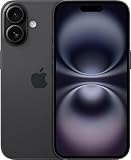
- This pre-owned product is not Apple certified, but has been professionally inspected, tested and cleaned by Amazon-qualified suppliers.
- There will be no visible cosmetic imperfections when held at an arm’s length. There will be no visible cosmetic imperfections when held at an arm’s length.
- This product will have a battery which exceeds 90% capacity relative to new.
- Accessories will not be original, but will be compatible and fully functional. Product may come in generic Box.
- This product is eligible for a replacement or refund within 365 days of receipt if you are not satisfied.
That distinction matters if you expect to use Apple’s writing tools, notification summaries, image-generation features, Visual Intelligence or newer Siri-related capabilities. But buying an iPhone 16 does not guarantee every feature is immediately available: Apple Intelligence depends on software version, language, region, device settings and Apple’s rollout. Apple’s iOS 26 feature documentation also shows that requirements differ by feature: some capabilities cover iPhone 15 and later, while others require iPhone 16 or later.
Pay extra for AI only if you expect to use it. If you do not want generative features, or would rather save money, the iPhone 15 can remain a sensible value at the right price. Both models can run iOS 26, but not every feature in that release is available on every compatible phone.
Windows Errors? Fix Them Before They Spread
Repair common Windows errors and clear accumulated junk for a smoother, more stable PC - no reinstall needed.Free scan · no reinstallOutdated Drivers Are Slowing You Down
One free scan finds every outdated or missing driver and matches the right update for your exact hardware.Free scan · exact hardware matchPerformance and useful life
The A18 is newer than the iPhone 15’s A16 Bionic and gives the iPhone 16 more headroom for demanding tasks and newer on-device features. That does not mean the iPhone 15 is suddenly slow: it remains capable for everyday apps, gaming, photography and ordinary iOS use.
Apple does not publish a fixed guaranteed support end date for each iPhone. The defensible reason to favor the iPhone 16 for a multi-year purchase is that it launched a year later, has a newer chip and supports Apple Intelligence—not a promise that it will receive exactly a certain number of additional updates. Both appear within iOS 26’s compatibility picture, while individual features have their own device requirements.
Camera: useful additions, not a telephoto upgrade
Both phones have a 48MP main camera, and both can offer 2x framing using the central portion of that high-resolution sensor. Neither standard model has a dedicated telephoto lens. Do not treat a 2x crop as equivalent to the optical reach of a Pro model’s separate telephoto camera.
Rank #3

- 6.1" Super Retina XDR OLED, HDR10, 800 nits (HBM), 1200 nits (peak), 2532x1170px at 460ppi, 4005mAh Battery
- 8GB RAM, Apple A18 6-core CPU (2 performance + 4 efficiency cores), Apple GPU 4-core, 16‑core Neural Engine
- Rear camera: 48MP, f/1.6, wide, Front Camera: 12MP, f/1.9, wide, iOS 18.3.1, upgradable to iOS 18.5
- Connectivity: Global 4G LTE, Sub-6 GHz 5G, LTE, Wi-Fi 6, Bluetooth 5.3, NFC, USB-C, Wireless Charging (7.5W). (does not have mmWave 5G or MagSafe or physical SIM card) - Dual eSIM Only
- Unlocked for freedom to choose your carrier. Compatible with both GSM & CDMA networks. The phone is unlocked to work with all GSM Carriers & CDMA Carriers Including AT&T, T-Mobile, Verizon, Straight Talk., Etc.
The iPhone 16 adds a revised camera arrangement, macro photography through its ultrawide camera, spatial photo and video capture, and newer camera and video features. Camera Control offers a quicker way to open the camera and adjust settings. These are useful differences for close-up subjects, people experimenting with spatial capture, or anyone who wants camera controls at hand.
The iPhone 15 remains well suited to daylight photos, everyday 1x and 2x shots, family pictures, travel and social media. A shared megapixel count does not make the cameras identical, but neither should the iPhone 16 be described as delivering a dramatic improvement in every ordinary photo. Processing, lens capabilities and shooting conditions matter alongside resolution.
Controls and everyday feel
The iPhone 15 keeps the familiar physical Ring/Silent switch. The iPhone 16 replaces it with an Action button that can be assigned to a shortcut, such as toggling a setting or launching a function. If you like a configurable shortcut, that can be useful; if you prefer a dedicated mute switch, the iPhone 15 may feel more straightforward.
Camera Control on the iPhone 16 can speed up access to the camera and settings, but it is a workflow improvement rather than a new camera system. You can still open the camera through familiar software shortcuts, and not everyone will prefer a separate control.
The display is much the same
Both phones have a 6.1-inch OLED display with Dynamic Island, a 2556-by-1179-pixel resolution at 460 pixels per inch, HDR support, True Tone and Haptic Touch. The standard iPhone 16 does not add ProMotion, an always-on display, a larger screen or a major resolution increase over the iPhone 15.
Free tools Windows power users keep installed
One-click scans. No signup required.
Rank #4
- This pre-owned product is not Apple certified, but has been professionally inspected, tested and cleaned by Amazon-qualified suppliers.
- There will be no visible cosmetic imperfections when held at an arm’s length. There will be no visible cosmetic imperfections when held at an arm’s length.
- This product will have a battery which exceeds 90% capacity relative to new.
- Accessories will not be original, but will be compatible and fully functional. Product may come in generic Box.
- This product is eligible for a replacement or refund within 365 days of receipt if you are not satisfied.
That makes the iPhone 15 attractive at a deep discount: day-to-day screen quality is broadly similar. Someone upgrading from an older LCD iPhone may notice a substantial improvement with either phone, but an iPhone 15 owner should not expect a major display transformation by moving to the iPhone 16.
Battery, USB-C and SIM considerations
Apple’s controlled playback ratings are up to 20 hours of video playback and 16 hours of streamed video playback for iPhone 15, compared with up to 22 hours of video playback and 18 hours of streamed video playback for iPhone 16. These are Apple test-category figures, not a promise of a particular screen-on time in daily use. Signal strength, brightness, gaming, camera use, background activity and battery condition all affect real-world endurance. Apple rates audio playback at up to 80 hours for each model.
Both phones use USB-C, but that alone does not establish that their data-transfer speeds are identical or that either has fast USB performance. The iPhone 15 specifications list USB 2 transfer speeds of up to 480 Mb/s; check the precise model specification if moving large files over a cable matters to you.
U.S. iPhone 16 models purchased through Apple use eSIM and do not include a physical SIM tray. SIM configuration varies by market, so international buyers should check the exact regional model. Before importing or switching phones, confirm eSIM support with your carrier, along with cellular-band compatibility and warranty coverage. Physical SIM users traveling internationally should verify that the phone and destination carrier will work as expected.
What’s actually slowing this PC down?
Pick the symptom - the matching free tool is one click away.
Choose storage for the way you use the phone
Both generations offer 128GB, 256GB and 512GB configurations. Choose 128GB if you are a light user who streams most media and is comfortable relying on cloud storage. Consider 256GB if you keep a large photo library locally, record a lot of 4K video, install demanding games or plan to keep the phone for several years.
Best Value

- This pre-owned product is not Apple certified, but has been professionally inspected, tested and cleaned by Amazon-qualified suppliers.
- There will be no visible cosmetic imperfections when held at an arm’s length. There will be no visible cosmetic imperfections when held at an arm’s length.
- This product will have a battery which exceeds 80% capacity relative to new.
- Accessories will not be original, but will be compatible and fully functional. Product may come in generic Box.
Compare the cost of the storage tier you actually need. A discounted 128GB iPhone 15 may not be better value than a 256GB iPhone 16 if you will otherwise pay for cloud storage, delete files often or run short of space. Conversely, paying for a larger capacity you will not use is not automatically a good investment.
When the iPhone 15 is the better buy
- It costs substantially less than a comparable iPhone 16 after accounting for storage and purchase terms.
- You do not need Apple Intelligence or the iPhone 16’s newer camera features.
- Your photography is mostly ordinary 1x and 2x shooting.
- You want USB-C and Dynamic Island without paying for the newest available hardware.
- You prefer the physical Ring/Silent switch.
- You find a refurbished unit from a seller that clearly discloses battery condition, parts history, lock status, warranty and return window.
There is no universal discount threshold because storage, warranty, battery health and carrier terms change the value. As a practical rule, if the saving is small, the newer hardware and AI compatibility make the iPhone 16 easier to justify. A deep discount can make the iPhone 15 the better use of your money.
When to choose the iPhone 16 instead
- You want Apple Intelligence hardware support and understand that features still vary by software, language and region.
- You plan to keep the phone for several years and value newer hardware headroom.
- You want the Action button, Camera Control, macro capability or spatial capture.
- The price gap narrows after a legitimate discount or trade-in.
- You are choosing between similar storage configurations and the iPhone 16 costs only modestly more.
In 2026, also compare the iPhone 17 and iPhone 17e. The iPhone 17 is a current-generation alternative at a higher displayed starting price, while the 17e is a lower-cost current-generation option. Their exact value depends on the configuration and current offer, but a current model may make more sense than paying close to current-generation prices for an older iPhone 16.
The Tool Desk
Outbyte Driver Updater FREEScan for outdated or missing drivers - takes under a minuteDriver Scan →Outbyte PC Repair FREERepair Windows errors before they cause bigger problemsFix Now →Buying a refurbished iPhone 15? Check these first
A low sticker price can conceal a weak battery, non-genuine replacement parts, a carrier lock, Activation Lock, a short warranty or cosmetic damage. Before paying, confirm:
- Battery health and whether the battery has been replaced.
- Parts and Service History in the phone’s settings, where available.
- Activation Lock is off and the seller will let you complete setup.
- Whether the phone is carrier-unlocked and compatible with your carrier.
- Exact storage capacity and model number.
- Return window, warranty terms and the seller’s cosmetic grading.
Repairs can also affect water resistance. Do not treat an older phone’s original water-resistance rating as a guarantee after years of use or repair.
Bottom line
The original launch-era advice was conditional: wait for iPhone 16 if Apple Intelligence and its newer controls or camera features mattered; buy iPhone 15 if a real discount outweighed those differences. In 2026, do not wait for the iPhone 16—it has been available since September 2024. Buy an iPhone 15 only when the total price is clearly lower and its limitations suit you. Otherwise compare the iPhone 16’s actual deal with current iPhone 17 options, including the 17e, before committing.
Quick Recap
Product prices and availability are accurate as of the date/time indicated and are subject to change. Any price and availability information displayed on Amazon at the time of purchase will apply.



