PC Slower Than It Used to Be?
A free scan shows the junk files, broken settings and background clutter dragging Windows down - then fixes them in one click.Free scan · Windows 10 & 11Crashes, No Sound, or Screen Glitches?
Random freezes, missing sound and display glitches usually trace back to one bad driver. Find and replace yours safely.Free scan · under a minuteSome links on this page are affiliate links: if you buy through them we may earn a commission, at no extra cost to you.
Intel’s path since the buyout speculation of 2024 has favored selling or monetizing individual assets, not selling the whole company. Intel agreed to sell control of Altera to Silver Lake and later sold additional Mobileye shares, while its CPU and foundry businesses remained part of Intel. Those transactions support the September 2024 view that selective divestitures were more practical than a full acquisition—but they do not prove that more sales are inevitable or that a future buyout is impossible.
What the 2024 buyout speculation did—and did not—establish
On September 25, 2024, EE Times published an analyst-based assessment that Intel was more likely to sell individual businesses than accept a whole-company buyout. The discussion followed reports that Qualcomm had explored a possible acquisition. It was not an announcement of a formal offer or a signed deal; Intel declined to comment on the reports, according to EE Times’ coverage.
The distinction matters: a sale of one subsidiary, a separation of Intel Foundry, a sale of CPU operations, and an acquisition of all of Intel are different transactions, with different buyers, risks, and regulatory questions. The 2024 thesis favored asset-level sales over a buyer taking on the entire company.
Do these 3 things before closing this tab:
1Fix the driver behind crashes, sound loss and screen glitches2Repair Windows errors before they cause bigger problems3Scan for outdated or missing drivers - takes under a minuteWhy a buyer might hesitate to acquire all of Intel
Foundry losses and capital demands
A whole-company buyer would inherit Intel’s manufacturing business along with its product operations. That means factories, process-technology commitments, construction plans, customer-development work, and execution risk—not just chip designs that could be folded into another company.
#1 Best Overall

- Next‑Gen Platform Support: Compatible with Intel 800 Series Chipset‑based motherboards with LGA1851 Socket enabling PCIe 5.0/4.0 and high‑speed DDR5 memory (up to 7200 MT/s).
- High‑Performance Core Configuration: Features up to 24 cores (8 P‑cores + 16 E‑cores) for demanding gaming and creator
- Ultra‑Fast Boost Clocks: Reaches up to 5.5 GHz max turbo frequency for top‑tier responsiveness and performance
- Built for Enthusiasts: Unlocked for performance tuning when paired with Intel Z‑series chipsets, making it ideal for overclockers and power users.
- Robust Power & Thermal Design: Engineered with 125W base power and 250W max turbo power to sustain high‑intensity
EE Times reported that Intel Foundry recorded a $2.8 billion operating loss in the second quarter of 2024, with losses expected to continue at roughly that rate in the following quarter. That is a historical figure from 2024, not a statement of the foundry’s current results. The same article described cost reductions, capital-expenditure cuts, government support, and partner financing as ways to give Intel more runway rather than force an immediate sale (EE Times).
Factories also require large, long-duration investment. A buyer would have to decide whether to keep funding Intel’s manufacturing roadmap and how to balance those obligations against the needs of Intel’s chip-design businesses. That is a more complicated proposition than acquiring a stand-alone product line.
Regulatory and policy exposure
Analysts cited by EE Times expected a Qualcomm-Intel combination to attract substantial antitrust scrutiny, including in China and other jurisdictions. That was an analyst assessment, not a regulatory ruling or a finding that a deal would necessarily be blocked (EE Times).
Rank #2

- Game Without Compromise. Play harder and work smarter with Intel Core 14th Gen processors
- 20 cores (8 P-cores plus 12 E-cores) and 28 threads. Integrated Intel UHD Graphics 770 included
- Up to 5.6 GHz with Turbo Boost Max Technology 3.0 gives you smooth game play, high frame rates, and rapid responsiveness
- Compatible with Intel 600-series (with potential BIOS update) or 700-series chipset-based motherboards
- DDR4 and DDR5 platform support cuts your load times and gives you the space to run the most demanding games
Intel’s manufacturing role also gives the question a policy dimension. Its 2025 annual filing describes government funding arrangements under which warrants could be triggered if Intel ceased to directly or indirectly own at least 51% of its foundry business. The condition does not establish that a sale or separation is impossible, but it shows that changes in foundry control can have contractual consequences (Intel’s 2025 filing).
Combining different businesses
A strategic buyer would need a plan for businesses with different economics and priorities: smartphone, PC, server, and manufacturing operations. In the 2024 discussion, an analyst argued that Intel’s larger business units were difficult to separate because of their ties to the x86 architecture. That is an attributed view of the operational challenge, not proof that separation is technically or legally impossible (EE Times).
Altera is the clearest test of the divestiture thesis
Intel’s Altera transaction closely matched the kind of selective sale discussed in 2024. On April 14, 2025, Intel agreed to sell 51% of Altera to Silver Lake at a stated valuation of $8.75 billion. The transaction closed on September 12, 2025. Intel retained 49%, received approximately $4.3 billion in net purchase consideration, and deconsolidated Altera from its financial statements (Intel’s announcement; Intel’s filing).
Rank #3

- Get ultra-efficient with Intel Core Ultra desktop processors that improve both performance and efficiency so your PC can run cooler, quieter, and quicker.
- Core and Threads 24 cores (8 P-cores plus 16 E-cores) and 24 threads. Integrated Intel Graphics included
- Performance Hybrid Architecture Integrates two core microarchitectures, prioritizing and distributing workloads to optimize performance
- Performance Unlocked Up to 5.7 GHz unlocked. 40MB Cache
- Compatibility Compatible with Intel 800 series chipset-based motherboards
This was a sale of control, not a complete exit. Intel raised cash and reduced its ownership responsibility while keeping a substantial financial interest. Intel also said it would continue providing foundry services to Altera, illustrating how a business can operate under a new controlling owner while retaining a commercial relationship with its former parent (Intel’s announcement).
Intel’s 2025 annual report separately describes an approximately $5.6 billion pre-tax gain on the Altera divestiture. That accounting gain is not the same measure as the approximately $4.3 billion in net purchase consideration reported in Intel’s later filing; the figures describe different aspects of the transaction (Intel’s 2025 annual report; Intel’s filing).
Mobileye was monetized, not fully sold
Intel also reduced its Mobileye stake by selling shares. Its 2025 filing reports approximately $921 million in proceeds from Mobileye share sales during 2025, while Intel remained Mobileye’s majority owner in the filing information reviewed. Mobileye describes itself as independently listed while majority-owned by Intel (Intel’s 2025 filing; Mobileye investor relations).
Rank #4
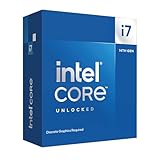
- Game Without Compromise. Play harder and work smarter with Intel Core 14th Gen processors
- 20 cores (8 P-cores plus 12 E-cores) and 28 threads. Discrete graphics required
- Up to 5.6 GHz with Turbo Boost Max Technology 3.0 gives you smooth game play, high frame rates, and rapid responsiveness
- Compatible with Intel 600-series (with potential BIOS update) or 700-series chipset-based motherboards
- DDR4 and DDR5 platform support cuts your load times and gives you the space to run the most demanding games
These distinctions are useful when interpreting headlines:
- Share sale: Intel sells some of its stock in Mobileye and receives proceeds; that alone does not transfer control.
- Control sale: A buyer obtains control, as Silver Lake did with Altera, while Intel retains a minority stake.
- Full divestiture: Intel exits ownership entirely. The cited Mobileye evidence does not show that outcome.
What Intel’s current structure says about the core businesses
Intel’s filings describe Client Computing Group, Data Center and AI, and Intel Foundry as reportable operating segments. The filings reviewed through 2026 describe Intel as an operating public company; they do not disclose a completed whole-company buyout or a completed sale of Intel Foundry (Intel’s 2025 filing; Intel’s first-quarter 2026 filing).
Recommended Free Tools
That does not mean the product and manufacturing operations could never be separated. A separation would have to address manufacturing capacity and supply, customer confidence, intellectual-property and licensing arrangements, packaging and process coordination, and the costs of running two organizations. Selling a distinct subsidiary such as Altera is structurally different from dividing businesses that have long shared technology and operations.
Best Value

- Game without compromise. Play harder and work smarter with Intel Core 14th Gen processors
- 24 cores (8 P-cores plus 16 E-cores) and 32 threads. Integrated Intel UHD Graphics 770 included
- Leading max clock speed of up to 6.0 GHz gives you smoother game play, higher frame rates, and rapid responsiveness
- Compatible with Intel 600-series (with potential BIOS update) or 700-series chipset-based motherboards
- DDR4 and DDR5 platform support cuts your load times and gives you the space to run the most demanding games
How to evaluate a possible Intel asset sale
A divestiture can provide liquidity and management focus, but it can also sacrifice future earnings or make Intel more dependent on suppliers. For investors, the headline sale price alone is not enough to judge whether a transaction creates value. Consider:
- Standalone viability: Can the business report credible results and operate without Intel’s corporate infrastructure?
- Manufacturing and supply: Can it use outside foundries, or does it need a continuing supply agreement with Intel?
- Separation costs: Will duplicated functions, employee transitions, or customer changes consume part of the proceeds?
- Strategic importance: Does the unit support Intel’s CPU, AI, or foundry plans, or is it meaningfully outside them?
- Price and retained exposure: Is Intel selling at an attractive valuation, and does it keep a minority stake or other economic interest?
- Policy and contractual terms: Could government arrangements or national-security concerns constrain the transaction?
Altera illustrates a structured monetization: Intel sold control but retained 49%. Mobileye illustrates a different approach: Intel sold shares while retaining majority ownership. Neither transaction, by itself, establishes that Intel’s core businesses will be sold or that divestitures have resolved the company’s operating challenges.
Three paths remain possible
The completed transactions support selective asset monetization as a path Intel has used, but they do not determine what comes next. The principal scenarios are:
Quick wins for a faster PC:
Clear out junk files and repair common Windows errorsFree Scan →Fix the driver behind crashes, sound loss and screen glitchesFind Drivers →- Further selective sales or stake reductions. Intel could continue to monetize businesses or holdings that can operate independently, while preserving its core product and manufacturing structure.
- Keep the company together and bring in capital or partners. Funding or commercial partnerships could support manufacturing without transferring ownership of the whole company.
- Separate product and foundry operations. A more extensive restructuring remains a possibility, but would require resolving operational, financial, customer, and government-related issues; the filings cited here do not report a completed separation agreement.
For shareholders, each path trades near-term cash and simpler operations against future upside, separation costs, and possible loss of strategic capabilities. For customers and policymakers, the foundry’s ownership and ability to supply advanced manufacturing capacity matter alongside the financial outcome.
Quick Recap
Product prices and availability are accurate as of the date/time indicated and are subject to change. Any price and availability information displayed on Amazon at the time of purchase will apply.



