Some links on this page are affiliate links: if you buy through them we may earn a commission, at no extra cost to you.
Short answer: Intel is developing new GPUs and wants to manufacture a larger share of future products internally, but it has not confirmed that all future GPUs will be made in Intel fabs instead of TSMC. Intel’s latest public disclosures say it will continue using TSMC and other third-party foundries for selected tiles when that makes the most sense for performance, cost, capacity, or timing.
The distinction matters for investors, technology buyers, and anyone interpreting Intel’s foundry strategy. Intel’s GPU announcement was primarily a product-development decision. It was not proof of a universal “TSMC out, Intel fabs in” manufacturing policy.
What Intel has actually confirmed
Intel CEO Lip-Bu Tan said in February 2026 that the company planned to build GPUs and had hired an executive to lead the effort. Reuters reported the announcement, which signals a renewed GPU push but does not establish where every GPU wafer will be produced.
What’s actually slowing this PC down?
Pick the symptom - the matching free tool is one click away.
Intel’s 2025 annual report describes successive generations of inference-optimized GPUs and continued development of the Jaguar Shores architecture. The same filing says Intel chooses manufacturing technology based on factors including performance and cost, while continuing to use TSMC and other third-party suppliers for key tiles.
#1 Best Overall

- Next-Gen Intel Arc Graphics: Powered by Intel Arc A580 GPU with Intel Xe HPG microarchitecture, featuring 384 XMX engines for enhanced AI acceleration and content creation.
- High-Performance Memory: 8GB GDDR6 on a 256-bit interface running at 16 Gbps, delivering excellent bandwidth for 1440p gaming and creative workloads.
- Factory Overclocked: Engine clock set at 2000 MHz out of the box, providing optimized performance for smooth gameplay and multimedia tasks.
- Advanced Dual-Fan Cooling: Features a dual-fan design with striped axial fans and an ultra-fit heatpipe for efficient thermal management. 0dB Silent Cooling stops fans completely at low temperatures for silent operation.
- Durable Construction: Includes a stylish metal backplate for enhanced PCB rigidity and a premium aesthetic, backed by ASRock's Super Alloy components for long-term reliability.
Confirmed: Intel is developing new GPUs.
Confirmed: Intel wants more silicon for some future products to come from its own fabs.
Confirmed: Intel still uses TSMC and other external foundries.
Not confirmed: Every future Intel GPU will be fabricated internally.
Recommended Free Tools
Uncertain: The long-term scope of discrete Arc gaming GPUs.
“Internal manufacturing” does not mean one thing
A modern processor may contain several chiplets, or tiles, manufactured on different processes and possibly by different companies. Therefore, describing a product as “made internally” can refer to several different activities:
- Fabricating a particular tile on an Intel wafer.
- Assembling or testing the package at an Intel facility.
- Using Intel packaging technologies such as Foveros or EMIB.
- Producing most of the package internally while sourcing one or more tiles externally.
A chip can consequently combine an Intel-made compute tile, a TSMC-made graphics or I/O tile, and Intel packaging. Product design ownership is also different from manufacturing ownership.
Intel has previously described Panther Lake as having approximately 70% internally manufactured silicon and said Nova Lake would contain a still larger internal share. Those statements illustrate an increasingly internal, mixed model—not proof that every component of every future GPU will leave TSMC.
Outdated Drivers Are Slowing You Down
One free scan finds every outdated or missing driver and matches the right update for your exact hardware.Free scan · exact hardware matchPC Slower Than It Used to Be?
A free scan shows the junk files, broken settings and background clutter dragging Windows down - then fixes them in one click.Free scan · Windows 10 & 11Why Intel used TSMC for Arc GPUs
Intel’s first Arc generation was manufactured by TSMC on a 6nm process. Raja Koduri previously explained that outsourcing allowed Intel to bring graphics products to market while preserving internal manufacturing capacity and using a suitable, established process.
Rank #2

- System Compatibility Note: This 2-slot card measures 271 x 112 x 39 mm and requires a single 12V-2x6-pin power connector. Please verify chassis and PSU compatibility before purchase.
- Dedicated Support: Please contact us directly through Amazon for any product questions or assistance you may require.
- Professional Intel Arc Pro B70 GPU: Built on the Intel Xe2-HPG architecture, it features 32 Xe cores and 256 XMX engines, designed to accelerate AI, rendering, and complex visualization workloads.
- Massive 32GB GDDR6 VRAM: Equipped with 32GB of high-speed GDDR6 memory on a 256-bit bus, running at 19 Gbps, which allows for handling large AI models and complex datasets locally.
- High-Performance Engine Clock: Delivers an engine clock of 2540 MHz, providing the compute power needed for demanding professional applications and AI inference.
The decision had practical advantages:
- High-volume experience: TSMC had an established ecosystem for manufacturing large GPU dies.
- Time to market: Intel could develop a new graphics product without waiting for its own newest node to mature.
- Capacity management: Intel could reserve internal capacity for CPUs and other products.
- Process flexibility: A chiplet design can use different nodes for compute, graphics, I/O, and other functions.
- Lower execution risk: Using an experienced external supplier can reduce the risk associated with a new internal process ramp.
Using TSMC was therefore a product- and node-specific decision, not necessarily a permanent surrender of Intel’s manufacturing ambitions.
Which Intel GPU products are affected?
Consumer Arc graphics
Existing Arc generations have historically relied on TSMC for major GPU dies. Intel has also said it remains committed to offering GPU products, although it has not provided a complete public roadmap.
Reports have raised questions about future discrete gaming GPUs, including possible changes to the Arc and Celestial roadmaps. Those reports remain unconfirmed. They should not be converted into a definitive claim that Arc is canceled—or that a future gaming GPU will definitely be made in an Intel fab.
For buyers, the practical point is simple: Intel’s manufacturing strategy does not change the specifications or support of an Arc card already purchased. Drivers, game performance, pricing, board availability, and software compatibility remain more important than the location of the wafer fab.
Data-center and AI GPUs
Intel’s current strategic emphasis appears increasingly focused on inference and data-center acceleration. Its annual report specifically identifies inference-optimized GPU development and Jaguar Shores.
Secondary reporting has also described Crescent Island as a potential Xe3P/Celestial-based data-center GPU using LPDDR5X memory, with sampling reportedly expected in the second half of 2026. These details come from reporting and unofficial material, so they should not be treated as final specifications unless Intel confirms them.
Data-center accelerators may be the more strategically important part of Intel’s GPU push. They can showcase Intel’s process technology, packaging, and foundry capabilities, while addressing a market where supply availability and total cost of ownership may matter as much as gaming performance.
Integrated graphics
Integrated graphics are often one tile inside a larger CPU package. An Intel processor with Intel graphics does not automatically mean that every graphics-related die was fabricated on an Intel process.
Rank #3
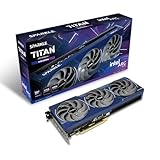
- OC Edition Boost Clock: 2760MHz
- TORN Cooling 2.0
- Metal Backplate
- Blue Breathing Light
- Graphic card sag bracket
Meteor Lake is a useful example: reporting described a combination of Intel-made and TSMC-made tiles, including an Intel compute tile alongside graphics, SoC, and I/O components sourced from TSMC or older Intel processes. The correct question is not simply “Was this an Intel chip?” but “Which tile was made where?”
How Intel’s process roadmap fits in
Intel is ramping Intel 18A for current-generation leading-edge products and developing Intel 14A as a future process. Intel leadership has also discussed longer-term 10A and 7A efforts.
Reporting has placed 14A risk production in 2027 and high-volume manufacturing in 2028. Those are forward-looking targets, not guaranteed delivery dates. If the roadmap holds, Intel’s own products are expected to receive priority as new nodes ramp.
However, Intel’s filings preserve an important option: if its internal technology is not competitive, the company may shift additional production to third-party foundries, particularly TSMC, for nodes beyond 18A and its 18A-P derivative. That flexibility is evidence against the idea of a blanket TSMC exit.
Why Intel wants more production in-house
Bringing a larger share of production into Intel’s fabs could provide several strategic benefits:
- Supply control: Intel could reduce dependence on external allocation for selected products.
- Fab utilization: Internal products can help use the expensive capacity Intel is building.
- Design-process integration: Intel can co-optimize architecture, process technology, and packaging.
- Foundry credibility: Successful internal products could demonstrate Intel’s manufacturing capabilities to outside customers.
- Geopolitical diversification: More production in Intel facilities could reduce exposure to cross-border supply-chain risks.
- Potential margin benefits: Avoiding external foundry payments could help economics if yields and utilization are strong.
None of these benefits is automatic. Internal manufacturing can be more expensive when yields are weak, capacity is constrained, or a process underperforms a mature external alternative.
Independent reader supportYour contribution helps us test, update, and keep practical guides available for everyone.The risks of moving GPU production in-house
Yield risk
Large GPU dies are costly when defects make them unusable. A lower yield can eliminate the apparent savings from avoiding an external foundry.
Capacity risk
Intel must balance CPU production, new GPU products, internal foundry objectives, and potential external customers. A GPU ramp could compete for capacity with products that already generate substantial revenue.
Rank #4

- System Compatibility Note: 2‑slot ITX card, 169.9x123.5x39.2mm, single 8‑pin power, recommended 500W PSU. Verify chassis clearance before purchase.
- Dedicated Support: Please contact us directly through Amazon for any product questions or assistance you may require.
- Intel Arc A380 GPU: Powered by Intel Xe architecture with 6GB GDDR6 on 96‑bit bus – ideal for compact gaming, HTPC, and media builds.
- 2250MHz GPU Clock: Factory overclocked core delivers solid performance for esports titles and everyday creative tasks.
- Small Form Factor ITX Design: Compact 2‑slot card fits easily into mini‑ITX and small form factor cases without sacrificing performance.
Process and packaging risk
A leading-edge process name alone does not guarantee better products. GPU competitiveness also depends on high-volume execution, advanced packaging, memory integration, power delivery, software, and supply reliability.
Mixed-node complexity
Using multiple suppliers can create additional coordination and packaging challenges, but it may be economically rational. Forcing every tile onto an Intel process could be less efficient than choosing the best node for each function.
Roadmap risk
Intel may prioritize inference accelerators and data-center products while reducing the scope or frequency of discrete gaming GPUs. Continuing to offer GPUs does not guarantee a long-term, high-end Arc gaming roadmap.
Do these 3 things before closing this tab:
1Fix the driver behind crashes, sound loss and screen glitches2Repair Windows errors before they cause bigger problems3Scan for outdated or missing drivers - takes under a minuteProduct-by-product view
| Product area | What is known | What remains unknown |
|---|---|---|
| Existing Arc GPUs | Major first-generation GPU dies used TSMC manufacturing. | Whether future discrete gaming dies will use Intel, TSMC, or a mixed model. |
| Future integrated graphics | Could use multiple tiles made on different Intel and external processes. | The sourcing of each future graphics tile. |
| Data-center and inference GPUs | Intel is developing inference-focused products, including Jaguar Shores. | Product-level fabrication and packaging details. |
| Intel 14A products | Intel intends to prioritize internal products as the node develops. | Whether the process will meet performance, yield, capacity, and cost targets on schedule. |
| All future Intel GPUs | Intel plans new GPU products and more internal manufacturing where appropriate. | No public confirmation supports an all-Intel-fab policy. |
What this means for investors and buyers
For investors, the announcement should be read as part of Intel’s broader attempt to rebuild its manufacturing position—not as proof that external foundry costs will disappear. The outcome depends on whether Intel can deliver competitive yields, reliable volume, strong packaging, and products customers actually want.
For consumers, an internally manufactured GPU would not automatically be cheaper, faster, or better. Retail pricing also reflects memory, board design, distribution, software support, competition, and demand. Intel’s manufacturing location is only one input.
For data-center customers, a successful internal GPU program could improve supply resilience and give Intel greater control over product integration. But customers will still evaluate performance per watt, software support, memory capacity, availability, and total cost of ownership.
How to interpret future headlines
When Intel announces a new GPU, check these details before concluding that it has abandoned TSMC:
Quick wins for a faster PC:
Clear out junk files and repair common Windows errorsFree Scan →Scan for outdated or missing drivers - takes under a minuteDriver Scan →- Which tile is being discussed: compute, graphics, I/O, memory controller, or interposer?
- Which process node is named?
- Where is the wafer fabricated?
- Where is packaging performed?
- Does “Intel GPU” refer to Intel’s design or Intel’s manufacturing?
- Is the product an Arc gaming GPU, integrated graphics tile, or AI accelerator?
- Is the claim from Intel, named reporting, or an unverified leak?
- Does “mostly internal” refer to package area rather than the GPU die itself?
Bottom line
Intel is trying to make more of its future silicon internally, and its renewed GPU strategy could give Intel’s fabs a larger role. But the evidence does not support the claim that Intel has decided to manufacture all future GPUs internally instead of using TSMC.
The most accurate interpretation is a flexible, mixed manufacturing strategy: Intel will use its own fabs when its process, capacity, cost, and yields are competitive, while retaining TSMC and other suppliers for tiles or products that benefit from external manufacturing. The future of Intel’s data-center GPU effort is clearer than the long-term roadmap for discrete Arc gaming cards.
Quick Recap
Product prices and availability are accurate as of the date/time indicated and are subject to change. Any price and availability information displayed on Amazon at the time of purchase will apply.



