Free tools Windows power users keep installed
One-click scans. No signup required.
Some links on this page are affiliate links: if you buy through them we may earn a commission, at no extra cost to you.
Yes—Intel was sued over the Downfall CPU vulnerability. The complaint, filed in the U.S. District Court for the Northern District of California on November 8, 2023, alleged that affected processors were defective because they exposed data without mitigation or suffered significant performance losses after mitigation. The original complaint was dismissed in August 2024, plaintiffs amended their claims, and later rulings narrowed the case. Intel’s March 2026 filing still described related consumer vulnerability litigation as pending. No court finding establishes that Intel is liable, and there is no automatic payment program for affected owners.
What is Downfall?
Downfall is the common name for CVE-2022-40982, also called Gather Data Sampling (GDS). It is a CPU side-channel vulnerability involving Intel vector instructions, gather operations, and speculative execution.
Under certain technical conditions, an attacker may be able to infer data belonging to another process or virtual machine sharing the processor. That can create a confidentiality risk for information such as encryption material or data held in memory.
What’s actually slowing this PC down?
Pick the symptom - the matching free tool is one click away.
Downfall is not conventional malware, automatic remote code execution, or proof that passwords were stolen from ordinary users. Exploitation requires suitable conditions, including the ability to run code in a relevant environment. The available reporting does not establish widespread exploitation in the wild.
#1 Best Overall

- Get ultra-efficient with Intel Core Ultra desktop processors that improve both performance and efficiency so your PC can run cooler, quieter, and quicker.
- Core and Threads 24 cores (8 P-cores plus 16 E-cores) and 24 threads. Integrated Intel Graphics included
- Performance Hybrid Architecture Integrates two core microarchitectures, prioritizing and distributing workloads to optimize performance
- Performance Unlocked Up to 5.7 GHz unlocked. 40MB Cache
- Compatibility Compatible with Intel 800 series chipset-based motherboards
Google publicly disclosed Downfall and Intel’s mitigation on August 8, 2023. Google’s technical disclosure described the fix as blocking speculative forwarding from gather operations.
For additional technical detail, see the original USENIX research paper.
Which Intel processors were affected?
Google identified Intel Core processors from the 6th through 11th generations as affected. Related Intel Xeon generations were also discussed in the lawsuit and technical coverage.
Recommended Free Tools
That is a family-level description, not a guarantee that every model, operating system, firmware version, or deployment has identical exposure. Owners should check Intel’s security information and their computer or motherboard manufacturer’s documentation for the exact processor and update status.
Rank #2

- Game without compromise. Play harder and work smarter with Intel Core 14th Gen processors
- 24 cores (8 P-cores plus 16 E-cores) and 32 threads. Integrated Intel UHD Graphics 770 included
- Leading max clock speed of up to 6.0 GHz gives you smoother game play, higher frame rates, and rapid responsiveness
- Compatible with Intel 600-series (with potential BIOS update) or 700-series chipset-based motherboards
- DDR4 and DDR5 platform support cuts your load times and gives you the space to run the most demanding games
Newer Intel processors should not automatically be treated as affected simply because they use related architectural features.
Why did performance become part of the lawsuit?
The security fix could impose a performance cost because it changes how the processor handles speculative data forwarding. Google reported overhead ranging from 0% to approximately 50%, depending on the workload.
The range is not a universal slowdown. Ordinary browsing, office work, and many games may see little noticeable impact, while vectorized, AVX-heavy, gather-intensive, scientific, media, cryptographic, and other specialized workloads may be affected more substantially.
The lawsuit focused on the trade-off: an unmitigated processor could remain exposed, while a mitigated processor could perform worse. Plaintiffs alleged that either condition reduced the value of systems customers had purchased.
Rank #3
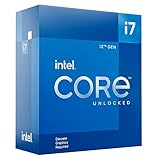
- Intel Core i7 3.60 GHz processor offers more cache space and the hyper-threading architecture delivers high performance for demanding applications with better onboard graphics and faster turbo boost
- The Socket LGA-1700 socket allows processor to be placed on the PCB without soldering
- 11 MB L2 and 25 MB L3 cache offers supreme performance for computation intensive apps
- Intel 7 Architecture enables improved performance per watt and micro architecture makes it power-efficient
What did the plaintiffs allege?
The 112-page complaint asserted several theories:
- Security defect: Downfall and related speculative-execution flaws allegedly allowed sensitive information to leak across processes or virtual machines.
- Performance defect: Intel’s mitigation allegedly reduced performance, potentially by as much as 50% in certain workloads—not across all computers.
- Knowledge and disclosure: Plaintiffs alleged Intel knew about related weaknesses after the Spectre and Meltdown disclosures and failed to adequately explain the risks and mitigation costs.
- Damages: The complaint sought monetary relief, including actual damages or reported statutory damages of $10,000 per plaintiff.
These were plaintiffs’ allegations, not established findings. A requested damages figure is not an award or a prediction of what any consumer will receive.
Timeline of the Intel Downfall lawsuit
| Date | Development |
|---|---|
| June 2017 | Google researchers notified Intel and other chipmakers about speculative-execution vulnerabilities later associated with Spectre and Meltdown. |
| January 2018 | Spectre and Meltdown became public. |
| August 8, 2023 | Downfall was publicly disclosed and Intel’s mitigation was released, according to Google. |
| November 8, 2023 | The consumer class-action complaint was filed in federal court in California. |
| January 2024 | Intel moved to dismiss the original complaint. |
| August 2024 | The court dismissed the original complaint. |
| September 2024 | Plaintiffs filed an amended complaint. |
| October 2024 | Intel moved to dismiss the amended complaint. |
| August 2025 | Nationwide class claims under California law were dismissed with prejudice, while certain alternative state-law subclass claims survived that motion stage. |
| March 2026 | Intel’s regulatory filing continued to describe U.S. and Canadian consumer vulnerability litigation as pending. |
The filing history is available through the federal docket record. Intel’s later regulatory disclosures describe the subsequent dismissals and remaining litigation.
Independent reader supportYour contribution helps us test, update, and keep practical guides available for everyone.What is the current status?
The original complaint did not survive. Plaintiffs filed an amended complaint, and the court later dismissed the nationwide California-law class claims with prejudice. However, certain alternative state-law subclass theories were not dismissed at that stage, and Intel’s March 2026 filing still listed related consumer litigation as pending.
Based on the available filings, it would be inaccurate to say that:
Rank #4

- Next‑Gen Platform Support: Compatible with Intel 800 Series Chipset‑based motherboards with LGA1851 Socket enabling PCIe 5.0/4.0 and high‑speed DDR5 memory (up to 7200 MT/s).
- High‑Performance Core Configuration: Features up to 24 cores (8 P‑cores + 16 E‑cores) for demanding gaming and creator
- Ultra‑Fast Boost Clocks: Reaches up to 5.5 GHz max turbo frequency for top‑tier responsiveness and performance
- Built for Enthusiasts: Unlocked for performance tuning when paired with Intel Z‑series chipsets, making it ideal for overclockers and power users.
- Robust Power & Thermal Design: Engineered with 125W base power and 250W max turbo power to sustain high‑intensity
- Intel was found liable;
- the entire case was dismissed;
- a nationwide class was certified;
- the case reached a final merits judgment;
- Intel paid a settlement; or
- all affected owners are entitled to compensation.
Intel’s decision to issue microcode and software mitigations is remediation activity. It does not, by itself, prove negligence, concealment, or a legally defective product. Those issues are distinct from the technical fact that Downfall was documented and mitigated.
Will affected Intel owners receive money?
Not automatically. A lawsuit filing does not create an individual payment right. Any recovery would depend on the claims that ultimately survive, the definition of any certified class, jurisdiction, purchase history, and a settlement or judgment.
Consumers should rely on official court notices or a verified settlement administrator. Be cautious of unsolicited messages requesting payment, passwords, remote computer access, or sensitive financial information.
What should owners do?
- Identify the exact processor model and generation.
- Check the computer or motherboard manufacturer’s BIOS/UEFI support page.
- Install current BIOS/UEFI, microcode, and operating-system security updates from official sources.
- Use current guidance for the exact operating system and hardware. For Windows, consult Microsoft’s CVE-2022-40982 guidance.
- Do not disable mitigations solely to improve benchmark results unless the security trade-off is understood and documented.
- If performance matters, benchmark the specific application before and after updating.
The risk is more consequential on shared servers, cloud hosts, virtualized systems, developer machines running untrusted code, and scientific or cryptographic infrastructure than on an isolated personal computer.
Downfall is not the same as all Spectre and Meltdown litigation
Downfall arose within the broader history of speculative-execution vulnerabilities, but this was a separate later complaint. Earlier Spectre and Meltdown litigation had its own procedural history and should not be treated as the same lawsuit.
Quick Recap
Product prices and availability are accurate as of the date/time indicated and are subject to change. Any price and availability information displayed on Amazon at the time of purchase will apply.



