Quick wins for a faster PC:
Fix the driver behind crashes, sound loss and screen glitchesFind Drivers →Repair Windows errors before they cause bigger problemsFix Now →Some links on this page are affiliate links: if you buy through them we may earn a commission, at no extra cost to you.
Intel reduced the reported 1,000-unit Recommended Customer Pricing (RCP) for several high-end Xeon 6 Granite Rapids processors in January 2025. The largest percentage cuts were 30% for the 128-core Xeon 6980P and 72-core Xeon 6960P. The 96-core Xeon 6952P received a 20% reduction.
The timing followed the arrival of AMD’s fifth-generation EPYC processors, code-named Turin, but the cited report does not include a direct Intel statement saying AMD caused the cuts. More importantly for buyers and investors, RCP is list pricing—not a guaranteed invoice price or a 30% reduction in the cost of a complete server.
The reported Xeon 6 price cuts
The changes were reported on January 28, 2025, roughly four months after the first Xeon 6 6900P processors launched. The figures apply to Intel’s 1,000-unit RCP and cover the three models identified in the report.
What’s actually slowing this PC down?
Pick the symptom - the matching free tool is one click away.
| Processor | Earlier RCP | New RCP | Dollar reduction | Percentage reduction |
|---|---|---|---|---|
| Xeon 6980P, 128 cores | $17,800 | $12,460 | $5,340 | 30.0% |
| Xeon 6952P, 96 cores | $11,400 | $9,115 | $2,285 | 20.0% |
| Xeon 6960P, 72 cores | $13,750 | $9,625 | $4,125 | 30.0% |
“Up to 30%” is therefore the accurate description. The reduction was not uniform across the listed processors, and it should not be interpreted as a 30% cut across the entire Xeon 6 range.
#1 Best Overall

- Intel Xeon E5-2699 V4 Docosa-core (22 Core) 2.20 Ghz Processor - Socket Lga 2011-v3 - 5.50 Mb - 55 Mb Cache - 64-bit Processing - 14 Nm - 145 W
HotHardware reported the price changes using Intel pricing information. The report does not establish that Intel issued a formal public announcement describing the move as a price war.
Which processors were affected?
Xeon 6 is Intel’s current server-CPU generation, but the processors in this pricing report are specifically high-end Granite Rapids performance-core models in the 6900P family. They are aimed at demanding data-center, high-performance-computing, artificial-intelligence, and enterprise workloads.
The Xeon 6980P was the flagship model discussed in the report, with 128 cores. The Xeon 6952P has 96 cores, while the Xeon 6960P has 72 cores. Xeon 6 also includes other designs, including efficiency-core products such as Sierra Forest, so these three Granite Rapids price changes should not be generalized to every Xeon 6 processor. Intel’s Xeon 6 product information provides the broader family context.
Rank #2
![Intel Xeon Silver [3rd Gen] 4310 Dodeca-core [12 Core] 2.10 GHz Processor - OEM Pack](https://m.media-amazon.com/images/I/31KUwTUW75L._SL160_.jpg)
Why the timing points to AMD EPYC
AMD’s fifth-generation EPYC processors, code-named Turin, had recently entered the market when Intel reduced these prices. That timing makes competitive pressure the most plausible explanation for the change. The cited report interprets the cuts as an effort to improve Xeon’s position against EPYC.
That conclusion should remain qualified. The available report does not document a direct Intel explanation attributing the reductions to AMD. The cuts may improve Intel’s negotiating position with server manufacturers, cloud providers, and large enterprise customers, but they do not by themselves prove anything about Intel’s sales, margins, or market share.
Why lower CPU pricing can matter
The cuts improve Intel’s headline acquisition price, particularly for buyers needing high core counts. A $5,340 reduction on the reported RCP of the Xeon 6980P is significant in a large deployment. Lower processor pricing may also matter when software licensing is calculated per core, although licensing rules vary widely by vendor and product.
Rank #3
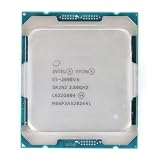
- Total Cores 14
- Total Threads 28
- Processor Base Frequency 2.60 GHz
- Max Turbo Frequency 3.50 GHz
- Sockets Supported LGA2011-3
For cloud providers and server OEMs, a lower starting price can affect fleet economics and procurement negotiations. For an enterprise, however, the processor is only one part of the bill. Memory, accelerators, storage, networking, chassis, power delivery, support, and software can outweigh the CPU price difference.
The Tool Desk
Outbyte PC Repair FREERepair Windows errors before they cause bigger problemsFix Now →Outbyte Driver Updater FREEFix the driver behind crashes, sound loss and screen glitchesFind Drivers →RCP is not the price most customers pay
The reported figures are 1,000-unit Recommended Customer Pricing. They are not retail prices, one-off purchase prices, or guaranteed prices for customers of Dell, HPE, Lenovo, or a cloud provider.
Large buyers commonly negotiate volume discounts, rebates, bundles, and long-term supply agreements. An OEM’s quote may already have been below the old RCP, or it may pass along only part of the reduction. Consequently, the new RCP does not mean that a customer automatically saves 30% on a processor—or that a complete server becomes 30% cheaper.
Rank #4

- Manufacturer: Intel CPU Frequency: 2.20 GHz CPU Max Turbo Frequency: 3.60 GHz Number of Cores: 22 Threads: 44 Cache: 55 MB Intel Smart Cache Number of UPI Links: 0 Lithography: 14 nm Thermal Design Power: 145 W Memory Types: DDR4 1600/1866/2133/2400 Max Memory Size: 1.5 TB Max # Memory Channels: 4 Sockets Supported: FCLGA2011-3 E5-2699v4
These are also historical January 2025 figures. They should not be treated as current September 2026 pricing without fresh confirmation from Intel, an OEM, or a cloud provider.
How to compare Xeon 6 with AMD EPYC
A processor price comparison is useful only when the systems and workloads are comparable. Buyers evaluating Intel’s reduced RCP against AMD EPYC should examine:
- Workload performance: Test the applications that matter, including databases, virtualization, analytics, compilation, or batch processing.
- Core count and performance per core: A cheaper core is not necessarily a faster core, and the best choice depends on workload parallelism.
- Memory: Capacity and bandwidth can determine performance in memory-bound applications.
- I/O and expansion: PCIe connectivity, storage, networking, and accelerator support may dominate platform value.
- Power and cooling: Electricity, facility capacity, and cooling costs can erase an upfront CPU discount over the server’s life.
- Software licensing: Compare per-core, per-socket, virtual-machine, and other licensing models rather than assuming all licensing is core-based.
- Platform availability: The processor must be supported by the preferred server, firmware, memory, and management stack.
- Migration costs: Existing Intel or AMD standards, validation work, staff expertise, and support contracts can materially affect the financial decision.
AMD’s EPYC server lineup should be compared using equivalent system configurations and current supplier quotes—not simply against Intel’s published RCP.
Best Value

- Part Number Identification: CD8069504194501 for easy reference and compatibility verification
- CPU Series Specification: 2nd Generation Intel Xeon Scalable processor from the Gold 6000 series
- Processor Frequency: 3.10GHz base clock speed with 18 cores for high-performance computing tasks
- Package Type: OEM tray processor without retail packaging
- Cooling Device Notice: Processor only, cooling device not included and must be purchased separately
What the cut does—and does not—prove
The pricing move improves Xeon 6’s published price position. It does not prove that Xeon 6 is now a better value than EPYC, that Intel lost the server market, or that AMD wins every performance comparison.
The cited coverage also mentions Intel objecting to some comparisons with AMD and characterizing certain comparisons as spurious. That is a company position, not an independent performance verdict. Buyers should rely on workload-specific testing or credible, clearly documented benchmarks.
Likewise, the report’s reference to AMD approaching 25% of the data-center CPU market is a secondary-source claim and should not be treated as a current September 2026 market-share figure.
Recommended Free Tools
What enterprise buyers should do
- Request a complete quote for the configured server or cloud instance, not just the processor price.
- Ask the supplier which CPU pricing basis is being used and whether discounts, rebates, or bundles are included.
- Model memory, networking, storage, support, power, and cooling costs over the expected service life.
- Calculate software licensing under the actual contract terms.
- Benchmark representative workloads on comparable Intel and AMD configurations.
- Include migration, validation, availability, and fleet-management costs before switching platforms.
Physical Xeon and EPYC processors are normally purchased inside validated systems from vendors such as Dell PowerEdge, HPE ProLiant, or Lenovo ThinkSystem. Organizations that need flexible capacity may instead compare current cloud offers from AWS EC2, Microsoft Azure, or Google Cloud, while accounting for memory, region, utilization, storage, networking, and support charges.
Quick Recap
Product prices and availability are accurate as of the date/time indicated and are subject to change. Any price and availability information displayed on Amazon at the time of purchase will apply.



