Recommended Free Tools
Some links on this page are affiliate links: if you buy through them we may earn a commission, at no extra cost to you.
Intel and SoftBank Corp.’s wholly owned SAIMEMORY subsidiary are collaborating on Z-Angle Memory (ZAM), a development-stage memory architecture designed for artificial-intelligence and high-performance-computing systems. The project is intended to combine high capacity, high bandwidth and lower power consumption, potentially addressing weaknesses in today’s high-bandwidth memory (HBM).
It is not, however, a newly formed Intel–SoftBank joint venture, a commercial product or a proven “HBM killer.” The companies are targeting a prototype in fiscal 2027 and commercialization in fiscal 2029—the Japanese fiscal year ending March 31, 2030. Those are development goals, not delivery guarantees.
What Intel and SoftBank are actually building
SoftBank Corp. announced on February 3, 2026, that SAIMEMORY and Intel had signed a collaboration agreement the previous day to commercialize Z-Angle Memory.
Do these 3 things before closing this tab:
1Scan for outdated or missing drivers - takes under a minute2Repair Windows errors before they cause bigger problems3Fix the driver behind crashes, sound loss and screen glitchesSAIMEMORY was established by SoftBank Corp. in December 2024 as a wholly owned subsidiary focused on next-generation memory technology. The more accurate description is therefore SoftBank Corp.’s SAIMEMORY subsidiary collaborating with Intel, not “Intel and SoftBank forming a joint venture.” SoftBank Corp., the Japanese telecom and technology company, should also be distinguished from SoftBank Group, the broader investment holding company.
#1 Best Overall

- [Color] PCB color may vary (black or green) depending on production batch. Quality and performance remain consistent across all Timetec products.
- DDR3L / DDR3 1600MHz PC3L-12800 / PC3-12800 240-Pin Unbuffered Non-ECC 1.35V / 1.5V CL11 Dual Rank 2Rx8 based 512x8
- Module Size: 16GB KIT(2x8GB Modules) Package: 2x8GB ; JEDEC standard 1.35V, this is a dual voltage piece and can operate at 1.35V or 1.5V
- For DDR3 Desktop Compatible with Intel and AMD CPU, Not for Laptop
- Guaranteed Lifetime warranty from Purchase Date and Free technical support based on United States
ZAM is a proposed architecture rather than a finished memory chip or established industry standard. The official descriptions emphasize its potential to deliver:
- Higher memory capacity for large AI models and other demanding workloads;
- High data bandwidth between memory and processors;
- Lower power consumption; and
- Improved thermal behavior as memory is stacked vertically.
Why AI systems need new memory approaches
Modern AI accelerators can perform enormous numbers of calculations, but those calculations are useful only when data can reach the processor quickly enough. Memory bandwidth—the rate at which data can be transferred—often becomes a system-level constraint.
HBM addresses this problem by stacking DRAM dies and placing the memory close to an AI accelerator or other processor. Shorter connections and wide interfaces allow HBM to supply much more data than conventional memory in many accelerator designs.
HBM is already a commercial technology, but scaling it creates difficult trade-offs. More stacked layers and more complex packaging can increase:
- Heat density and the difficulty of removing heat;
- Manufacturing complexity and defective-stack risk;
- Advanced-packaging demand and cost;
- Interconnect and testing requirements; and
- Power consumption across memory, interfaces and surrounding circuitry.
Capacity is another constraint. An accelerator may have exceptional compute performance but still require multiple memory packages, external memory tiers or slower data transfers if its local memory cannot hold enough model weights and intermediate data.
That is the market opening ZAM is intended to address. Its success would depend not on one headline specification, but on whether it can deliver a useful balance of bandwidth, capacity, energy efficiency, thermal performance, yield, price and compatibility.
Rank #2

- A-Tech 16GB RAM Module, DDR4 SO-DIMM 260-Pin, 3200MHz PC4-25600 (PC4-3200AA)
- Non-ECC Unbuffered, JEDEC DDR4 Standard 1.2V Operating Voltage
- Compatible with select Laptop, Notebook, Mini PC, and All-in-One (AIO) systems. Please verify your system's memory type, form factor, and maximum supported capacity before purchasing
- Not compatible with desktop DIMM, non DDR4 memory, or ECC memory types such as RDIMM, LRDIMM, and ECC UDIMM
- Increases available memory capacity to enhance system responsiveness, application performance, and multitasking capabilities.
How Z-Angle Memory is supposed to work
SAIMEMORY’s April 2026 technical announcement describes a vertically built memory structure using stacked DRAM and magnetic-field-coupled wireless I/O rather than relying solely on conventional wired connections between layers.
The Tool Desk
Outbyte Driver Updater FREEFix the driver behind crashes, sound loss and screen glitchesFind Drivers →Outbyte PC Repair FREEClear out junk files and repair common Windows errorsFree Scan →The proposed approach is intended to make it easier to stack memory while improving heat dissipation and reducing some of the limitations associated with adding more layers. In principle, a different interconnect could provide greater flexibility in the physical arrangement of memory and help address the thermal burden of dense vertical stacking.
That remains an engineering objective, not a publicly validated product result. The available announcements do not establish ZAM’s final bandwidth, capacity, latency, power consumption, manufacturing yield or reliability.
Wireless or magnetic-field-coupled I/O could also introduce new questions involving signal integrity, crosstalk, electromagnetic interference, error correction, latency, manufacturing tolerances and long-term operation across temperature changes. Those questions will need to be answered through prototypes and independent testing.
ZAM versus current HBM
| Category | Current HBM | Proposed ZAM |
|---|---|---|
| Basic memory | Commercial stacked DRAM | Proposed stacked-DRAM architecture |
| Main proposition | Very high bandwidth close to compute | High capacity, bandwidth and lower power consumption |
| Interconnect | Advanced packaging and die-to-die connections | Proposed magnetic-field-coupled wireless I/O |
| Commercial status | Established technology | Development-stage technology |
| Key uncertainty | Cost, heat, supply and packaging scale | Technical validation, yield and ecosystem adoption |
| Likely role | AI accelerators and HPC systems | Potential alternative or complement for AI and HPC |
ZAM should therefore be viewed as a possible alternative to, or complement for, HBM—not as an automatic replacement. HBM suppliers will also continue improving bandwidth, stack height, power efficiency, thermal design and cost. Faster HBM progress could narrow the commercial opportunity for a new architecture.
What Intel contributes
Intel brings semiconductor research and advanced-packaging expertise to the collaboration. Intel has connected the project with its Next Generation DRAM Bonding initiative, which focuses on improving performance and power efficiency in future DRAM designs.
Rank #3

- Disclaimer: Maximum Speed requires overclocking/PC BIOS adjustments. Maximum speed and performance depend on system components, including motherboard and CPU
- Hand-sorted memory chips ensure high performance with generous overclocking headroom
- VENGEANCE LPX is optimized for wide compatibility with the latest Intel and AMD DDR4 motherboards
- A low-profile height of just 34mm ensures that VENGEANCE LPX even fits in most small-form-factor builds
- A solid aluminum heatspreader efficiently dissipates heat from each module so that they consistently run at high clock speeds
According to the Intel collaboration explanation, the work also relates to foundational technology validated through Intel’s participation in the U.S. Department of Energy’s Advanced Memory Technology program.
This gives Intel a route to participate in strategically important memory technology without demonstrating an immediate return to conventional commodity-DRAM manufacturing. Intel has previously reduced its exposure to other memory businesses, including selling its NAND and SSD business to SK hynix. The ZAM collaboration should not be described as proof that Intel has fully re-entered the DRAM market.
What SoftBank Corp. and SAIMEMORY contribute
SoftBank Corp. provides corporate backing and strategic interest in the memory required by future AI infrastructure. Its broader AI and data-center ambitions could potentially make it an early user or evaluation partner, although no guaranteed purchase volumes have been publicly established.
Quick wins for a faster PC:
Clear out junk files and repair common Windows errorsFree Scan →Scan for outdated or missing drivers - takes under a minuteDriver Scan →SAIMEMORY is the vehicle developing the technology and coordinating the project’s commercialization effort. SoftBank Corp. has also framed next-generation memory as part of Japan’s future social infrastructure and semiconductor competitiveness.
That strategic support matters, but capital and a potential anchor customer do not by themselves establish a broad market. A commercially meaningful ZAM business would need adoption by multiple accelerator designers, cloud providers, server manufacturers and data-center operators.
The important April 2026 update
The project gained additional institutional support in April 2026.
Rank #4
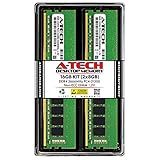
- Compatible with select DDR4 Desktop computers + Easy to install at home, no expertise required
- Maximize your system's performance, boost loading speeds and multitask with ease
- Backed by A-Tech's Lifetime Warranty + Friendly tech support team available to help before and after your purchase
- 16GB RAM Kit ( 2 x 8GB Modules ) | DDR4 DIMM 288-Pin | Speeds up to 2666MHz (2667MHz), PC4-21300 / PC4-2666V
- NON-ECC Unbuffered | 1Rx8 or 2Rx8 - Single or Dual Rank | JEDEC DDR4 standard 1.2V
SAIMEMORY announced that it, Intel and RIKEN had been selected for a NEDO-backed development project. SAIMEMORY is the lead organization, Intel is a joint contractor and RIKEN is participating as a collaborative research institution.
RIKEN also invested in SAIMEMORY on March 27, 2026, with the investment announced April 22. The research organization plans to help design a ZAM performance-evaluation system drawing on its experience with supercomputing and memory-related workloads.
The disclosed Series A investors include Fujitsu, the Development Bank of Japan, RIKEN and SoftBank. NEDO backing and participation by major Japanese technology and research institutions improve the project’s resources and credibility. They do not prove that ZAM will achieve commercial manufacturing yields, meet its performance goals or secure customers.
Timeline and what has—and has not—been demonstrated
- December 2024: SoftBank Corp. establishes SAIMEMORY as a wholly owned subsidiary.
- February 2, 2026: SAIMEMORY and Intel sign their collaboration agreement.
- February 3, 2026: SoftBank Corp. announces the collaboration and ZAM objectives.
- March 27, 2026: RIKEN makes its investment in SAIMEMORY.
- April 22, 2026: SAIMEMORY announces the NEDO project, Series A investors and expanded institutional participation.
- FY2027: Prototype target, according to the official announcement. This means the fiscal year ending March 31, 2028.
- FY2029: Commercialization target, corresponding to the fiscal year ending March 31, 2030.
Publicly available announcements do not identify a commercial ZAM chip, independent benchmark results or a production-ready device demonstrating a 50% power reduction.
Earlier TechRepublic reporting cited a possible reduction of up to 50% in power consumption. That figure should be treated as an attributed expectation, not a verified result. A meaningful comparison would need to specify whether the reduction applies to power per transferred bit, a memory package, a complete workload or the entire system—and which HBM generation is used as the baseline.
Windows Errors? Fix Them Before They Spread
Repair common Windows errors and clear accumulated junk for a smoother, more stable PC - no reinstall needed.Free scan · no reinstallCrashes, No Sound, or Screen Glitches?
Random freezes, missing sound and display glitches usually trace back to one bad driver. Find and replace yours safely.Free scan · under a minuteWhat must be proven before ZAM can compete
Bandwidth and capacity
ZAM must show that it can supply the bandwidth required by large AI accelerators, rather than merely offering more capacity at lower speed. Capacity claims must also be separated by package, stack, module and complete system.
Best Value
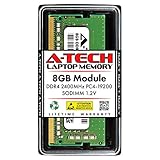
- Compatible with select DDR4 Laptop, Notebook computers + Easy to install at home, no expertise required
- Maximize your system's performance, boost loading speeds and multitask with ease
- Backed by A-Tech's Lifetime Warranty + Friendly tech support team available to help before and after your purchase
- Single 8GB RAM Module | DDR4 SO-DIMM 260-Pin | Speeds up to 2400MHz, PC4-19200 / PC4-2400T
- NON-ECC Unbuffered | 1Rx8 or 2Rx8 - Single or Dual Rank | JEDEC DDR4 standard 1.2V
Energy and cooling
Lower memory-device power would be valuable, but it may not translate into lower total data-center energy if the architecture requires additional controllers, conversion circuitry, packaging or cooling. Sustained AI workloads are particularly important because thermal advantages that appear in short demonstrations may weaken under continuous operation.
Manufacturing yield
A technically successful prototype can still fail commercially if too many stacked assemblies are defective or if the required equipment cannot operate at volume. Yield, testing and repair strategies will be central to the cost-per-bit calculation.
Packaging and compatibility
ZAM will need to work with accelerator dies, substrates or interposers, package assembly, memory controllers, testing systems, server boards and existing data-center architectures. A new memory approach can be fast in isolation but difficult to adopt if it requires a complete ecosystem redesign.
Reliability
Customers will need evidence that magnetic-field-coupled links and stacked structures remain reliable over temperature, time and manufacturing variation. Qualification cycles for AI infrastructure can be long, particularly when a failure could disrupt an expensive data-center system.
Cost and supply
The commercial comparison is not simply the price of a memory chip. It includes cost per gigabyte, cost per unit of bandwidth, advanced packaging, cooling, yield losses, system redesign and the availability of qualified suppliers.
Why the project could matter to the market
If ZAM reaches production and delivers its intended combination of capacity, bandwidth and efficiency, it could give AI-system designers another option as HBM demand grows. It could also create pressure on existing memory and packaging suppliers by changing how memory is integrated with accelerators.
The project is strategically relevant to Japan because it links SoftBank Corp., RIKEN, Fujitsu, the Development Bank of Japan and NEDO with an advanced-memory development effort. For Intel, it offers participation in a critical AI-infrastructure component and a potential use for its memory-bonding and packaging research.
What’s actually slowing this PC down?
Pick the symptom - the matching free tool is one click away.
But government support does not eliminate commercial risk, and AI demand does not guarantee adoption. Buyers will still require validated performance, dependable supply, software and hardware compatibility, competitive economics and a credible long-term roadmap.
Quick Recap
Product prices and availability are accurate as of the date/time indicated and are subject to change. Any price and availability information displayed on Amazon at the time of purchase will apply.



