Some links on this page are affiliate links: if you buy through them we may earn a commission, at no extra cost to you.
Meta is building AI infrastructure and models to strengthen the products and advertising business it already owns—not relying mainly on selling access to a chatbot. Its strategy combines large-scale computing capacity, broadly available but conditionally licensed Llama models, and AI features distributed through Facebook, Instagram, WhatsApp, Messenger, Meta AI and its glasses. The potential payoff is better advertising and recommendations, more useful products, and greater control over the technology stack; the costs and returns remain uncertain.
What Zuckerberg’s 2024 thesis got right—and what has changed
A February 2, 2024 VentureBeat analysis distilled Mark Zuckerberg’s comments on Meta’s Q4 2023 earnings call into three pillars: compute, open model releases and training data. That was an analysis of his remarks, not a formal Meta strategy document. The framework still helps explain the company, but it is no longer enough on its own.
Since then, Meta’s AI effort has expanded across custom chips, AI-focused data centers, the Meta AI assistant, AI glasses and frontier-model research. Meta’s 2025 year-end account describes consumer AI products and glasses alongside continued Llama development; its 2026 infrastructure announcements describe a broader computing stack. Together, these moves point to a company trying to integrate AI into its existing ecosystem, rather than simply become a model vendor.
For investors and technology decision-makers, the key question is not whether Meta can spend heavily or release a popular model. It is whether that spending produces products people use, improves the economics of Meta’s core businesses, and earns a return that justifies the capital and operating costs.
#1 Best Overall

- 【Leading AI Mini Workstation】MINISFORUM AI MS-S1 Max Workstation comes with AMD Ryzen AI Max+ 395 processor, which uses AMD's latest generation Zen 5 architecture. It has 16 Cores and 32 Threads, the boost clock is up to 5.1GHz. The overall processor performance is up to 126 TOPS, and the NPU performance reaches up to 50 TOPS. AMD Ryzen AI enables improved productivity, advanced collaboration, and improved efficiency.
- 【AMD Radeon 8060S Graphics 】The MS-S1 Max Mini PC equipped with AMD Radeon 8060S Graphics which built on the new generation of RDNA 3.5 architecture AMD graphics, it brings ultra-high frame rate experiences and advanced content creation features anywhere and delivers staggering performance. It can handle all your computing and multimedia tasks efficiently.
- 【Five 8K Video Output】This MS-S1 Max Workstation comes with five video outputs, 1x HDMI (8K@60Hz), 2x USB4(40Gbps,Alt DP2.0,PD out 15W) and 2x USB4 V2(80Gbps,Alt DP2.0,PD out 15W) Outputs, which support multiple monitors display at the same time and provide a larger and wider filed of view and improve your work efficiency. It is used in fields that require high-performance computing and graphics processing, including digital signage and securities trading, as well as work that uses CAD, such as engineering design, scientific calculations, animation production, and post-production for movies and television.
- 【 Fast and Stable Wire & Wireless Speed】It comes with Two 10G Lan Ports for wired connection and and Wi-Fi 7 / BT5.4 for wireless connection, which increased the network speed greatly and expand its functions and improved performance of computer to a large extent and allows you to use more networks such as software routers (OpenWRT / DD-WRT / Tomato etc.), firewalls, NAT, network isolation etc.
- 【Large Storage & Flexible Expandability】This Workstation equipped with 128GB LPDDR5-8000MHz + 2TB M.2 2280 PCIe4.0 SSD. There is another PCIe4.0 SSD slot available for up to 8TB, these SSD slots are compatible with RAID0 and RAID1, you can store movies, videos, photos, important files easily. What’s more, it also comes with 1x standard PCIex16 slot(PCIe4.0x4) inside.
What Meta is trying to win
Meta is pursuing several goals at once: frontier-model capability; control over more of the infrastructure needed to train and serve models; AI distribution through its apps and devices; better advertising and recommendations; and developer adoption of Llama and related tools. These objectives reinforce each other, but success in one does not guarantee success in the others.
- Model capability: compete with developers such as OpenAI, Google and Anthropic, while continuing to develop Llama.
- Infrastructure control: secure computing, networking and data-center capacity rather than depending entirely on outside providers.
- Distribution: put AI into services and devices where Meta already has an audience.
- Core-business improvement: use AI in ranking, advertising, content tools and business messaging.
- Ecosystem influence: encourage developers to build around Llama and tools such as PyTorch.
Meta’s infrastructure overview and its 2025 AI and glasses review illustrate how the company connects the technical stack to consumer products. The strategy is vertically integrated in parts: Meta develops models and hardware, operates large-scale services and controls distribution into its own products.
Compute means more than buying GPUs
Compute is the processing capacity used to develop and operate AI. Training compute helps create or improve a model. Inference compute is needed every time a model responds to a user or supports a feature. For a service operating at Meta’s scale, inference is a recurring operating requirement, not a one-time cost incurred when a model is trained.
Chips are only one part of the system. AI workloads also require networking, storage, software, scheduling, cooling, reliable power and facilities designed to keep equipment operating efficiently. Meta’s 2023 infrastructure overview described a 16,000-GPU Research SuperCluster and AI-oriented data-center systems. That figure describes the cluster in that overview; it should not be read as Meta’s current total computing capacity.
From external accelerators to a broader stack
Meta continues to use external GPUs while developing its own Meta Training and Inference Accelerator (MTIA) chips for internal workloads. In March 2026, Meta said it was developing and deploying four MTIA generations within two years, with workloads expanding from recommendations toward generative AI. Meta also reported that hundreds of thousands of MTIA chips had been deployed in production and said further generations were planned for deployment in 2026 and 2027. These are company statements, not independently verified measures of cost savings or performance.
In its June 2026 infrastructure explainer, Meta described a global network of AI-oriented data centers, its custom chips and an Arm partnership for a data-center CPU. In July 2026, it announced a BlackRock-led venture to develop a data-center campus in El Paso, Texas, designed to scale to 1 gigawatt. The announced capacity is a design target, not evidence that the campus is already operating at that level.
Custom silicon can give Meta more control over workloads and is intended to improve efficiency. But the existence of a chip roadmap does not establish that custom chips will lower total costs: Meta must also design, manufacture, deploy and support them, while managing their software and integration with other hardware.
Free tools Windows power users keep installed
One-click scans. No signup required.
Rank #2
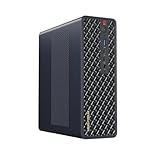
- 【Leading AI Mini Workstation】MINISFORUM AI MS-S1 Max Workstation comes with AMD Ryzen AI Max+ 395 processor, which uses AMD's latest generation Zen 5 architecture. It has 16 Cores and 32 Threads, the boost clock is up to 5.1GHz. The overall processor performance is up to 126 TOPS, and the NPU performance reaches up to 50 TOPS. AMD Ryzen AI enables improved productivity, advanced collaboration, and improved efficiency.
- 【AMD Radeon 8060S Graphics 】The MS-S1 Max Mini PC equipped with AMD Radeon 8060S Graphics which built on the new generation of RDNA 3.5 architecture AMD graphics, it brings ultra-high frame rate experiences and advanced content creation features anywhere and delivers staggering performance. It can handle all your computing and multimedia tasks efficiently.
- 【Five 8K Video Output】This MS-S1 Max Workstation comes with five video outputs, 1x HDMI (8K@60Hz), 2x USB4(40Gbps,Alt DP2.0,PD out 15W) and 2x USB4 V2(80Gbps,Alt DP2.0,PD out 15W) Outputs, which support multiple monitors display at the same time and provide a larger and wider filed of view and improve your work efficiency. It is used in fields that require high-performance computing and graphics processing, including digital signage and securities trading, as well as work that uses CAD, such as engineering design, scientific calculations, animation production, and post-production for movies and television
- 【 Fast and Stable Wire & Wireless Speed】It comes with Two 10G Lan Ports for wired connection and and Wi-Fi 7 / BT5.4 for wireless connection, which increased the network speed greatly and expand its functions and improved performance of computer to a large extent and allows you to use more networks such as software routers (OpenWRT / DD-WRT / Tomato etc.), firewalls, NAT, network isolation etc.
- 【Large Storage & Flexible Expandability】This Workstation equipped with 64GB LPDDR5-8000MHz + 2TB M.2 2280 PCIe4.0 SSD. There is another PCIe4.0 SSD slot available for up to 8TB, these SSD slots are compatible with RAID0 and RAID1, you can store movies, videos, photos, important files easily. What’s more, it also comes with 1x standard PCIex16 slot(PCIe4.0x4) inside.
Why inference may shape the economics
A model that works well in a research test may still be expensive to serve at scale. Meta’s infrastructure supports recommendations, moderation, translation, image and video features, assistants and device experiences, among other workloads. A small improvement in a widely used product could matter commercially, but only if its value exceeds the continuing cost of serving it.
Meta’s 2025 third-quarter investor materials said infrastructure costs and cloud expenses were expected to drive faster expense growth in 2026 as compute needs expanded. That is a warning against treating AI spending as a guaranteed productivity gain. Capital expenditure, depreciation, cloud bills and power needs can rise before a new feature produces measurable revenue or savings.
Why release Llama models if Meta does not primarily sell model access?
Meta’s logic is that it need not capture every dollar at the model layer. Making Llama weights available can attract developers, encourage outside experimentation and put pressure on providers whose models are accessible only through hosted services. Meta may still benefit if that activity makes Llama a familiar standard, helps its tools and hiring, or improves the ecosystem around its own products.
Meta has said that open development can speed innovation, invite scrutiny and reduce costs. The commercial logic is that a widely used model may strengthen the company’s position even when a developer runs it outside Meta. The trade-off is that adoption does not necessarily turn into revenue or product use for Meta: developers can download Llama and build independent businesses without choosing Meta’s services.
Quick wins for a faster PC:
Repair Windows errors before they cause bigger problemsFix Now →Scan for outdated or missing drivers - takes under a minuteDriver Scan →Clear out junk files and repair common Windows errorsFree Scan →Meta reported that Llama and its derivatives had exceeded 650 million downloads by December 2024, and its 2025 year-end account said Llama reached 1 billion downloads in March 2025. Those are Meta-reported download counts, not counts of active deployments, unique users, paying customers or revenue.
“Open source” is not the same as unrestricted or fully reproducible
Meta calls Llama open source, but the label needs qualification. Downloadable weights do not necessarily mean that a model’s full training data, training pipeline, code and evaluations are all public or that anyone can use every version for any purpose. Licensing terms and release conditions can vary. A model may be available for inspection and adaptation without making its creation independently reproducible.
Meta’s Llama 3 materials describe the models and their training, while its responsibility materials discuss safety and data curation. Meta’s Frontier AI Framework says release decisions for more advanced systems depend on risk assessments. Openness is therefore a strategic choice with limits, not a promise to release every model or every component.
Rank #3

- Built for Local AI and Advanced Workflows – The BOSGAME M5 AI Mini PC is powered by AMD Ryzen AI Max+ 395 with 16 cores, 32 threads, up to 5.1GHz, 50 TOPS NPU performance and up to 126 TOPS total AI performance. It is designed for local AI inference, private AI assistants, coding, data analysis, virtualization, content creation and demanding multitasking while keeping sensitive data on the device.
- 128GB Unified Memory for Large Models and Creative Projects – M5 includes 128GB LPDDR5X-8000 unified memory, giving the CPU and Radeon 8060S graphics access to a large shared memory pool. This helps support memory-intensive AI workloads, large project files, multiple virtual machines, 3D work, video editing and complex professional applications without the capacity limits of typical 32GB or 64GB mini computers.
- Radeon 8060S Graphics for Creation, Rendering and Gaming – Integrated Radeon 8060S graphics with 40 RDNA 3.5 compute units delivers high-end visual performance without a separate graphics card. Use the M5 creator workstation for 4K video editing, 3D rendering, CAD, AI image workflows, high-resolution media and modern gaming, while maintaining a compact desktop footprint.
- 2TB PCIe 4.0 SSD and Flexible Expansion – A pre-installed 2TB NVMe PCIe 4.0 SSD provides fast access to models, datasets, media libraries and project files. A second M.2 2280 PCIe 4.0 slot allows additional storage expansion, while the SD 4.0 card reader supports efficient photo and video workflows for creators and production teams.
- Professional Connectivity and Four-Display Support – Dual USB4 ports, HDMI 2.1 and DisplayPort 1.4 support up to four displays and resolutions up to 8K@60Hz. WiFi 7, Bluetooth 5.4 and 2.5GbE deliver fast networking for cloud collaboration, NAS access and business deployment. Windows 11 Pro, performance-mode switching, Wake-on-LAN and auto power-on support flexible workstation use.
Open release also creates a safety trade-off. Wider access can support innovation and external review, but it can also make it harder to control downstream uses or prevent safety mitigations from being bypassed. Meta itself frames release decisions as a balance between potential benefits and serious risks.
Windows Errors? Fix Them Before They Spread
Repair common Windows errors and clear accumulated junk for a smoother, more stable PC - no reinstall needed.Free scan · no reinstallCrashes, No Sound, or Screen Glitches?
Random freezes, missing sound and display glitches usually trace back to one bad driver. Find and replace yours safely.Free scan · under a minuteTraining data, product content and feedback are different things
“Meta’s data” can mean several distinct inputs. Treating them as one vast, automatically available training set obscures how models are built and what users should understand about data use.
Pretraining material
Meta said Llama 3 was trained on more than 15 trillion tokens from publicly available sources. The company described that dataset as seven times larger than Llama 2’s, with four times more code, and said more than 5% consisted of high-quality non-English data spanning more than 30 languages. These figures describe Meta’s account of Llama 3’s training data; they do not establish the contents or sourcing of every later model’s training corpus.
Content from Meta products
In 2024, Zuckerberg highlighted publicly shared posts, images, videos, comments and other material across Meta’s services. Publicly shared content is not the same thing as private messages. Meta’s 2026 proxy materials say training data may include publicly available information, licensed data and information from Meta products and services. They also state that publicly shared Facebook and Instagram posts, as well as content from chats with Meta AI, can be used to train AI models.
Those disclosures make data use relevant to users, regulators and investors, but they do not settle questions about consent, copyright, user expectations or the rules that apply in a particular market. Public availability alone does not resolve those questions. Meta’s proxy materials direct readers to its Privacy Center and settings; a user concerned about a specific use should check the current controls and terms applicable to their account and location.
Feedback from products
People’s use of recommendations, assistants, ads and creative tools can generate signals that help evaluate or improve products. Meta has an unusually large consumer distribution network, so the potential feedback loop is strategically important. But public disclosures do not establish exactly how every interaction is used—whether for training, fine-tuning, evaluation, ranking or another purpose. The defensible claim is that Meta has broad opportunities to observe product use, not that every user interaction becomes training data.
Independent reader supportYour contribution helps us test, update, and keep practical guides available for everyone.How the strategy could produce commercial returns
Meta’s business case is primarily about using AI around its existing platforms and devices. The routes below are plausible sources of value, not proof that AI spending has already caused a particular financial result.
Rank #4

- Speed up your tasks with AI: Unlock new levels of productivity and creativity by upgrading to Intel Core Ultra processors with built-in AI.
- Supports multiple monitors: Connect up to four FHD monitors using DisplayPort and Daisy Chaining*. Or connect two 4K displays using HDMI 2.1 port and DisplayPort.
- Effortless upgrades: The tool-less entry and removable side panel let you quickly access the internal components, making upgrades convenient and stress-free.
- Ready for business: Keep your data secure with a hardware TPM security chip. And when you need to step away from your desk, simply secure your desktop using the built-in lock slot or padlock loop.
- Style meets sustainability: Dell Tower Desktop seamlessly combines elegance with sustainability. Its sleek, modern design, crafted from recycled materials and featuring refined corners, makes it a stylish addition to any home or office.
Advertising and business tools
AI can support ad ranking and delivery, improve prediction, help businesses create advertising material, and streamline campaign setup or customer conversations. Because advertising is central to Meta’s business, improvements to these systems could matter even if a user never pays for a model. The relevant investment question is whether those improvements generate enough additional business value to offset infrastructure and operating costs.
Recommendations, engagement and retention
Recommendation systems help determine what people see across Meta’s services. AI can also support search, translation, content understanding and creation tools. If these features make products more useful or encourage continued use, they may support Meta’s core business. A feature’s launch or popularity alone, however, does not prove a causal improvement in revenue, retention or margins.
What’s actually slowing this PC down?
Pick the symptom - the matching free tool is one click away.
Meta AI and consumer devices
Meta has described Meta AI as a consumer assistant and, in its 2025 review, highlighted a dedicated app built with Llama 4 and an AI-video feed called Vibes. The same review presented AI glasses as a significant product area. Glasses could give Meta a physical interface for an assistant, camera and audio features; whether that becomes a durable business depends on adoption, utility, costs and user trust.
Developer adoption and infrastructure leverage
Even without charging developers directly for every Llama use, Meta could benefit if adoption makes its model formats, tooling or standards influential, or creates a larger pool of developers familiar with its ecosystem. The commercial benefit is indirect and not assured: Llama downloads are not themselves evidence of paid usage or a stronger Meta business.
What could go wrong
The strategy has meaningful execution and governance risks. A large infrastructure budget can create strategic options, but it also raises the bar for returns.
- Capital and utilization risk: data centers and chips are expensive, can depreciate quickly and may be underused if demand or product adoption disappoints.
- Supply and energy constraints: chip availability, grid capacity, cooling and power costs can limit deployment. Meta’s 2026 proxy materials also record shareholder concerns about data-center energy use, emissions and climate commitments; those concerns are not proof that the company has failed its goals.
- Inference economics: serving a large volume of model requests may erode the value of a feature if each interaction remains costly.
- Model and product gap: open weights do not guarantee that Llama will match closed competitors in capability, reliability or developer support, and benchmark performance does not guarantee a better social product.
- Weak ecosystem capture: developers may adopt Llama without deploying through Meta or creating value for its services.
- Safety and misuse: harmful downstream applications could undermine the case for broad release and invite regulatory scrutiny.
- Privacy, copyright and trust: disputes over data use or user expectations could bring legal constraints, product changes or reputational costs.
- Operational complexity: maintaining external GPUs, custom chips, multiple model families, safety systems and consumer products at once is difficult.
Meta’s proxy materials also connect infrastructure expansion to concerns about energy and emissions. This is an investor and governance issue as well as an engineering one: power availability and local constraints can affect where and how quickly new capacity is built.
Do these 3 things before closing this tab:
1Repair Windows errors before they cause bigger problems2Fix the driver behind crashes, sound loss and screen glitches3Clear out junk files and repair common Windows errorsHow to assess the strategy as an investor or technology buyer
For investors, the practical test is whether Meta can translate compute into measurable product or advertising value while keeping infrastructure costs, energy demands and safety exposure manageable. Watch company disclosures about expense and capital needs alongside evidence of product use and business impact; do not treat a new model, download milestone or data-center announcement as a return on investment by itself.
For organizations considering Llama, the choice is less “Meta AI or nothing” than a deployment trade-off. Llama can suit teams that value model control, customization or self-hosting and can manage the associated infrastructure and license review. A managed model service may suit teams that prioritize operational simplicity, support and hosted access. The right option depends on the actual model license, privacy and data-residency requirements, inference costs at expected volume, latency, customization needs and support commitments. Current Llama pricing or enterprise service terms should be checked directly rather than inferred from Meta’s consumer assistant.
The strategic read
Meta’s AI strategy is best understood as open-weight models at one layer, proprietary consumer products and distribution at another, and increasing investment in infrastructure underneath both. The model releases may spread capability beyond Meta; the company’s hoped-for advantage is that its apps, advertising systems, hardware and global operating scale let it capture value around that capability. Whether the loop earns an adequate return remains an open business question, not a foregone conclusion.
Quick Recap
Product prices and availability are accurate as of the date/time indicated and are subject to change. Any price and availability information displayed on Amazon at the time of purchase will apply.
The Tool Desk
Outbyte PC Repair FREEClear out junk files and repair common Windows errorsFree Scan →Outbyte Driver Updater FREEScan for outdated or missing drivers - takes under a minuteDriver Scan →



