Some links on this page are affiliate links: if you buy through them we may earn a commission, at no extra cost to you.
Equinix NY4 is a secure, carrier-neutral data center at 755 Secaucus Road in Secaucus, New Jersey—not a stock exchange or a room of traders. Financial firms place servers and network equipment there, then connect to exchanges, market-data providers and other firms through fiber, cross-connects and network services. NY4’s value lies in that web of connections: it can put a firm’s equipment near important market infrastructure, but it does not guarantee faster trades or better returns.
What NY4 is—and what it is not
NY4 is an Equinix International Business Exchange (IBX) colocation facility. “New York” refers to the market region, not the building’s city: the site is in Secaucus, New Jersey, across the Hudson River from Manhattan. Equinix lists 151,771 square feet (14,100 square metres) of colocation space in a two-story reinforced-concrete building. Equinix’s facility page describes a data center, not a trading floor.
Three related services help explain how the place works:
Free tools Windows power users keep installed
One-click scans. No signup required.
- Colocation is space for a customer’s equipment, typically in a cabinet, private cage or suite. The customer operates its own hardware, subject to facility rules and service arrangements.
- Interconnection is the link between that equipment and another customer, carrier, exchange or service provider. A physical cross-connect is a direct cable connection provisioned inside the facility or campus.
- Digital services can provide virtual connectivity, cloud routing, network virtualization or timing without every connection being a dedicated cable between customer racks.
That makes NY4 better understood as a financial network junction than as an exchange. An exchange or alternative trading system (ATS) may operate equipment there, but the building itself does not run a public market.
#1 Best Overall

- GIGABIT ETHERNET PORTS: Features 5 x 1.0Gbps Ethernet ports for high-speed connectivity. Auto-negotiating ports detect the optimal speed for connected devices and work with existing Cat5e or Cat6 Ethernet cables.
- PLUG-AND-PLAY UNMANAGED NETWORK SWITCH: Simple plug-and-play setup with no software to install or configuration required.
- FLEXIBLE MOUNTING OPTIONS: Compact metal design supports desktop or wall-mount placement for versatile installation.
- SILENT & ENERGY-EFFICIENT OPERATION: Fanless design ensures silent performance, while IEEE 802.3az Energy Efficient Ethernet reduces power consumption without compromising high-speed network performance.
- REGIONAL COMPATIBILITY: Made for use in U.S. & CA only
What is inside a financial data center?
At a high level, a facility like NY4 contains customer server cabinets and private cages, network switches and routers, fiber pathways and carrier handoff points, as well as the power and cooling systems that keep equipment running. Financial-market equipment may include exchange gateways, market-data systems and trading technology. Secure entry controls, remote support and operational services help customers maintain hardware that may be hundreds of miles from their offices.
Equinix lists services available at NY4 that include private cages, high-density cooling, Smart Hands, Internet Exchange, Internet Access, Metro Connect, Fiber Connect, Cross Connects, Campus Cross Connects, Equinix Fabric, Fabric Cloud Router, Precision Time and Network Edge. Availability of a listed service does not by itself establish that a particular provider, port or route is available to every customer; that depends on the deployment and provider arrangements.
Equinix publishes N+1 redundancy for NY4’s UPS, generators and cooling, and generator autonomy of 30 hours or more at full load. N+1 means the system is designed with an additional component beyond the amount needed to support the stated load. Those are facility-level specifications, not a promise of uninterrupted service for every customer. A customer also needs appropriate rack power design, redundant equipment and diverse network paths if its application requires resilience.
Who connects there?
The NY4 ecosystem can include exchanges and ATSs, broker-dealers, proprietary and quantitative trading firms, market-data vendors, financial-network providers, carriers, hosting companies and suppliers of trading, risk and analytics software. They may be customers, service providers or counterparties; their presence and roles are not interchangeable.
Rank #2

- 𝗢𝗻𝗲 𝗦𝘄𝗶𝘁𝗰𝗵 𝗠𝗮𝗱𝗲 𝘁𝗼 𝗘𝘅𝗽𝗮𝗻𝗱 𝗡𝗲𝘁𝘄𝗼𝗿𝗸: 5× 10/100/1000Mbps RJ45 Ports supporting Auto Negotiation and Auto MDI/MDIX.
- 𝗚𝗶𝗴𝗮𝗯𝗶𝘁 𝘁𝗵𝗮𝘁 𝗦𝗮𝘃𝗲𝘀 𝗘𝗻𝗲𝗿𝗴𝘆: Latest innovative energy-efficient technology greatly expands your network capacity with much less power consumption and helps save money.
- 𝗥𝗲𝗹𝗶𝗮𝗯𝗹𝗲 𝗮𝗻𝗱 𝗤𝘂𝗶𝗲𝘁: IEEE 802.3X flow control provides reliable data transfer and Fanless design ensures quiet operation.
- 𝗣𝗹𝘂𝗴 𝗮𝗻𝗱 𝗣𝗹𝗮𝘆: Easy setup with no software installation or configuration needed.
- 𝗔𝗱𝘃𝗮𝗻𝗰𝗲𝗱 𝗦𝗼𝗳𝘁𝘄𝗮𝗿𝗲 𝗙𝗲𝗮𝘁𝘂𝗿𝗲𝘀: Prioritize your traffic and guarantee high quality of video or voice data transmission with Port-based 802.1p/DSCP QoS and IGMP Snooping.
A current, concrete example is Nasdaq’s Secaucus point of presence (POP) inside NY4. Nasdaq says customers can connect to its network there for market-data access and order-entry capabilities comparable to those available through its primary facilities. But Nasdaq identifies its primary production data center as Equinix NY11 in Carteret, New Jersey—not NY4. A POP provides network access; it should not be mistaken for the primary location of Nasdaq’s production matching infrastructure. Nasdaq’s POP overview explains the distinction.
Another documented example is the CBX ATS filing with the SEC, which scheduled a move of its Main Session matching engine to NY4 for August 4, 2025, with Pico Quantitative Trading providing hosting services. That filing shows how a venue can place a particular matching engine or session in NY4. It does not mean every session or all of the venue’s infrastructure is there. The filing also makes clear that customers may need to arrange their own cross-connects rather than relying on the venue to provide them. See the CBX filing.
Historical announcements also help explain NY4’s role without proving current occupancy. Cboe announced in 2012 that its CBOE Command trading-engine platform had moved to NY4. Equinix reported in 2014 that EDGA and EDGX, then Direct Edge exchanges, were operating there before a planned migration to NY5. Those are historical examples, not confirmation that the venues remain at NY4 today. The wider New York-area trading infrastructure is distributed across multiple facilities and providers; it is inaccurate to say that all major exchanges or every Wall Street firm is in NY4.
How a market connection gets from a rack to a venue
A typical deployment involves several separate commercial and technical steps:
Rank #3
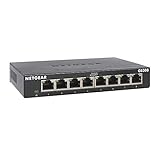
- GIGABIT ETHERNET PORTS: Features 8 x 1.0Gbps Ethernet ports for high-speed connectivity. Auto-negotiating ports detect the optimal speed for connected devices and work with existing Cat5e or Cat6 Ethernet cables.
- PLUG-AND-PLAY UNMANAGED NETWORK SWITCH: Simple plug-and-play setup with no software to install or configuration required.
- FLEXIBLE MOUNTING OPTIONS: Compact metal design supports desktop or wall-mount placement for versatile installation.
- SILENT & ENERGY-EFFICIENT OPERATION: Fanless design ensures silent performance, while IEEE 802.3az Energy Efficient Ethernet reduces power consumption without compromising high-speed network performance.
- REGIONAL COMPATIBILITY: Made for use in U.S. & CA only
- Secure space and power. The firm leases a cabinet, cage or other colocation space and plans its power, network hardware and physical access.
- Choose the destination and service. The firm determines which venue, market-data provider, carrier or financial extranet it needs. A market-data subscription and an order-entry connection may be separate products.
- Obtain authorization. The venue or provider may require onboarding, a service order or a Letter of Authorization (LOA) before a data-center cross-connect can be requested.
- Order the connection. The customer or its provider arranges the physical cross-connect or virtual connection and confirms which ports and demarcation points it joins.
- Configure and test. Network teams configure ports and, as applicable, VLANs, optics, FIX sessions, multicast feeds and other protocols. They validate data entitlements, routing, timing, packet loss and failover behavior.
- Monitor it in operation. The firm tracks feed health, latency, clock synchronization and connection status, and tests recovery paths rather than assuming that a backup circuit behaves exactly like the primary.
Nasdaq’s NY4 POP process illustrates why a POP is not a one-step purchase. Nasdaq says customers place POP handoff orders through its customer portal and receive an LOA. That authorization lets them request the subsequent cross-connect from the data-center provider. Nasdaq also says the customer is responsible for ordering and maintaining the cross-connect between its cabinet or telecom demarcation point and the Nasdaq POP. The customer must separately satisfy relevant market-data and order-entry requirements. Nasdaq’s POP FAQ describes the process and additional charges.
Why proximity matters—and what a latency number means
Data moving over fiber takes time, so shorter physical routes can reduce propagation delay. A direct cross-connect may also eliminate intermediate network hops. Colocation can make a path more predictable and easier to troubleshoot. For firms whose systems react to market data or submit orders electronically, those differences can matter.
But “latency” is not one universal number. Market-data delivery and order-entry timing are distinct measurements; one-way circuit latency is not the same as a round trip from a strategy to a matching engine and back. The total also depends on switches, serialization, queueing, hardware, operating-system and application behavior, exchange rules, congestion and the exact route. A fast cable does not guarantee a fast strategy, and low latency alone does not make a trading approach profitable.
Nasdaq’s FAQ lists 150 microseconds of one-way circuit latency between Carteret and its Secaucus POP, with redundant circuits. Treat this as a specific published point-to-point circuit figure—not a promise for every NY4 connection, all market-data feeds, or a complete trade round trip. Nasdaq notes that failover paths have a different latency profile because they are distinct routes. Redundancy can improve resilience while changing performance.
Rank #4

- 【One Switch Made to Expand Network】Features 5 RJ45 ports with 10/100/1000Mbps speeds, supporting Auto-Negotiation and Auto MDI/MDIX for hassle-free setup. Ideal for expanding your network, with 1 uplink (input) port and 4 output ports to split your Ethernet connection to multiple devices.
- 【Gigabit that Saves Energy】Latest innovative energy-efficient technology greatly expands your network capacity with much less power consumption and helps save money
- 【Reliable and Quiet】IEEE 802.3X flow control provides reliable data transfer and Fanless design ensures quiet operation
- 【Plug and Play】Easy setup with no software installation or configuration needed
- 【Ethernet Splitter】Connect to your router or modem for additional wired connections (laptop, gaming console, printer, etc)
NY4, NY11 and other regional facilities
| Site | What the cited information establishes |
|---|---|
| NY4 | Equinix’s Secaucus facility; Nasdaq operates a POP there. CBX’s filing scheduled its Main Session matching engine move there in 2025. |
| NY11 | In Carteret, New Jersey; Nasdaq identifies it as its primary production data center. |
| NY5 | Another Secaucus facility. Nasdaq reported that Tradeweb’s Dealerweb CLOB moved its primary data center there and described cross-connections involving NY2, NY4 and NY5. |
| NY2, NY3, NY6, NY7 and other sites | Other facilities in the broader regional ecosystem, with different tenants, services and routes. Their names do not establish that a particular venue or provider is available at a given site. |
These distinctions matter when selecting a location: the useful site depends on the exact matching engine, POP, data feed or counterparty the firm needs. “NY4” is not a synonym for the entire Secaucus trading campus, and a connection to a venue’s POP is not automatically the same as colocation beside its matching engine.
Independent reader supportYour contribution helps us test, update, and keep practical guides available for everyone.What does NY4 connectivity cost?
There is no single NY4 price. A realistic budget can include space and power, equipment, cross-connect installation and monthly fees, carrier or extranet transport, exchange connectivity, market-data licenses and distribution, order-entry ports and sessions, remote support, and redundant circuits. Firms also pay for the people and processes needed to operate and test the deployment.
Equinix does not display NY4-specific colocation pricing on its facility page; space, power, density, term and service needs require a quote. Equinix’s documentation describes most cross-connect categories as having a one-time installation or non-recurring charge (NRC) plus a monthly recurring charge (MRC); early termination may also carry deinstallation costs. Cross-connect billing terms provide details.
The Tool Desk
Outbyte Driver Updater FREEScan for outdated or missing drivers - takes under a minuteDriver Scan →Outbyte PC Repair FREEClear out junk files and repair common Windows errorsFree Scan →Nasdaq’s published FAQ offers a specific price example for production POP connectivity: a 1 Gbps Ultra handoff for Nasdaq Markets and selected third-party data at NY4/CH4 is listed at $1,500 installation and $2,500 monthly; the 10 Gbps option is listed at $1,500 installation and $7,500 monthly. The FAQ says additional data, distribution, access, order-entry port and session fees may apply. These are Nasdaq POP charges, not the price of an NY4 cabinet, a full trading setup or all market-data rights. Confirm current terms and eligibility with Nasdaq before budgeting.
Best Value

- 𝗘𝗶𝗴𝗵𝘁 𝟮.𝟱 𝗚𝗯𝗽𝘀 𝗣𝗼𝗿𝘁𝘀 𝗳𝗼𝗿 𝗦𝘂𝗽𝗲𝗿-𝗙𝗮𝘀𝘁 𝗖𝗼𝗻𝗻𝗲𝗰𝘁𝗶𝗼𝗻𝘀: 8× 2.5-Gigabit ports unlock the highest performance of your Multi-Gig bandwidth and devices, and provide up to 40 Gbps of switching capacity.
- 𝗔𝘂𝘁𝗼-𝗡𝗲𝗴𝗼𝘁𝗶𝗮𝘁𝗶𝗼𝗻: Auto-negotiation intelligently senses the link speeds and adjusts between 3-speeds (100Mb/1G/2.5G) for compatibility and optimal performance for all your devices, including 2.5G WiFi 6 AP, 2.5G NAS, 2.5G PCIe Adapter, 2.5G Server, gaming computer, 4K video, and more.
- 𝗜𝗱𝗲𝗮𝗹 𝗳𝗼𝗿 𝗩𝗮𝗿𝗶𝗼𝘂𝘀 𝗦𝗰𝗲𝗻𝗮𝗿𝗶𝗼𝘀: Built for LAN parties, home entertainment, small and home offices, and instant transfer for workstations.
- 𝗛𝗮𝘀𝘀𝗹𝗲-𝗙𝗿𝗲𝗲 𝗖𝗮𝗯𝗹𝗶𝗻𝗴: Instantly upgrade to 2.5 Gbps without the need to upgrade to Cat6 wiring, reducing wiring costs and hassle. *
- 𝗦𝗶𝗹𝗲𝗻𝘁 𝗢𝗽𝗲𝗿𝗮𝘁𝗶𝗼𝗻: Industry-leading fanless design ensures silent operation, ideal for any home or business.
Virtual connectivity has its own cost model, not a universal cost advantage. Equinix’s Fabric billing documentation describes monthly charges for 1G, 10G and 100G ports, generally with a 12-month term, while virtual connections are bandwidth-tiered and have no term commitment under the documentation. Cloud routers or network-edge devices may add instance, software, virtual-circuit and cloud-provider fees. Compare the full route, contract and service requirements rather than just the port price. Equinix Fabric billing information and its pricing-tool documentation outline those components.
When NY4 makes sense—and when it may not
NY4 may be worth considering when a firm specifically needs a provider or venue available there, its counterparties are already connected in the facility, or a controlled physical path and hands-on hardware access justify colocation. Its network density can be useful for connecting to several providers in one metro, while redundant power, cooling and remote support can help reduce operational burden.
It may be a poor fit if the application is latency-insensitive, the required matching engine is elsewhere, or the firm needs only ordinary cloud hosting or Internet access. Fixed costs can also outweigh the benefit for a small operation or modest trading volume. A hosted service or provider connection may avoid the need to operate a full cabinet, although it can reduce control over hardware and routing. A virtual service may offer flexibility, but it is not automatically appropriate for a path that depends on a particular physical route or tightly controlled latency.
Quick wins for a faster PC:
Repair Windows errors before they cause bigger problemsFix Now →Scan for outdated or missing drivers - takes under a minuteDriver Scan →Clear out junk files and repair common Windows errorsFree Scan →Before committing, confirm the exact venue and service location, whether the provider is reachable from the intended cabinet, who owns each cross-connect, what licenses and sessions are required, and how primary and backup routes differ. Verify power feeds, rack-level redundancy, timing and failover behavior in the design. Provider availability, diversity and route quality must be checked for the specific deployment; carrier-neutral means choice among available providers, not universal availability at every rack.
NY4 is not valuable because traders gather there. It is valuable when its equipment, service providers and network paths put a firm in useful proximity to the infrastructure it needs. Whether that proximity is worth the cost depends on the destination, the application and the full operating design.
Quick Recap
Product prices and availability are accurate as of the date/time indicated and are subject to change. Any price and availability information displayed on Amazon at the time of purchase will apply.



