Free tools Windows power users keep installed
One-click scans. No signup required.
Some links on this page are affiliate links: if you buy through them we may earn a commission, at no extra cost to you.
Infostealer malware can turn one infected employee or contractor device into a source of reusable corporate access. It may copy browser passwords, session cookies, authentication tokens, autofill data, email and VPN credentials, cloud secrets, cryptocurrency wallets, and local files, then send them to criminals. Those artifacts can be sold, replayed against business applications, used for fraud, or passed to ransomware operators.
The right response is to treat a confirmed infection as a potential identity and session compromise—not merely an antivirus alert. Isolate the device, revoke sessions and tokens from a clean device, rotate exposed secrets, and investigate identity, email, SaaS, VPN, and cloud activity.
What is infostealer malware?
An infostealer is malware designed to collect sensitive information from an infected computer or phone and transmit it to an attacker-controlled server or criminal marketplace. Capabilities differ by malware family, operating system, browser, user privileges, and the data actually present on the device.
Quick wins for a faster PC:
Repair Windows errors before they cause bigger problemsFix Now →Fix the driver behind crashes, sound loss and screen glitchesFind Drivers →Depending on those conditions, a stealer may target:
#1 Best Overall

- High-Resolution Scanning: Features a 38MP CMOS sensor with a resolution of 7168 × 5376 and 410 DPI, suitable for capturing clear and detailed images
- Patented Curve-Flattening Technology: Automatically flattens the curved pages of bound books and removes distortion for accurate, clean scans without the need to unbind
- Powerful OCR Functionality: Converts scanned images into editable and searchable files, including Word, Excel, and searchable PDFs. Supports 180+ languages. Please note that Thai and Hebrew are currently not supported. Arabic is only supported on ET Series scanners under Windows systems; other operating systems currently do not support Arabic OCR. If you need the complete OCR language support list, please feel free to contact us for more details
- Large Scanning Area: Supports documents up to A3 size (16.5'' × 11.7''). Note: Not recommended for glossy or highly reflective materials
- Fast Scanning Speed: Scan a page in just 1.5 seconds with practiced operation—ideal for high-efficiency, bulk scanning projects
- Browser usernames, passwords, cookies, session tokens, history, and autofill records.
- Payment details, email, messaging, VPN, and SaaS credentials.
- Cryptocurrency wallets and locally stored files or screenshots.
- Password-manager data where the malware can access the relevant browser or operating-system context.
- Developer credentials, API keys, SSH keys, cloud tokens, environment files, and source-code secrets.
That makes an infostealer different from a simple keylogger. It can steal an already-authenticated browser session, allowing an attacker to act as the user without necessarily knowing the password or causing a fresh multifactor-authentication prompt. CrowdStrike describes browser-data theft and session hijacking as central features of modern stealers (CrowdStrike).
How does it reach a business device?
Common delivery routes include phishing attachments and links, fake browser or software updates, cracked applications and game cheats, malvertising, search-engine poisoning, compromised websites, fake CAPTCHA or document downloads, hijacked social-media or messaging accounts, exploited vulnerabilities, and third-party or supply-chain distribution. Employees installing unapproved software is another frequent route.
The business attack chain usually looks like this:
- A user runs or installs the malware.
- It collects local passwords, cookies, tokens, keys, and other data.
- The information is exfiltrated and packaged into a “log” or credential collection.
- Criminals sell or exchange it.
- Another actor tests the credentials or session against email, SaaS, VPN, cloud, or financial systems.
- The actor commits fraud, steals data, escalates privileges, establishes persistence, or enables ransomware.
Why businesses face greater risk than individuals
A corporate endpoint often contains several valuable identities at once. An employee may be signed in to email, CRM, payroll, file storage, code repositories, collaboration tools, VPN, and cloud consoles. Single sign-on can turn one stolen identity into access to many connected applications. Administrators, developers, finance staff, and executives may expose especially sensitive systems, payment workflows, production environments, or secrets.
Remote and hybrid work also mean that business access may occur from lightly managed or personal devices. Attackers can use stolen credentials and sessions to look like legitimate users rather than noisy perimeter intruders.
Rank #2

- Plug and play, This laser handheld barcode scanner has simple installation with any USB port and Ideal for businesses, shops and warehouse operations. Its function is unbeatable and easy to use, design is stylish
- Compatible with Windows, Mac, and Linux; works with Word, Excel, Novell, and all common software
- Scanning Speed: 200 scans per second. Scanning angle: Inclination angle 55°, Elevation angle 65°. Operational Light Source:Visible Laser 650-670nm.
- Decode Capability: Code11, Code39, Code93, Code32, Code128, Coda Bar, UPC-A, UPC-E, EAN-8, EAN-13, ISBN/ISSN, JAN.EAN/UPC Add-on2/5 MSI/Plessey, Telepen and China Postal Code,Interleaved 2 of 5, Industrial 2 of 5, Matrix 2 of 5, etc ; 300 configurable options for prefix, suffix and termination strings, support turn on/off the beep.
- Color: Black. Dimensions: 3.6 x 2.6 x 6.1 inches. Type of Cable: 2M or 6ft straight cable. Shock: 1.5m drop on concrete surface. Regulatory Approvals: FCC CE.
Vendor findings illustrate the concern but should not be treated as universal statistics. Palo Alto Networks’ 2026 Unit 42 report says identity weaknesses were material in almost 90% of its investigations and that more than 90% of incidents in its dataset were materially enabled by misconfiguration or coverage lapses (Unit 42). Verizon’s 2026 DBIR found that, among ransomware victims in its expanded dataset with an associated credential-leak or infostealer event, half had that event within the preceding 95 days; 27% had no associated event. This indicates a possible upstream relationship, not proof that every stealer causes ransomware (Verizon DBIR).
How a stolen browser session becomes a business breach
The practical sequence is:
infected laptop → stolen browser data → criminal marketplace → session or credential reuse → SaaS/cloud access → fraud, espionage, ransomware, or extortion
A valid cookie or refresh token may let an attacker reuse an authenticated state. That is why “the password was changed” is not necessarily the end of the incident. Active sessions, refresh tokens, OAuth grants, API keys, SSH keys, app passwords, mailbox rules, and cloud secrets may require separate revocation or rotation.
What can a business lose?
Account takeover and fraud
- Email, SaaS, VPN, remote-access, cloud-console, and customer-support accounts.
- Payment diversion, invoice fraud, payroll redirection, and executive impersonation.
- Abuse of existing email threads to make fraudulent requests appear genuine.
Ransomware and extortion
Stolen access can be sold to an initial-access broker, followed by privilege escalation, lateral movement, data theft, encryption, or extortion. An infection does not prove ransomware or exfiltration occurred; endpoint, network, identity, and cloud evidence must establish what happened.
Rank #3

- PORTABLE SCANNER FOR USE ON-THE-GO — The fastest and lightest mobile single-sheet-fed compact document scanner in its class¹
- QUICK DOCUMENT SCANNING ― This Epson ultra-fast scanner scans a single page as quickly as 5.5 seconds²; Windows and Mac compatible
- VERSATILE PAPER HANDLING ― Portable scanner scans documents up to 8.5 x 72 in; Also easily digitizes receipts and ID cards to make accounting, bookkeeping, and organizing simpler
- INTUITIVE, HIGH-SPEED SOFTWARE — Epson ScanSmart Software³ is a smart tool allowing you to easily scan, review, and save; Stay organized easily with the help of this Epson scanner
- EASY SETUP — USB-powered connect to your computer for quick and simple scanning; No batteries or external power supply required to operate portable document scanner; Standard Connectivity: USB 2.0
Intellectual property and regulated data
Source code, product designs, research, contracts, customer lists, employee records, API keys, and cloud infrastructure details may be exposed. Depending on the data and jurisdiction, notification, contractual, insurance, legal-hold, or regulatory obligations may follow.
Can infostealers bypass MFA?
They may bypass a fresh MFA challenge indirectly by stealing an already-authenticated session or token. That is session hijacking, not universal defeat of MFA cryptography. MFA still substantially reduces password-only attacks, and phishing-resistant methods such as hardware security keys provide stronger protection than passwords or push approvals alone.
Use MFA with device trust, Conditional Access, short or risk-based sessions, token-protection features where supported, continuous risk evaluation, and endpoint controls. Microsoft Entra supports risk-based policies, leaked-credential detection, Conditional Access, and risk-driven remediation across applicable plans (Microsoft Entra ID Protection FAQ; Microsoft identity security guidance). Verify each provider’s behavior: a password reset may not invalidate every active session, refresh token, OAuth grant, or application-specific secret.
PC Slower Than It Used to Be?
A free scan shows the junk files, broken settings and background clutter dragging Windows down - then fixes them in one click.Free scan · Windows 10 & 11Crashes, No Sound, or Screen Glitches?
Random freezes, missing sound and display glitches usually trace back to one bad driver. Find and replace yours safely.Free scan · under a minuteWhat to do after a suspected infection
- Isolate the device. Disconnect wired and wireless networking and stop using it for business. Preserve it rather than immediately wiping it when forensic evidence may be needed. For a personal device, involve legal, HR, and privacy stakeholders.
- Contain identities from a trusted device. Revoke active sessions and refresh tokens where supported. Reset passwords for accounts used on the device, revoke remembered devices and trusted browsers, review MFA methods, and remove unauthorized registrations.
- Rotate secrets. Replace API keys, SSH keys, cloud secrets, application passwords, and other credentials that may have been locally accessible. Rotate after useful evidence is collected when doing so would destroy investigative context.
- Prioritize high-value users. Start with tenant, domain, global, and cloud administrators; finance and payment users; developers and DevOps; security administrators; executives and assistants; and anyone with regulated data or VPN access.
- Review identity and application logs. Look for unfamiliar locations or autonomous systems, impossible travel, abnormal velocity, new MFA methods, OAuth consent, mailbox forwarding and rules, bulk downloads, new administrative roles, and unusual access to SharePoint, OneDrive, Google Workspace, GitHub, cloud consoles, or CRM systems. Export identity logs to a SIEM or equivalent monitoring system (Microsoft guidance).
- Determine scope and recover. Establish which browsers, profiles, sessions, files, repositories, VPNs, and privileged systems were reachable. Reimage or rebuild when compromise cannot be confidently ruled out, patch systems and browsers, remove unauthorized software and extensions, monitor for recurrence, and make legally required notifications.
Controls that reduce infostealer risk
Endpoint
- Managed EDR or next-generation antivirus with centralized alerting and asset inventory.
- Application control, patching, script and unauthorized-execution protection, and limited local-admin rights.
- USB governance and mobile-device coverage where business accounts are accessed.
Identity
- MFA everywhere, with phishing-resistant MFA for administrators and high-risk users.
- Conditional Access, blocked legacy authentication, separate admin accounts, least privilege, and just-in-time access.
- Alerts for leaked credentials, suspicious sign-ins, MFA changes, OAuth consent, and new privileged roles.
Browser and secrets hygiene
- Managed browsers, compliant devices, separate personal and corporate profiles, and limits on persistent sign-in from unmanaged devices.
- Enterprise password managers and removal of plaintext secrets from source code, shell history, shared documents, and local files.
- Prompt rotation of secrets after suspected exposure.
Email, web, and logging
- Attachment and URL scanning; SPF, DKIM, and DMARC; approved software sources; and blocking of risky downloads.
- User training against “paste this command” or fake-CAPTCHA instructions.
- Centralized endpoint, identity, email, SaaS, VPN, DNS/proxy, cloud, and EDR telemetry so an endpoint alert can be correlated with later account use.
CISA and the FBI also emphasize phishing-resistant MFA, asset inventory, least privilege, centralized logging, third-party controls, tested backups, and incident planning (CISA ransomware guidance; FBI cyber-resiliency actions).
Rank #4
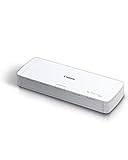
- STAY ORGANIZED – Easily convert your paper documents into digital formats like searchable PDF files, JPEGs, and more.Power Consumption : 2.5W or less (Energy Saving Mode: 0.7W). Suggested Daily Volume : 500 scans..Does it contain liquid: no
- CONVENIENT AND PORTABLE –lightweight and small in size, you can take the scanner anywhere from home offices, classrooms, remote offices, and anywhere in between
- HANDLES VARIOUS MEDIA TYPES – Digitize receipts, business cards, plastic or embossed cards, reports, legal documents, and more
- FAST AND EFFICIENT – No technical hurdles or complicated setups here; easily scan both sides of a document at the same time, in color or black-and-white, at up to 12 pages-per-minute, and with a 20 sheet automatic feeder
- BROAD COMPATIBILITY – Works with both Windows and Mac devices, be it laptop or computer
Should you prioritize EDR, identity security, MDR, or a compromise assessment?
| Priority | Best indication | Important limitation |
|---|---|---|
| Endpoint protection/EDR | Weak laptop visibility, frequent unapproved installs, remote work, or no investigation capability. | Does not automatically revoke SaaS sessions or rotate secrets. |
| Identity security | Heavy Microsoft 365, SaaS, VPN, or cloud use; broad SSO; privileged users on ordinary workstations. | Cannot replace endpoint isolation or prove local exfiltration. |
| MDR | No 24/7 security team or inability to triage alerts promptly. | Value depends on telemetry coverage, tuning, escalation, and human expertise. |
| Specialist compromise assessment | Privileged-user infection, unexplained cloud activity, uncertain timeline, ransomware signs, or legal/insurance requirements. | Custom and potentially costly; it complements rather than replaces routine controls. |
For a Microsoft 365 organization, begin with Entra MFA, Conditional Access, leaked-credential detection, logging, and Microsoft endpoint coverage. If endpoint visibility is the gap, evaluate an EDR or MDR provider. If a privileged account may be compromised, containment and a defensible assessment take priority over immediately buying another subscription. Unit 42 describes assessments involving endpoint, network, cloud, and third-party visibility, forensic collection, threat hunting, and executive reporting; engagements are custom (Unit 42 compromise assessment).
Frequently Asked Questions
Is a password reset enough after an infostealer infection?
No. Revoke active sessions and refresh tokens, review OAuth grants and MFA methods, and rotate API keys, SSH keys, app passwords, and cloud secrets as applicable.
Should the infected computer be wiped immediately?
Not if evidence may be needed. Isolate it first and coordinate preservation with your incident-response, legal, or forensic specialists; rebuild it after scope and evidence decisions are made.
What if the employee used a personal laptop?
Treat it as a potential corporate identity incident while following privacy, HR, and legal requirements. Your policy should define monitoring, isolation, and evidence rights before an incident occurs.
Best Value

- WHAT YOU GET: FixMeStick Virus Removal Tool for Windows PCs (Windows XP, Vista, 7, 8, 8.1, 10, and 11. 512 MB RAM required), Getting Started Guide, our virus removal guarantee backed by our friendly Canadian based Customer Support Team.
Does antivirus quarantine prove the business is safe?
No. Quarantine shows a detection; it does not prove that credentials or sessions were not collected before detection. Investigate the endpoint and affected identities.
When should a company call specialists?
Do so for privileged-user infections, unexplained cloud sign-ins, uncertain scope or timing, ransomware or persistence indicators, wiped evidence, or regulatory, insurance, or customer-assurance requirements.
The Bottom Line
Infostealer malware is an endpoint incident with potential identity, financial, and operational consequences. Isolate the device, revoke sessions and tokens, rotate exposed secrets, investigate cloud and identity activity, and rebuild from trusted sources. MFA remains essential, but it must be paired with phishing-resistant authentication, managed endpoints, least privilege, logging, and a tested response plan.
What’s actually slowing this PC down?
Pick the symptom - the matching free tool is one click away.
Quick Recap
Product prices and availability are accurate as of the date/time indicated and are subject to change. Any price and availability information displayed on Amazon at the time of purchase will apply.



