Some links on this page are affiliate links: if you buy through them we may earn a commission, at no extra cost to you.
Icertis acquired legal-technology startup Dioptra on November 19, 2025, in a deal designed to strengthen AI-assisted contract review, playbook creation, risk analysis and redlining. Icertis did not disclose the purchase price or other financial terms. The transaction follows a July 2025 partnership between the companies and appears to be a technology-and-talent acquisition focused on improving pre-signature contracting workflows.
What Icertis bought
Icertis said Dioptra’s founders and team would join its product and engineering organization. The announcement described the deal as an extension of Icertis Vera, the company’s broader AI strategy for contract intelligence.



The companies did not disclose the acquisition price, deal structure, acquired revenue, customer-transfer terms or detailed product-transition plans. Icertis’s announcement confirms the transaction but does not establish whether Dioptra will continue as an independent product.
What’s actually slowing this PC down?
Pick the symptom - the matching free tool is one click away.
Dioptra was founded in 2021 and participated in Y Combinator’s Winter 2022 batch, according to Y Combinator’s company profile. Icertis identified the founders as Pierre Arnoux, Farah Gasmi and Jacques Arnoux.
#1 Best Overall

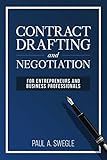
- Understand how contract provisions work
- Adapt reliable drafting precedents
- Avoid drafting errors, omissions, and ambiguities
- Make contracts more user-friendly
- Build flexibility into contracts without compromising precision
What Dioptra’s technology does
Dioptra positioned itself as an AI layer for contract work rather than a conventional end-to-end CLM replacement. Its advertised capabilities included:
- Generating redlines in Microsoft Word.
- Creating playbooks from executed contracts, standard forms and example redlines.
- Searching for and extracting contract terms.
- Producing issue lists and risk summaries.
- Recommending or inserting clauses from a clause library.
- Providing chat-based contract assistance.
- Connecting with CLM, CRM, procure-to-pay, email and Slack workflows.
The acquisition announcement specifically highlighted four customer-facing capabilities: AI-assisted playbook creation, agent-powered risk review, interactive redlining aligned with custom playbooks and one-click clause insertion. These functions are more specific than a general “AI upgrade”: they target the point where contracts are reviewed and negotiated before signature.
Dioptra’s public site also displayed vendor-reported accuracy figures of 95% for company paper, 92% for counterparty paper and 97% for term search and extraction. Those numbers should not be treated as independently verified benchmarks because the reviewed material did not disclose the methodology, sample size, test set or definition of accuracy.
How the deal follows the earlier partnership
Icertis and Dioptra announced a partnership on July 28, 2025, roughly four months before the acquisition. The partnership focused on “surgical redlining”: using bespoke playbooks to generate targeted changes, accelerate compliant routine agreements and escalate potentially risky contracts.
Rank #2
The sequence suggests that Icertis had already worked with Dioptra’s technology before deciding to acquire the company. It does not, however, prove that the partnership directly caused the acquisition. The companies’ partnership announcement and Dioptra’s account provide the public chronology.
Why Icertis wanted Dioptra
More automation before signature
CLM platforms traditionally organize contracts, approvals, obligations and searchable records. Dioptra adds capabilities aimed directly at pre-signature work: comparing drafts with negotiation rules, identifying deviations, proposing edits and inserting approved language.
A legal-specific experience
Legal teams often need more than summaries. They need to know which clause violates a policy, what fallback language is permitted, who must approve an exception and whether a proposed change affects other provisions. Dioptra’s playbook and redlining focus gives Icertis a way to address that review process more directly.
Do these 3 things before closing this tab:
1Repair Windows errors before they cause bigger problems2Fix the driver behind crashes, sound loss and screen glitches3Clear out junk files and repair common Windows errorsUsing a company’s own contracting history
Dioptra’s playbook-distillation concept turns prior contracts, standard forms and example negotiations into guidance. Combined with Icertis’s contract repository, that supports a strategy in which AI works from an organization’s own negotiated positions rather than relying only on generic language.
Moving toward bounded agents
The announced use case is not simply document summarization. An illustrative workflow would be:
- A business user submits or opens a draft agreement.
- The system identifies the contract type and relevant playbook.
- The AI compares the draft with approved rules and fallback positions.
- It produces redlines, an issues list and explanations for deviations.
- Routine, compliant items can move through a faster path.
- Unusual or high-risk issues are escalated to legal or another authorized approver.
- The final document and approval decisions are stored in the contract system.
This is an interpretation of the announced capabilities, not a verified description of every current Icertis screen or customer implementation. “Agentic” should also not be confused with unsupervised legal decision-making: playbooks, permissions, escalation rules and human review remain important controls.
What it could mean for Icertis customers
For organizations already using Icertis, the potential benefits include faster first-pass review, more consistent enforcement of playbooks, quicker redline generation and better links between historical contracts and new negotiations.
The practical value will depend on implementation quality. Historical contracts may contain outdated or contradictory language. A playbook created from poor source material can reproduce those problems. Clause changes can also affect definitions, liability caps, indemnities, insurance, data rights and termination provisions elsewhere in an agreement.
Human review remains particularly important for unusual transactions, regulated industries, complex counterparty paper, high-value agreements and jurisdiction-specific issues. A system that identifies a deviation may not know whether the business has authority to approve it.
What it means for Dioptra customers
The acquisition announcement does not clearly say whether Dioptra will remain available as a standalone product, whether customers must migrate, whether pricing or contracts will change, or whether existing integrations will be maintained.
Dioptra’s website displayed “Book Demo” and “Sign Up” calls to action in the reviewed material, but that is not proof of unchanged availability, pricing or support commitments. Existing and prospective customers should obtain written answers about product access, data migration, support, integration maintenance and roadmap ownership.
Quick wins for a faster PC:
Repair Windows errors before they cause bigger problemsFix Now →Fix the driver behind crashes, sound loss and screen glitchesFind Drivers →Questions buyers should ask
- Packaging: Are Dioptra-derived capabilities included in an existing Icertis subscription, or sold as a separate Vera, AI, user, document or usage-based add-on?
- Accuracy: Can the vendor test the system on the buyer’s own company and counterparty paper?
- Human controls: Can users accept, reject, edit, explain and audit every AI-generated change?
- Word workflow: Do tracked changes, comments, tables, defined terms and document formatting survive correctly?
- Data governance: Where are documents, prompts, outputs, embeddings and logs stored? Is customer data used to train models?
- Auditability: Can the system preserve the source clause, governing rule, AI output, user decision and final contract?
- Escalation: How are conflicting clauses, missing playbook rules and uncertain interpretations handled?
- Integration: Does the workflow connect cleanly with CLM, CRM, procurement, e-signature, email and identity systems?
- Transition: What happens to current Dioptra customers, contracts, pricing and support?
Market significance
The acquisition reflects a wider CLM shift from storing contracts and managing approvals toward actively operating on contract content. Vendors are competing to provide contract-specific generative AI, automated negotiation assistance, structured data extraction and workflow actions inside tools such as Microsoft Word.
Icertis later linked the Dioptra acquisition with AI annual recurring-revenue growth and platform adoption in company-reported materials. Those statements are not independent evidence that the acquisition caused the growth or generated a particular return.
The deal may strengthen Icertis against both full-suite CLM platforms and focused legal-AI tools. But it does not by itself establish that Icertis leads the market, that competing products are no longer needed or that the acquired technology will be available to every Icertis customer.
The financial and commercial picture
No reliable public pricing or acquisition valuation was disclosed in the reviewed official sources. Buyers should request a quote and ask specifically whether the functionality is included in their current agreement or requires a new module or implementation project.
Recommended Free Tools
Icertis is likely to be a better fit for large organizations with complex contracting, compliance, procurement and integration requirements. A focused contract-review tool may be more suitable for a legal team that wants redlining assistance without replacing its entire CLM environment. Procurement-oriented platforms may be preferable when supplier workflows and purchase orders matter more than legal negotiation.
Bottom line
Icertis’s Dioptra acquisition is best understood as a strategic move to strengthen the pre-signature side of contract intelligence. It brings together Icertis’s enterprise CLM platform and Dioptra’s advertised capabilities for playbook generation, risk review, redlining and clause insertion.
The deal is meaningful, but its business impact is not yet proven by the public announcement. The key questions are whether the technology integrates well, how it is packaged, how existing Dioptra customers are treated and how reliably it performs on real-world contracts under human governance.
Quick Recap
Product prices and availability are accurate as of the date/time indicated and are subject to change. Any price and availability information displayed on Amazon at the time of purchase will apply.



