Recommended Free Tools
Some links on this page are affiliate links: if you buy through them we may earn a commission, at no extra cost to you.
IBM Granite 4.0 is an open-weight family of enterprise language models designed to reduce the memory and serving burden associated with conventional Transformer models. Its hybrid architecture uses mostly Mamba-2 state-space layers, with selected Transformer attention layers retained for tasks such as retrieval, instruction following and tool calling.
IBM says the approach can deliver more than 70% lower memory requirements and up to 2× faster inference than similar models in certain long-context and multi-session scenarios. Those figures are IBM-reported claims, not universal guarantees. Results depend on the exact checkpoint, context length, concurrency, hardware, quantization and inference runtime.


There is also an important date qualification: Granite 4.0 launched on October 2, 2025. IBM’s newer Granite 4.1 family arrived on April 29, 2026, so anyone planning a new deployment should test both rather than automatically choosing Granite 4.0.
What’s actually slowing this PC down?
Pick the symptom - the matching free tool is one click away.
What is IBM Granite 4.0?
Granite 4.0 is a family of open-weight language models from IBM, rather than one model with one fixed capability or hardware profile. The family includes different size tiers and model types intended for workloads ranging from local experimentation to enterprise inference, retrieval-augmented generation (RAG), tool calling and agent workflows.
#1 Best Overall
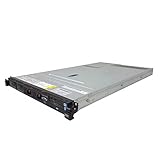
- IBM X3550 M4 4B Server
- 2x 2.50GHz E5-2640 12-Cores Total
- 32GB RAM / No Hard Drives / No Hard Drive Trays
- M5110 w/ 1GB
- No Operating System
IBM released the models under the Apache 2.0 license, according to its launch announcement. The models were made available through channels including IBM watsonx.ai, Hugging Face, Docker Hub, Kaggle, LM Studio, NVIDIA NIM, Ollama, Replicate and other partners. Availability through a platform does not mean that every provider offers the same model revision, context length, quantization, support or commercial terms.
The most useful way to evaluate Granite 4.0 is therefore to name the exact checkpoint. “Granite 4.0” alone is too broad for a deployment decision.
IBM announced Granite 4.0 on October 2, 2025.
Granite 4.0 model types and specifications
The family spans dense and mixture-of-experts (MoE) designs, along with small, micro, tiny and other size tiers. It also includes base and instruct checkpoints.
Free tools Windows power users keep installed
One-click scans. No signup required.
| Specification | What buyers should check |
|---|---|
| Model name | Use the exact IBM or Hugging Face checkpoint name, not just “Granite 4.0.” |
| Architecture | Determine whether the checkpoint is a dense hybrid model or a hybrid MoE model. |
| Parameters | For MoE models, distinguish total parameters from active parameters used for each token. |
| Model type | Base checkpoints are not instruction-tuned assistants; instruct checkpoints are intended for following user requests. |
| Context length | Verify the limit for the specific revision and runtime. A headline long-context capability does not guarantee equal quality throughout the context. |
| License | IBM says the released Granite 4.0 models use Apache 2.0 licensing. Hosted services can have separate terms. |
| Quantization | Confirm which formats are officially supported and test their effect on quality, speed and memory. |
| Runtime support | Check support for the exact GPU, CPU, operating system, library version and serving framework. |
Granite-4.0-H-Small is one prominent long-context instruct model. Its Hugging Face model-card presentation has varied across revisions, showing approximately 30 billion to 32 billion parameters. That is a reason to use the current model-card revision when sizing hardware, rather than copying an older parameter figure into a procurement document.
The model card is available at Hugging Face; its historical revision is documented here.
How the hybrid Mamba-Transformer architecture works
Traditional Transformer models use attention to compare tokens with other tokens in a sequence. Attention is powerful, but its memory and compute requirements can become a major serving constraint as prompts grow longer and more users share an accelerator.
Granite 4.0 takes a hybrid approach:
Input tokens
   ↓
Mamba-2/state-space blocks
   ↓
Selective Transformer attention blocks
   ↓
Mamba-2/state-space blocks
   ↓
Output or tool-call generation
This is a conceptual simplification, not a complete layer-by-layer specification. IBM describes Granite 4.0 as using mostly Mamba-2 layers, with occasional Transformer layers inserted where attention remains useful.
Do these 3 things before closing this tab:
1Repair Windows errors before they cause bigger problems2Scan for outdated or missing drivers - takes under a minute3Clear out junk files and repair common Windows errorsWhat Mamba-2 contributes
Mamba-2 belongs to the state-space-model family. In practical deployment terms, state-space layers can process sequence information with less memory pressure than full attention, particularly when context length and the number of concurrent sessions increase.
That can matter for applications that keep many conversations open, process long documents or place retrieved material into every prompt. Less memory pressure may make it possible to use smaller accelerators, serve more sessions per device or avoid the most aggressive quantization.
Why IBM keeps Transformer attention
Attention is still useful when a model must make selective token-to-token comparisons. IBM specifically positions the Transformer portions of the design as helpful for instruction following, retrieval and tool-use behavior.
Granite 4.0 does not claim that attention is obsolete. Its premise is that most sequence processing can use a more memory-efficient mechanism while carefully placed attention layers preserve capabilities that matter to enterprise applications.
IBM’s explanation of the design is available in its technical overview. The approach follows earlier IBM research including the Bamba hybrid state-space/Transformer model.
Why the design could reduce infrastructure costs
The cost argument has several separate parts. Lower memory use, faster generation and lower active computation are related, but they are not the same metric.
1. Lower memory requirements
IBM’s Granite documentation claims more than 70% lower memory requirements compared with similar models in specified scenarios. If that applies to a particular workload, a team might be able to:
- Use a smaller GPU or fewer GPUs per replica.
- Fit more concurrent sessions on each accelerator.
- Use less aggressive quantization.
- Handle longer contexts within a fixed memory budget.
- Deploy more practical CPU, integrated-GPU or edge configurations.
However, the percentage is not a universal hardware discount. Memory requirements depend on model size, precision, prompt length, output length, batch size, concurrency, KV-cache behavior and runtime implementation. A short-prompt workload may show a much smaller advantage than a long-context, multi-session workload.
The Tool Desk
Outbyte PC Repair FREERepair Windows errors before they cause bigger problemsFix Now →Outbyte Driver Updater FREEScan for outdated or missing drivers - takes under a minuteDriver Scan →2. Throughput and latency
IBM also describes 2× faster inference in relevant long-context and multi-session comparisons. A production evaluation should identify which metric improved:
Rank #3

- 2.0 GHz Intel Xeon
- 8 GB SDRAM DDR3
- Linux
- Time to first token: how quickly generation begins.
- Inter-token latency: the delay between generated tokens.
- Tokens per second: generation speed for one request or a batch.
- End-to-end latency: including preprocessing, retrieval, queuing and tool calls.
- Throughput: completed requests or tokens under realistic concurrency.
A model may generate tokens quickly for one user but become less attractive at high concurrency if expert routing, memory placement or scheduling is inefficient.
3. MoE active computation
Some Granite 4.0 models use a fine-grained MoE strategy with shared experts. In an MoE model, the total parameter count can be much larger than the number of parameters activated for each token. That can lower per-token computation compared with a similarly capable dense model.
MoE does not make the whole model free to store or serve. The system may still need to hold many experts in memory, and routing can introduce communication and scheduling overhead. Multi-GPU deployments may also have to move data between devices. Expert imbalance can reduce the theoretical efficiency.
Quick wins for a faster PC:
Scan for outdated or missing drivers - takes under a minuteDriver Scan →Repair Windows errors before they cause bigger problemsFix Now →For that reason, compare total parameters, active parameters, peak memory, throughput and cost together. Parameter count alone is not a cost model.
What Granite 4.0 is designed to do well
IBM positions Granite 4.0 around enterprise language workloads rather than claiming frontier-level general reasoning across every category. Relevant use cases include:
- Instruction following and enterprise text generation.
- Retrieval-augmented generation over documents and knowledge bases.
- Function and tool calling.
- Multi-agent workflows.
- Customer-support automation.
- Long-document processing.
- Private, local or edge inference.
Granite-4.0-H-Small is specifically presented as an instruct model for long-context and agentic tasks, including tool calling. That does not mean it will outperform every competing model. Quality depends on the exact prompt format, tool schema, retrieval system, orchestration framework and evaluation set.
RAG quality is also not determined by the generator alone. Chunking, embeddings, reranking, retrieval recall and citation handling can matter as much as the language model.
Open weights do not mean every deployment is identical
Apache 2.0 model weights can be attractive to teams that want private deployment, modification and greater control over their serving environment. But “open-weight” is more precise than broadly calling the entire system open source.
Rank #4

- New
- IBM - SERVER OPTIONS 46M0902
- IBM - SERVER OPTIONS 46M0902 RR ULTRASLIM ENHANCED SATA MULTI BURNER
Open weights do not automatically imply open training data, fully reproducible training or unrestricted use of every companion dataset. Hosted offerings may add their own data-handling policies, usage limits, prices and contractual terms. Enterprise indemnity or governance features offered through IBM may apply to a managed IBM service rather than to every self-hosted copy.
IBM also describes Granite as cryptographically signed and associates the family with governance and ISO/IEC 42001-related claims. Those are useful provenance and governance signals, but they do not guarantee that generated answers are accurate, harmless or compliant in a particular application. Application-level safety controls remain necessary.
Deployment routes
Hugging Face and local serving
Hugging Face is the most direct route for obtaining model artifacts, reading revision-specific documentation and integrating with the surrounding ecosystem. It is a good starting point for engineers who want to control the runtime and benchmark the exact checkpoint.
Docker Model Runner
The Granite-4.0-H-Small model card provides this example command:
docker model run hf.co/ibm-granite/granite-4.0-h-smallUse the current model card for Python loading examples. Model classes, library APIs and recommended versions can change, so copying an older snippet may produce an incorrect model-class or kernel error.
Ollama and LM Studio
IBM lists Ollama and LM Studio among Granite 4.0 access or distribution channels. They can be convenient for local experimentation and prototyping. They should not automatically be treated as production serving platforms for high-concurrency workloads without testing observability, scheduling, runtime support and failure recovery.
NVIDIA NIM
NVIDIA NIM may be relevant to organizations standardized on NVIDIA infrastructure. Confirm that the exact Granite checkpoint and required hybrid architecture are supported in the needed NIM configuration. A model being named in an availability announcement does not establish identical support for every GPU or deployment topology.
Crashes, No Sound, or Screen Glitches?
Random freezes, missing sound and display glitches usually trace back to one bad driver. Find and replace yours safely.Free scan · under a minuteWindows Errors? Fix Them Before They Spread
Repair common Windows errors and clear accumulated junk for a smoother, more stable PC - no reinstall needed.Free scan · no reinstallIBM watsonx.ai
watsonx.ai is the managed option for teams that value IBM ecosystem integration, governance and enterprise support over maximum runtime customization. Self-hosting may be a better fit for organizations optimizing for hardware flexibility or the lowest possible infrastructure cost.
Independent reader supportYour contribution helps us test, update, and keep practical guides available for everyone.How to test Granite 4.0 properly
A useful benchmark should reproduce the workload that will generate the bill. Follow this sequence:
- Select the exact checkpoint. Record the model revision, base or instruct status, precision and quantization.
- Define the workload. Specify prompt length, retrieval context, output length, concurrency, batch size, tool calls and expected request mix.
- Choose a baseline. Test at least one similarly capable standard Transformer model, plus Granite 4.1 for any new project.
- Measure serving performance. Record time to first token, inter-token latency, tokens per second, end-to-end latency and throughput.
- Measure resources. Record peak accelerator memory, CPU use, system RAM, power where possible and network traffic for distributed serving.
- Measure quality. Use your own RAG questions, tool schemas, documents, refusal requirements and business success criteria.
- Repeat under concurrency. A single-user result is not a production capacity plan.
- Test failures. Include context overflow, malformed tool calls, long-generation degradation, quantized quality loss, unsupported kernels, memory fragmentation and runtime crashes.
- Convert results into economics. Calculate cost per successful task or completed workflow, not just cost per generated token.
For a practical cost model, include:
Total inference cost =
accelerator cost
+ host and memory cost
+ power
+ networking
+ storage
+ orchestration
+ monitoring
+ engineering and support
Lower GPU memory can reduce one component without reducing total ownership cost. Runtime tuning, monitoring, model updates and distributed-serving complexity may offset part of the hardware saving.
Trade-offs and failure modes
Hybrid architecture is promising, but it creates engineering questions that conventional Transformer deployments may have already solved.
- Runtime maturity: Some libraries support standard Transformer kernels more completely than hybrid Mamba architectures.
- Kernel compatibility: Support can vary by GPU, CPU, operating system and software version.
- Quantization: Dense and MoE variants may have different supported formats and different quality loss after quantization.
- Short prompts: The long-context advantage may be less important when requests are short.
- MoE serving: Expert routing, placement and communication can complicate multi-GPU deployments.
- Tool calling: Test the exact schema and agent framework rather than relying on a general function-calling score.
- Long-context quality: A model may accept a long prompt while still losing information, especially in the middle of the context.
- Base-model behavior: Base checkpoints are not safety-aligned assistants and should not be evaluated as though they were instruct models.
- Revision drift: Model cards and loading requirements can change, including reported parameter counts and recommended libraries.
IBM’s base-model documentation warns that base models are not safety-aligned and may produce problematic outputs. Production systems need access controls, content policies, monitoring, testing and human escalation where appropriate.
Granite 4.0 versus Granite 4.1
Granite 4.1 is the newer IBM family, released on April 29, 2026. That does not make every Granite 4.0 deployment obsolete. A 4.0 checkpoint may still be attractive when its runtime is already validated, its license and behavior meet requirements, or its memory profile fits a constrained device.
For a new project, however, Granite 4.1 should be part of the first comparison. Test the two generations on the same prompts, retrieval corpus, tool schemas, hardware and concurrency. A newer model may offer better quality or operational behavior, while a proven 4.0 runtime may still deliver lower cost for a particular workload.
IBM’s current-generation context is described in its Granite 4.1 announcement.
Who should consider Granite 4.0?
Granite 4.0 is most compelling when memory, concurrency, long context, private deployment or edge constraints dominate the decision. It is also worth testing when Apache 2.0 weights, IBM governance and watsonx integration are strategically valuable.
Choose another model or delay adoption when the workload is dominated by short prompts, requires frontier-level reasoning or multimodal capabilities, depends heavily on mature standard-Transformer tooling, or cannot justify custom runtime testing. A hosted API may also be preferable if the team wants to avoid operating inference infrastructure altogether.
Verdict
Granite 4.0 is an important practical test of whether hybrid state-space/Transformer models can make enterprise inference more efficient. IBM’s reported memory and speed improvements are plausible reasons to benchmark it, especially for long contexts and many simultaneous sessions, but they are not guaranteed production savings.
The correct buying decision is checkpoint-specific and workload-specific. Benchmark Granite 4.0 against a comparable Transformer, an MoE alternative where relevant, your current hosted option and Granite 4.1. Measure successful task cost, quality, latency and operational effort—not just parameter count or a headline memory percentage.
Quick Recap
Product prices and availability are accurate as of the date/time indicated and are subject to change. Any price and availability information displayed on Amazon at the time of purchase will apply.



