Quick wins for a faster PC:
Scan for outdated or missing drivers - takes under a minuteDriver Scan →Clear out junk files and repair common Windows errorsFree Scan →Fix the driver behind crashes, sound loss and screen glitchesFind Drivers →Some links on this page are affiliate links: if you buy through them we may earn a commission, at no extra cost to you.
The headline refers to Summit, the U.S. Department of Energy’s supercomputer at Oak Ridge National Laboratory. Unveiled on June 8, 2018, it ranked No. 1 on the TOP500 list with a 122.3-petaflop High-Performance Linpack result. That made it the world’s fastest system by that benchmark at the time—not today: Summit was shut down on November 15, 2024.
What Summit was—and who built it
Summit, technically the IBM Power System AC922, was a leadership-class research computer installed at the Oak Ridge Leadership Computing Facility in Tennessee. The Department of Energy funded and operated the system through Oak Ridge National Laboratory (ORNL). IBM served as the primary system integrator and supplied the POWER9-based compute servers and storage; NVIDIA supplied the Volta-generation Tesla V100 GPUs and NVLink technology. Mellanox networking and Red Hat Linux were also part of the system.
| # | Preview | Product | Price | |
|---|---|---|---|---|
| 1 |

|
NVD RTX PRO 6000 Blackwell Professional Workstation Edition Graphics Card for AI, Design,... | $16,999.99 | Buy on Amazon |
| 2 |
|
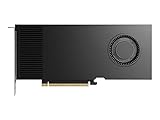
NVIDIA RTX PRO 4000 Blackwell Graphics Card - 24GB GDDR7 ECC Memory, PCIe 5.0 x16, 4X DisplayPort... | $3,195.00 | Buy on Amazon |
| 3 |

|
PNY NVIDIA RTX A6000 | $5,970.04 | Buy on Amazon |
Calling it a computer can suggest one enormous machine. Summit was instead a distributed system: thousands of compute nodes linked together so researchers could divide large calculations among them. Its public mission was scientific research, not consumer computing or a classified, military-only workload. DOE highlighted energy systems, materials, scientific modeling, artificial intelligence and large-scale data analysis. Researchers could seek time through DOE programs such as INCITE and the ASCR Leadership Computing Challenge.
How the IBM-NVIDIA design worked
Each Summit node paired two IBM POWER9 CPUs with six NVIDIA V100 GPUs. CPUs are flexible general-purpose processors; GPUs can perform many similar calculations in parallel, making them useful for workloads such as simulation kernels and neural-network operations. NVLink provided high-speed communication between the CPUs and GPUs within a node. A Mellanox dual-rail EDR InfiniBand network connected nodes, while a large parallel file system served data to the system.
#1 Best Overall
- PLEASE NOTE: Exporting an NVIDIA RTX Pro 6000 GPU outside the US requires strict adherence to the U.S. Export Administration Regulations (EAR) and issuance of an export license from the Bureau of Industry and Security (BIS). Compliance and Know Your Customer (KYC) screening may be required as a condition of order acceptance. [NVIDIA Blackwell Streaming Multiprocessor] The new SM features increased processing throughput, and new neural shaders that integrate neural networks inside of programmable shaders | DLSS 4: Multi Frame Generation ensures ultra-smooth frame pacing for lifelike simulations.
- [Double-Flow-Through Design] The RTX PRO 6000 Blackwell features a double-flow-through cooling design, optimizing efficiency and airflow to sustain peak performance under 600W power loads. | [5th Gen Tensor Cores] Deliver up to 3X the performance of the previous generation and support for FP4 precision for faster AI model processing times with reduced memory usage, enabling local fine-tuning of LLMs and generative AI | [4th Gen Ray Tracing Cores] Double the ray-triangle intersection rate of the previous generation to create photoreal, physically accurate scenes and immersive 3D designs with RTX Mega Geometry, which enables up to 100X more ray-traced triangles.
- [PCIe Gen 5] Support for PCIe Gen 5 provides double the bandwidth of PCIe Gen 4, improving data-transfer speeds from CPU memory and unlocking faster performance for data-intensive tasks like AI, data science, and 3D modeling. | [GDDR7 Memory] With 96 GB of GPU memory and 1.8 TB ps bandwidth, it can tackle massive 3D and AI projects, fine-tune AI models locally, explore large-scale VR environments, and drive larger multi-app workflows.
- [DisplayPort 2.1] Achieve unparalleled visual clarity and performance, driving high resolution displays at up to 8K at 240 Hz and 16K at 60 Hz. Increased bandwidth enables seamless multi-monitor setups while HDR and higher color depth support ensures superior color accuracy for precision work, such as video editing, 3D design, and live broadcasting.
- [Universal MIG] Divide a single RTX PRO 6000 Blackwell into multiple isolated instances, each with dedicated resources, allowing for concurrent execution of multiple workloads, optimized GPU utilization, and secure isolation of different applications or users. [WARRANTY] 3 YR Manufacturer's Warranty. Bulk OEM Packaging. Retail Packaging is NOT included.
This heterogeneous design was central to Summit’s performance. Rather than relying on CPUs alone, it assigned highly parallel work to GPUs while CPUs handled other computation and system tasks. The approach also made Summit a platform for combining traditional high-performance computing (HPC) simulation with AI and data analysis. It was not automatic: applications had to be designed or adapted to use GPUs effectively, and moving data, balancing work, and scaling software across many nodes could limit performance.
Summit’s key specifications
| Specification | Reported configuration |
|---|---|
| Full system | 4,608 compute nodes |
| Processors | 9,216 IBM POWER9 CPUs (two per node) |
| Accelerators | 27,648 NVIDIA Tesla V100 GPUs (six per node) |
| Memory per node | 512 GB DDR4 system memory, 96 GB HBM2 GPU memory and 1.6 TB nonvolatile memory |
| Aggregate memory | More than 10 petabytes |
| Storage | 250 petabytes of IBM Spectrum Scale parallel file-system storage |
| Peak power | Approximately 13 megawatts |
| Theoretical peak performance | About 200 petaflops |
| TOP500 HPL result | 122.3 petaflops, submitted using 4,356 nodes |
The node figures are not a contradiction: 4,608 describes Summit’s full physical configuration, while 4,356 is the number of nodes used for the June 2018 TOP500 benchmark submission. Likewise, 200 petaflops and 122.3 petaflops describe different things. The first is theoretical peak capacity; the second is the measured result on High-Performance Linpack (HPL), the dense linear-algebra benchmark used for the TOP500 ranking.
Rank #2
- Professional GPU with Blackwell Architecture
- Blackwell Architecture
- 24GB GDDR7 with PCIe 5.0 & Ray Tracing
- AI Workstation
What “world’s fastest” meant
In June 2018, Summit’s HPL result of 122.3 petaflops put it above China’s Sunway TaihuLight, which had led the list at about 93 petaflops. The result returned the United States to the top of TOP500 for the first time since 2012. Summit remained No. 1 in the November 2018 and June 2019 rankings; Japan’s Fugaku took the lead in November 2019.
Recommended Free Tools
TOP500 leadership is a meaningful comparison, but it is not a universal measure of computer performance. HPL tests one kind of calculation. A scientific application may run slower or faster depending on how well it uses GPUs, memory, storage and the network. Summit’s frequently cited AI capability of more than 3 exaops also uses a different, lower-precision workload measure. Exaops for AI should not be compared directly with petaflops on a double-precision HPC benchmark, and that AI figure did not make Summit an exascale system in the conventional scientific-computing sense.
Rank #3
- NVIDIA Ampere Architecture-based CUDA Cores - Double-speed processing for single-precision floating point (FP32) operations and improved power efficiency provide significant performance improvements for graphics and simulation workflows, such as complex 3D computer-aided design (CAD) and computer-aided engineering (CAE), on the desktop.
- Second-Generation RT Cores - With up to 2X the throughput over the previous generation and the ability to concurrently run ray tracing with either shading or denoising capabilities, second-generation RT Cores deliver massive speedups for workloads like photorealistic rendering of movie content, architectural design evaluations, and virtual prototyping of product designs. This technology also speeds up the rendering of ray-traced motion blur for faster results with greater visual accuracy.
- Third-Generation Tensor Cores - New Tensor Float 32 (TF32) precision provides up to 5X the training throughput over the previous generation to accelerate AI and data science model training without requiring any code changes. Hardware support for structural sparsity doubles the throughput for inferencing. Tensor Cores also bring AI to graphics with capabilities like DLSS, AI denoising, and enhanced editing for select applications.
- Third-Generation NVIDIA NVLink - Increased GPU-to-GPU interconnect bandwidth provides a single scalable memory to accelerate graphics and compute workloads and tackle larger datasets.
- 48 Gigabytes (GB) of GPU Memory - Ultra-fast GDDR6 memory, scalable up to 96 GB with NVLink, gives data scientists, engineers, and creative professionals the large memory necessary to work with massive datasets and workloads like data science and simulation.
Why it mattered beyond the ranking
Summit’s significance was both technical and institutional. It showed how a large CPU-GPU system could support demanding simulation alongside machine learning and data-intensive work. ORNL described it as roughly eight times more powerful than its predecessor, Titan, in peak performance, despite having 4,608 nodes compared with Titan’s 18,688. Summit’s larger memory capacity, CPU-GPU bandwidth, storage and accelerator resources were intended to support workloads that could benefit from that combination.
Research areas included energy and fusion modeling, advanced materials, climate and Earth science, molecular dynamics, biomedical and cancer research, and AI. The point was not that every project used all nodes or achieved peak speed. Rather, the facility gave selected research teams access to computing and data infrastructure beyond what ordinary institutional clusters could provide.
Summit’s timeline and current status
- June 8, 2018: DOE and ORNL unveiled Summit; it took No. 1 on TOP500’s June list.
- January 1, 2019: Summit entered full production operation.
- November 2019: Fugaku displaced Summit at the top of TOP500.
- 2022: ORNL’s Frontier became the first exascale-class system, marking a new generation of capability.
- November 15, 2024: Summit was shut down after operating beyond its original planned service period.
As of the June 2026 TOP500 list, Summit is a retired landmark, not an operating world leader. Its historical description as the world’s fastest is accurate only when tied to its 2018 TOP500 ranking and HPL benchmark.
Do these 3 things before closing this tab:
1Fix the driver behind crashes, sound loss and screen glitches2Repair Windows errors before they cause bigger problems3Scan for outdated or missing drivers - takes under a minuteQuick Recap
Sources
- U.S. Department of Energy: Summit launch announcement
- TOP500: June 2018 list and Summit system profile
- ORNL: Summit system specifications and Summit user guide
- ORNL: Summit system acceptance
- ORNL: 2024 operational assessment report
- ORNL: Frontier and TOP500: June 2026 list
Product prices and availability are accurate as of the date/time indicated and are subject to change. Any price and availability information displayed on Amazon at the time of purchase will apply.



