Free tools Windows power users keep installed
One-click scans. No signup required.
Some links on this page are affiliate links: if you buy through them we may earn a commission, at no extra cost to you.
Hewlett-Packard’s most important innovation was a repeatable idea: take specialist technology, make it smaller and easier to use, and put it directly in front of an individual. The pattern runs from the programmable HP 9100A in 1968 to the HP-35 pocket calculator, then through programmable handhelds, early personal computers and the LaserJet and DeskJet printer lines.
This is an editorial ranking, not an official HP list. The products below are judged by technological originality, accessibility, category creation, workflow impact, lasting influence and importance to HP’s identity. Some were commercial blockbusters; others mattered because they anticipated products that became ordinary later.
HP’s innovation arc: from instruments to personal technology
Founded around test and measurement equipment, Hewlett-Packard did not begin as a consumer-computer company. Its calculators formed a bridge between professional instruments and personal computing. Printing then gave HP one of its broadest household and office successes.
The products in this list were developed before the 2015 corporate separation. Today, HP Inc. concentrates mainly on personal systems and printing, while Hewlett Packard Enterprise focuses on enterprise technology. Historical HP material is therefore hosted across both companies’ sites.
#1 Best Overall

- The OfficeJet Pro 8125e is perfect for home offices printing professional-quality color documents like business documents, reports, presentations and flyers. Print speeds up to 10 ppm color, 20 ppm black
- PERFECTLY FORMATTED PRINTS WITH HP AI – Print web pages and emails with precision—no wasted pages or awkward layouts; HP AI easily removes unwanted content, so your prints are just the way you want
- UPGRADED FEATURES – Fast color printing, scan, copy, auto 2-sided printing, auto document feeder, and a 225-sheet input tra
- WIRELESS PRINTING – Stay connected with our most reliable dual-band Wi-Fi, which automatically detects and resolves connection issues
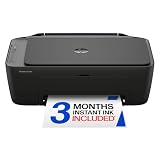
- 3 MONTHS OF INSTANT INK WITH HP+ ACTIVATION – Subscribe to Instant Ink delivery service to get ink delivered directly to your door before you run out. After 3 months, monthly fee applies unless cancelled.
1. HP 9100A programmable desktop calculator (1968)
HP’s 9100A was described by the company’s archive as the world’s first programmable scientific desktop calculator. It combined scientific functions, algorithms for trigonometric and logarithmic calculations, and user-programmable operations in a machine that sat on a desk rather than in a computer room.
HP marketed it as a calculator partly because “computer” still suggested an expensive mainframe. In practical terms, it was an important early desktop computer for engineers and scientists. It used Reverse Polish Notation (RPN), in which numbers are entered before the operation, reducing the need for parentheses and allowing a compact keyboard.
Calling it “the first personal computer” without qualification is contentious. A more defensible description is an early desktop computer sold to individual professionals and a precursor to the personal computer. Its lasting contribution was interactive computing: professionals could run calculations at their desks instead of submitting jobs for batch processing. HP’s historical account of the 9100A documents the machine and its significance.
2. HP-35 handheld scientific calculator (1972)
Bill Hewlett challenged engineers to reduce the 9100A’s capabilities to shirt-pocket size. The result, the HP-35, is widely identified by HP as the world’s first handheld scientific calculator. It was also HP’s first product using both integrated circuits and light-emitting diodes (LEDs).
For engineers, scientists and students, the HP-35 replaced the slide rule with a battery-powered electronic instrument that could evaluate advanced functions wherever work took place. HP’s archive says sales exceeded 300,000 units in its first three years, a remarkable reach for a specialized device.
The important change was social as much as technical. Scientific calculation was no longer tied to a laboratory, desk or learned slide-rule technique. The claim that it was the “first handheld scientific calculator” should be attributed to HP’s historical record; HP did not invent electronic calculators generally. See the HP-35 history and calculator archive.
3. HP-65 programmable handheld calculator (1974)
The HP-65 turned a calculator from a fixed-function instrument into a reusable personal tool. HP identifies it as the first fully programmable handheld calculator. Its magnetic cards allowed users to save programs and load them again later.
Recommended Free Tools
Rank #2
That feature mattered because a professional could carry customized procedures, not just a device for entering one calculation at a time. The HP-65’s memory and programming model were highly constrained by modern standards, but the underlying idea resembles later software libraries and apps: users could preserve a method and apply it repeatedly.
It was not a general-purpose computer. Its historical importance lies in making programmability portable and personal, years before software became a normal consumer concept. HP’s personal-systems history records the model’s place in the calculator line.
4. HP-01 calculator watch (1977)
The HP-01 combined a digital wristwatch, calculator and personal calendar. It could perform more than three dozen functions involving time, dates and numerical data, making it an unusually early attempt at wearable computing.
The HP-01 was expensive, difficult to use and not a mass-market success. That is precisely why it belongs in a history of innovation rather than a sales-only ranking. It showed HP trying to compress useful computing into a personal object before displays, batteries and interfaces were ready for today’s smartwatch market.
It is best described as an early calculator watch and wearable-computing experiment, not simply a smartwatch. HP’s timeline places the product in the company’s broader experimentation with personal technology.
5. HP-41C programmable calculator (1979)
The HP-41C made a handheld calculator feel substantially more like a small, expandable computer. HP’s archive identifies it as the first calculator displaying both numbers and letters. Its alphanumeric display could show labels, instructions and error messages rather than only numeric results.
It was programmable and expandable, with capabilities that supported professional users such as engineers, pilots and surveyors. Text made programs easier to understand and operate; expansion made the device adaptable to specialized work.
Rank #3

- FROM AMERICA'S MOST TRUSTED PRINTER BRAND – The Envy 6155 is perfect for homes printing everyday high-quality color documents like homework and borderless photos. Print speeds up to 10 ppm black, 7 ppm color.
- 3 MONTH TRIAL OF INSTANT INK – Subscribe to the Instant Ink delivery service to get ink delivered directly to your door before you run out, and you save up to 50% on ink. After 3 months, a monthly fee applies unless cancelled.
- KEY FEATURES – Color print, copy and scan, plus auto 2-sided printing and a 100-sheet input tray
- HP'S MOST INTUITIVE COLOR TOUCHSCREEN – Smoothly navigate your printer with the easy-to-use 2.4" touchscreen
- WIRELESS PRINTING – Stay connected with our most reliable dual-band Wi-Fi, which automatically detects and resolves connection issues
The HP-41C should not be reduced to the vague label “first pocket computer.” It remained a specialized calculator architecture. Its influence came from combining portability, software-like customization and a more intelligible user interface. The HP calculator archive provides the historical qualification.
Crashes, No Sound, or Screen Glitches?
Random freezes, missing sound and display glitches usually trace back to one bad driver. Find and replace yours safely.Free scan · under a minutePC Slower Than It Used to Be?
A free scan shows the junk files, broken settings and background clutter dragging Windows down - then fixes them in one click.Free scan · Windows 10 & 116. HP-85 personal computer (1980)
The HP-85 marked HP’s first major entry into the personal-computer market, according to the company’s historical timeline. It integrated computing components into a single desktop system aimed primarily at technical and professional users.
The HP-85 did not single-handedly create the mass personal-computer revolution; Apple, Commodore, IBM and others reached different audiences and scales. Its significance was strategic and cultural inside HP. Computing became a normal part of laboratory, engineering and business workflows, extending the company’s instrument heritage into a complete desktop system.
That professional focus also illustrates a recurring HP trade-off: the company often prioritized capability and reliability for specialized users rather than the lowest possible consumer price. See HP’s innovation timeline.
7. HP-75C handheld computer (1982)
The HP-75C was HP’s first handheld computer, according to the company’s 1980s history. Weighing 26 ounces, it provided computing functions and could connect to peripherals including a modem, digital cassette drive and printer/plotter.
Do these 3 things before closing this tab:
1Repair Windows errors before they cause bigger problems2Scan for outdated or missing drivers - takes under a minute3Clear out junk files and repair common Windows errorsIt was not a laptop in the modern sense. Its specialized interface and peripheral ecosystem reflected an earlier form of mobile productivity. Nevertheless, it established an important concept: professional computing could travel with the user and remain connected to external equipment.
The later OmniBook 300, listed by HP at 2.9 pounds, moved closer to the portable-PC form people recognize today. The HP-75C is more historically useful for showing the earlier conceptual step. HP’s 1980s timeline documents both the handheld era and later portable systems.
Rank #4

- FROM AMERICA'S MOST TRUSTED PRINTER BRAND – The OfficeJet Pro 8125 is perfect for home offices printing professional-quality color documents like business documents, reports, presentations and flyers. Print speeds up to 20 ppm black, 10 ppm color.
- 3 MONTH TRIAL OF INSTANT INK INCLUDED – Subscribe to the Instant Ink delivery service to get ink delivered directly to your door before you run out, and you save up to 50% on ink; after 3 months, a monthly fee applies unless cancelled
- KEY FEATURES – Fast color printing, scan, copy, auto 2-sided printing, auto document feeder, and a 225-sheet input tray
- 2.7-INCH TOUCHSCREEN – Quickly navigate your printer with a large color touchscreen and a phone-like user interface
- WIRELESS PRINTING – Stay connected with our most reliable dual-band Wi-Fi, which automatically detects and resolves connection issues
8. HP ThinkJet thermal inkjet printer (1984)
The ThinkJet was an early practical expression of HP’s thermal inkjet work. Introduced in 1984, it was a small, rugged printer designed to make printing quieter and more compact than mechanical dot-matrix alternatives.
HP did not invent inkjet printing in general; industrial inkjet systems predated the ThinkJet. HP’s contribution was developing thermal inkjet into a practical platform for compact office and personal printers. Tiny heated elements could fire droplets of ink without the mechanical print-head noise associated with dot matrix.
The ThinkJet therefore matters as a bridge. It established the direction that later enabled affordable home color documents and photographs, even though the mass-market breakthrough came with the DeskJet. Read HP’s ThinkJet history.
9. HP LaserJet (1984)
HP’s first LaserJet brought high-quality, relatively quiet laser printing to desktop personal-computer users and offices. HP’s historical timeline calls the LaserJet line its most successful single product line.
Laser printing itself was not invented by HP. The company’s achievement was commercializing a dependable desktop product that made clean text, fast output and professional-looking documents routine in ordinary offices. That changed expectations for business documents and reduced reliance on noisy, mechanically constrained printers.
The LaserJet also shows why technological originality and commercial impact are different measures. HP assembled and productized technologies that existed elsewhere, then made the result useful at office scale. Its influence came from reliability, workflow fit and distribution as much as from the underlying electrophotographic process. HP’s 1980s history provides the company’s chronology.
Quick wins for a faster PC:
Scan for outdated or missing drivers - takes under a minuteDriver Scan →Repair Windows errors before they cause bigger problemsFix Now →Fix the driver behind crashes, sound loss and screen glitchesFind Drivers →10. HP DeskJet (1988)
Introduced in 1988, the DeskJet was HP’s first mass-market inkjet printer and a major milestone in personal printing. It helped make quiet printing of documents and graphics practical for homes and small offices.
Best Value

- From America's most trusted printer brand, the HP Envy Photo 7975 is a premium multi-purpose home printer with everything families need to learn, work, and create. Loaded with features to print high-quality photos, homework, office docs and everything else. It's also AI-enabled to intuitively adapt to your workflow, with wireless and security features that keep your multifunction printer up to date and secure.
- PERFECT FOR HOME - The HP Envy Photo 7975 is great for printing documents, high-quality true-to-screen borderless photos, creative projects and more. Print speeds up to 10 pages per minute color, 15 pages per minute black.
- PERFECTLY FORMATTED PRINTS WITH HP AI - Print web pages and emails with precision-no wasted pages or awkward layouts; HP AI easily removes unwanted content, so your prints are just the way you want.
- KEY FEATURES - Print, copy, scan, automatic 2-sided printing, advanced photo features, separate photo tray, auto document feeder, mobile and wireless printing.
- EFFORTLESS PRINTING - Smoothly navigate printing with a large intuitive printer color touchscreen.
The DeskJet’s importance was broader than its hardware. It helped normalize printing schoolwork, household forms, illustrations and photographs at home. HP’s anniversary material reports that more than 68 million DeskJet printers had been sold since the line’s introduction by the time of its anniversary publication.
The line also exposed a durable business-model trade-off: a relatively affordable printer could be paired with recurring revenue from ink cartridges. Cartridge costs, waste and environmental impact are part of the DeskJet story, not footnotes. “First mass-market inkjet printer” is the careful claim; it was not the first inkjet printer generally. Consult HP’s timeline and DeskJet anniversary history.
What the ten products reveal about HP
HP was not only a calculator or printer company
The sequence shows several businesses at different times. Test and measurement supplied the engineering foundation. Calculators translated that expertise into direct personal computing. Desktop and handheld systems extended it into general-purpose workflows. Printing became HP’s most visible consumer success and a major recurring-revenue business.
The Tool Desk
Outbyte PC Repair FREERepair Windows errors before they cause bigger problemsFix Now →Outbyte Driver Updater FREEScan for outdated or missing drivers - takes under a minuteDriver Scan →“First” and “most influential” are different
The 9100A, HP-35, HP-65, HP-41C and HP-75C can be described as firsts when the claims are attributed and narrowly defined. The ThinkJet and LaserJet were influential commercial developments, not inventions of inkjet or laser printing. The HP-01 was visionary without being a blockbuster. A product can matter because it opens a path, not only because it sells at mass scale.
The printing transition changed everyday economics
- Dot-matrix printers were noisy and mechanically constrained.
- Thermal inkjet made compact, quieter printing practical.
- LaserJet delivered professional text at the desktop.
- DeskJet made inkjet printing accessible to households.
- Later multifunction devices combined printing, scanning, copying and faxing.
For buyers today, the lesson is to evaluate total cost rather than sticker price: ink or toner, print volume, maintenance and subscription terms can matter more than the initial printer price.
Honorable mentions and difficult omissions
Any ten-product list is debatable. The HP 12C has greater long-term business and financial-professional significance than the HP-01 and remains an important calculator model, although availability varies by region and current model. The HP-67 and HP-28C extended programmable-calculator ideas. The OmniBook 300 refined portable computing toward the modern laptop. HP’s 197A Camera, early plotters, HP 3000 systems and HPIB/GPIB interface work show that the company’s influence extended beyond mass-market products.
These alternatives do not invalidate the main list. They highlight the choice between ranking broad cultural reach, technical originality, professional importance or evidence of a design direction.
What’s actually slowing this PC down?
Pick the symptom - the matching free tool is one click away.
Conclusion: HP’s real innovation was the bridge
HP did not change technology through one invention alone. Its distinctive contribution was repeatedly turning advanced, expensive and specialist capabilities into tools that individuals could use directly: a programmable desktop machine, a scientific calculator in a pocket, a computer in a briefcase and professional printing on a home or office desk.
That bridge from instrument to personal tool explains why HP’s history still matters after the company split. The products changed expectations about where computing could happen, who could use it and how much technical work could be brought into everyday life.
Quick Recap
Product prices and availability are accurate as of the date/time indicated and are subject to change. Any price and availability information displayed on Amazon at the time of purchase will apply.



