Free tools Windows power users keep installed
One-click scans. No signup required.
Some links on this page are affiliate links: if you buy through them we may earn a commission, at no extra cost to you.
HPE closed its approximately $14 billion acquisition of Juniper Networks on July 2, 2025. At HPE Discover Barcelona in December, CEO Antonio Neri presented the first concrete signs of integration: Aruba Central and Juniper Mist were beginning to share AI-operations capabilities, hardware, and technology. But this was early platform convergence—not a completed merger of every Aruba and Juniper product.
What HPE had integrated five months after closing
Neri’s “first fruits” description referred to several product and technology moves announced at HPE Discover Barcelona on December 3–4, 2025.

- Shared AI operations: HPE said Aruba Central and Juniper Mist were gaining increasingly consistent AI-assisted monitoring, troubleshooting, and automation capabilities.
- Common hardware: New Wi-Fi 7 access points were designed to work with both management environments, helping protect customers from an immediate platform choice.
- Mist technology in Aruba Central: Juniper Mist’s Large Experience Model capabilities were being made available in Aruba Central.
- Aruba technology in Mist: Aruba’s Agentic Mesh technology was being brought toward the Mist environment.
- Broader observability: HPE described integration with OpsRamp and GreenLake Intelligence to connect networking information with wider infrastructure operations.
- Networking for AI infrastructure: HPE highlighted Ethernet networking associated with AMD’s Helios rack-scale architecture.
The precise description is therefore platform and feature convergence while retaining two identifiable operating environments and product families. HPE did not announce that Aruba Central and Mist had instantly become one finished product.
The Tool Desk
Outbyte Driver Updater FREEScan for outdated or missing drivers - takes under a minuteDriver Scan →Outbyte PC Repair FREERepair Windows errors before they cause bigger problemsFix Now →HPE’s December announcement provides the company’s detailed account, while Network World’s report captures Neri’s presentation and the event context.
#1 Best Overall

- Used Book in Good Condition
What Aruba Central and Juniper Mist do
Aruba Central is HPE’s cloud and on-premises management environment for Aruba networking equipment. It provides monitoring, automation, configuration, security functions, and AI-assisted network operations.
Juniper Mist is Juniper’s AI-native networking and operations platform, built around telemetry, user-experience monitoring, troubleshooting, and automated or assisted remediation. Its Marvis capabilities are intended to help network teams identify problems before users report them and reduce the time needed to diagnose faults.
HPE described the Mist Large Experience Model as using large volumes of application and network information—including data associated with applications such as Zoom and Teams—as well as synthetic digital-twin data. The objective is to detect, predict, and help resolve user-experience issues.
Agentic Mesh, developed by Aruba, is intended to improve anomaly detection, root-cause analysis, and automated or assisted actions across the network.
Those labels should not be confused with proof that every network change happens without human approval. “Agentic,” “self-driving,” and “autonomous” can cover several levels of automation: detecting a problem, recommending a fix, applying a change with approval, or making a change automatically. Buyers should establish which functions are available for their hardware, software release, license, and deployment model.
AI for networking versus networking for AI
HPE’s strategy combines two related but different ideas.
Rank #2

- 𝗢𝗻𝗲 𝗦𝘄𝗶𝘁𝗰𝗵 𝗠𝗮𝗱𝗲 𝘁𝗼 𝗘𝘅𝗽𝗮𝗻𝗱 𝗡𝗲𝘁𝘄𝗼𝗿𝗸: 5× 10/100/1000Mbps RJ45 Ports supporting Auto Negotiation and Auto MDI/MDIX.
- 𝗚𝗶𝗴𝗮𝗯𝗶𝘁 𝘁𝗵𝗮𝘁 𝗦𝗮𝘃𝗲𝘀 𝗘𝗻𝗲𝗿𝗴𝘆: Latest innovative energy-efficient technology greatly expands your network capacity with much less power consumption and helps save money.
- 𝗥𝗲𝗹𝗶𝗮𝗯𝗹𝗲 𝗮𝗻𝗱 𝗤𝘂𝗶𝗲𝘁: IEEE 802.3X flow control provides reliable data transfer and Fanless design ensures quiet operation.
- 𝗣𝗹𝘂𝗴 𝗮𝗻𝗱 𝗣𝗹𝗮𝘆: Easy setup with no software installation or configuration needed.
- 𝗔𝗱𝘃𝗮𝗻𝗰𝗲𝗱 𝗦𝗼𝗳𝘁𝘄𝗮𝗿𝗲 𝗙𝗲𝗮𝘁𝘂𝗿𝗲𝘀: Prioritize your traffic and guarantee high quality of video or voice data transmission with Port-based 802.1p/DSCP QoS and IGMP Snooping.
AI for networking uses machine learning and related automation to monitor network health, understand user experience, find root causes, optimize performance, and assist with remediation. Aruba Central and Mist are the relevant operational platforms.
Do these 3 things before closing this tab:
1Clear out junk files and repair common Windows errors2Scan for outdated or missing drivers - takes under a minute3Repair Windows errors before they cause bigger problemsNetworking for AI is the infrastructure problem: providing the bandwidth, latency, switching capacity, routing, visibility, and reliability required by AI training and inference workloads. HPE’s Juniper acquisition expands its access to data-center switching, routing, service-provider networking, and AI-oriented Ethernet infrastructure.
The distinction matters. An AI assistant that diagnoses a wireless problem is not the same thing as a network designed to connect large numbers of accelerators in an AI cluster. HPE is positioning the combined portfolio to address both.
What Juniper added to HPE
According to HPE, the acquisition doubled the size of its networking business and expanded it into data-center networking, routers, firewalls, service-provider markets, and AI-native networking.
Before the deal, Aruba was particularly associated with enterprise campus networking, wireless access, security, and SASE. Juniper added a substantial portfolio spanning routing, switching, data-center networking, service providers, and Mist’s AI-operations technology.
HPE also presented the transaction as a way to build a broader networking stack covering silicon, hardware, operating systems, security, software, and services. The company said the larger portfolio would support sales alongside compute, storage, hybrid cloud, GreenLake, and AI systems.
These are HPE’s strategic claims, not independently demonstrated proof that the combined business had already achieved all of those outcomes. Product integration, revenue growth, margins, and customer retention are separate tests.
The $14 billion deal and its antitrust price
The acquisition was not approved without conditions. The U.S. Department of Justice sued on January 30, 2025, arguing that the transaction could reduce competition in wireless local-area networking, particularly for campus and branch WLAN products.
HPE and Juniper reached a settlement with the DOJ on June 28, 2025. The remedies included:
- Divesting HPE’s global Instant On campus-and-branch WLAN business.
- Transferring associated assets, intellectual property, research and development personnel, and customer relationships.
- Making specified Juniper Mist AI-operations source code available to competitors through a licensing process.
The DOJ described the Mist license as perpetual and non-exclusive, with optional transitional support and personnel transfers. That does not mean competitors received Juniper’s entire software portfolio or that all of Mist became open. It does mean HPE had to surrender part of its overlapping WLAN business while providing rivals access to a significant software asset.
HPE completed the acquisition on July 2, 2025, and Juniper shares ceased trading on the New York Stock Exchange. The original transaction, announced on January 9, 2024, was valued at approximately $14 billion, based on $40 per Juniper share. Juniper shareholders approved it on April 2, 2024.
The DOJ’s settlement announcement and its competitive-impact statement explain why the remedies mattered.
Rank #4

- GIGABIT ETHERNET PORTS: Features 5 x 1.0Gbps Ethernet ports for high-speed connectivity. Auto-negotiating ports detect the optimal speed for connected devices and work with existing Cat5e or Cat6 Ethernet cables.
- PLUG-AND-PLAY UNMANAGED NETWORK SWITCH: Simple plug-and-play setup with no software to install or configuration required.
- FLEXIBLE MOUNTING OPTIONS: Compact metal design supports desktop or wall-mount placement for versatile installation.
- SILENT & ENERGY-EFFICIENT OPERATION: Fanless design ensures silent performance, while IEEE 802.3az Energy Efficient Ethernet reduces power consumption without compromising high-speed network performance.
- REGIONAL COMPATIBILITY: Made for use in U.S. & CA only
Timeline of the takeover
| Date | Event |
|---|---|
| January 9, 2024 | HPE announces a planned approximately $14 billion, all-cash acquisition of Juniper at $40 per share. |
| April 2, 2024 | Juniper shareholders approve the transaction. |
| January 30, 2025 | The DOJ files suit to block the acquisition. |
| June 28, 2025 | HPE and Juniper agree to divestiture and Mist licensing remedies. |
| July 2, 2025 | HPE closes the acquisition. |
| August 26, 2025 | HPE announces additional Mist agentic-AI innovations. |
| December 3–4, 2025 | HPE Discover Barcelona showcases the first major public integration milestones. |
| June 16, 2026 | HPE announces further convergence across Mist, Aruba Central, AI data-center networking, and self-driving operations. |
What Aruba customers should watch
Existing Aruba customers may gain access to Juniper-derived AI-operations capabilities, a wider choice of data-center products, and closer connections to HPE compute, storage, GreenLake, and AI infrastructure.
Quick wins for a faster PC:
Fix the driver behind crashes, sound loss and screen glitchesFind Drivers →Repair Windows errors before they cause bigger problemsFix Now →They should nevertheless ask:
- Will Aruba Central remain the primary management platform for their installed equipment?
- Which Aruba models and software releases receive the new AI capabilities?
- Do the features require new subscriptions, cloud connectivity, or particular hardware?
- Are product names, APIs, entitlements, or support contracts changing?
- What does the Instant On divestiture mean for small-business product availability and support?
What Juniper and Mist customers should watch
Juniper customers may benefit from HPE’s larger sales, support, financing, services, and infrastructure organization. HPE also has an incentive to connect Mist and Juniper data-center networking with its compute, storage, hybrid-cloud, and AI offerings.
The key questions are different:
- Will Mist remain a distinct platform, or become more tightly coupled to Aruba Central?
- Which Mist capabilities are covered by the DOJ licensing remedy, and how will HPE protect the product’s differentiation?
- Will Juniper product roadmaps, channel relationships, or support processes change?
- Are overlapping switches, access points, firewalls, and management tools being maintained, merged, or retired?
- Can existing policies, APIs, telemetry, and historical data move between environments?
A procurement checklist for new and existing buyers
Customers should not make an immediate replacement decision based only on the acquisition announcement. Before approving a new deployment or migration, request:
- A product-by-product lifecycle and roadmap statement.
- Written confirmation that support, warranties, and software entitlements continue.
- A model-level compatibility list for Aruba Central, Mist, and proposed mixed deployments.
- Clear pricing and licensing details, including subscription tiers and required cloud services.
- Migration documentation covering configurations, policies, APIs, telemetry, identities, and historical data.
- Evidence of how AI recommendations and remediation are audited, approved, rolled back, and secured.
- Deployment options for customers with restricted cloud access, on-premises requirements, or air-gapped environments.
- Performance and design details for AI training and inference workloads.
How to judge whether integration is real
The strongest evidence will be operational rather than promotional. Buyers should evaluate seven practical tests:
- Management-plane convergence: Can one team manage both product families with common policy, identity, telemetry, and workflows?
- Hardware interoperability: Are devices genuinely interchangeable, or merely visible in two separate systems?
- Feature parity: Are user-experience monitoring, root-cause analysis, and remediation consistent across platforms?
- Licensing clarity: Are separate subscriptions or feature licenses required?
- Roadmap stability: Are overlapping products being supported predictably?
- Operational portability: Can customers migrate without rebuilding their management and automation systems?
- Security and sovereignty: What functions require cloud access, and what works in regulated or offline environments?
The trade-off is straightforward: a broader portfolio can give customers more choice and a stronger single-vendor relationship, but it can also create overlapping SKUs, more complex licensing, channel conflict, and greater dependence on one supplier’s software ecosystem.
Outdated Drivers Are Slowing You Down
One free scan finds every outdated or missing driver and matches the right update for your exact hardware.Free scan · exact hardware matchWindows Errors? Fix Them Before They Spread
Repair common Windows errors and clear accumulated junk for a smoother, more stable PC - no reinstall needed.Free scan · no reinstallWhat happened after the December announcement
HPE’s June 16, 2026 update showed that the December milestones were an early stage, not a finished convergence. HPE announced support for CX wired access switches in Mist, expanded Marvis capabilities in Aruba Central, additional HPE Juniper Networking QFX products, and deeper links to HPE’s AI Data Center portfolio, including infrastructure associated with AMD Helios.
Best Value
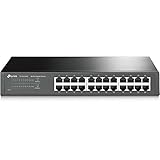
- 𝙊𝙣𝙚 𝙎𝙬𝙞𝙩𝙘𝙝 𝙈𝙖𝙙𝙚 𝙩𝙤 𝙀𝙭𝙥𝙖𝙣𝙙 𝙉𝙚𝙩𝙬𝙤𝙧𝙠: 24 port of 10/100/1000Mbps RJ45 Ports supporting Auto Negotiation and Auto MDI/MDIX
- 𝙂𝙞𝙜𝙖𝙗𝙞𝙩 𝙩𝙝𝙖𝙩 𝙎𝙖𝙫𝙚𝙨 𝙀𝙣𝙚𝙧𝙜𝙮: Latest innovative energy-efficient technology greatly expands your network capacity with much less power consumption and helps save money
- 𝙍𝙚𝙡𝙞𝙖𝙗𝙡𝙚 𝙖𝙣𝙙 𝙌𝙪𝙞𝙚𝙩: IEEE 802. 3X flow control provides reliable data transfer and Fanless design ensures whisper quiet operation
- 𝙋𝙡𝙪𝙜 𝙖𝙣𝙙 𝙋𝙡𝙖𝙮: Easy setup with no software installation or configuration needed, just plug it in and start
- 𝙈𝙚𝙩𝙖𝙡 𝘾𝙖𝙨𝙞𝙣𝙜: Metal-cased switches provide superior durability, heat dissipation, and EMI protection, making them the clear choice for reliable performance over cheaper plastic switches.
Those developments support the conclusion that HPE was moving quickly. They should not be backdated into the December 2025 announcement, nor treated as proof that every Aruba and Juniper device now shares one management plane.
The June update also illustrates why roadmap discipline matters. Integration is not complete when two vendors share marketing language; it is complete only when customers can verify supported hardware, stable software, portable operations, predictable licensing, and clear support ownership.
HPE’s competitive position
HPE is presenting the combination as a broader alternative to large incumbent suppliers, especially for customers that want networking, compute, storage, hybrid cloud, and AI infrastructure from one organization. Neri also argued that the market remains fragmented, but that characterization is HPE’s position rather than an independent market-share analysis.
Cisco remains a broad alternative across campus, data-center, security, and observability. Arista is a strong option for high-performance data-center and cloud networking. Fortinet may be a better fit when firewall and security consolidation are the primary objectives. Ubiquiti can suit smaller, more price-sensitive deployments, while Cambium Networks is an alternative in some wireless and specialized connectivity scenarios.
Some enterprises will prefer a pure-play or mixed-vendor architecture rather than accepting the integration risk and lock-in of a larger HPE stack. The right choice depends on existing skills, installed hardware, cloud and sovereignty requirements, support expectations, and the importance of AI infrastructure to the network design.
Bottom line
HPE demonstrated rapid early integration of Juniper technology after closing the acquisition: Aruba Central and Mist began sharing AI-operations capabilities, common Wi-Fi 7 hardware was introduced, and the two portfolios were being connected to broader HPE infrastructure and AI initiatives.
That is meaningful progress, but it is not the same as a single unified networking platform. The acquisition also carried significant DOJ remedies, including the Instant On divestiture and licensing of specified Mist AI-operations source code. For customers, the decisive evidence will be roadmap stability, model-level interoperability, transparent licensing, migration portability, and measurable reductions in troubleshooting effort and downtime.
What’s actually slowing this PC down?
Pick the symptom - the matching free tool is one click away.
Read HPE’s acquisition-close announcement and its June 2026 integration update for the company’s stated roadmap.
Quick Recap
Product prices and availability are accurate as of the date/time indicated and are subject to change. Any price and availability information displayed on Amazon at the time of purchase will apply.



