Free tools Windows power users keep installed
One-click scans. No signup required.
Some links on this page are affiliate links: if you buy through them we may earn a commission, at no extra cost to you.
Uber did not invent freelance, contingent, or piecework labor. Its bigger innovation was turning those arrangements into a smartphone marketplace: customers could request a service in real time, workers could log on when they chose, and software could handle matching, payment, pricing, ratings, and performance management.
That model changed more than how people got around. It made on-demand services ordinary, lowered the barrier to finding short-term work, and helped normalize a labor bargain in which platforms coordinate the transaction while individuals absorb more of the costs and risks. Consumers gained convenience and workers gained flexibility—but predictable income, benefits, vehicle expenses, safety, and legal protections remained unsettled.
The ordinary Uber transaction hides a new kind of labor system
A typical ride appears simple:
- A rider opens an app and enters a destination.
- The platform estimates a fare and arrival time.
- A nearby driver receives and accepts the request.
- GPS navigation, identity information, communication, payment, and ratings are handled digitally.
- The ride ends without a street hail, phone call, cash payment, or traditional dispatcher.
That apparent simplicity depends on a much larger system. The driver supplies the vehicle, fuel or electricity, maintenance, insurance, phone, unpaid waiting time, and availability during uncertain demand. The platform supplies the marketplace, software, customer access, pricing mechanisms, and data infrastructure.
Recommended Free Tools
This is the central story of Uberization. Uber made it normal for a company to coordinate work without necessarily employing the people who perform it in the conventional sense.
#1 Best Overall

- 20W High-Speed Charging: Enjoy fast charging with 20W max output for your iPhone, Samsung phones, and other devices.
- Simultaneous Dual-Port Charging: With the ability to use USB-C and USB-A ports simultaneously, power two devices at once without compromising speed or performance.
- Small and Compact: Designed with portability in mind, take the compact charger with you wherever you go, ensuring that you never run out of power when you need it the most.
- Safety Features You Can Trust: Anker's proprietary system includes overvoltage protection, temperature control, and other safety features designed to help safeguard your devices while charging.
- What You Get: Anker Charger (2-Port, 20W), 2-pack 5 ft USB-C to USB-C cable, welcome guide, 18-month warranty, and our friendly customer service.
What Uber actually changed
Uber’s influence came from combining several technologies and business practices rather than from the existence of an app alone:
- GPS-based dispatch: The platform could match a request with nearby supply instead of relying on a taxi stand or central telephone dispatcher.
- Digital identity: Riders and drivers received information about one another before the trip.
- Cashless payment: The app processed the transaction and stored a digital record.
- Estimated and dynamic pricing: Customers could see an expected fare, while prices could change with demand, supply, location, competition, promotions, and regulation.
- Real-time matching: A large, distributed pool of drivers could be coordinated moment by moment.
- Ratings: Customer feedback became part of service quality control and worker evaluation.
- In-app communication and support: Many interactions that once required a dispatcher or company office moved into software.
- Data-driven incentives: The platform could use bonuses, notifications, dispatch patterns, and destination information to influence when and where workers operated.
Uber was founded in 2009, incorporated as UberCab in 2010, and renamed Uber Technologies in 2011, according to the company’s 2025 Form 10-K. Its lasting contribution was to organize work around a platform, a task, and a moment of demand rather than around a fixed workplace and scheduled shift.
Consumers gained speed, visibility, and new expectations
Ride-hailing changed everyday behavior by making transportation feel summonable. Instead of finding a taxi stand, calling a local company, or relying on knowledge of a particular neighborhood, a rider could request a vehicle from almost anywhere the service operated.
That convenience introduced several expectations:
- Vehicles should arrive with an estimated time of arrival.
- Customers should be able to track the trip on a map.
- Payment should happen automatically.
- The price should be visible before or during the transaction, subject to local pricing rules and changes in demand.
- A service should be available late at night, at airports, in suburbs, and in places with limited traditional taxi coverage.
- Customers should be able to rate the service immediately.
The same pattern spread beyond rides. Food delivery, grocery shopping, parcels, household services, and other tasks increasingly became available through apps that connected customers to a distributed workforce.
Uber did not make transportation universally cheaper. Fares vary by city, time, competition, promotions, driver supply, government policy, and demand. The company itself identifies pricing, discounts, driver availability, and customer dissatisfaction as factors affecting its marketplace. A low fare during one period or in one city is not evidence of a permanent economy-wide price reduction.
Did ride-hailing complement public transportation?
There is no single answer for every city. Ride-hailing can fill gaps when buses or trains run infrequently, connect passengers to stations, and provide an option in areas with limited transit. It can also substitute for transit trips, attract people who would otherwise walk, cycle, or use public transportation, and add vehicles to roads while drivers wait between trips.
The same distinction applies to congestion, emissions, and drunk driving. Ride-hailing may help some people avoid driving after drinking, but it may also encourage additional trips or create empty vehicle miles as drivers reposition themselves. Whether the overall effect is beneficial depends on local travel patterns, transit availability, vehicle occupancy, regulation, and the design of the service. Individual convenience is not the same as system-wide transportation efficiency.
Quick wins for a faster PC:
Repair Windows errors before they cause bigger problemsFix Now →Fix the driver behind crashes, sound loss and screen glitchesFind Drivers →Clear out junk files and repair common Windows errorsFree Scan →The original bargain: easier access to work, fewer traditional barriers
Uber lowered the friction involved in starting certain kinds of paid work. A prospective driver generally did not need to apply for a conventional job, accept a fixed shift, or obtain a traditional taxi position. Requirements still vary by location and can include a valid license, background checks, insurance, vehicle standards, and other regulatory conditions.
Uber says drivers can use its platform without applying for or working the fixed schedules associated with traditional employment. That description captures a real advantage: a person can often decide whether to work today, take a second job, or use the platform temporarily while searching for something else.
Administrative tax-data research from the U.S. Census Bureau found that ridesharing substantially increased entry into the taxi and limousine industry. New entrants in the study were more likely to be young, female, White, and U.S.-born, and many combined rideshare income with wage-and-salary employment. The study also found that displaced workers viewed ridesharing as a more attractive fallback than taxi driving.
That makes “Uber provides jobs” an incomplete description. The platform provides access to income-generating tasks. For some people, that access is a meaningful economic opportunity. Whether the arrangement legally qualifies as employment—and whether it provides enough net income for a household—is a separate question.
Outdated Drivers Are Slowing You Down
One free scan finds every outdated or missing driver and matches the right update for your exact hardware.Free scan · exact hardware matchWindows Errors? Fix Them Before They Spread
Repair common Windows errors and clear accumulated junk for a smoother, more stable PC - no reinstall needed.Free scan · no reinstallRank #2
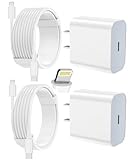
- 【Compatibility】This product is not compatible with all iPhone 15 and iPhone 16 models., Works With foriPhone 14,iPhone 14 Pro,iPhone 14 Pro Max,iPhone 14 Plus,iPhone 13,iPhone13 Pro,iPhone13 Pro Max,iPhone13 mini,iPhone 12 Pro Max,iPhone 12 Pro,iPhone 12,iPhone 12 mini,iPhone 11 Pro Max,iPhone 11 Pro,iPhone 11,iphone x,iphone xr
- 【MFi Certified Cable】Each cable contains a unique, verified serial number and an authorization chip issued by iphone to ensure 100% compatibility with any Lightning device.USB C to Lightning Cord fully supports the iOS version and all future updates.Please note that this charger does not work with iPhone 15 and iPhone 16 models.
- 【3X Fast Charging】The 12W 5V 3A USB-C port PD fast adapter wall charger and 6FT&10FT usb c to lightning fast charging cords,That is,it will charge your iPhone up to 50% power in just 30 minutes,and only takes 1.8 hours to charge your iPhone fully to save 1.5hrs more time for you!
- 【Superior Safety Fast Charging】FEEL2NICE lightning charger has multipotent safety system ensures complete protection for your lightning devices. The ETL certified wall charger built-in over-voltage protection, features a stable voltage. the lightning cable built-in smart chip to match the current required by devices automatically.
- 【What You Get 】2 pack of USB-C iPhone charger and 2 pack of 6FT&10FT USB-C to Lightning charging cable are packed in a box,1 year worry-free refund and replacement guarantee. If you have any questions, don't hesitate to contact us! We promise to solve your problems within 24 Hours!
Flexibility is real, but it has two different meanings
Workers often value the ability to choose when they work. Research on Uber drivers found that temporal flexibility has value because workers can adjust their schedules around childcare, education, health, another job, or an unexpected financial need. An NBER study specifically examined the value drivers place on flexible work.
Another NBER study of Uber’s Instant Pay found that quicker access to earnings increased drivers’ work time. That result illustrates how a platform can respond to immediate liquidity needs: when workers can receive money sooner, some choose to supply more labor.
But flexibility has two meanings:
- Worker flexibility: The worker chooses when to log on and, in some circumstances, whether to accept a task.
- Platform flexibility: The company can expand or contract its labor supply without maintaining a fixed payroll and without paying workers for all idle capacity in the same way a conventional employer might.
These benefits are not equivalent. A driver may control working hours while having little control over fares, dispatch, incentives, ratings, account access, or the amount of unpaid time required to find the next trip.
The crucial financial distinction: gross pay is not net earnings
For a platform worker, the amount shown in an earnings screen is not automatically an hourly wage or take-home pay. A realistic calculation must distinguish:
- Gross platform earnings from money left after expenses and taxes.
- Passenger or delivery time from all time logged in and available.
- Revenue attributed to a trip from the worker’s compensation after the platform’s share and adjustments.
- Temporary incentives from ordinary, repeatable earnings.
- Vehicle operating costs from personal driving costs.
Costs can include fuel or charging, maintenance, tires, repairs, depreciation, financing, rideshare or commercial insurance, phone service, cleaning, parking, tolls, taxes, and self-employment obligations. A driver who counts only the minutes with a passenger can produce a much higher hourly figure than one who counts waiting, repositioning, canceled trips, and the decline in vehicle value.
Human Rights Watch’s 2025 report, The Gig Trap, reviewed studies from New York, Seattle, Chicago, Denver, and nationwide datasets. It reported that the studies it examined generally found earnings below local living-wage benchmarks after vehicle and other work-related costs, although only some found earnings below applicable minimum-wage standards. The studies used different years, samples, definitions of working time, jurisdictions, and expense assumptions.
That evidence supports a careful conclusion: many platform workers experience economic insecurity after expenses, but there is no single national Uber wage figure that applies to every driver. Results vary with city, vehicle, hours, demand, household circumstances, multi-apping, and local pay rules.
Who bears the risk?
In a conventional employment relationship, the employer generally assumes more responsibility for payroll taxes, unemployment insurance, workers’ compensation, paid leave, training, equipment, scheduling, and workplace safety. Platform arrangements often move more of those responsibilities to the worker.
Uber’s 2025 filing acknowledges that independent workers generally receive fewer benefits and protections than employees and warns that changes in worker classification could materially affect its business. Some jurisdictions have created intermediate systems that retain contractor status while adding minimum-pay guarantees, benefits, transparency requirements, or deactivation protections.
The risk shift is easiest to see in a slow period. A traditional employee may be paid for scheduled time even when customer demand is weak. A driver may instead spend that period online, using fuel and adding mileage, without receiving a trip. The worker gains the right to choose whether to be available, but may also bear the cost of being available.
This is why the same platform can be a useful short-term bridge and a precarious sole livelihood. A worker with a paid-off car, another source of health insurance, and the ability to drive only during busy periods faces a different economic calculation from a worker financing a vehicle and relying on the app for most household income.
Rank #3

- Small & Powerful: With 25W charging power but smaller size, this Vilive Samsung charger fast charging cord is more convenient and portable. Equipped with a type c port, you can charge your device back to full power in no time by using the 25W USB C fast charger for Samsung Galaxy S26 S25 series. It takes about 1 hour to fully charge your Samsung Galaxy S26 ultra, S25 ultra, S24 ultra, S23 ultra, 3 times as fast as standard PC USB-C charger.
- Universal Compatibility: The Vilive samsung fast charger supports most of usb c devices, including Samsung Galaxy S26 Ultra/S26/S26+/S25 Ultra/S25+/S25/S24 Ultra/S24/S24+/S23 Ultra/S23/S23+/S21/ S21+/ S21 Ultra/ S22/S22+/S22 Ultra, S20/S20+/S20 Ultra/ S20, Note10/Note 20. It also charge for iPhone/Duo/ iPhone 18 Pro Max/iPhone 18 Pro/iPhone 17/iPhone 17 Pro Max/iPhone 17/16/15. Please be noted that "fast charging" is not suitable for S8/S9/S10, Galaxy Z Fold 5/Galaxy Z Flip 5/Z Flip/Z Flip3/Z Flip3 5G/Galaxy Z Fold2/Z Fold3.
- Vilive 10FT Type C Charger Fast Charging: The 25W android phone charger fast charging is equipped with extra longer 10FT(about 3 meters long) USB C fast charger cable, offering a user-friendly reversible design and longer charging distance, fast charging and up to 480 Mbps data transfer speed. The power output up to 3 Amp and 100-240 volt input of this 2pack Samsung fast chargers can charge two devices simultaneously, ideal for worldwide travel with your partner!
- Safety Assurance: The Vilive Samsung galaxy S26 S25 S24 S23 ultra super fast charger is built in intelligent chips, which can protect your devices against damage caused by short circuit, over-current, over-voltage, over-heating, and over-charging issues. Automatically stops charging when battery capacity is full to ensure your device safety and longevity.
- What's in Package: 2x 25W Vilive USB C fast charger blocks and 2x extra long 10FT(about 3 meters long) USB C fast charging cables.
The algorithm became a manager
Uber helped normalize management through software rather than a visible supervisor. The app may influence:
Do these 3 things before closing this tab:
1Scan for outdated or missing drivers - takes under a minute2Repair Windows errors before they cause bigger problems3Fix the driver behind crashes, sound loss and screen glitches- Which jobs a worker sees.
- How much a trip appears to pay.
- Where drivers are encouraged to go.
- Eligibility for bonuses or promotions.
- Ratings and access to future work.
- Whether an account is suspended or deactivated.
- The price charged to the customer.
- The platform’s share of the transaction.
That means the platform is not merely a neutral noticeboard matching supply and demand. It can set or influence prices, allocate opportunities, shape behavior, evaluate performance, enforce rules, and decide who retains access to the marketplace.
Human Rights Watch describes rideshare and delivery platforms as using artificial intelligence and data-driven technologies to manage and control workers. Its report highlights opaque incentives, unpredictable pay, and surge strategies that may encourage drivers to spend additional time and mileage chasing uncertain rewards. The report concerns platform work broadly, so a finding about rideshare or delivery systems should not automatically be treated as evidence about every Uber feature in every market.
The practical consequence is a new form of dependence. Workers may be formally independent while still relying on rules they cannot negotiate individually. Ratings can act as an informal disciplinary system. Deactivation can function like termination, but without the same notice, explanation, or appeal process associated with many conventional jobs.
Uber disrupted taxis—but the effects depended on regulation
It is too simple to say that Uber “destroyed taxis.” Ridesharing created new entry opportunities while putting competitive pressure on incumbent taxi drivers, and local regulation shaped the result.
The Census Bureau study found faster entry into the taxi and limousine industry after ridesharing arrived. It also found higher exit rates among lower-earning incumbent taxi drivers, little change in exit rates among higher-earning taxi drivers, and earnings losses for both low- and high-earning taxi drivers in cities without taxi-fleet limits. In more heavily regulated markets, those losses were smaller or absent.
Traditional taxis often operated under medallion systems, dispatch requirements, insurance rules, fare regulation, vehicle standards, and fleet limits. Uber initially framed itself as a technology platform rather than a transportation employer or taxi company. The resulting legal conflict was therefore not only about innovation. It was about whether services performing similar transportation functions should face similar obligations.
For consumers, the app often made the transaction easier. For incumbent drivers, it could mean competing against a newer model with different regulatory costs. For cities, it raised a difficult question: should regulation protect an old industry, promote competition, protect workers, preserve service availability, or pursue all of those goals at once?
Ratings changed expectations of service and conduct
Ratings made quality control immediate and visible. A rider could see a driver’s rating, and a driver could rate a rider. That increased accountability compared with some anonymous street transactions and created a digital record of trips, locations, payment, and identity.
Ratings also create risks. They can reflect bias, misunderstandings, retaliation, false complaints, or factors unrelated to driving quality. Workers may not know exactly how a rating affects access to future work, and customers may not know how complaints are investigated. A numerical score can look objective while concealing a discretionary process.
The same tension appears in safety. Digital trip records, GPS tracking, identity information, and in-app support can improve traceability. Yet sexual assault, violence, harassment, account hacking, disputed background checks, and dangerous behavior remain serious concerns. Uber identifies safety incidents and criminal or dangerous conduct involving platform users as material business risks in its annual filing. That is a company disclosure, not an independent safety assessment.
Rank #4

- Superior Safety Type C Fast Chargimg :PD3.0 Technology ensures an optimized and rapid safe charging experience(25W) for S26 Ultra/S26/S26+,S25 Ultra/S25,S24,S23,S22,S21, S20, S20+, S20 Ultra, S21, S21+, S21 Ultra,S22,S22+,S22 Ultra Galaxy S10, Galaxy S10 5G, Galaxy S10 Plus, Galaxy S10e,Galaxy S9 S8, Galaxy S8 S9 Plus,, Galaxy Galaxy S8, S8+, S8 active, S9, S9+, Note10, Note10+/ Note 20, Note 20+, S10+ 5G, Phone 16/16 Plus/16 Pro/16 Pro Max/15/15 Pro/15 Pro Max/15 Plus
- PD 3.0 USB C Wall Charger: Fast Charging Technology can charge your Cell Phone/ Electronic Devices up to 9V/2.77A charge speed,Fast charge your battery from zero up to 100% in about 60 min,5 times as fast as Stanbdard Charger Wall,10 times as fast as PC USB port and saves you time.
- 6Feet USB-C to USB-C Charging Cable :Length of 6 feet, easy for charging on different occasion, for travel, home, car, office, etc.
- High-quality Copper Wire:Reduced charging cable resistance enable to provide the fastest possible charge via any USB-C charger. Sync and charge at the same time at the fastest speeds on your windows PC or Mac. Its durability, connectivity, combatibility, and performance is 100%
- What You Get :2-PACK 25W PD Type C Fast charger and 2-PACK 6FT USB-C to USB-C cable.You may receive different model products of 25W charger but they are same products as before, because we keep to update the products' charging function in order to make sure all of them are work good when you receive them. Contact us if there any question, we are here for your all the time.
When something goes wrong, responsibility can be unclear. The driver, rider, platform, insurer, vehicle owner, and local regulator may each hold only part of the obligation. The convenience of one app does not automatically create one clear accountable employer.
Uber changed the meaning of a job
Platform work weakened several assumptions that shaped twentieth-century employment:
What’s actually slowing this PC down?
Pick the symptom - the matching free tool is one click away.
- One employer provides most of a worker’s income.
- Work happens at a designated workplace.
- A shift is scheduled in advance.
- Pay is calculated by an hour, salary, or clearly defined commission.
- Training and equipment come from the employer.
- A supervisor is identifiable.
- Poor performance leads to a recognizable disciplinary process.
- Benefits are attached to the job.
Uber-style work replaces some of those assumptions with multiple income sources, task-based pay, variable demand, worker-owned equipment, app-mediated evaluation, customer ratings, algorithmic scheduling, and independent-contractor classification.
That does not mean every platform worker is in the same position. A highly skilled online freelancer, a delivery courier, a rideshare driver, and someone completing occasional microtasks may face entirely different pay structures, expenses, bargaining power, and legal protections.
The Bureau of Labor Statistics uses the narrower term electronically mediated employment for short jobs or tasks found through websites or mobile apps that connect workers with customers and arrange payment. Its category includes rideshare, delivery, household tasks, and online work, but it is not synonymous with every possible definition of the gig economy.
BLS also warns that its 2017 survey questions produced false positives and required recoding, and it does not provide earnings estimates for this category from that survey. Statistics about the size or growth of the gig economy should therefore identify the definition, population, time period, and measurement method rather than presenting a single number as settled fact.
The Tool Desk
Outbyte PC Repair FREEClear out junk files and repair common Windows errorsFree Scan →Outbyte Driver Updater FREEFix the driver behind crashes, sound loss and screen glitchesFind Drivers →How the model spread beyond rides
The transferable platform model is straightforward:
- Aggregate customer demand through an app.
- Recruit a distributed supply of workers.
- Break work into discrete tasks.
- Price and allocate those tasks algorithmically.
- Shift equipment, idle-time, and some compliance costs outward.
- Use ratings and data to maintain quality control.
- Scale across locations without building a conventional physical workforce in every market.
That pattern appeared in food delivery, grocery shopping, package delivery, home services, freelance design and software, online microtasks, care work, on-demand staffing, and creator marketplaces. The common feature is not that all of these workers have the same experience. It is that software mediates the relationship between customer, task, payment, and worker.
For employers and customers, this can increase speed and reduce search costs. For workers, it can open access to more potential customers. It can also make the worker responsible for maintaining equipment, absorbing idle time, paying taxes, managing multiple apps, and remaining available under uncertain conditions.
The hidden costs for cities and households
Uberization can produce benefits that are easy to see and costs that are distributed across many people.
Household costs
Workers may bear vehicle depreciation, fuel, repairs, insurance, taxes, and unpaid time. Customers may face surge pricing, service fees, and higher prices where regulation or limited supply constrains the marketplace. Employers may gain a flexible source of labor but lose some of the stability, training, and institutional knowledge associated with a conventional workforce.
Best Value

- 40% Smaller & Lighter Portable Charger: Powered by the industry’s first TinyCell high-density battery technology, this ultra-compact 10,000mAh portable charger power bank is 40% smaller and 36% lighter than conventional chargers. Whether you are an office user slipping a mini small portable battery into a purse for commuting, or a student looking for lightweight college essentials, you get powerful daily carry convenience without the extra bulk to keep you powered on the go.
- 45W Pro Speed Portable Phone Charger: This 45W fast charger boosts an iPhone 17 Pro Max to 76%, a Galaxy S25 Ultra to 84%, or an iPad Pro to 60% in just 30 minutes (charging from 20%). Whether you are a driver needing a quick portable charger for car, a commuter relying on a desk phone charger, or a gamer wanting a seamless Switch battery pack and Steam deck charger portable, you will spend less time tethered to a wall and more time enjoying your day.
- Detachable Cable for Multiple Devices: Unlike a standard portable charger with built in cable that becomes useless if the cord breaks, INIU's 0.4ft detachable braided USB-C cable can be swapped anytime to save your investment. It effortlessly transforms into a versatile travel charger for multiple devices, ensuring your family or group travelers always have a reliable portable charger for all cell phones to keep everyone connected without carrying messy cords.
- Airline-Safe Travel Essentials: This TSA-compliant, flight safe power bank provides nearly 2 full charges for your smartphone, making it the perfect battery pack flight safe for business trips, cruise vacations, and airplane travel essentials. Beyond flights, it empowers campers, hikers, and outdoor users with ultimate camping essentials and road trip essentials—so you can explore freely without battery anxiety, making it ideal gifts for travelers women and men.
- Trusted Emergency Backup: As the SAFE Fast Charge Pro trusted by over 38 million users, we ensure the safest charging with the highest-grade materials. When unexpected storms or hurricanes strike, it acts as a lifeline—providing a dependable power outage battery backup and emergency phone charger for emergency users.
Urban costs
Cities may see fewer street hails and taxi stands but more vehicles circulating while waiting for work. Ride-hailing can improve access in some underserved areas while increasing pressure on curbs, airports, nightlife districts, roads, and public transit. It can also prompt disputes over licensing, congestion fees, data sharing, disability access, insurance, and driver pay.
A city pay rule might raise compensation per trip but reduce available trips or hours. A regulation that improves worker protections might also raise consumer prices or reduce service availability. These are not arguments for or against a particular policy by themselves; they are trade-offs policymakers must measure locally.
Why worker classification became the central legal fight
The question is not simply whether drivers choose their hours. The deeper question is whether a platform exercises enough control over the work to justify employee-like obligations.
What’s actually slowing this PC down?
Pick the symptom - the matching free tool is one click away.
Relevant issues include:
- Minimum pay after expenses.
- Payroll taxes and benefits.
- Workers’ compensation and unemployment insurance.
- Collective bargaining rights.
- Deactivation notices and appeals.
- Algorithmic transparency.
- Access to and portability of work data.
- Insurance and liability.
- Local versus national regulatory authority.
An independent contractor may have genuine autonomy over schedule and choice of platform while lacking the bargaining power to set prices or challenge a deactivation. Conversely, an employment classification can provide protections but may reduce the flexibility or geographic availability that workers and customers value.
There is no single national solution that has prevailed everywhere. Uber’s 2025 filing lists jurisdictions pursuing different models, including systems that preserve contractor status while adding minimum earnings, transparency, benefits, or deactivation protections. Rules vary substantially by country, state, province, and city.
The most useful policy debate therefore avoids treating “employee” and “independent contractor” as the only imaginable choices. It asks which protections should follow the worker, who should pay for them, how minimum earnings should be calculated, and what process should apply when an algorithm or complaint removes access to work.
Who benefited—and who absorbed the risks?
| Group | Potential benefits | Costs or risks |
|---|---|---|
| Consumers | Fast ordering, tracking, cashless payment, wider availability, and price visibility | Surge pricing, service fees, privacy concerns, and uncertain accountability |
| Platform workers | Lower entry barriers, schedule flexibility, supplemental income, and access to customers | Vehicle and equipment costs, unpaid time, volatile earnings, limited benefits, ratings, and deactivation |
| Platforms | Scalable supply, data, network effects, and flexible operating capacity | Regulatory disputes, safety obligations, classification risk, and competition |
| Incumbent workers | More demand in some markets and pressure to modernize service | Competitive pressure and possible earnings or employment losses, depending on local rules |
| Cities | More mobility options and new data for transportation planning | Congestion, curb pressure, emissions, enforcement challenges, and fragmented accountability |
The evidence supports a mixed conclusion. Uber expanded access to flexible earning and reshaped urban mobility. It also shifted bargaining power toward algorithmically managed platforms and made the boundary between independent contractor and employee harder to defend when a company controls pricing, allocation, evaluation, and continued access to work.
Free tools Windows power users keep installed
One-click scans. No signup required.
What comes next: more platform work or less human work?
The next phase may involve more than improving the app. Autonomous vehicles could change the economics of ride-hailing by reducing the need for human drivers, while also creating new questions about ownership, maintenance, safety, insurance, and who benefits from automation.
Uber identifies autonomous vehicle technology as both a major investment opportunity and a competitive risk in its 2025 Form 10-K. Other possible directions include worker-owned platforms, portable benefits, minimum-pay standards, algorithmic audits, multi-app worker tools, data portability, and stronger public oversight of platform decisions.
The key question is whether society can preserve the useful part of platform work—fast matching and genuine scheduling flexibility—without making individuals bear nearly all the economic risks. A sustainable model would need to account for the full cost of work, provide meaningful due process when access is withdrawn, and make responsibility legible when customers, workers, or the public are harmed.
Uber’s deepest legacy is therefore not simply that it made rides easier to order. It made it normal for platforms to coordinate work, price labor, evaluate performance, and allocate risk while presenting the arrangement as flexibility. Whether that becomes a durable improvement or a more efficient form of insecurity depends on the rules built around the technology.
Recommended Free Tools
Quick Recap
Product prices and availability are accurate as of the date/time indicated and are subject to change. Any price and availability information displayed on Amazon at the time of purchase will apply.



