Do these 3 things before closing this tab:
1Clear out junk files and repair common Windows errors2Fix the driver behind crashes, sound loss and screen glitches3Repair Windows errors before they cause bigger problemsSome links on this page are affiliate links: if you buy through them we may earn a commission, at no extra cost to you.
To start an online boutique, validate a focused product idea, choose how you’ll source it, handle the business and tax setup required where you operate, and build a storefront with workable pricing, shipping, returns, and payments. Then test the full order process before launching. The steps below are geared to first-time U.S. entrepreneurs; legal, tax, and product rules vary by state, locality, and what you sell.
What counts as an online boutique?
An online boutique is a focused retail business with a curated selection and a recognizable point of view. It might sell clothing, jewelry, gifts, beauty products, handmade items, or another category. “Boutique” describes the assortment and brand—not a specific selling channel or legal structure.
You might sell through your own direct-to-consumer website, a marketplace such as Etsy, or social-commerce features. You might stock products yourself, make them to order, use a supplier to fulfill orders, or sell products made by another company under your own label. These models differ in control, costs, and customer experience; none removes your responsibility to understand the rules that apply to your business.
Quick wins for a faster PC:
Clear out junk files and repair common Windows errorsFree Scan →Fix the driver behind crashes, sound loss and screen glitchesFind Drivers →1. Choose a niche and validate the customer
Start with a specific customer and need, not just a broad category such as “fashion.” A narrower offer can make your product selection, messaging, content, and advertising more coherent. Define the customer’s life stage, location, budget, style or use case, buying motivation, and where they discover products. Then answer: why would this person buy from your boutique rather than a marketplace or established retailer?
#1 Best Overall

- 【200 LBS Heavy-Duty Stability】The semicircular-shaped metal base with 30% thicker frames hold all your winter clothes without wobbling. Acting as a steadfast guardian, its industrial-grade reinforced joints prevent bending, surpassing any flimsy rolling hanging clothes rack
- 【Large Capacity, Space-Saving】It accommodates 50+ coats with ease, perfect for maximizing space in small apartments or tiny rooms. Size: 43"W x 14.8"D x 66"H (taller than standard garment racks for hanging clothes)
- 【Elegant Design Meets Function】A sleek golden finish and graceful curves elevate storage to stylish décor. The rolling wardrobe rack is versatile enough to complement any closet or master bedroom. Sturdy shoulders that keep everything perfectly in place
- 【All-in-One Versatility】Integrated side frames organize bags, while the bottom shelf stores boxes or shoes. The high rail of closet racks for hanging clothes accommodate garments of all lengths, adapting seamlessly from seasonal storage to daily outfit planning
- 【Easy to Move and Lock】Silent 360° wheels ensure smooth relocation across floors. You can move each of the gold clothing racks for hanging clothes between rooms in seconds—no more awkward "stuck-in-place" frustrations.
Try this positioning sentence: We sell [product category] for [specific customer] who wants [desired result] at approximately [price range]. For example, “We sell easy-care workwear for commuters who want polished pieces under $100” gives you more to test than “clothes for everyone.”
Look for evidence that customers want the offer and can be reached economically:
- Study search interest, social discussions, competitor assortments, and actual prices—not just viral posts.
- Read competitor reviews for recurring complaints, missing sizes, unclear descriptions, or product features customers wish existed.
- Talk to prospective customers about what they buy, what they dislike, and what they have paid. Ask about real behavior, not only whether they like your idea.
- Test a small collection, preorder, waitlist, pop-up, or social-selling offer before committing heavily to stock.
- Use product photos and descriptions to test interest, but treat clicks and likes as early signals, not proof of profitable demand.
A viable niche also needs reliable supply, workable margins, manageable shipping and returns, and a reason for repeat purchases or referrals. A popular product can still be a poor business if it is costly to ship, frequently returned, difficult to source, or expensive to market.
Deliverable: A one-sentence customer-and-product definition, plus evidence from conversations or a small test that customers may buy.
2. Choose products and a sourcing model
Decide what to sell and how each item will reach the customer. You do not need a large catalog or custom manufacturing to begin; a small curated collection, preorder, made-to-order item, or carefully tested supplier arrangement may be enough to validate an offer.
| Model | Potential advantages | Main trade-offs |
|---|---|---|
| Wholesale | Can be faster than manufacturing and offers established products and specifications. | Minimum orders tie up cash; other retailers may sell the same items; you manage stock and fulfillment. |
| Private label | More control over branding, packaging, and differentiation. | Sampling, production delays, quality control, and larger minimums can require more capital. |
| Handmade or self-produced | Distinctive products and direct control over quality and design. | Production time limits capacity; price your labor realistically before assuming the margin is attractive. |
| Dropshipping | Less money committed to inventory upfront; a supplier fulfills orders. | You still own the customer experience. Quality, stock, delivery times, packaging, returns, and margins may be outside your control. |
| Consignment | Can reduce upfront inventory spending and support independent makers. | You need clear agreements and careful tracking of sales, damage, returns, and unsold stock. |
Before committing to a supplier, order samples and check size, color, material, workmanship, and packaging. Confirm minimum order quantities, lead times, reorder terms, stock availability, and how defective items are handled. Calculate the landed cost—the product cost plus costs to get it ready for sale, such as freight, duties where applicable, and packaging—not just the quoted wholesale price. Keep invoices and product records, and get permission before using supplier photos.
Product category matters. Apparel needs useful size and fit information and may have significant return costs. Jewelry and accessories may have material or quality details customers need to know. Beauty products, children’s goods, food, and supplements can involve additional labeling, safety, or other requirements. Handmade goods need realistic production lead times; digital products have no physical shipping but can still raise tax and refund questions. Check the rules for the specific product and location rather than assuming a general retail license covers every item.
Deliverable: A first collection, a sourcing plan, sample results, and written supplier terms.
Rank #2
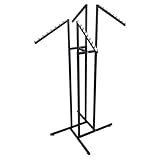
- Sturdy: This 4-way clothing display rack with slant arms features welded caps and strong leveler glides as well as a metal frame that makes it durable and dependable
- Perfect Size for Retail: Slant arm is 18 in. Base 32 in x 32 in. All of the arms are adjustable from 48 in to 72 in, allowing you to accommodate all of your clothing
- Stylish: This 4 way clothing rack with slant arms has a black matte finish with chrome accents making it a sleek way to hang or display your merchandise
- Variety of Uses: The four-way clothing racks can be used in a variety of locations such as retail, home storage, restaurants, and more to store or display clothing
- Versatility: Adjust the arms of this retail clothes rack into different positions to showcase your merchandise on multiple levels in a fashionable way
3. Choose a name and complete the relevant business setup
Check whether your proposed name is available in the places that matter: your state’s business records, a suitable domain, and relevant trademark records. A state entity name, “doing business as” (DBA) registration, domain, and trademark are separate things; getting one does not automatically secure the others. The SBA’s launch guidance discusses naming and registration. Consider legal advice if a name is close to an existing brand or if you plan to invest significantly in it.
Choose a business structure based on your circumstances, not because one type is always right for boutiques. A sole proprietorship may be simpler for an individual testing an idea, but it does not create the same legal separation as an entity. Partnerships, LLCs, and corporations have different filing, tax, liability, and administration implications. An LLC is not an automatic shield against every business risk, and it is not a universal tax recommendation. The IRS overview of business structures explains common types; the SBA launch guide explains why structure affects taxes, paperwork, fundraising, and personal liability.
For a U.S. business, work through the relevant items in this order:
Crashes, No Sound, or Screen Glitches?
Random freezes, missing sound and display glitches usually trace back to one bad driver. Find and replace yours safely.Free scan · under a minutePC Slower Than It Used to Be?
A free scan shows the junk files, broken settings and background clutter dragging Windows down - then fixes them in one click.Free scan · Windows 10 & 11- Check state and local requirements for your business location, structure, and products.
- Register an entity if required; check whether you need a DBA, registered agent, local license, permit, or other filing.
- Determine whether you need a federal Employer Identification Number (EIN). It is commonly relevant for employers and some entity types or applications, but not every sole proprietor must have one. Follow the IRS startup checklist and eligibility guidance.
- Open a separate business bank account when appropriate, and keep records of income, costs, inventory, and tax documents. Separation makes bookkeeping clearer even when a particular structure does not require a separate account.
- Consider insurance based on your products, inventory, premises, employees, and risks.
Registration fees and deadlines vary. The SBA says some states require an initial report or tax-board filing within roughly 30–90 days after registration, but you must verify the current deadline with your state. The IRS also says state requirements must be checked separately in its starting-a-business guidance.
Deliverable: A chosen name, a structure decision informed by your situation, and a checklist of required federal, state, and local steps. For tax or liability questions, consult a qualified professional.
4. Build a startup budget and price for contribution
List costs in three groups so a low-looking launch budget does not conceal the expense of fulfilling each order.
- One-time or launch costs: samples, opening inventory, registration, branding, photography, packaging, domain, equipment, and initial marketing.
- Recurring costs: ecommerce or marketplace subscriptions, domain renewals, email tools, apps, storage, insurance, bookkeeping, and ongoing advertising.
- Per-order costs: product cost, packaging, payment processing, platform fees, postage, shipping subsidy, return or defect allowance, discounts, and customer-acquisition cost.
Use real supplier quotes and platform pricing for your own situation. There is no trustworthy universal amount to start a boutique: a made-to-order shop and an apparel business buying several sizes and colors face very different cash needs. Make a 90-day cash plan that includes bills due before sales arrive and money held back for refunds, tax obligations, and reorders.
The Tool Desk
Outbyte PC Repair FREERepair Windows errors before they cause bigger problemsFix Now →Outbyte Driver Updater FREEScan for outdated or missing drivers - takes under a minuteDriver Scan →For each product, calculate a rough gross contribution per order:
Rank #3

- 【𝘿𝙤𝙪𝙗𝙡𝙚 𝙍𝙤𝙙𝙨 𝘿𝙚𝙨𝙞𝙜𝙣, 𝙑𝙚𝙧𝙨𝙖𝙩𝙞𝙡𝙚 𝙎𝙩𝙤𝙧𝙖𝙜𝙚】The double rods clothes rack is designed with a high and a low rods for hanging dresses, pants, etc flexibly. The side extension rods provide extra storage space for hanging bags, hats, belts, towels, umbrellas, etc and the bottom bars for your shoes, suitcases or luggage
- 【𝙇𝙖𝙧𝙜𝙚 𝙇𝙤𝙖𝙙𝙞𝙣𝙜 𝘾𝙖𝙥𝙖𝙘𝙞𝙩𝙮】The rolling clothing rack is made of heavy duty and 22mm diameter steel, and the stable structure design allows this garment rack to hold up to 210 lbs without deformation (160 lbs for the double rods and 50 lbs for the bottom shelf)
- 【𝙐𝙥𝙜𝙧𝙖𝙙𝙚𝙙 𝘼𝙨𝙨𝙚𝙢𝙗𝙡𝙮 𝙈𝙚𝙩𝙝𝙤𝙙】Adopting upgraded structure, the garment racks for clothes connecting each rod with thread rolling, making the portable clothes rack screws together smoothly, which saves a lot of time. Compared to other screw mounting, the HYSEYY clothing rack with wheels is faster and give a solid rigid connection. This makes the coat rack more sturdy and less wobbly.
- 【𝙈𝙤𝙫𝙖𝙗𝙡𝙚 𝙒𝙝𝙚𝙚𝙡𝙨 𝙛𝙤𝙧 𝙈𝙪𝙡𝙩𝙞𝙥𝙡𝙚 𝙎𝙘𝙚𝙣𝙖𝙧𝙞𝙤𝙨】The wardrobe rack for hanging clothes with 360-degree swivel wheels ensure that the rolling rack for clothes moves smoothly across any floor. The lockable caster wheels can be fixed to the position as required
- 【𝘾𝙤𝙢𝙥𝙡𝙚𝙩𝙚 𝘾𝙪𝙨𝙩𝙤𝙢𝙚𝙧 𝙎𝙪𝙥𝙥𝙤𝙧𝙩】Our dedicated after-sales team is available 24/7 to assist you with any inquiries or technical support you may need. If you have any issues before or after your purchase, please find us via the Amazon Message Center. Your satisfaction is our goal
Gross contribution per order = selling price − product cost − packaging − payment fee − platform fee − shipping subsidy − expected return or defect allowance
This is a planning measure, not net profit. It does not yet deduct fixed operating expenses, taxes, owner compensation, or other overhead. Markup is the amount added to cost; gross margin is gross profit divided by selling price; net profit is what remains after the business’s expenses and other obligations. Do not confuse the three.
For example, suppose an item sells for $60 and product cost is $24. If packaging is $2, payment and platform charges together are $2.50, shipping subsidy is $4, and the expected return or defect allowance is $3, the contribution before fixed overhead is $24.50—not the $36 difference between price and product cost. These figures are illustrative only; substitute your actual costs.
What’s actually slowing this PC down?
Pick the symptom - the matching free tool is one click away.
Price using landed cost, competitor ranges, perceived value, shipping economics, fees, expected returns, and the amount needed to contribute to overhead and profit. Simply doubling wholesale cost can leave out advertising, owner labor, discounts, shipping, or returns. Model conservative, expected, and high-demand sales scenarios. If orders rise but cash does not, inspect contribution per order and cash flow before buying more stock or increasing advertising.
Deliverable: A startup budget, a price sheet with costs per item, and a 90-day conservative cash-flow estimate.
5. Choose a sales channel and build the minimum viable storefront
Your channel affects discovery, brand control, fees, and how much work you must do to attract customers. Start with a route you can maintain accurately rather than opening everywhere at once.
| Channel | Often useful when | Trade-offs |
|---|---|---|
| Own ecommerce site | You want brand control, content, email capture, and a direct customer relationship. | Software and payment costs, setup, compliance, and traffic generation are your responsibility. |
| Marketplace | You want to test demand with marketplace discovery, or your products suit a marketplace audience. | Fees, competition, platform policies, and a more limited customer relationship; visibility is not guaranteed. |
| Social commerce | Your products are visual and you can create content or work with creators. | Rules, catalog eligibility, and algorithms can change; content and customer service take time. |
Shopify, WooCommerce, Wix, Squarespace, and BigCommerce are examples of website options, not a universal ranking. Compare total costs, payment availability, inventory tools, shipping features, integrations, and how much technical control you want. If you already use WordPress and value control, WooCommerce may suit you, though hosting, extensions, security, backups, and maintenance may be separate. A design-led site builder may suit a small catalog, while a managed commerce platform may help if you want integrated store tools. Verify current plan terms before choosing.
A marketplace can be useful for validation; an owned site can support brand-building and direct customer relationships. A hybrid approach can work if you can keep inventory synchronized and provide consistent service. Etsy’s shop-opening guidance reminds sellers to follow laws applicable to their business: a platform does not replace ordinary business or product compliance.
Rank #4

- HEAVY-DUTY CONSTRUCTION: Crafted from thick and high-quality metal, Sakugi heavy-duty clothes rack boasts a sturdy structure that can support up to 82 pounds of weight and accommodate up to 33 garments. Rest assured, this closet rack is built to last and provides long-lasting durability for all your hanging needs.
- MULTIPURPOSE STORAGE: With a height of 59 inches, Sakugi clothes hanger rack offers versatile storage for various clothing collections, both short and longer garments. The anti-slip stoppers at each end ensure clothes stay in place without falling off. Moreover, the bottom mesh shelf creates extra storage space for shoes, boxes, bags, etc.
- CONVENIENT TO MOVE: Sakugi garment rack for hanging clothes is equipped with four 360-degree rotating casters, two of which can be locked. It allows you to smoothly move or securely fix the garment rack according to your needs. This clothing rack with shelves provides easy usability and flexible storage solutions for home or office use.
- EASY TO ASSEMBLE: Sakugi clothes rack for hanging clothes comes with a detailed manual, video, and installation tools, making the assembly process straightforward. By following the step-by-step guide, even a single person can easily complete the installation in minutes. Enjoy the simplicity of setting up your garment rack.
- WIDE APPLICATION: With a compact size of 28.0"x 16.9"x 59.0", the sleek and modern Sakugi wardrobe rack is a perfect fit for multiple scenes and different decors. Whether it's for your bedroom, closet, laundry room, or office, this garment rack effortlessly complements your space while providing practical storage for your clothing.
As one dated example, Shopify’s U.S. pricing page displayed Basic at $39 per month billed monthly or $29 per month billed yearly, a standard online card rate of 2.9% + 30¢, and a 2% third-party transaction fee on Basic when using a third-party payment provider when checked on August 18, 2026. Rates, plans, eligibility, and billing terms can change and vary by country; see Shopify’s current pricing page rather than treating those figures as a quote. Separate subscription charges, processing fees, third-party transaction fees, marketplace commissions, advertising, and shipping costs when comparing channels.
Make the first storefront useful before making it elaborate. A product page needs clear photos from useful angles, accurate color and materials, dimensions or sizing, price, availability, shipping cost and timing, and an easy-to-find return policy. For clothing, add actual garment measurements, fit notes, fabric composition, stretch or opacity details, model measurements, and care instructions. For all products, include contact information, privacy and terms pages as appropriate, secure checkout, order confirmation, and analytics. A clear product page usually matters more than a complicated homepage.
Deliverable: One primary sales channel and product pages that answer the questions a buyer needs answered before checkout.
Recommended Free Tools
6. Configure payments, tax, fulfillment, and returns
Set up the payment methods your customers are likely to use, understand when funds settle, and know how to handle refunds, fraud alerts, and chargebacks. Confirm what the platform charges separately from what the payment processor charges. If you plan to sell internationally, check currency, payment availability, customs, and tax implications before promising service in other countries.
Sales tax is not a simple “home state only” rule. U.S. obligations depend on state and local law, where the business has a relevant connection (which may include physical presence or economic nexus), product taxability, and marketplace rules. A marketplace facilitator may collect and remit tax on some sales, but that does not necessarily remove your registration, filing, recordkeeping, or other obligations. Shopify’s U.S. tax setup guidance tells merchants to determine where they need to collect and register when required. Check the relevant tax agency’s instructions or consult a tax professional, especially if you sell across state lines or offer unusual products.
Choose how orders will be fulfilled: from home, a storage space, a third-party logistics provider, or a supplier. Decide the regions you serve, carrier options, tracking, packaging, and how you will handle lost or damaged packages. Choose flat-rate, calculated, or free shipping only after modeling the cost; free shipping is a pricing strategy to test, not a cost that disappears. State processing time separately from carrier transit time. “Ships in two business days” should mean the parcel is handed to the carrier within that processing window—not that it will arrive in two days.
Write a return and exchange policy before taking orders. State the return window, refund timing, who pays return postage, the condition and packaging required, how you handle wrong or defective items, and any clearly disclosed final-sale, preorder, made-to-order, or hygiene-sensitive product rules. Make the policy easy to find before checkout and check it against the law that applies; no single return period is universal.
Document a simple customer-service workflow: where questions go, when you reply, how you look up an order, and what you do when an item is delayed, damaged, or unavailable. Reconcile stock across channels or start with one channel; selling the same last item in two places creates cancellations and lost trust.
Best Value
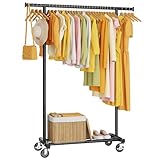
- 【Easy Assembly】The easy-to-assemble design with thread-rolling allows for quick and hassle-free install, saving your time and effort. The clothes rack has a clear instructions, a helpful video—so you can set it up in 15 minutes.
- 【Movable 360° Wheels】Equipped with four PP material wheels for smooth rolling in any direction, making it easy to reposition your clothing rack as needed. Two lockable wheels provide a secure and stable stop, ensuring your rack stays firmly in place when needed.
- 【Sturdy & Perfect Height】Built with 25.4mm reinforced steel pipes, this rack delivers rock solid stability (180 lbs capacity) , while its 63.8" height allows you to hang many pieces of clothes from short tops to long dresses—no bending, no wobbling, no dragging hems!
- 【Multiple Uses】It is suitable for living room, bedroom, home, apartment, clothing store or commercial use, and it is very suitable for providing additional clothing storage to display boutique goods, or to provide space for clothing display in theaters or studios.
- 【Professional Customer Support】Our dedicated support team is always ready to assist with any questions or concerns. If you have any issues before or after your purchase, you can contact us and we will respond within 24 hours. Your satisfaction is our goal.
Before announcing the store, run a complete test order. Exact menu names vary by platform, so use the platform’s current instructions for test mode:
- Open the storefront in a private or incognito browser window and view it on a phone.
- Add a product to the cart and apply a discount if you advertise one.
- Enter a test shipping address; check shipping cost and the delivery estimate.
- Complete a payment in test mode, or make a controlled real order if appropriate.
- Verify that the order appears in the admin and the confirmation email arrives.
- Confirm inventory changes correctly, then test fulfillment and a refund or use the platform’s supported test process.
- Verify the refund and customer notification; remove test products and disable test-mode settings before launch.
Deliverable: A documented order-to-refund process and a tested checkout with clear delivery and return terms.
7. Launch, market, and learn from the first 30 days
Build a small audience before launch instead of relying on opening-day traffic. Publish useful product and behind-the-scenes content, invite interested shoppers to a waitlist, and send samples to carefully selected testers or creators when the economics make sense. Prepare product photos, launch emails, support replies, inventory counts, and a clear offer. Do not claim an item is scarce unless the quantity really is limited.
On launch day, release a focused collection, email the waitlist, post on the channels you can maintain, and monitor orders, questions, payment issues, and inventory. A small first collection makes it easier to see what customers respond to and to fulfill reliably.
In the first month, track the path from discovery to repeat purchase:
- Sessions and product-page views
- Add-to-cart and checkout-start rates
- Conversion rate and average order value
- Gross contribution or margin by product
- Refund, return, and defect rates
- Customer-acquisition cost and email signups
- Repeat purchases and best- and slow-moving products
Diagnose the point of friction before spending more on ads. Low sales may mean too little traffic, but they can also reflect weak product-market fit, unclear product pages, price, shipping costs, checkout problems, or a lack of trust. High social engagement with few signups, carts, or purchases is not the same as demand.
If inventory is slow, pause reorders, improve merchandising and photos, test a carefully costed bundle or promotion, and use sales data before expanding. If orders sell but money does not accumulate, recalculate every variable cost and review discounts, shipping, and returns. If returns are high, improve fit information and descriptions. If checkout fails, fix that before buying traffic.
Free tools Windows power users keep installed
One-click scans. No signup required.
Deliverable: A launch calendar and a simple dashboard you review weekly, with one specific improvement to test at a time.
A minimum-viable boutique checklist
- Offer: A defined customer, focused collection, and evidence of interest.
- Supply: Samples checked, supplier terms understood, and landed costs recorded.
- Business: Name and structure considered; applicable registrations, tax IDs, permits, and insurance checked for your location and products.
- Money: Per-order costs and prices modeled; business records and cash plan prepared.
- Store: Accurate product pages, policies, contact details, and secure checkout.
- Operations: Payments, tax questions, shipping, returns, support, and inventory workflow documented.
- Launch: Test order completed; audience, email, and measurement plan ready.
Keep the first version small enough to learn from. Add inventory, channels, and paid tools when customer behavior—not just enthusiasm—supports the next expense.
Quick Recap
Product prices and availability are accurate as of the date/time indicated and are subject to change. Any price and availability information displayed on Amazon at the time of purchase will apply.



