PC Slower Than It Used to Be?
A free scan shows the junk files, broken settings and background clutter dragging Windows down - then fixes them in one click.Free scan · Windows 10 & 11Crashes, No Sound, or Screen Glitches?
Random freezes, missing sound and display glitches usually trace back to one bad driver. Find and replace yours safely.Free scan · under a minuteSome links on this page are affiliate links: if you buy through them we may earn a commission, at no extra cost to you.
Russia did not eliminate its technology sector. Domestic IT sales, employment, and investment grew in 2024, according to Russia’s Higher School of Economics. But the Kremlin and its invasion of Ukraine largely destroyed something more important: the conditions for an open, privately financed, globally integrated civilian technology industry.
Russia still has engineers, software companies, digital platforms, defense contractors, and a large domestic market. What it has largely lost is the path to becoming a normal global technology power.
What “Russia’s tech industry” actually means
The phrase covers several very different industries, and treating them as one produces misleading conclusions.
Do these 3 things before closing this tab:
1Scan for outdated or missing drivers - takes under a minute2Repair Windows errors before they cause bigger problems3Fix the driver behind crashes, sound loss and screen glitches- Consumer internet: search, social networks, marketplaces, fintech, advertising, media, and digital services.
- Enterprise software and IT services: databases, cybersecurity, cloud services, systems integration, telecom infrastructure, and consulting.
- Hardware: processors, networking equipment, storage, sensors, telecom components, and manufacturing tools.
- Startups and venture capital: companies that can raise private capital, scale internationally, and provide founders with credible exit opportunities.
- Defense and state technology: military electronics, drones, cyber operations, surveillance, censorship systems, and government platforms.
These categories do not rise and fall together. A country can produce effective military systems while losing consumer innovation. Its domestic software market can grow while its startup ecosystem becomes less competitive. Government IT spending can increase while independent companies become less able to operate internationally.
#1 Best Overall
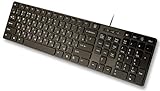
- Slim and Lightweight Desktop Design: Features a compact and portable design that saves desk space while providing full-size keyboard functionality
- Water Resistant Construction: Protects against accidental spills and liquid damage, ensuring durability and longevity in everyday use
- USB Connection: Simple plug-and-play connectivity through standard USB interface for easy setup with your computer
- Complete Russian Character Set: Includes ALL Russian letters and commonly missed Cyrillic characters for authentic Russian typing experience
- Laser Etched Letters: Durable laser-etched characters ensure long-lasting visibility of both English and Russian letters that won't fade over time
The industry was structurally weak before February 2022
The full-scale invasion accelerated Russia’s technological decline, but it did not create every underlying problem. Before the invasion, Russia already had talented engineers and several impressive companies, yet it lacked the institutional environment needed to turn technical talent into a broad, self-reinforcing innovation economy.
Research from the Center for Strategic and International Studies identified long-running weaknesses including brain drain, weak protection of property rights, state-dominated priorities, and a hostile investment environment.
For a technology economy to mature, founders generally need confidence that contracts will be enforced, intellectual property will be protected, investors can exit, and successful companies will not be taken or politically constrained. Russia increasingly offered the opposite.
The Kremlin favored technology that strengthened state power, military capacity, surveillance, or information control. It was less comfortable with the openness, independent finance, free exchange of ideas, and political unpredictability that help civilian startups grow.
That created a fundamental contradiction: Russia wanted technological sovereignty, but it also wanted political control. It wanted entrepreneurs, but made access to capital and market opportunities increasingly dependent on state relationships. It wanted artificial-intelligence leadership, but prioritized security and military applications. It wanted globally competitive companies, while making global integration politically suspect.
Import substitution was necessary—but not sufficient
After the 2014 annexation of Crimea, sanctions and export restrictions pushed Russia to make “import substitution” a strategic priority. Government agencies were encouraged to use domestic software, while businesses were pressured to reduce their dependence on foreign operating systems, cloud services, enterprise software, and telecom equipment.
That policy created demand for local suppliers. But replacing an imported product inside a protected domestic market is not the same as building a product that customers voluntarily choose worldwide.
Quick wins for a faster PC:
Repair Windows errors before they cause bigger problemsFix Now →Fix the driver behind crashes, sound loss and screen glitchesFind Drivers →A complete technology ecosystem requires more than a domestic alternative to a foreign application. It also needs:
- research institutions and international collaboration;
- venture capital and reliable payment systems;
- semiconductor design tools and fabrication equipment;
- data centers, networking hardware, storage, and security updates;
- experienced managers and globally connected engineers;
- customers willing to buy the product without political pressure.
The Center for a New American Security described Russia’s prewar import-substitution effort as struggling to create the infrastructure and capacity required for an indigenous technology sector. The problem was not simply a shortage of software. It was the absence of a competitive stack from chips and equipment to capital, talent, and international customers.
What changed after the full-scale invasion
Russia’s invasion of Ukraine on February 24, 2022 turned structural weaknesses into an acute technology shock. “Sanctions” were not one single mechanism; several separate disruptions arrived at once.
Rank #2

- 【ENHANCE YOUR WORKSPACE】Whether you are working from home or taking online courses, our keyboard will give you slim size, comfortable and ergonomic feel. Purpose built for Windows/Apple/Androids Systems, it features a 78-key layout, 6 multimedia keys, 10 languages, 13 shortcut keys, and visually stunning aluminum body.
- 【STRONG WIRELESS CONNECTION】Connect With Bluetooth 3.0, the cordless keyboard establishes a stable connection from up to 32ft away via Bluetooth. This eliminates excess cables and clutter, providing a clean workspace.
- 【A SOPHISTICATED TYPING EXPERIENCE】Each keycap on our low profile wireless USB keyboard is designed with a concave shape and scissor flexor technology. This allows for smooth and responsive keystrokes. Also, for wrist comfort, an angled kickstand is integrated.
- 【SIMPLE SETUP】This slim keyboard is completely connect and play. Simply connect Bluetooth with your computer and begin. Also, two AAA batteries provides up to 2-3 months of run time. (not include batteries).
- 【ADD LANGUAGES LAYOUT ON PC】-Open the start menu and select "Control Panel". -Select "Change keyboards or other input methods" under the Clock, Language, and Region section. -In the new window, click on the button that says "Change keyboards...". -Another window will open and show all currently installed keyboards. -Click "Add..." -International should now show on the list of keyboards installed. Click "Apply" and then "OK".
Foreign technology companies left
Major companies suspended operations, stopped deliveries, or withdrew from Russia. The CNAS review identified companies including Intel, Adobe, Hewlett-Packard, Microsoft, Cisco, Dell, Ericsson, Nokia, LG, NVIDIA, Kyocera, Logitech, Siemens, SAP, Oracle, Juniper Networks, and Samsung among those that curtailed Russian operations in different ways.
The damage was not limited to losing access to new products. Russian customers also faced lost vendor support, software updates, security patches, maintenance contracts, replacement parts, and international partnerships. “Exit” varied by company: in some cases it meant a full withdrawal; in others, a suspension of sales or support. The practical effect was still a sharp reduction in reliable access to the global technology ecosystem.
Hardware dependence became harder to hide
Russia’s domestic semiconductor industry cannot replace the full imported technology stack. According to analysis cited by the Carnegie Endowment for International Peace, Russian factories operated around 65-nanometer production technology—far behind leading-edge global manufacturing.
That figure describes domestic fabrication capability, not every chip Russia can obtain through imports. Russia continued to acquire components through alternative channels. But the gap matters because modern technology depends on much more than the ability to buy a finished processor. It requires semiconductor design software, fabrication equipment, packaging and testing, networking components, storage, sensors, power electronics, industrial controls, and dependable technical support.
Russia’s imports of transistors and microprocessors fell sharply after 2022 and later moved back toward prewar levels through alternative supply routes. That rebound indicates access through rerouted trade, not the restoration of domestic manufacturing capability.
Free tools Windows power users keep installed
One-click scans. No signup required.
Capital and international exits disappeared
The invasion damaged the financing model that could have turned Russian startups into global companies. Western venture capital became unavailable or much harder to access. Sanctions complicated banking and payments. Foreign ownership and exit restrictions made acquisitions more difficult. International customers and partners became harder to serve.
This matters because a startup ecosystem depends on more than talented founders. Companies need capital to scale, the ability to hire internationally, credible public or private exit markets, and confidence that a successful business will remain under its founders’ control.
The “build in Russia, sell globally” pathway became far less realistic. A company could still serve Russian customers, but its ability to become a global platform was constrained by politics, finance, infrastructure, and trust.
Technical workers left
Russia’s government estimated that approximately 100,000 IT workers left after the invasion—roughly 10% of the technology workforce by that estimate. The number is difficult to verify independently and may include people who continued working remotely for Russian employers.
A separate study using developer-location data found that by November 2022, 11.1% of Russian developers in its sample had listed a new country, compared with 2.8% in a regional comparison group. The study also found that those who left were more active and more central in developer collaboration networks than those who remained.
Rank #3

- 104 KEYS: Computer keyboard wired is a 104 key design with full functionality for long hours of work and gaming.
- ERGONOMIC DESIGN: Gaming keyboard adopts tilted design, ergonomic design to ensure the comfort of the wrist, not easy to fatigue after long time use.
- CONVENIENT CONNECTION: 1.3 meters long cable, easy to connect to desktop and laptop computers, meet the needs of a variety of working environments.
- PLUG AND PLAY: The USB wired keyboard is plug and play, no driver required, more convenient to use and stable performance.
- PREMIUM MATERIAL: Keyboard is made of high strength ABS material, sturdy and high durability, no deformation for long time use, increase the life of the keyboard.
That composition matters. Losing 10% of workers does not necessarily mean losing 10% of capability. If the departing group is disproportionately international, senior, entrepreneurial, and technically connected, the loss to future innovation can be considerably larger than the headcount suggests.
Some emigrants continued working for Russian firms. Others relocated companies or founded new businesses abroad. That diaspora could eventually create useful networks, but those networks benefit Russia only if its institutions allow meaningful cross-border cooperation.
The internet became more controlled and isolated
Russia’s digital environment had already been subject to data-localization rules, censorship, platform pressure, and surveillance. After 2022, the country moved further toward technological isolation.
Recommended Free Tools
The Atlantic Council and DFRLab describe this shift as a combination of foreign-company exits, brain drain, domestic-technology promotion, and increased dependence on Chinese technology.
This is not merely a civil-liberties issue. Restrictions on information and communications affect the quality of research, product design, platform trust, international partnerships, and the willingness of independent founders to build companies that depend on openness.
Yandex shows what Russia lost
Yandex is the clearest example of Russia’s technological potential colliding with its political model.
Yandex became Russia’s most internationally credible internet company. Its success depended on highly skilled technical workers, sophisticated infrastructure, data, and access to global knowledge. But operating a major search and information platform in Russia also exposed it to Kremlin pressure over news, political content, and the boundaries of acceptable information.
After the invasion, Yandex faced overlapping pressures: state demands, Western restrictions, employee departures, ownership and asset constraints, and the shrinking possibility of remaining both Russian and globally integrated. Its international assets and Russian operations were separated through a major restructuring, while key executives and employees departed.
The Yandex story should not be reduced to “sanctions destroyed a successful company.” Its predicament resulted from the interaction of political control, war, sanctions, ownership restrictions, and talent flight. The larger message to Russian founders was more damaging than the fate of one company: even the country’s strongest technology business might not control its own future.
The MIT Technology Review account of Russia’s technology industry places Yandex and Skolkovo in the broader story of a technology model that never became fully independent from state priorities.
Rank #4
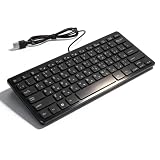
- [Premium Durability]: The Mini Keyboard is skillfully crafted with superior craftsmanship to ensure outstanding durability. Its sturdy design guarantees long lasting performance, while the legible text on the keys will not fade over time. This keyboard is built to withstand the test of time and provide reliable typing for years to come
- [Effortless Convenience]: Experience the convenience of plug and play with this Mini Keyboard. It requires no complicated installation process, allowing you to quickly connect it to your device and start typing without any hassle. Enjoy the simplicity and ease of use, making it ideal for both beginners and advanced users
- [Enhanced Typing Comfort]: Designed for comfort, this Mini Keyboard offers a satisfying typing experience. Whether you're using it for office or home use, or even with your laptop or desktop, the keys are ergonomically positioned for optimal comfort and efficiency. Say goodbye to wrist strain and enjoy long hours of comfortable typing
- [Multilingual Support]: Choose the version that suits your language preferences with the Mini Keyboard's three available versions in Russian, French, and German. With a total of 78 keys, this keyboard ensures seamless typing and communication in your desired language. It is perfect for users who require specific language support and greatly enhances convenience and efficiency
- [Universal Compatibility]: Versatility is key with this Mini Keyboard. It is universally applicable to various models, making it a reliable choice for a wide range of devices. Whether you're using a PC, laptop, or desktop, this keyboard guarantees compatibility across the board. Enjoy its consistent performance and exceptional typing experience, regardless of your device
A bigger domestic IT sector can still be a weaker tech ecosystem
Russia’s domestic technology activity did not disappear after 2022. In fact, official figures show strong growth.
The Tool Desk
Outbyte Driver Updater FREEFix the driver behind crashes, sound loss and screen glitchesFind Drivers →Outbyte PC Repair FREERepair Windows errors before they cause bigger problemsFix Now →Russia’s Higher School of Economics reported that in 2024:
- ICT-sector sales rose 28.3% year over year;
- IT-industry sales rose 49%;
- employment in IT and related services rose 13.4%;
- fixed-capital investment in ICT rose 38.9%.
HSE also reported that ICT’s share of total economic activity increased from 1.9% in 2023 to 2.5% in 2024. These figures show that domestic IT activity was expanding, not vanishing.
They do not, by themselves, prove that Russia was becoming more innovative, more productive, or more technologically independent. Growth can reflect several forces:
- replacement demand after foreign suppliers left;
- state subsidies and procurement;
- military and security spending;
- price increases and nominal revenue growth;
- reclassification of activities;
- large incumbent firms absorbing market share;
- companies maintaining essential systems rather than developing frontier products.
The Russian government has also said that sales of domestic IT solutions and services nearly doubled since 2022, reaching 4.5 trillion rubles. That is a government-reported figure and should be treated as evidence of domestic activity, not as an independent measure of technological health.
What’s actually slowing this PC down?
Pick the symptom - the matching free tool is one click away.
This is the central paradox: a technology sector can grow in revenue while becoming less competitive. A captive market can make local substitutes profitable even when customers would prefer foreign products. Government funding can sustain firms while making them dependent on political priorities. More jobs can coexist with fewer internationally mobile, high-value opportunities.
Independent reader supportYour contribution helps us test, update, and keep practical guides available for everyone.Russia did not become technologically self-sufficient
Export controls hurt Russia, but they did not create technological autarky. The Carnegie analysis identifies three routes that helped Russia continue acquiring critical components:
- ordinary commercial chips that were not always subject to the strictest controls;
- third-country traders and rerouted supply chains;
- continued trade with countries including China, India, Türkiye, and the United Arab Emirates.
The U.S. Government Accountability Office similarly concluded that export controls hindered, but did not completely prevent, Russia from obtaining technologies relevant to its military effort. The GAO found that Russia’s economy recovered somewhat after its 2022 decline, while estimating that the combined effect of the invasion and sanctions reduced 2022 growth by about six percentage points compared with what might otherwise have occurred.
Access is not the same as capability. Russia may obtain chips without possessing the manufacturing ecosystem, design leadership, software tools, supply certainty, or global customer base required to sustain a durable civilian technology industry.
China became a substitute—but not a full replacement
China helped Russia preserve access to smartphones, consumer electronics, telecom equipment, networking hardware, industrial components, payment channels, and some dual-use goods. It became a more important source of technology and a route around restrictions.
Best Value
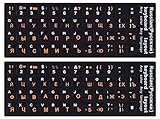
- 【DESIGN FOR】The Russian-english keyboard stickers are suitable for a variety of keyboards for Desktops, Laptops and Computer. The keyboard letter stickers are well suited for different language communication, education or a language self-learning.
- 【EASY TO APPLY & REMOVE】The Russian keyboard stickers are easy to apply and remove without leaving any residue behind. The individual keyboard replacement english stickers have been cut neatly, and there is a notch for the F and J keys to blend well with your keyboard.
- 【RENEW THE WORN-OUT KEYBOARD】It’s a great way to update your keyboard worn-out letter keys with a different fresh new look, so you don't have to spend a lot of money on a new keyboard.
- 【PREMIUM MERTIALS】The computer Russian keyboard stickers are made of high-quality, non-transparent vinyl with a matte texture that will give you a good grip and feel close to the original keyboard. Long-lasting, durable coating, not fade for 5 years in normal use.
- 【PACKAGE INCLUDED】This keyboard replacement stickers Russian set includes 2 x English keyboard stickers. Each one small sticker: 0.43" x 0.51". Full Size: 7.09" x 2.56". Risk-Free Replacement Warranty with CaseBuy.
But dependence on China is not the same as technological autonomy. Russia exchanged reliance on multiple competing Western suppliers for greater dependence on a narrower group of politically aligned suppliers, especially China. That may preserve basic functionality while reducing bargaining power and increasing vulnerability to another supplier’s policy decisions.
The Atlantic Council and DFRLab identify growing Russian dependence on Chinese digital technology after the invasion. The relationship is therefore best understood as a partial substitute, not proof that Russia recreated an independent technology stack.
The military exception explains the apparent contradiction
Russia can maintain sophisticated drones, electronic warfare, cyber operations, surveillance systems, and weapons production even while its civilian technology ecosystem deteriorates.
Military technology receives direct state funding, priority access to scarce components, emergency procurement, and tolerance for higher costs and lower efficiency. It does not need to win ordinary consumer customers or attract global venture capital. The state can also use gray-market procurement channels that would be unavailable to ordinary civilian companies.
Carnegie reported that Russia shifted substantial resources toward defense production and that its military-industrial base adapted rapidly to a war footing.
That does not disprove civilian-tech decline. A state can expand military technology while losing consumer innovation, international software exports, research collaboration, independent platforms, hardware competitiveness, and commercial trust.
What Russia actually lost
Judged by domestic revenue alone, Russia’s technology sector is not dead. Judged by the conditions required for a globally competitive civilian industry, the damage is severe.
Do these 3 things before closing this tab:
1Fix the driver behind crashes, sound loss and screen glitches2Repair Windows errors before they cause bigger problems3Scan for outdated or missing drivers - takes under a minute| Measure | What happened |
|---|---|
| Global competitiveness | Russian firms have fewer international customers, partners, and markets. |
| Frontier capability | Domestic hardware production remains far behind leading global semiconductor manufacturing, while access to advanced equipment is less reliable. |
| Talent retention | A significant and possibly selective group of technical workers left the country. |
| Capital formation | International venture funding, banking access, and credible exits became much harder. |
| Institutional trust | Political intervention, censorship, sanctions, and ownership restrictions weakened confidence in long-term independence. |
| Research openness | International collaboration and access to global technology networks contracted. |
| Technological autonomy | Russia remained dependent on imported components and third-country supply chains. |
| Entrepreneurial optionality | Founders had fewer realistic choices about where to raise money, sell companies, hire talent, and serve customers. |
The precise verdict
“Russia killed its tech industry” is too broad if it means that Russian IT activity disappeared. Official Russian data show the opposite: domestic ICT sales, employment, and investment grew in 2024.
But the phrase is defensible as shorthand for a deeper institutional loss. Russia’s preexisting political controls, weak property-rights environment, limited venture ecosystem, and import dependence had already constrained civilian innovation. The invasion then added foreign-company exits, export controls, capital isolation, talent flight, censorship, and deeper dependence on China and gray-market supply chains.
The result is a technology sector increasingly shaped by state procurement, military demand, domestic replacement, and political control. It can be productive in selected areas. It can generate revenue. It can field capable military systems. Yet it is less open, less independent, less globally integrated, and less likely to produce the next generation of internationally competitive civilian technology companies.
Russia did not kill every engineer, platform, or software company. It largely killed the ecosystem’s most valuable trajectory: the chance to turn technical talent into a normal, privately financed, globally connected innovation economy.
Recommended Free Tools
Quick Recap
Product prices and availability are accurate as of the date/time indicated and are subject to change. Any price and availability information displayed on Amazon at the time of purchase will apply.



