Some links on this page are affiliate links: if you buy through them we may earn a commission, at no extra cost to you.
ecobee’s best chance against Amazon and Google is not to build a bigger general-purpose smart-home platform. It is to specialize in heating, cooling, room-by-room comfort and household energy management, while staying compatible with rival ecosystems. Generac’s 2021 acquisition gives that strategy a bigger ambition: making ecobee’s thermostat and software a control point for generators, batteries and other home-energy equipment. That could make ecobee more useful—and more distinct—but it also puts the company’s future on Generac’s ability to make a complex energy system work as one consumer-friendly product.
ecobee competes in three different markets
Comparing ecobee with Amazon or Google as if all three sell the same kind of smart-home platform misses the point. ecobee competes in at least three overlapping arenas:
- Thermostat hardware: It competes with Google Nest, Amazon-compatible thermostats, Honeywell Home/Resideo, Sensi and other connected thermostats. The important differences include HVAC compatibility, remote sensors, installation needs, schedules and app features—not just the screen.
- Smart-home ecosystems: Amazon and Google can tie a thermostat to speakers, displays, cameras, subscriptions, voice assistants and other services. ecobee is smaller, but its thermostats work with several competing platforms.
- Home-energy management: This is where ecobee may have its clearest strategic opening. A thermostat can influence heating and cooling—the largest or one of the largest controllable energy uses in many homes—and may be part of programs that shift demand or coordinate with backup power.
That focus has roots in ecobee’s history. Founded in 2007, the company launched its first smart thermostat in 2009, before Amazon and Google turned smart-home devices into parts of much larger platform businesses. ecobee describes that product as the world’s first smart thermostat; treat that as the company’s characterization, not an uncontested historical ranking. Its enduring distinction has been to treat the thermostat as an HVAC control and energy tool, rather than merely another endpoint for a voice assistant.
Free tools Windows power users keep installed
One-click scans. No signup required.
Its specialist advantage is HVAC and room comfort
A wall thermostat measures conditions where it is installed. If that spot is a hallway, a sunny room or a drafty corner, its reading may not reflect the bedroom or living room where people spend time. ecobee’s remote sensors can add temperature and occupancy information from other rooms, allowing the system to respond to conditions beyond the thermostat itself. That can help in homes with uneven temperatures or schedules that change which rooms matter during the day.
#1 Best Overall

- Save up to 23% every year on heating and cooling costs, adjusts to your set schedule to save energy when you’re gone and optimize comfort when you’re home. Compared to a hold of 72
- Compatible with 85% of systems, check your system’s compatibility with our online ecobee Compatibility Checker on the ecobee support page
- Change your temperature by easily tapping the color touchscreen or using the ecobee app. Plus, free software upgrades ensure you get the best out of your Smart Thermostat Essential, for years to come
- Automatically adjusts to your set schedule to save energy when you’re gone and optimize comfort when you’re home. Keep track of your energy consumption when you're on the go on the ecobee app
- Easy DIY install. No C Wire, no problem. Get the ecobee Power Extender Kit (PEK) for homes without a C-Wire and keep your walls looking nice with our trim kit – both sold separately
This is a feature-fit advantage, not proof that ecobee is universally better than Nest or Amazon. It is especially relevant to homeowners who want room-level sensing, detailed comfort management or control over a more involved HVAC setup. Buyers with heat pumps, auxiliary or emergency heat, multi-stage equipment, dual-fuel systems or unusual wiring should check the exact thermostat’s compatibility and installation requirements before buying. A feature list alone cannot establish that a thermostat will work correctly with every system.
Sensors also have costs and trade-offs. They may be sold separately, raising the total price, and the way occupancy sensing affects temperature can take adjustment to match a household’s preferences. In a small home where the thermostat already reflects the rooms people use, extra sensors may provide little value.
How ecobee stacks up against Amazon and Google
| Decision | ecobee’s case | Amazon or Google’s advantage |
|---|---|---|
| HVAC and room comfort | Remote temperature and occupancy sensing, with a product strategy centered on thermostat control. | They sell connected thermostats too, but their broader consumer proposition is not limited to HVAC. |
| Smart-home integration | Designed to work with Alexa, Google Assistant, Apple HomeKit, SmartThings and IFTTT, subject to model and feature differences. | Each can make its own assistant and home app the default for a household already using its devices. |
| Product breadth and reach | A narrower portfolio centered on comfort, thermostats, sensors and related security features. | Large consumer ecosystems spanning assistants, displays, cameras, cloud services and other products. |
| Energy strategy | A direct connection between HVAC control, utility programs and, under Generac, energy generation and storage. | Considerable platform and cloud resources, but ecobee’s strategic pitch is more specifically tied to HVAC and home energy. |
| Independence from one platform | Can suit a mixed-brand household that does not want to choose a thermostat solely to match its assistant. | Often the natural choice for people already invested in Google Home/Nest or Alexa/Echo. |
ecobee says its products integrate with major ecosystems, but “works with” does not guarantee equal access to every function. Basic voice commands, full app control, sensor data, automations, security settings and camera viewing are distinct capabilities. Check the documentation for the specific thermostat and platform if a feature is essential to your setup. Do not assume that general Alexa or Google support for Matter means every ecobee model supports Matter; Amazon’s documentation describes Alexa’s supported Matter device categories, not ecobee model certification.
Do these 3 things before closing this tab:
1Clear out junk files and repair common Windows errors2Scan for outdated or missing drivers - takes under a minute3Repair Windows errors before they cause bigger problemsAmazon and Google also have a scale advantage. Their hardware can reinforce larger businesses in cloud services, subscriptions, commerce, advertising and consumer devices. ecobee’s narrower business must persuade customers that the thermostat and its accessories are worth buying on their own. Conversely, platform scale does not automatically mean better HVAC control or a better fit for a particular home.
Rank #2
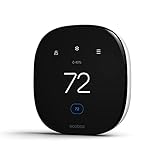
- Saves you energy automatically — Save up to 26% per year on heating and cooling costs.* The Smart Thermostat Enhanced automatically adjusts your home’s temperature when you’re away or asleep, helping reduce energy use without sacrificing comfort.
- Smart comfort for everyday life — Built-in occupancy sensing detects when people are home and can preheat or precool your home before you arrive. It also learns your temperature preferences and schedule and adjusts for humidity to help keep your home comfortable.
- Compatible with 90% of HVAC systems: Use the Compatibility Checker on the ecobee support page to confirm. ecobee.com/compatibility/thermostat.
- Easy DIY installation right out of the box: Includes the Power Extender Kit (PEK) for homes without a C-wire, a Trim Kit for a clean finished look, and everything needed for most installations.
- Control from anywhere — Adjust your thermostat remotely using the ecobee app on your smartphone, tablet, or Apple Watch.
ecobee’s U.S. price ladder
ecobee’s U.S. product comparison page lists three main thermostats: Essential at $139.99, Enhanced at $199.99 and Premium at $259.99. These are listed prices, not guaranteed transaction prices; bundles, promotions, rebates and availability can change. The company advertises savings of up to 23% for Essential and up to 26% for Enhanced and Premium. Those are ecobee claims, not independently established outcomes for every household. Actual savings depend on factors such as climate, insulation, HVAC efficiency, prior thermostat use, occupancy, utility rates and settings.
| Model | Listed U.S. price | Why consider it | Check before buying |
|---|---|---|---|
| Smart Thermostat Essential | $139.99 | Lower-priced entry to ecobee’s thermostat and app proposition. | Whether you need features or accessories that are available only with a higher model. |
| Smart Thermostat Enhanced | $199.99 | Midrange option for buyers seeking more of ecobee’s comfort and energy-control capabilities. | Which sensors and functions are included versus optional or Premium-specific. |
| Smart Thermostat Premium | $259.99 | Flagship combining thermostat functions with advanced sensing, indoor-air-quality monitoring, voice features and a route into ecobee Smart Security. | Whether you will use those features, and the added cost of accessories or any subscription-dependent security functions. |
The headline price is not always the system price. Add any remote sensors, door or window sensors, cameras, professional installation, optional HVAC accessories and recurring security subscription that you actually want. Essential may be a good value if its feature set is enough; adding several accessories or requiring a Premium-only function can change the calculation. Ask your utility whether a rebate or demand-response program applies to the exact model and whether enrollment involves restrictions.
Security adds utility, but does not make ecobee a full security-system rival
Premium can act as a hub for ecobee Smart Security. With compatible additional devices and, for some functions, a subscription, ecobee describes capabilities including intrusion alerts, smoke-alarm detection and freeze detection. This can be a useful extension for an existing ecobee owner: the thermostat and sensors already in the home may contribute to a basic monitoring setup.
It is a narrower proposition than buying a complete security system. A homeowner seeking extensive camera coverage, professional installation and monitoring, cellular backup or a broad accessory ecosystem should compare dedicated security providers and larger camera platforms. Subscription tiers and functions can change; review ecobee’s current plan terms and availability in your country rather than relying on an old price or assuming that every feature is included with the thermostat.
Rank #3
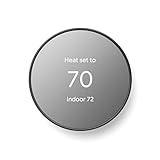
- ENERGY STAR certified smart thermostat for home that helps you save energy and stay comfortable.Connectivity : Wi-Fi - 802.11b/g/n 2.4 GHz, 802.11a/n 5 GHz Wi-Fi., Wireless interconnect : Bluetooth Low Energy Please refer to the product description section below for all applicable legal disclaimers.Product note: You can also check your system’s compatibility before purchasing a Nest thermostat with our online Nest Compatibility Checker on the Google Nest support page
- The Nest Thermostat is designed to work without a C wire in most homes, but for some systems, including heating only, cooling only, zone controlled, and heat pump systems, you’ll need a C wire or other compatible power accessory
- Nest Thermostat turns itself down when you leave, so you don’t waste energy heating or cooling an empty home. Lock feature: No
- Programmable thermostat that lets you create an energy efficient schedule in the Google Home app on your Android or iPhone
- Remote control lets family members change the thermostat temperature from anywhere on a phone, laptop, or tablet[1]
For ecobee, security is both an engagement opportunity and a strategic question. It gives owners another reason to use the company’s app and hardware, but it also places ecobee beside competitors with much larger camera and monitoring portfolios. Whether that becomes a meaningful business depends on execution, not merely on a thermostat serving as a hub.
Independent reader supportYour contribution helps us test, update, and keep practical guides available for everyone.Generac shifts the long-term strategy toward energy
Generac completed its acquisition of ecobee in December 2021. The rationale is more significant than a change in ownership: Generac describes ecobee as a foundation for residential energy management, linking energy generation, storage, consumption and load control. Generac brings generators, battery storage, solar-related equipment and installer or dealer relationships. ecobee brings HVAC expertise, a consumer-facing interface, room and occupancy sensing, connected thermostats and potential connections to utility programs.
There is evidence the two businesses are already being connected. In 2025, they introduced an ecobee by Generac Smart Thermostat Enhanced designed to integrate with Generac standby generators and PWRcell 2 battery storage. Generac’s 2025 annual report describes ecobee technology as a central user interface for its residential energy system, while its 2026 proxy materials point to deeper integration across the home-energy ecosystem and stronger dealer and installation capabilities.
PC Slower Than It Used to Be?
A free scan shows the junk files, broken settings and background clutter dragging Windows down - then fixes them in one click.Free scan · Windows 10 & 11Crashes, No Sound, or Screen Glitches?
Random freezes, missing sound and display glitches usually trace back to one bad driver. Find and replace yours safely.Free scan · under a minuteThe strategic implication is that ecobee may become a control point for more than temperature: HVAC use could be coordinated with a generator, battery, solar equipment, EV charging or a utility demand-response program. During an outage, energy controls could help manage loads; when electricity prices or grid conditions change, a connected system could potentially shift consumption. These are plausible directions suggested by Generac’s stated strategy, not a promise that every product, integration or automation is available today. Utilities, programs and equipment compatibility vary by location.
Rank #4

- Comfort where you need it most: SmartSensor detects which rooms are occupied and shares temperature readings with your ecobee Smart Thermostat from up to 60 feet away—even through walls and floors—so your home adjusts for the rooms you actually use, not just the hallway.
- Bedroom comfort: Place a SmartSensor in your bedroom, and your thermostat will prioritize that room's temperature overnight instead of relying on one reading from elsewhere in the house.
- Save energy when you’re away: SmartSensor detects when rooms are occupied and helps your thermostat adjust automatically, reducing energy use when your home is empty while keeping comfort ready when you return.
- Your home’s comfort at your fingertips: Get a complete view of your home’s temperature and occupancy, then adjust settings room by room from the ecobee app—whether you’re on the couch or away.
- Flexible placement with effortless setup: Everything you need is included in the box. Simply place your SmartSensor on a stand or mount it to the wall, then connect it to your ecobee thermostat in the app. No wiring, no tools, and no professional installation required.
This route is more defensible than trying to match Amazon or Google device for device. It also has a hard execution test: customers need an integrated system that is reliable, understandable, installable and useful in ordinary homes—not simply a collection of products under one owner. Dealer-led distribution and quote-driven generator or storage installations may be appropriate for resilience buyers but are less accessible than a thermostat sold at retail.
The risks ecobee still has to manage
- It does not own the household platform. Compatibility keeps ecobee in consideration, but Alexa or Google Home may remain the main interface in many homes.
- Cloud and account dependence matter. Cross-platform compatibility and non-ownership by Amazon or Google do not establish that a product is private, local or independent of cloud services. Remote access, voice features and connected services can rely on accounts and online infrastructure. Buyers with strong privacy or offline requirements should review current policies and feature behavior directly.
- Subscriptions and accessories change the economics. A Premium thermostat, multiple sensors and a security plan can cost more over time than the thermostat’s listed price suggests. Subscription terms can change.
- Generac ownership creates both resources and risk. The energy strategy could strengthen ecobee’s purpose, but priorities may tilt toward generators, storage and dealer channels. Product support, software quality, release cadence and the usability of integrations will show whether the consumer brand benefits.
- Installation is system-specific. C-wire availability, the need for a power-extension kit, heat-pump configuration and accessory compatibility all matter. Use ecobee’s compatibility checker and installation guidance or consult a qualified HVAC professional; there is no universal wiring recommendation.
Who should consider ecobee?
ecobee is most compelling for homeowners who have uneven room temperatures, want remote sensing, have a more demanding HVAC setup, use a mix of smart-home platforms or are interested in energy programs. It is also a more natural choice for a Generac customer seeking a common interface for compatible home-energy equipment.
It is a weaker fit for someone seeking only the cheapest thermostat, a fully local system, a complete professional-security replacement or a simple purchase that requires no attention to wiring and compatibility. Renters may also lack permission to replace a thermostat or eligibility for utility programs. If the household is committed to one platform and values seamless integration with that company’s full device range above HVAC specialization, a Nest- or Alexa-centered option may be more convenient.
Before purchasing, confirm the HVAC model and wiring, the required features and sensors, the exact integration behavior for your preferred smart-home platform, rebate eligibility, installation cost and any ongoing subscription. For a Generac energy setup, verify that the thermostat is the model intended for the relevant equipment rather than assuming every ecobee thermostat has the same integration.
Where ecobee is headed
ecobee’s likely next phase is not a race to build the biggest assistant, camera catalog or general-purpose smart-home service. It is an effort to make HVAC control the center of an energy-aware home: coordinate comfort with storage and backup power, connect equipment to utility programs, and give the household a more unified view of energy use. Security may remain a supporting layer, especially for existing owners, rather than the company’s strongest reason to compete with specialist security providers.
That direction gives ecobee a clearer identity than “another thermostat brand,” and Generac gives it a plausible route to equipment and distribution that a standalone thermostat company would not have. The unresolved question is whether the combined products will be easy for mainstream homeowners to buy, install and operate—and whether ecobee continues to deliver a strong consumer experience while Generac builds around energy resilience.
Quick Recap
Product prices and availability are accurate as of the date/time indicated and are subject to change. Any price and availability information displayed on Amazon at the time of purchase will apply.
What’s actually slowing this PC down?
Pick the symptom - the matching free tool is one click away.



